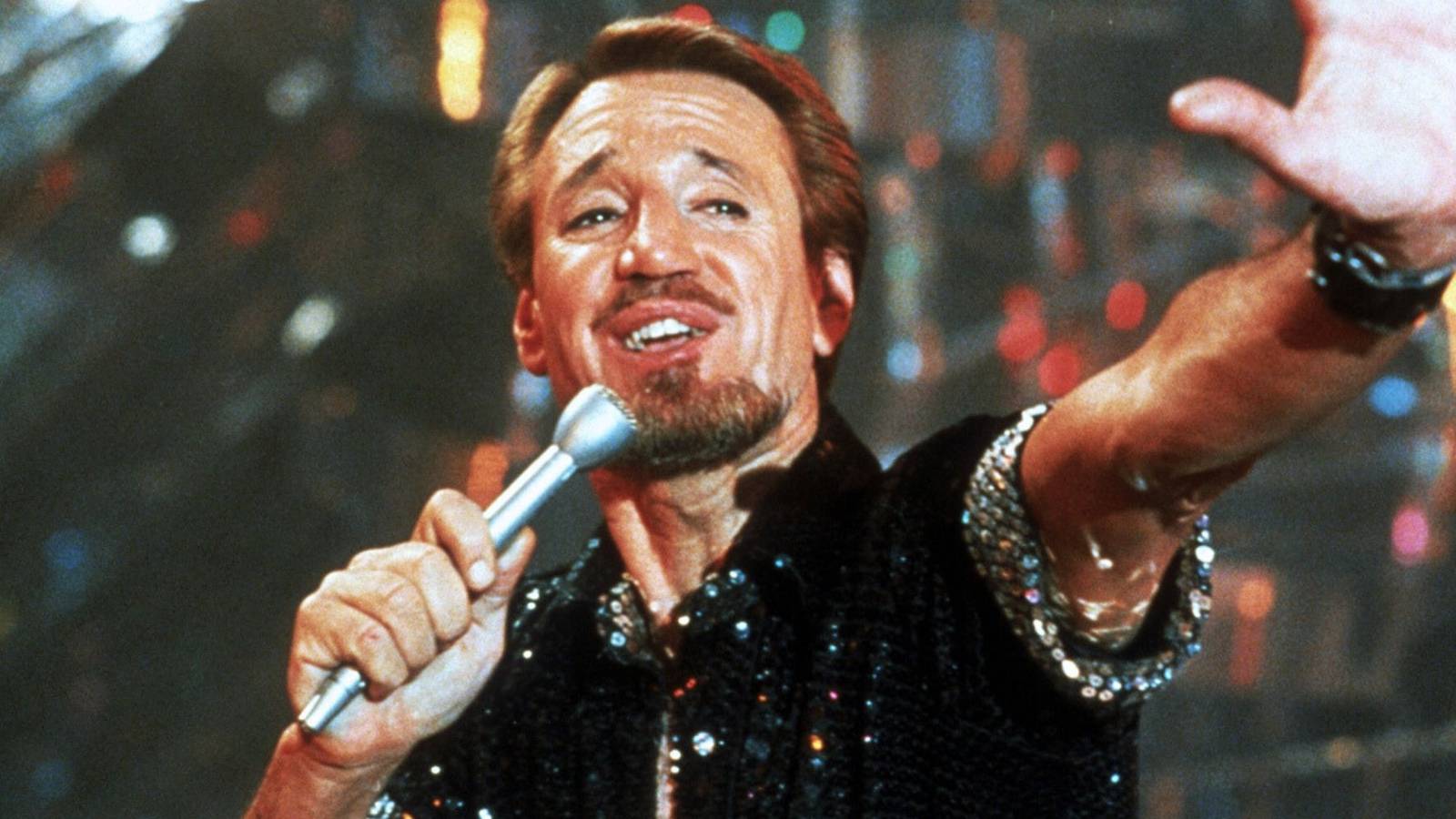
Image via 20th Century Studios Published Jul 31, 2026, 6:39 AM EDT Sign in to your Collider account My dad used to skip every musical number when we watched movies together, hitting fast forward the second someone opened their mouth to sing. I used to fight him on it every time. Then one night we watched Cabaret, and about halfway through, there's a scene where a blond boy stands up in a beer garden and starts singing "Tomorrow Belongs to Me." It sounds sweet at first, like any old folk song. Then the camera pulls back slowly, and you see the armband on his sleeve, and you realize everyone around him has stopped eating and started singing along with him. No one touched the remote for that one. That's the moment I understood what a song in a movie can actually do that a normal scene absolutely can't. It can let something build in the background while you're still humming along, so that by the time you notice what's really happening, you're already part of it. Not every musical bothers to use that trick. The ten movies on this list all do, in one way or another so let’s get into it. 10 ‘Pennies from Heaven’ (1981) Image via MGM Arthur Parker (Steve Martin) sells sheet music for a living, but in his head, he's always somewhere better, living inside old pop songs instead of dealing with his own life. His real life keeps getting worse though, since he cheats on his wife, loses his job, and then gets blamed for a murder he didn't do. Every time something bad happens, Pennies from Heaven switches to a bright musical number, and it almost feels like the songs are teasing him, and promising a happy ending they never plan to give him. Joan (Bernadette Peters) and Tom (Christopher Walken) both get dragged into Arthur's mess along the way, but neither one can save him in the end. Arthur is wrongly convicted and executed, and since most musicals end with a wedding or a big dance, watching this one end with a death feels like the movie broke a promise it never should have made. 9 ‘The Umbrellas of Cherbourg’ (1964) Image via 20th Century Studios Nobody in The Umbrellas of Cherbourg speaks a single line out loud. Even a simple sentence like "pass the sugar" gets sung, which makes the film like a fairy tale from the very first scene. Geneviève (Catherine Deneuve) and Guy (Nino Castelnuovo) fall in love fast, the way young people often do, but the war takes Guy away right when things are just getting good between them. While Guy is gone, Geneviève finds out she's pregnant, and even though she waits for him as long as she can, she ends up marrying someone else instead. Guy comes home eventually and builds his own life too, and years later, when they run into each other again, there's no big reunion, just two people being polite and that underestimation of everything makes you sad. The songs stay sweet the whole time, but the story underneath them still manages to break your heart. 8 ‘Cabaret’ (1972) Image via Allied Artists The characters in Cabaret only sing when they're on stage at the Kit Kat Klub. Everywhere else, they just talk like regular people. Sally Bowles (Liza Minnelli) works as a singer there, and she falls for Brian Roberts (Michael York), while the Emcee (Joel Grey) hosts every show with a grin that never seems to drop, even as the world outside gets darker by the day. While Sally and Brian fall for each other, the Nazis are quietly gaining power in the background, and the club just keeps singing like nothing outside its doors is changing. The film also doesn't look away from Brian's bisexuality or Sally's abortion, both bold subjects for a mainstream movie in 1972. By the end, the fun on stage and the fear building outside sit side by side, and you can tell which one is losing. 7 ‘South Park: Bigger, Longer & Uncut’ (1999) Image via Paramount Pictures South Park: Bigger, Longer & Uncut takes four foul-mouthed cartoon kids and gives them real Broadway-style songs, and Trey Parker, who voices most of the cast, fills the lyrics with swear words and jokes about censorship. The film almost got banned over its rating, so in a way, the whole thing plays like one long joke aimed straight at the people who tried to stop it. Even with all the crude jokes, the songs are actually well written, catchy enough that you'll be humming them for days after you watch. That's probably why "Blame Canada" got nominated for an Oscar, swearing and all. Cartoons are supposed to be safe for kids, but this one refuses to behave, and it laughs at anyone who still expects it to. 6 ‘Moulin Rouge!’ (2001) Image via 20th Century Studios Moulin Rouge! takes songs by Elton John, Nirvana, and Madonna and drops them into Paris in 1899, so Satine (Nicole Kidman), a singer at the club, and Christian (Ewan McGregor), a writer who falls for her, end up falling in love to music that shouldn't even exist yet in their world. The songs blend together fast, and the camera cuts even faster, so the whole film feels like it's moving faster than it can really handle and that thing was way ahead of its time. It also keeps breaking the fourth wall, making fun of musicals even while it's busy being one itself. Satine dies at the end, which is an old, worn-out idea for stories about women like her, but because the rest of the film is already so loud and messy, even that old idea looks different and doesn’t feel cliche. Collider Exclusive · Oscar Best Picture Quiz Which Oscar Best PictureIs Your Perfect Movie? Parasite · Everything Everywhere · Oppenheimer · Birdman · No Country Five Oscar Best Picture winners. Five completely different visions of what cinema can be — and what it can do to you. One of them is the film that was made for the way your mind works. Ten questions will figure out which one. 🪜Parasite 🌀Everything Everywhere ☢️Oppenheimer 🐦Birdman 🪙No Country for Old Men FIND YOUR FILM → 01 What kind of film experience do you actually want? The best movies don't just entertain — they leave something behind. ASomething that pulls the rug out — that makes me think I'm watching one kind of film and then reveals I'm watching another entirely. BSomething overwhelming — funny, sad, absurd, and genuinely moving, all at once. CSomething grand and weighty — a film that makes me feel the full scale of what I'm watching. DSomething formally daring — a film that pushes what cinema can even do. ESomething lean and relentless — pure tension with no wasted frame. NEXT QUESTION → 02 Which idea grabs you most in a film? Great films are driven by a central obsession. What's yours? AClass, inequality, and what people are willing to do when desperation meets opportunity. BIdentity, family, and the chaos of trying to hold your life together when everything is falling apart. CGenius, moral responsibility, and the catastrophic weight of a decision you can never take back. DEgo, legacy, and the terror of becoming irrelevant while you're still alive to watch it happen. EEvil, chance, and whether moral order actually exists or if we just tell ourselves it does. NEXT QUESTION → 03 How do you like your story told? Form is content. The way a story is shaped changes what it means. AGenre-twisting — I want it to start in one lane and migrate into something completely different. BMaximalist and genre-blending — comedy, action, drama, sci-fi, all in one ride. CEpic and non-linear — cutting between timelines, building a mosaic of cause and consequence. DA single unbroken flow — I want to feel like I'm living it in real time, no cuts to safety. ESpare and precise — every scene doing exactly what it needs to do and nothing more. NEXT QUESTION → 04 What makes a truly great antagonist? The opposition defines the protagonist. What kind of opposition fascinates you? AA system — invisible, structural, and almost impossible to fight because it has no single face. BThe self — the ways we sabotage, abandon, and fail the people we love most. CHistory — the unstoppable momentum of events that no single person can stop or redirect. DThe industry — the machinery of culture that chews up talent and spits out irrelevance. EPure, implacable evil — a force so certain of itself it becomes almost philosophical. NEXT QUESTION → 05 What do you want from a film's ending? The final note is the one that lingers. What do you want it to sound like? AShock and inevitability — a conclusion that recontextualises everything that came before it. BEarned emotion — I want to cry, laugh, and feel genuinely hopeful, even if the world is a mess. CDevastation and grandeur — an ending that makes me sit in silence for a few minutes after. DAmbiguity — something that leaves enough open that I'm still thinking about it days later. EBleakness — an honest refusal to pretend the world is tidier than it actually is. NEXT QUESTION → 06 Which setting pulls you in most? Where a film takes place shapes everything — mood, stakes, what's even possible. AA gleaming modern city with a hidden underside — beauty masking rot, wealth masking desperation. BA collapsing suburban life that opens onto something infinite — the multiverse of a single ordinary person. CThe corridors of power and science at a world-historical turning point — where decisions echo for decades. DThe grimy, alive chaos of New York and Hollywood — fame as both destination and trap. EVast, indifferent landscape — desert and highway where violence arrives without warning or reason. NEXT QUESTION → 07 What cinematic craft impresses you most? Every great film has a signature — a technical or artistic element that makes it unmistakable. AProduction design and mise-en-scène — every frame composed to carry meaning beneath the surface. BEditing and tonal control — the ability to move between registers without losing the audience. CScore and sound design — music that becomes inseparable from the dread and awe of what you're watching. DCinematography as performance — the camera not recording events but participating in them. ESilence and restraint — what's left unsaid and unshown doing more work than any dialogue could. NEXT QUESTION → 08 What kind of main character do you root for? The protagonist is the lens. Who you choose to follow says something about you. ASomeone smart and resourceful who makes increasingly dangerous decisions under pressure. BSomeone overwhelmed and ordinary who turns out to be capable of something extraordinary. CA brilliant, tortured figure whose gifts and flaws are inseparable from each other. DA self-destructive artist whose ego is both their superpower and their undoing. EA quiet, principled person trying to make sense of a world that has stopped making sense. NEXT QUESTION → 09 How do you feel about a film that takes its time? Pace is a choice. Some films sprint; others let tension accumulate slowly, deliberately. AI love a slow build when I know the payoff is going to be seismic — patience for a devastating reveal. BGive me relentless momentum — I want to feel breathless and emotionally spent by the end. CEpic runtime doesn't scare me — if the material demands three hours, give me three hours. DI want it to feel propulsive even when nothing is technically happening — restless energy throughout. EDeliberate and unhurried — I want dread to accumulate in the spaces between the action. NEXT QUESTION → 10 What do you want to feel walking out of the cinema? The best films leave a mark. What kind of mark do you want? AUnsettled — like I've just seen something I can't fully explain but can't stop thinking about. BMoved and energised — like the film reminded me what actually matters and gave me something to hold onto. CHumbled — like I've been in the presence of something genuinely important and overwhelming. DExhilarated — like I've just seen cinema doing something it's never quite done before. EHaunted — like a cold, quiet dread that stays with me for days. REVEAL MY FILM → The Academy Has Decided Your Perfect Film Is…Your answers have pointed to one Oscar Best Picture winner above all others. This is the film that was made for the way your mind works. ParasiteYou are drawn to films that operate on multiple levels simultaneously — that begin in one genre and quietly, brilliantly migrate into another. Bong Joon-ho's Parasite is a film about class, desire, and the architecture of inequality that manages to be darkly funny, deeply suspenseful, and genuinely shocking across a single extraordinary running time. Your instinct is for cinema that hides its true intentions until the moment it's ready to reveal them. Parasite is exactly that — a film that rewards close attention and punishes assumptions, right up to its devastating final image. Everything Everywhere All at OnceYou want it all — and this film gives you all of it. The Daniels' Everything Everywhere All at Once is one of the most maximalist films ever made: action comedy, multiverse sci-fi, family drama, existential crisis, and a genuinely earned emotional core that sneaks up on you amid the chaos. You are someone who responds to ambition, who doesn't want cinema to choose between being entertaining and being meaningful. This film refuses that choice entirely. It is overwhelming by design, and its overwhelming nature is precisely the point — because the feeling of being crushed by infinite possibility is exactly what it's about. OppenheimerYou are drawn to cinema on a grand scale — films that understand history not as a backdrop but as a force, and that place their characters inside that force and watch what happens. Christopher Nolan's Oppenheimer is a film about the terrifying gap between what we can do and what we should do, told with the full weight of one of the most consequential moments in human history behind it. You want your films to feel important without feeling self-important — to earn their ambition through sheer craft and the gravity of their subject. Oppenheimer does exactly that. It is enormous, complicated, and refuses easy comfort. BirdmanYou are drawn to films that foreground their own construction — that make the how of the filmmaking part of the what it's about. Alejandro González Iñárritu's Birdman, shot to appear as a single continuous take, is cinema examining itself through the cracked mirror of a fading actor's ego. You respond to formal daring, to the feeling that a film is doing something that probably shouldn't be possible. Michael Keaton's performance and Emmanuel Lubezki's restless camera create something genuinely unlike anything else — a film that is simultaneously about creativity, relevance, self-destruction, and the impossibility of ever truly knowing if your work means anything at all. No Country for Old MenYou are drawn to cinema that trusts silence, that refuses to explain itself, and that treats dread as a form of meaning. The Coen Brothers' No Country for Old Men is a film about the arrival of a new kind of evil — implacable, arbitrary, and utterly indifferent to the moral frameworks we use to make sense of the world. It is one of the most formally controlled films ever made, and its controlled restraint is what makes it so terrifying. You want your films to haunt you, not comfort you. You are not interested in resolution if resolution would be dishonest. No Country for Old Men is honest in a way that most cinema never dares to be. ↻ RETAKE THE QUIZ 5 ‘All That Jazz’ (1979) Image via 20th Century Fox All That Jazz is basically Bob Fosse telling his own story, since Joe Gideon (Roy Scheider) is a choreographer who works too hard, sleeps around too much, and pops pills just to get through each day. Angelique (Jessica Lange) is actually Death, and Joe talks to her like an old friend the whole movie, which somehow makes his slow decline feel almost normal instead of scary. The film never tries to fix Joe or make him likable before it ends. Instead, it lets him keep wearing himself down until his own funeral turns into a full musical number, with lights, dancers, and a big finish. Watching a man dance toward his own death, and seem to enjoy it, is hard to sit through, especially since Fosse made this only a few years before he actually died. 4 ‘Dancer in the Dark’ (2000) Image via Constantin Film Selma (Björk) works in a factory and is slowly going blind, and whenever her life gets too hard to handle, she imagines a musical number in her head just to survive the moment. Kathy (Catherine Deneuve) is her closest friend, while Bill (David Morse) is the neighbor whose lie ends up ruining everything Selma has left. Unlike most musicals, the dream scenes in Dancer in the Dark are shot on shaky, cheap-looking cameras instead of anything smooth, and unlike most musicals, this story doesn't end well either. Selma is executed near the end, and the film even cuts her last song short before it finishes, so it gives you hope the whole way through only to take it back at the last second. Björk later said the role took so much out of her that she never wanted to act again. 3 ‘Hedwig and the Angry Inch’ (2001) Image via New Line Cinema Hedwig Robinson (John Cameron Mitchell) is a rock singer from East Germany who had a surgery that didn't go as planned after she moved to the West chasing love and freedom. The songs in Hedwig and the Angry Inch are part glam rock, part punk confession, and underneath the noise, they're really about her looking for the man who stole her music and her heart, a guy named Tommy Gnosis. Yitzhak (Miriam Shor) is Hedwig's bandmate and husband, and he stays quietly hurt and jealous through the whole story, even while he keeps performing next to her every night. The film also uses the fall of the Berlin Wall to talk about Hedwig's own body, and how she never quite feels whole no matter how loud she sings. It started out as a small stage show, but it's become something people who feel out of place still hold onto. 2 ‘Repo! The Genetic Opera’ (2008) Image via Twisted Pictures Repo! The Genetic Opera is set in a future where organs fail all the time, and a company run by Rotti Largo (Paul Sorvino) takes those organs back by force if you miss a payment, no matter how much you beg. Nathan (Anthony Head) does the repossessing in secret, while his daughter Shilo (Alexa Vega) has no idea what her father actually does once he leaves the house. Every surgery and every betrayal is sung, not spoken, mixing metal, opera, and horror into one loud, bloody story that feels a little too good to watch considering its subject. Blind Mag (Sarah Brightman) plays a singer whose career is fading fast, and Amber Sweet (Paris Hilton) shows up as a woman addicted to plastic surgery, whose face falls apart right on stage. It's extreme on purpose, but underneath all the blood, it's really just a sad story about a father trying to protect his daughter. 1 ‘The Rocky Horror Picture Show’ (1975) Image via 20th Century Studios Dr. Frank-N-Furter (Tim Curry) is a scientist in fishnets and heels who lures in a young couple, Brad (Barry Bostwick) and Janet (Susan Sarandon), after their car breaks down near his castle one stormy night. The Rocky Horror Picture Show makes fun of old horror movies and old love stories at the same time. What turned it into a legend wasn't just the movie itself, though. Fans started showing up to midnight showings dressed as the characters, shouting lines at the screen, and throwing rice and toast at just the right moments. Long before it was common, this film let its characters be openly queer and play with gender without apologizing for any of it, which is probably why, fifty years later, people are still showing up to watch it every single weekend.
10 Most Subversive Musical Movies of All Time
Full Article
Original Source
Read the full article at Collider →KhanList aggregates and links to publicly available news content. We do not host full articles from third-party sources. Always verify important information with original sources.