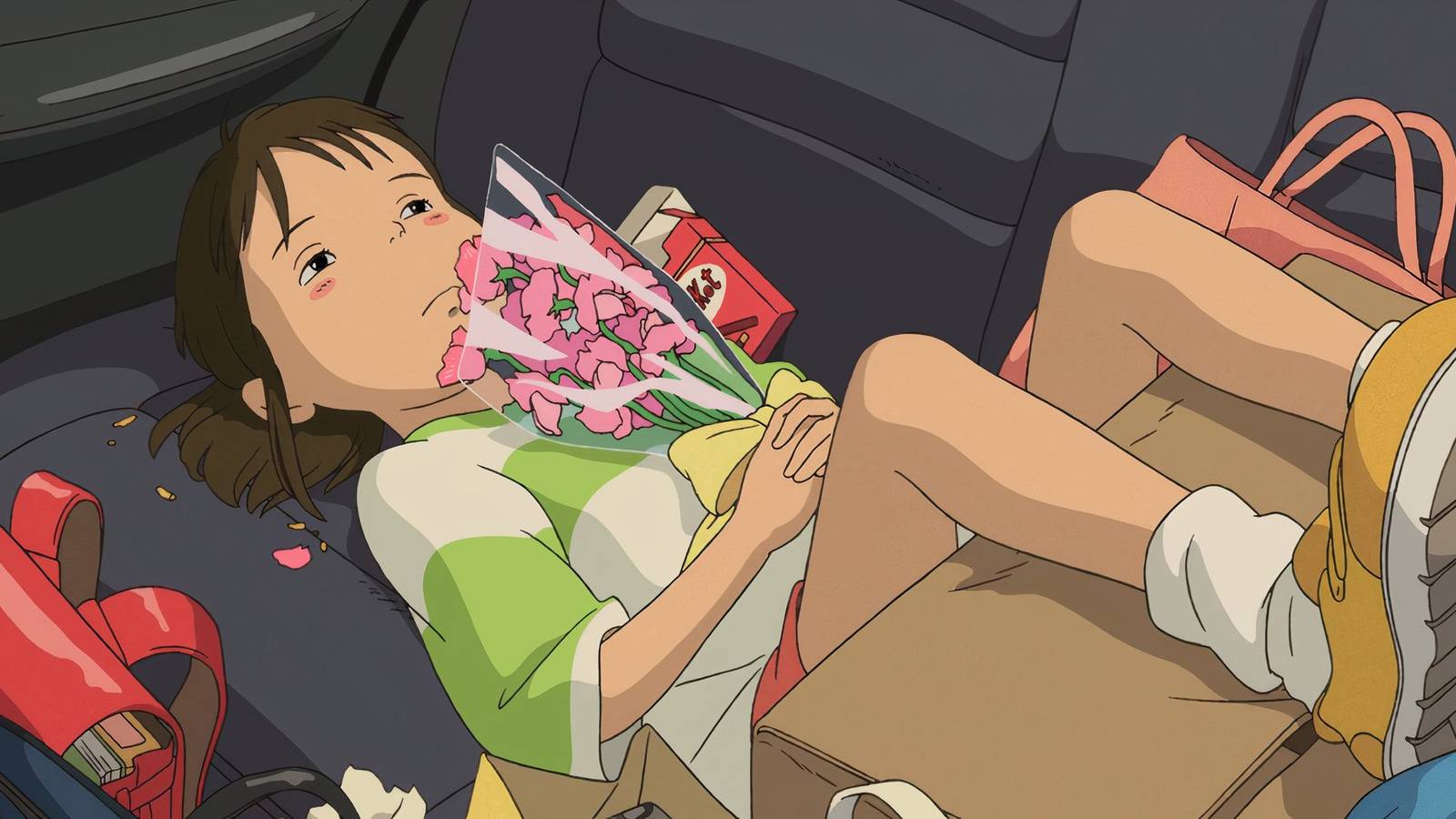
The 10 Most Subversive Fantasy Movies of All Time, Ranked Image via Toho Published Jul 27, 2026, 7:04 AM EDT Sign in to your Collider account Fantasy movies are in one way the best genre there is because there is a promise most other genres don't even try to keep. Things will turn out okay in the end. Magic will fix what's broken. The person who deserves to win will win. That promise is why people still tear up at a fairy tale ending even when they already know exactly how it goes. That happy ending is a real comfort in a story that keeps its word. These ten movies take that comfort and pull it out from under you, right when you're leaning on it hardest. Each one plays by fantasy's rules long enough to earn your trust, real magic, real curses, real quests, and then breaks the one promise the genre is supposed to keep, on purpose. That's the part that stays with you longer than a happy ending ever could. 10 'Edward Scissorhands' (1990) Image via 20th Century Studios Most fairy tales about outsiders end with the outsider learning to fit in, whether that means a wedding or some kind of big change that finally lets them belong. Edward Scissorhands (Johnny Depp) never gets that kind of ending, mostly because the inventor who built him died before finishing the job, which is why he still has scissors instead of hands. Kim (Winona Ryder) and her mother, Peg (Dianne Wiest), bring him down from his empty castle into their quiet, pastel neighborhood, where everyone treats him like an exciting new toy at first. That excitement doesn't last. Once Edward kills Jim (Anthony Michael Hall) in self-defense near the end, the same neighbors who welcomed him turn on him just as fast, chasing him back up the hill to the castle he came from. He stays there alone for the rest of his life, while Kim grows old without him and only tells the story to her granddaughter decades later, as a memory. Tim Burton takes the usual Beauty and the Beast formula, where the beast eventually gets the girl and a place in the world, and simply never lets Edward have either one. 9 'Beetlejuice' (1988) Image via Warner Bros. Pictures Betelgeuse (Michael Keaton) is the title character, yet he barely shows up in his own movie, adding up to less than twenty minutes of screen time total, and he isn't even the one the story wants you rooting for. That role belongs to Adam and Barbara Maitland (Alec Baldwin and Geena Davis), a married couple who just died and now find themselves haunting the house they used to live in, trying and failing to scare off the wealthy, rude family that's moved in and started redecorating. Most haunted house movies want the audience afraid of the ghosts, but this one flips that completely, since the Maitlands are the gentle, awkward ones who can barely manage a decent scare, while the humans, aside from Lydia (Winona Ryder), the one person who can actually see them, are the real nuisance. Betelgeuse only enters the story because the Maitlands get desperate enough to hire him, and once he's loose, he nearly wrecks everything for the characters we've spent the whole film rooting for. 8 'The Green Knight' (2021) Image via A24 The medieval poem this is based on ends with Gawain surviving his ordeal essentially unscathed, having proven his honor to everyone's satisfaction. David Lowery's version doesn't let him off that easily. Gawain (Dev Patel) spends the whole film wearing a magic girdle that guarantees he can't be killed, a cheat he never tells anyone about, right up until the moment he's supposed to keep his promise to the Green Knight and let himself be beheaded. Before he does, the film shows an entire imagined future where Gawain removes the girdle, flees the challenge, and lives out decades as a hollow, cowardly king, watching everything he built collapse. Then it cuts back to the real moment, where the girdle is still on his waist, and lets him choose. A quest story built entirely around a fight ends instead on a man deciding, alone, whether he's willing to actually be brave. 7 'The Shape of Water' (2017) Image via Searchlight Pictures Beauty and the Beast stories almost always end with the beast turning human. Guillermo del Toro's version ends with the human choosing to become something else instead. Elisa (Sally Hawkins), a mute cleaner at a Cold War research facility, falls for an amphibious creature (Doug Jones) being tortured and studied by Strickland (Michael Shannon), and it is never visible that their relationship is real. By the end, Elisa doesn't get her voice back, and the creature doesn't get legs. Instead, Elisa is pulled into the water and transforms into something that can breathe there alongside him, which reverses the direction every version of this story usually goes. It's the human who changes to fit the fantasy world, not the other way around, and a genre film built on that premise went on to win Best Picture, a category it almost never gets invited into. Collider Exclusive · Oscar Best Picture Quiz Which Oscar Best PictureIs Your Perfect Movie? Parasite · Everything Everywhere · Oppenheimer · Birdman · No Country Five Oscar Best Picture winners. Five completely different visions of what cinema can be — and what it can do to you. One of them is the film that was made for the way your mind works. Ten questions will figure out which one. 🪜Parasite 🌀Everything Everywhere ☢️Oppenheimer 🐦Birdman 🪙No Country for Old Men FIND YOUR FILM → 01 What kind of film experience do you actually want? The best movies don't just entertain — they leave something behind. ASomething that pulls the rug out — that makes me think I'm watching one kind of film and then reveals I'm watching another entirely. BSomething overwhelming — funny, sad, absurd, and genuinely moving, all at once. CSomething grand and weighty — a film that makes me feel the full scale of what I'm watching. DSomething formally daring — a film that pushes what cinema can even do. ESomething lean and relentless — pure tension with no wasted frame. NEXT QUESTION → 02 Which idea grabs you most in a film? Great films are driven by a central obsession. What's yours? AClass, inequality, and what people are willing to do when desperation meets opportunity. BIdentity, family, and the chaos of trying to hold your life together when everything is falling apart. CGenius, moral responsibility, and the catastrophic weight of a decision you can never take back. DEgo, legacy, and the terror of becoming irrelevant while you're still alive to watch it happen. EEvil, chance, and whether moral order actually exists or if we just tell ourselves it does. NEXT QUESTION → 03 How do you like your story told? Form is content. The way a story is shaped changes what it means. AGenre-twisting — I want it to start in one lane and migrate into something completely different. BMaximalist and genre-blending — comedy, action, drama, sci-fi, all in one ride. CEpic and non-linear — cutting between timelines, building a mosaic of cause and consequence. DA single unbroken flow — I want to feel like I'm living it in real time, no cuts to safety. ESpare and precise — every scene doing exactly what it needs to do and nothing more. NEXT QUESTION → 04 What makes a truly great antagonist? The opposition defines the protagonist. What kind of opposition fascinates you? AA system — invisible, structural, and almost impossible to fight because it has no single face. BThe self — the ways we sabotage, abandon, and fail the people we love most. CHistory — the unstoppable momentum of events that no single person can stop or redirect. DThe industry — the machinery of culture that chews up talent and spits out irrelevance. EPure, implacable evil — a force so certain of itself it becomes almost philosophical. NEXT QUESTION → 05 What do you want from a film's ending? The final note is the one that lingers. What do you want it to sound like? AShock and inevitability — a conclusion that recontextualises everything that came before it. BEarned emotion — I want to cry, laugh, and feel genuinely hopeful, even if the world is a mess. CDevastation and grandeur — an ending that makes me sit in silence for a few minutes after. DAmbiguity — something that leaves enough open that I'm still thinking about it days later. EBleakness — an honest refusal to pretend the world is tidier than it actually is. NEXT QUESTION → 06 Which setting pulls you in most? Where a film takes place shapes everything — mood, stakes, what's even possible. AA gleaming modern city with a hidden underside — beauty masking rot, wealth masking desperation. BA collapsing suburban life that opens onto something infinite — the multiverse of a single ordinary person. CThe corridors of power and science at a world-historical turning point — where decisions echo for decades. DThe grimy, alive chaos of New York and Hollywood — fame as both destination and trap. EVast, indifferent landscape — desert and highway where violence arrives without warning or reason. NEXT QUESTION → 07 What cinematic craft impresses you most? Every great film has a signature — a technical or artistic element that makes it unmistakable. AProduction design and mise-en-scène — every frame composed to carry meaning beneath the surface. BEditing and tonal control — the ability to move between registers without losing the audience. CScore and sound design — music that becomes inseparable from the dread and awe of what you're watching. DCinematography as performance — the camera not recording events but participating in them. ESilence and restraint — what's left unsaid and unshown doing more work than any dialogue could. NEXT QUESTION → 08 What kind of main character do you root for? The protagonist is the lens. Who you choose to follow says something about you. ASomeone smart and resourceful who makes increasingly dangerous decisions under pressure. BSomeone overwhelmed and ordinary who turns out to be capable of something extraordinary. CA brilliant, tortured figure whose gifts and flaws are inseparable from each other. DA self-destructive artist whose ego is both their superpower and their undoing. EA quiet, principled person trying to make sense of a world that has stopped making sense. NEXT QUESTION → 09 How do you feel about a film that takes its time? Pace is a choice. Some films sprint; others let tension accumulate slowly, deliberately. AI love a slow build when I know the payoff is going to be seismic — patience for a devastating reveal. BGive me relentless momentum — I want to feel breathless and emotionally spent by the end. CEpic runtime doesn't scare me — if the material demands three hours, give me three hours. DI want it to feel propulsive even when nothing is technically happening — restless energy throughout. EDeliberate and unhurried — I want dread to accumulate in the spaces between the action. NEXT QUESTION → 10 What do you want to feel walking out of the cinema? The best films leave a mark. What kind of mark do you want? AUnsettled — like I've just seen something I can't fully explain but can't stop thinking about. BMoved and energised — like the film reminded me what actually matters and gave me something to hold onto. CHumbled — like I've been in the presence of something genuinely important and overwhelming. DExhilarated — like I've just seen cinema doing something it's never quite done before. EHaunted — like a cold, quiet dread that stays with me for days. REVEAL MY FILM → The Academy Has Decided Your Perfect Film Is…Your answers have pointed to one Oscar Best Picture winner above all others. This is the film that was made for the way your mind works. ParasiteYou are drawn to films that operate on multiple levels simultaneously — that begin in one genre and quietly, brilliantly migrate into another. Bong Joon-ho's Parasite is a film about class, desire, and the architecture of inequality that manages to be darkly funny, deeply suspenseful, and genuinely shocking across a single extraordinary running time. Your instinct is for cinema that hides its true intentions until the moment it's ready to reveal them. Parasite is exactly that — a film that rewards close attention and punishes assumptions, right up to its devastating final image. Everything Everywhere All at OnceYou want it all — and this film gives you all of it. The Daniels' Everything Everywhere All at Once is one of the most maximalist films ever made: action comedy, multiverse sci-fi, family drama, existential crisis, and a genuinely earned emotional core that sneaks up on you amid the chaos. You are someone who responds to ambition, who doesn't want cinema to choose between being entertaining and being meaningful. This film refuses that choice entirely. It is overwhelming by design, and its overwhelming nature is precisely the point — because the feeling of being crushed by infinite possibility is exactly what it's about. OppenheimerYou are drawn to cinema on a grand scale — films that understand history not as a backdrop but as a force, and that place their characters inside that force and watch what happens. Christopher Nolan's Oppenheimer is a film about the terrifying gap between what we can do and what we should do, told with the full weight of one of the most consequential moments in human history behind it. You want your films to feel important without feeling self-important — to earn their ambition through sheer craft and the gravity of their subject. Oppenheimer does exactly that. It is enormous, complicated, and refuses easy comfort. BirdmanYou are drawn to films that foreground their own construction — that make the how of the filmmaking part of the what it's about. Alejandro González Iñárritu's Birdman, shot to appear as a single continuous take, is cinema examining itself through the cracked mirror of a fading actor's ego. You respond to formal daring, to the feeling that a film is doing something that probably shouldn't be possible. Michael Keaton's performance and Emmanuel Lubezki's restless camera create something genuinely unlike anything else — a film that is simultaneously about creativity, relevance, self-destruction, and the impossibility of ever truly knowing if your work means anything at all. No Country for Old MenYou are drawn to cinema that trusts silence, that refuses to explain itself, and that treats dread as a form of meaning. The Coen Brothers' No Country for Old Men is a film about the arrival of a new kind of evil — implacable, arbitrary, and utterly indifferent to the moral frameworks we use to make sense of the world. It is one of the most formally controlled films ever made, and its controlled restraint is what makes it so terrifying. You want your films to haunt you, not comfort you. You are not interested in resolution if resolution would be dishonest. No Country for Old Men is honest in a way that most cinema never dares to be. ↻ RETAKE THE QUIZ 6 'Pan's Labyrinth' (2006) Image via Warner Bros. Pictures Guillermo del Toro has never confirmed, in any interview, whether the fantasy world in this film is real or something Ofelia (Ivana Baquero) invented to survive fascist Spain, and he's said that ambiguity is deliberate. Her stepfather, Captain Vidal (Sergi López), is hunting resistance fighters in the forest above the labyrinth, and every fantastical creature Ofelia meets underground, including a faun (Doug Jones) who sets her three brutal tasks, exists right alongside real torture and real executions happening a few feet away. Ofelia dies at Vidal's hands in the last act, shot in the real world with no rescue arriving in time. The film's final scene shows her reunited with a magical mother and father in an underworld kingdom, crowned and welcomed home. Whether that's actually happening, or just what a dying child imagined in her last few seconds, is something the film never settles for you 5 'Being John Malkovich' (1999) Image via USA Films There's a door on the 7½th floor of an office building that leads directly into actor John Malkovich's mind for exactly fifteen minutes at a time, and the strangest thing about this movie is how fast everyone treats that as a business opportunity. Craig Schwartz (John Cusack) starts charging people two hundred dollars a ride, while his wife, Lotte (Cameron Diaz), and his coworker Maxine (Catherine Keener) start using the portal to work out their own tangled feelings for each other. John Malkovich plays an exaggerated version of himself, increasingly horrified as strangers start controlling his body from inside his own skull. The story ends with Craig trapped permanently inside the consciousness of a young girl, watching her life through her eyes with no way out, which turns the fantasy of becoming someone else into a life sentence instead of an escape. 4 'Brazil' (1985) Image via Universal Pictures Terry Gilliam fought his own studio so hard over this film's ending that he eventually took out a full-page ad in Variety demanding they release his cut instead of theirs, and once you see the ending, it's obvious why he refused to budge. Sam Lowry (Jonathan Pryce) spends the film escaping a suffocating, paperwork-choked dystopia through elaborate flying daydreams, and by the final scene, he seems to actually pull it off, rescuing Jill (Kim Greist) and driving free into open countryside. Then the camera pulls back, and it turns out none of that happened. Sam is strapped to a chair, having just been tortured into a lobotomy by the same bureaucracy he'd been dreaming his way out of, smiling blankly at nothing. The fantasy ending was real inside the film. It just wasn't real for him. 3 'Spirited Away' (2001) Image via Studio Ghibli Chihiro's parents get turned into pigs about fifteen minutes into this movie, punished for eating food that wasn't theirs without asking first, and Hayao Miyazaki never really lets the story go back to being gentle after that. Chihiro (voiced by Rumi Hiiragi) has to take a job at a bathhouse run by a witch named Yubaba to survive, and the film refuses to give Yubaba a clean villain arc, letting her run the place with genuine competence rather than pure cruelty. Chihiro and Haku (voiced by Miyu Irino), the boy who helps her, never get a romantic ending, not even a kiss goodbye. She's told not to look back as she leaves the spirit world, and the film cuts away before showing whether she'll remember any of it once she's home. This is a coming-of-age fantasy that hands its hero actual growth and then takes the memory of it away. Very subversive. 2 'Princess Mononoke' (1997) Image via Studio Ghibli Lady Eboshi (Minnie Driver) gives lepers and former sex workers real jobs and real dignity inside the walls of Irontown, something almost nobody else in the story is willing to offer them. She's also cutting down the forest that keeps her furnaces running, and by the film's climax, her hunters are chasing down the Forest Spirit to take its head. Hayao Miyazaki never gives you a clean reason to hate her for either one. San (Claire Danes), raised by wolves and ready to kill any human who threatens her home, doesn't get positioned as the clear hero either. Ashitaka (Billy Crudup), the one character trying to hold both sides together, carries a curse on his arm that never fully goes away, not even by the last scene. The forest grows back changed, not restored, and San and Ashitaka choose to live apart instead of ending up together. Nobody wins here the way a fantasy movie usually lets somebody win. 1 'Shrek' (2001) Image via DreamWorks Animation Shrek is based on a girl named Fiona (Cameron Diaz) who spends her whole life locked in a curse, turning into an ogre every night until true love's kiss can supposedly fix her for good and make the change permanent. She finally gets that kiss from Shrek (Mike Myers), and it does make the change permanent, just not in the direction she or anyone in the castle was expecting. Lord Farquaad (John Lithgow) had already offered Shrek a kingdom in exchange for rescuing her, a crown and a castle and a permanent place at court, exactly the ending most fantasy movies build their whole story toward. Shrek and Fiona turn it down anyway and go home to the swamp that started this whole mess . There's no lingering shot of the throne they're leaving behind at all. They just leave, and Donkey (Eddie Murphy) follows them there too, instead of staying behind in the fancy castle he could have had for himself. Shrek Release Date May 18, 2001 Runtime 90 minutes Cast Shrek / Blind Mouse (voice) Eddie Murphy Donkey (voice)
10 Most Subversive Fantasy Movies
Full Article
Original Source
Read the full article at Collider →KhanList aggregates and links to publicly available news content. We do not host full articles from third-party sources. Always verify important information with original sources.