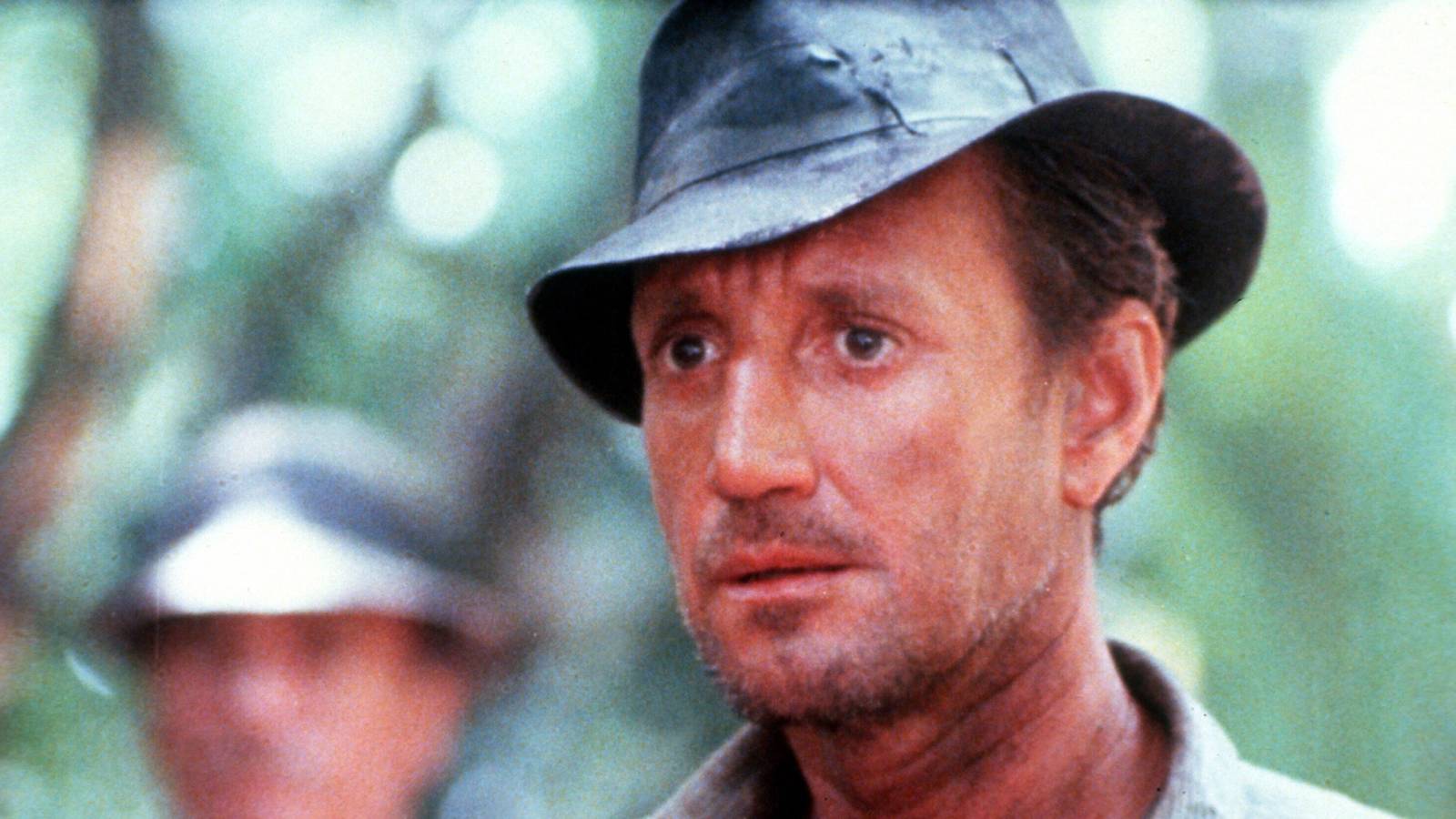
Image via Paramount Pictures Published Jul 25, 2026, 6:05 PM EDT Sign in to your Collider account There is usually one rule for adventure movies which is that the guys go out, they nearly die a few times, and they come home with something to show for it. There is always a promise to come back and survive the danger so it all means something by the time you get back. But the thrill is to do something so unexpected that it stays with the audience for long. The ten films here take that promise and break it on purpose. None of them play fair with the reward you were promised at the start, and that's exactly why they're still worth watching. You almost think you know what is going to happen, but keep your seatbelts on because you might never know. Let’s get into it. 10 ‘The Secret Life of Walter Mitty’ (2013) Image via 20th Century Studios Ben Stiller both directs and stars as Walter Mitty, a photo archivist who spends most of his day zoning out into elaborate daydreams instead of talking to Cheryl (Kristen Wiig), the coworker he likes. The trailers sold this as a globe-trotting adventure, skateboarding down Icelandic roads, outrunning a shark, climbing the Himalayas chasing down a photographer named Sean O'Connell (Sean Penn). Most of that footage is real in the film too. It just isn't the point of it. The missing photograph Walter travels the world to find turns out to be a picture of Walter himself, doing his unglamorous job at his desk, taken by Sean because he thought it mattered. An adventure movie spends two hours convincing you that grandeur is out there somewhere, then hands its main character a photo of an ordinary man doing ordinary work and calls that treasure. It's a strange thing for a studio adventure film to argue, and it argues it anyway. 9 ‘The Treasure of the Sierra Madre’ (1948) Image via Warner Bros. Pictures Humphrey Bogart plays Fred C. Dobbs, a broke drifter in Mexico who teams up with Curtin (Tim Holt) and an old prospector named Howard (Walter Huston) to dig gold out of a mountain none of them can legally claim. Bogart was the biggest star in America when this came out, and director John Huston spends the whole film making him uglier by the minute, paranoid, sweat-soaked, convinced his partners are plotting to rob him long before either of them actually considers it. Dobbs dies at the hands of bandits who have no idea the sacks he's carrying are full of gold dust, and they scatter it across the desert thinking it's worthless sand. Nobody gets the fortune. The wind takes it instead. For a film starring the man who'd just played Rick in Casablanca, letting him die broke, deluded, and unmourned was not the ending 1948 audiences were expecting to pay for. 8 ‘The Revenant’ (2015) Image via 20th Century Studios Alejandro G. Iñárritu shot this one in chronological order using only natural light, which meant the crew spent months chasing daylight across two continents just to keep the look consistent. All of that in service of one moment: Hugh Glass (Leonardo DiCaprio), left for dead in the snow by Fitzgerald (Tom Hardy) after a bear attack, finally catching up to him. When Glass corners Fitzgerald, dying in the snow, he doesn't kill him. He drags him to the river and pushes him toward a group of Arikara warriors who have their own reason to want him dead, and lets them finish it instead. Revenge movies almost always give the hero that final act with his own hands. This one takes the moment away from Glass right when the whole film has been promising it to him. Collider Exclusive · Oscar Best Picture Quiz Which Oscar Best PictureIs Your Perfect Movie? Parasite · Everything Everywhere · Oppenheimer · Birdman · No Country Five Oscar Best Picture winners. Five completely different visions of what cinema can be — and what it can do to you. One of them is the film that was made for the way your mind works. Ten questions will figure out which one. 🪜Parasite 🌀Everything Everywhere ☢️Oppenheimer 🐦Birdman 🪙No Country for Old Men FIND YOUR FILM → 01 What kind of film experience do you actually want? The best movies don't just entertain — they leave something behind. ASomething that pulls the rug out — that makes me think I'm watching one kind of film and then reveals I'm watching another entirely. BSomething overwhelming — funny, sad, absurd, and genuinely moving, all at once. CSomething grand and weighty — a film that makes me feel the full scale of what I'm watching. DSomething formally daring — a film that pushes what cinema can even do. ESomething lean and relentless — pure tension with no wasted frame. NEXT QUESTION → 02 Which idea grabs you most in a film? Great films are driven by a central obsession. What's yours? AClass, inequality, and what people are willing to do when desperation meets opportunity. BIdentity, family, and the chaos of trying to hold your life together when everything is falling apart. CGenius, moral responsibility, and the catastrophic weight of a decision you can never take back. DEgo, legacy, and the terror of becoming irrelevant while you're still alive to watch it happen. EEvil, chance, and whether moral order actually exists or if we just tell ourselves it does. NEXT QUESTION → 03 How do you like your story told? Form is content. The way a story is shaped changes what it means. AGenre-twisting — I want it to start in one lane and migrate into something completely different. BMaximalist and genre-blending — comedy, action, drama, sci-fi, all in one ride. CEpic and non-linear — cutting between timelines, building a mosaic of cause and consequence. DA single unbroken flow — I want to feel like I'm living it in real time, no cuts to safety. ESpare and precise — every scene doing exactly what it needs to do and nothing more. NEXT QUESTION → 04 What makes a truly great antagonist? The opposition defines the protagonist. What kind of opposition fascinates you? AA system — invisible, structural, and almost impossible to fight because it has no single face. BThe self — the ways we sabotage, abandon, and fail the people we love most. CHistory — the unstoppable momentum of events that no single person can stop or redirect. DThe industry — the machinery of culture that chews up talent and spits out irrelevance. EPure, implacable evil — a force so certain of itself it becomes almost philosophical. NEXT QUESTION → 05 What do you want from a film's ending? The final note is the one that lingers. What do you want it to sound like? AShock and inevitability — a conclusion that recontextualises everything that came before it. BEarned emotion — I want to cry, laugh, and feel genuinely hopeful, even if the world is a mess. CDevastation and grandeur — an ending that makes me sit in silence for a few minutes after. DAmbiguity — something that leaves enough open that I'm still thinking about it days later. EBleakness — an honest refusal to pretend the world is tidier than it actually is. NEXT QUESTION → 06 Which setting pulls you in most? Where a film takes place shapes everything — mood, stakes, what's even possible. AA gleaming modern city with a hidden underside — beauty masking rot, wealth masking desperation. BA collapsing suburban life that opens onto something infinite — the multiverse of a single ordinary person. CThe corridors of power and science at a world-historical turning point — where decisions echo for decades. DThe grimy, alive chaos of New York and Hollywood — fame as both destination and trap. EVast, indifferent landscape — desert and highway where violence arrives without warning or reason. NEXT QUESTION → 07 What cinematic craft impresses you most? Every great film has a signature — a technical or artistic element that makes it unmistakable. AProduction design and mise-en-scène — every frame composed to carry meaning beneath the surface. BEditing and tonal control — the ability to move between registers without losing the audience. CScore and sound design — music that becomes inseparable from the dread and awe of what you're watching. DCinematography as performance — the camera not recording events but participating in them. ESilence and restraint — what's left unsaid and unshown doing more work than any dialogue could. NEXT QUESTION → 08 What kind of main character do you root for? The protagonist is the lens. Who you choose to follow says something about you. ASomeone smart and resourceful who makes increasingly dangerous decisions under pressure. BSomeone overwhelmed and ordinary who turns out to be capable of something extraordinary. CA brilliant, tortured figure whose gifts and flaws are inseparable from each other. DA self-destructive artist whose ego is both their superpower and their undoing. EA quiet, principled person trying to make sense of a world that has stopped making sense. NEXT QUESTION → 09 How do you feel about a film that takes its time? Pace is a choice. Some films sprint; others let tension accumulate slowly, deliberately. AI love a slow build when I know the payoff is going to be seismic — patience for a devastating reveal. BGive me relentless momentum — I want to feel breathless and emotionally spent by the end. CEpic runtime doesn't scare me — if the material demands three hours, give me three hours. DI want it to feel propulsive even when nothing is technically happening — restless energy throughout. EDeliberate and unhurried — I want dread to accumulate in the spaces between the action. NEXT QUESTION → 10 What do you want to feel walking out of the cinema? The best films leave a mark. What kind of mark do you want? AUnsettled — like I've just seen something I can't fully explain but can't stop thinking about. BMoved and energised — like the film reminded me what actually matters and gave me something to hold onto. CHumbled — like I've been in the presence of something genuinely important and overwhelming. DExhilarated — like I've just seen cinema doing something it's never quite done before. EHaunted — like a cold, quiet dread that stays with me for days. REVEAL MY FILM → The Academy Has Decided Your Perfect Film Is…Your answers have pointed to one Oscar Best Picture winner above all others. This is the film that was made for the way your mind works. ParasiteYou are drawn to films that operate on multiple levels simultaneously — that begin in one genre and quietly, brilliantly migrate into another. Bong Joon-ho's Parasite is a film about class, desire, and the architecture of inequality that manages to be darkly funny, deeply suspenseful, and genuinely shocking across a single extraordinary running time. Your instinct is for cinema that hides its true intentions until the moment it's ready to reveal them. Parasite is exactly that — a film that rewards close attention and punishes assumptions, right up to its devastating final image. Everything Everywhere All at OnceYou want it all — and this film gives you all of it. The Daniels' Everything Everywhere All at Once is one of the most maximalist films ever made: action comedy, multiverse sci-fi, family drama, existential crisis, and a genuinely earned emotional core that sneaks up on you amid the chaos. You are someone who responds to ambition, who doesn't want cinema to choose between being entertaining and being meaningful. This film refuses that choice entirely. It is overwhelming by design, and its overwhelming nature is precisely the point — because the feeling of being crushed by infinite possibility is exactly what it's about. OppenheimerYou are drawn to cinema on a grand scale — films that understand history not as a backdrop but as a force, and that place their characters inside that force and watch what happens. Christopher Nolan's Oppenheimer is a film about the terrifying gap between what we can do and what we should do, told with the full weight of one of the most consequential moments in human history behind it. You want your films to feel important without feeling self-important — to earn their ambition through sheer craft and the gravity of their subject. Oppenheimer does exactly that. It is enormous, complicated, and refuses easy comfort. BirdmanYou are drawn to films that foreground their own construction — that make the how of the filmmaking part of the what it's about. Alejandro González Iñárritu's Birdman, shot to appear as a single continuous take, is cinema examining itself through the cracked mirror of a fading actor's ego. You respond to formal daring, to the feeling that a film is doing something that probably shouldn't be possible. Michael Keaton's performance and Emmanuel Lubezki's restless camera create something genuinely unlike anything else — a film that is simultaneously about creativity, relevance, self-destruction, and the impossibility of ever truly knowing if your work means anything at all. No Country for Old MenYou are drawn to cinema that trusts silence, that refuses to explain itself, and that treats dread as a form of meaning. The Coen Brothers' No Country for Old Men is a film about the arrival of a new kind of evil — implacable, arbitrary, and utterly indifferent to the moral frameworks we use to make sense of the world. It is one of the most formally controlled films ever made, and its controlled restraint is what makes it so terrifying. You want your films to haunt you, not comfort you. You are not interested in resolution if resolution would be dishonest. No Country for Old Men is honest in a way that most cinema never dares to be. ↻ RETAKE THE QUIZ 7 ‘Master and Commander: The Far Side of the World’ (2003) Image via Universal Pictures There's barely a villain in this one, and there's no romance subplot at all, which is a strange choice for a big studio adventure film released in 2003. What it has instead is Captain Jack Aubrey (Russell Crowe), chasing a French warship across the ocean with an obsession that starts to look a lot like Ahab's, and the ship's doctor, Stephen Maturin (Paul Bettany), who just wants five minutes onshore in the Galápagos to study finches. That tension, between duty and curiosity, is what actually drives the film, not a clear hero-versus-villain chase, which meant audiences expecting a swashbuckling adventure got long stretches of barnacle scraping and amputated limbs instead. It underperformed at the box office for exactly that reason, and it's also why people still bring it up as one of the most quietly intelligent adventure films a studio ever funded. 6 ‘Sorcerer’ (1977) Image via Universal Pictures By the time these four men agree to drive trucks packed with sweating, unstable dynamite through the jungle, none of them have anything left to lose, which is the only reason the job pays as well as it does. Jackie Scanlon (Roy Scheider) is one of them, a fugitive hiding under a fake name, and William Friedkin, coming off The Exorcist and The French Connection, wanted a film with no clean hero and no clean escape for any of them. The movie opened the same summer as Star Wars in 1977, and audiences who'd just watched a farm boy blow up the Death Star had no appetite for four desperate men who might not survive their own truck. It bombed badly enough to help end Friedkin's run as a bankable director, and decades later, critics reappraised it as one of the tensest adventure films ever made. 5 ‘Deliverance’ (1972) Image via Warner Bros. Four friends from Atlanta, led by Lewis (Burt Reynolds), the survivalist of the group, take a canoe trip down a river before it gets dammed and turned into a lake, wanting one last taste of real wilderness. Ed (Jon Voight), Bobby (Ned Beatty), and Drew (Ronny Cox) go along with him, and the trip turns into an assault, a killing, and a cover-up before the weekend is over. Lewis, the character built up as the toughest man in the group, breaks his leg and has to be carried out, while Ed, the least outdoorsy of the four, ends up killing a man to save the others. John Boorman spends the whole film undoing the fantasy that nature makes men stronger, and by the time the survivors are lying to police at the end, the river they came looking for has already been flooded over for good. 4 ‘Aguirre, the Wrath of God’ (1972) Image via Filmverlag der Autoren Lope de Aguirre (Klaus Kinski) is a Spanish conquistador who mutinies against his own expedition and drags a shrinking crew of soldiers down the Amazon hunting for a city of gold that was never real to begin with. Werner Herzog shot the film on actual rafts on an actual river, with a cast and crew who reportedly feared Kinski as much as anyone feared the jungle itself. Nobody finds El Dorado. Nobody survives, in fact, except Aguirre, who ends the film alone on a raft that's overrun with monkeys, declaring himself the wrath of God to an audience of nobody. Adventure movies about conquest usually end with a flag planted or a fortune claimed. This one ends with a man so consumed by his own delusion that he keeps giving orders to a crew that's already dead. 3 ‘Fitzcarraldo’ (1982) Image via Filmverlag der Autoren The ship you see getting dragged over a mountain in this film is a real 320-ton steamship, pulled by real pulleys and real manual labor, because Werner Herzog refused to fake any of it with models or effects. The man obsessed enough to attempt it on screen, Brian Sweeney Fitzgerald (Klaus Kinski), wants to build an opera house in the jungle, and hauling a ship over a mountain turns out to be the reasonable part of his plan. Fitzcarraldo actually gets the ship over the mountain, and the film could have ended there as a triumph. Instead, the ship gets swept down a set of rapids and lost almost immediately after. The opera happens anyway, on a different boat entirely, proof that Herzog was never interested in whether the obsession paid off, only in how far a person will go chasing something that never needed to make sense. 2 ‘Mad Max: Fury Road’ (2015) Image via Warner Bros. Pictures The man whose name is in the title spends a good portion of his own movie chained to the hood of a car, muzzled, and mostly along for the ride. Max Rockatansky (Tom Hardy) isn't the one driving the plot of Mad Max: Fury Road. Imperator Furiosa (Charlize Theron), a one-armed war rig commander who steals Immortan Joe's (Hugh Keays-Byrne) five captive wives and runs, is. George Miller shot the whole thing with real stunt drivers doing real stunts across real desert, using almost no CGI. Then, near the end, the film does something most quest stories never do: it turns around. The green land everyone's been chasing doesn't exist anymore, so instead of pushing forward toward a promised land, Furiosa leads everyone back the way they came to take the Citadel instead. 1 ‘The Wages of Fear’ (1953) Image via Cinédis Four broke men stranded in a South American oil town, including Mario (Yves Montand) and Jo (Charles Vanel), take a job no sane person would want and that is driving two trucks loaded with nitroglycerin over three hundred miles of unpaved road, because the American oil company running the town is offering enough money to finally leave. Henri-Georges Clouzot spends over an hour just showing how trapped and broke these men are before a single truck ever moves, so that by the time the driving starts, the money feels less like a prize and more like a trap with better lighting. Mario survives the entire trip, the explosions, the oil-slicked road, the mountain pass that shouldn't have been driveable. Then he dies on the way home, in a stupid car accident, swerving his truck off a cliff while dancing behind the wheel to music on the radio. The company he worked for never even slows down to notice.
10 Most Subversive Adventure Movies of All Time
Full Article
Original Source
Read the full article at Collider →KhanList aggregates and links to publicly available news content. We do not host full articles from third-party sources. Always verify important information with original sources.