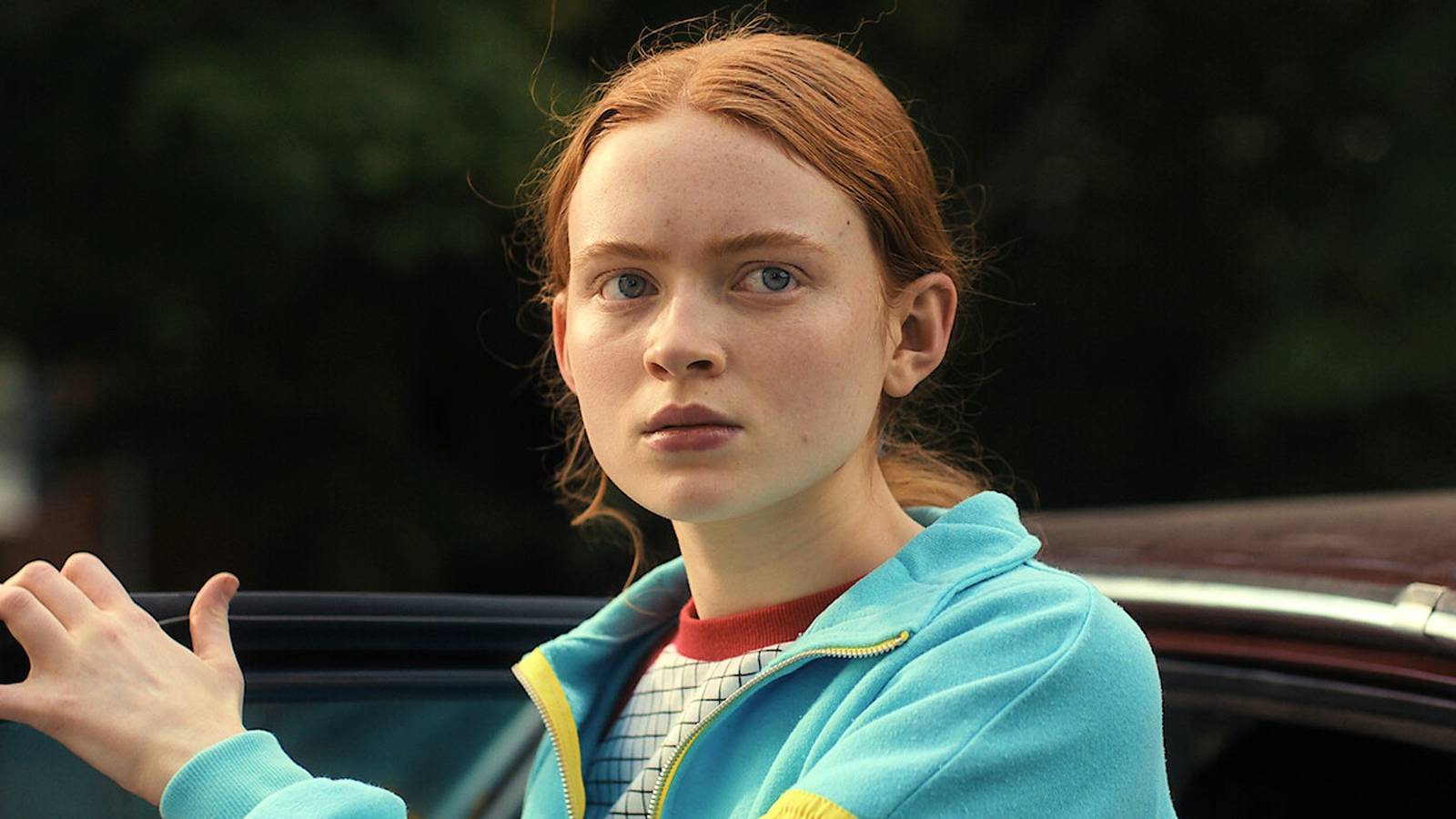
Image via Netflix Published Jul 29, 2026, 11:01 PM EDT Michael Block is a 14 time GLAM Award nominated writer, producer, and host of the podcast Block Talk. Throughout his time in the entertainment industry, he has worked on and off Broadway as a stage manager, written several produced plays, critiqued hundreds of theatrical performances, drag and cabaret shows, and has produced events randing from drag competitoons to variety concerts! On Block Talk, he interviews nightlife personalities, covers the wide world of entertainment through features, ranking episodes, and recaps ALL of Drag Race, as well as Dragula and Survivor. He has interviewed hundreds of RuGirls that span the globe at DragCon NYC, DragCon LA, and DragCon UK. In his free time, he makes one-of-a-kind jewelry and gift baskets with his mom. He is a proud member of the LGBTQ+ community. Sign in to your Collider account As time goes on and technology evolves, both in our reality and in entertainment, the caliber of science fiction storytelling has gotten stronger. In fact, as much as we love sci-fi films, television has slowly been bypassing cinema as the place for peak sci-fi content. With the ability to take more time to explain and explore, television's recent bevy of sci-fi shows is better than ever. The past ten years are complete proof. The titles on the list are among the best sci-fi shows out there. From epic sci-fi horror thrillers that blew up pop culture to a brand new Star Wars story that rivaled its big screen predecessor. These series have taken us to space, introduced us to extraterrestrial hiveminds, and showed us what living life in a 144-story silo in a dystopian future might be like. Science fiction has pushed the bounds of storytelling to places unimaginable. And we couldn't be happier. 10 'Foundation' (2021–Present) Image via Apple TV As you'll notice quite often on this list, lifting a project from a source material often leads to excellent content. First up is a series based on novels once believed to be "unfilmable": Foundation. Based on Isaac Asimov's epic stories, the three-season thriller chronicles a band of exiles who try to save humanity after Hari Seldon (Jared Harris) predicts the unavoidable collapse of the 12,000-year-old Galactic Empire. The mission is to rebuild civilization. Thus, he creates the Foundation on the remote planet Terminus to preserve human knowledge. The century-spanning story centers on the conflict between the ruling imperial Genetic Dynasty via the clones of Emperor Cleon (Lee Pace), and the Foundation, including Gaal Dornick (Lou Llobell), a prodigy who helps develop the plan, and Salvor Hardin (Leah Harvey), the warden of Terminus, as they navigate the predicted fall. Created by David S. Goyer and Josh Friedman, Foundation balances epic, galaxy-spanning storytelling and staggering visual production value with deeply personal character arcs and intense political philosophy. Foundation is a masterful and poetic space opera that tackles grand themes like the cyclical nature of empires, psychohistory, destiny, and the survival of human knowledge over thousands of years. The series does a stellar job exploring the tension between science and faith, the nature of power, and whether historical events can be altered. With Asimov's invention of psychohistory, Foundation has, well, a foundation on which to stand. It's a daunting tale, but brought to life as a breathtaking screen-space spectacle. While any series opts in for a one-for-one adaptation, the Apple TV series is wonderfully unpredictable. Because it spans hundreds of years and takes unexpected narrative leaps, even fans of the original books are treated to unpredictable twists. With a fourth season in the works with new showrunners Ian Goldberg and David Kob, there is a glorious roadmap to set out on to maintain narrative continuity. 9 'Dark Matter' (2024–Present) Image via Apple TV The multiverse narrative device has become a major plot point across all media of late. Some creators have been overwhelmed by it, botching the execution. Others have mastered it, proving just how brilliantly it could work. Dark Matter is the latter. Created by Blake Crouch based on his 2016 novel, the enthralling Apple TV thriller follows Jason Dessen (Joel Edgerton), a Chicago physicist who is abducted and thrust into the multiverse. He wakes up in alternate realities where his life choices went differently, and he must fight his way back home through a labyrinth of parallel worlds to save his true family from the most dangerous foe imaginable: himself. A deeply character-driven love story set within a high-stakes multiverse thriller, Dark Matter explores the roads not taken, challenging viewers with a core question: Are you happy in your life? Dark Matter is a perfect high-concept series that mixes the multiverse mechanic with a deeply emotional, grounded love story. Beneath the science, it is ultimately a story about a man desperately trying to get back to his true family. But as he questions whether it’s a journey worth taking, that’s when Dark Matter becomes truly gripping. The profound questions it raises about happiness, fulfillment, and marriage make it deeply introspective and relatable. Edgerton does a remarkable job playing multiple, vastly different versions of Jason. He leads an extraordinary ensemble which also features Jennifer Connelly and Jimmi Simpson. Crouch has the unique ability to craft his own content for the small screen, translating it flawlessly without risking contradictions or tonal derailments. If you haven’t checked out Dark Matter, now’s the perfect time to binge, as Season 2 is set to drop this August. 8 'Fallout' (2024–Present) Image via Prime Video Some video game-to-series adaptations fall flat. Not Fallout! In fact, it's one of the best of all time. Created by Graham Wagner and Geneva Robertson-Dworet, the Prime Video series takes the popular video game franchise and breathes new life into it while maintaining its iconic integrity. Fallout takes place 200 years after a nuclear war, following three main characters who collide in the irradiated ruins of America: Lucy MacLean (Ella Purnell), an optimistic Vault-dweller forced to leave her utopian bunker and venture into the lawless "Wasteland" to rescue her father, Hank (Kyle McLachlan); Maximus (Aaron Moten), an idealistic young soldier in a zealous, tech-hoarding military group tries to navigate the ruins while balancing his survival with the rigid rules of his organization; and The Ghoul (Walton Goggins), a centuries-old, radiation-mutated bounty hunter whose backstory bridges the gap between the modern-day wasteland and pre-war America. Blending a bleak retro-futuristic setting with satirical, dark humor, the series explores class disparity in a world where society has collapsed. While the video game lore and mythology are ever-present, Fallout forges its own identity that allows gamers and series-only viewers an exciting, visceral experience. The world-building is simply unmatched. With three perspectives that intertwine at times. Thanks to the original storyline within the established canon, Fallout has room to breathe while rewarding observant viewers with authentic props, armor designs, and references. Viewers get a chance to see the vast universe that is brilliantly crafted straight from the games. Fallout has emerged as a top-tier sci-fi series thanks to its willingness to play. That stems from the extraordinary ensemble. Whether it's the main trio, recurring stars like Leslie Uggams and Justin Theroux, or special guests Michael Emerson, Fred Armisen, Kumail Nanjiani, or Macaulay Culkin, everyone brings joy to the hauntingly delightful series. With Season 3 pushing beyond into new games with new stars, including Aaron Paul and Manny Jacinto, it's going to be something worth tuning in to. 7 'For All Mankind' (2019–Present) Image via Apple TV Imagine rewriting the events of one of the most crucial moments in American history where the future goes in an entirely new direction. That’s the premise of Apple TV's For All Mankind. Created by Ronald D. Moore, Matt Wolpert, and Ben Nedivi, the series dramatizes an alternate history that explores what would have happened if the global space race had never ended. The premise begins in 1969 when the Soviet Union successfully lands the first man on the Moon, dealing a devastating blow to the United States and intensifying the Cold War. By changing a single significant historical event, For All Mankind creates a massive butterfly effect, featuring rapid technological innovation, political intrigue, and an optimistic vision of human perseverance. For All Mankind is a brilliant "what if" drama. Across each season, the series organically leaps about a decade forward, showcasing how that inciting event reshaped reality. For All Mankind is rooted in character-driven drama, centered on human ambition, sacrifice, and the emotional toll that space exploration and grueling career choices take on the astronauts and their families. Rather than presenting space magic, For All Mankind is solidly rooted in hard science, respecting the laws of fiction. The innate tension in the story then comes from the mechanical realities of spaceflight, including navigating lunar storms, managing orbital mechanics, or dealing with equipment malfunctions. Even though the story is fiction, this makes the events feel factual. Most importantly, the series avoids a simple "good guys vs. bad guys" trope. The Cold War extends into space, but treats Russian and American characters with equal nuance. Now, the exploration from the other perspective is explored in the acclaimed spin-off, Star City. Collider Exclusive · Sci-Fi Survival Quiz Which Sci-Fi World Would You Survive? The Matrix · Mad Max · Blade Runner · Dune · Star Wars Five universes. Five completely different ways the future went wrong — or sideways, or up in flames. Only one of them is the world your instincts were built for. Eight questions will figure out which dystopia, galaxy, or desert wasteland you'd actually make it out of alive. 💊The Matrix 🔥Mad Max 🌧️Blade Runner 🏜️Dune 🚀Star Wars TEST YOUR SURVIVAL → 01 You sense something is deeply wrong with the world around you. What do you do? The first instinct is often the truest one. APull on every thread until I understand the system — then figure out how to break it. BStop asking questions and start stockpiling — food, fuel, weapons. Questions don't keep you alive. CKeep my head down, observe carefully, and trust no one until I know who's pulling the strings. DStudy the patterns. Every system has a rhythm — learn it, and you learn how to survive it. EFind the people fighting back and join them. You can't fix a broken galaxy alone. NEXT QUESTION → 02 In a world of scarcity, what resource do you guard most fiercely? What we protect reveals what we believe survival actually requires. AKnowledge. If you understand the system, you don't need resources — you can generate them. BFuel. Everything else — movement, power, escape — runs on it. CTrust. In a world of fakes and informants, a truly reliable ally is rarer than any commodity. DWater. And after water, information — the two things empires are truly built on. EShips and credits. The galaxy is big — you survive it by being able to move through it freely. NEXT QUESTION → 03 What kind of threat keeps you up at night? Fear is useful data — if you're honest about what you're actually afraid of. AThat reality itself is a lie — that everything I experience has been constructed to keep me compliant. BA raid. No warning, no mercy — just the roar of engines and then nothing left. CBeing identified. Once someone with power decides you're a problem, you're already out of time. DBeing outmanoeuvred — losing a political game I didn't even know I was playing. EThe Empire tightening its grip until there's nowhere left to run. NEXT QUESTION → 04 How do you deal with authority you don't trust? Every dystopia has a power structure. Your approach to it determines everything. ASubvert it from the inside — learn its rules well enough to weaponise them against it. BIgnore it and stay out of its reach. The further from any power structure, the better. CAppear to comply while doing exactly what I need to do. Visibility is the enemy. DManoeuvre within it carefully. You can't beat a system you refuse to understand. EResist openly when I have to. Some things are worth the risk of being seen. NEXT QUESTION → 05 Which environment could you actually endure long-term? Survival isn't just tactical — it's physical, psychological, and very much about where you are. AUnderground bunkers and server rooms — cramped, artificial, but with access to everything that matters. BOpen wasteland — brutal sun, no shelter, constant movement. At least the threat is honest. CA dense, rain-soaked city where you can disappear into the crowd and nobody asks questions. DMerciless desert — extreme heat, no water, and something enormous living beneath the sand. EThe fringe — backwater planets and busy spaceports where the Empire's attention rarely reaches. NEXT QUESTION → 06 Who do you want in your corner when things fall apart? The company you keep is the clearest signal of who you actually are. AA tight crew of believers who've seen behind the curtain and have nothing left to lose. BOne or two people I'd trust with my life. Any more than that and someone talks. CNobody, ideally. Alliances are liabilities. I work alone unless I have no choice. DA community bound by shared hardship and mutual survival — people who need each other to last. EA ragtag team with wildly different skills and total commitment when it counts. NEXT QUESTION → 07 Where do you draw the line — if you draw one at all? Every survivor eventually faces a moment that tests what they're actually made of. AI won't harm the innocent — even the ones who'd report me without hesitation. BI do what I have to to protect the people I've chosen. Everything else is negotiable. CThe line shifts depending on who's asking and what's at stake. DI draw a long-term line — nothing that compromises my people's future, even if it'd help now. ESome lines, once crossed, can't be uncrossed. I know which ones they are. NEXT QUESTION → 08 What would actually make survival worth it? Staying alive is one thing. Having a reason to is another. AWaking others up — dismantling the illusion so no one else has to live inside it. BFinding somewhere — or someone — worth protecting. A reason to keep moving. CAnswers. Understanding what I am, what any of this means, before time runs out. DLegacy — shaping the future in a way that outlasts me by generations. EFreedom — for myself, for others, for every world still living under someone else's boot. REVEAL MY WORLD → Your Fate Has Been Calculated You'd Survive In…Your answers point to the world your instincts were built for. This is the universe your temperament, your survival instincts, and your particular brand of stubbornness were made for. The MatrixYou took the red pill a long time ago — probably before anyone offered it to you. You're a systems thinker who can't help but notice the seams in things. You're drawn to understanding how the system works before figuring out how to break it. You'd find the Resistance, or it would find you — your instinct for spotting constructed realities is the machines' worst nightmare. You function best when you have access to information and the freedom to act on it. The Matrix built an airtight prison. You'd be the one probing the walls for the door. Mad MaxThe wasteland doesn't reward the clever or the well-connected — it rewards those who are hard to kill and harder to break. That's you. You don't need comfort, community, or a cause larger than the next horizon. You need a vehicle, a clear threat, and enough fuel to outrun it — and you're good at all three. You are unsentimental enough to survive that world, and decent enough — just barely — to be something more than another raider. In the wasteland, that distinction is everything. Blade RunnerYou'd survive here because you know how to exist in moral grey areas without losing yourself completely. You read people accurately, keep your circle small, and ask the questions others prefer not to answer. In a city where humanity is a legal designation rather than a feeling, you hold onto something that keeps you functional. You're not a hero. But you're not lost, either. In Blade Runner's world, that distinction is everything. DuneArrakis is the most hostile environment in the known universe — and you are precisely the kind of person it rewards. Patience, discipline, and political awareness are your core strengths — and on Arrakis, they're survival tools. You understand that the long game matters more than any single victory. Others come to Dune and are consumed by it. You'd learn its logic and earn its respect. In time, you wouldn't just survive Arrakis — you'd begin to reshape it. Star WarsThe galaxy far, far away is vast, loud, and in a constant state of violent political upheaval — and you wouldn't have it any other way. You find meaning in being part of something larger than yourself — a cause, a crew, a rebellion. You'd gravitate toward the Rebellion, or the fringes, or whatever pocket of the galaxy still believes the Empire's grip can be broken. You fight — not because you have to, but because standing aside isn't something you're capable of. In Star Wars, that willingness is what makes all the difference. ↻ RETAKE THE QUIZ 6 'Silo' (2023–Present) Image via Apple TV No show is more thrillingly claustrophobic than Silo. Created by Graham Yost and based on Hugh Howey's novels, Silo is set in a dystopian future where a community lives in a giant underground silo with 144 levels. The residents are governed by strict rules and believe the outside world is a toxic, ruined wasteland. Engineer Juliette Nichols (Rebecca Ferguson) becomes embroiled in the mystery of the past and the present as she seeks to uncover the dark, murderous conspiracy behind their existence. The more she investigates, the more she unravels, which extends deep into the toxic wasteland outside. A brilliant mystery box that continues to expand the universe's lore season by season, Silo is a fight for survival after a lie to survive. Silo is a standout Apple TV series that’s built on extreme dread and slow-burning tension. Silo unleashes a bevy of questions that you want answers to, allowing you to stick around for the addictive thriller. Each episode unravels another layer of the conspiracy without feeling rushed. And now, each season unleashes even more depth. Silo thrives on world-building in the sense that it captures the past in a terrifying manner. Because technological evolution has been halted in the silo, its inhabitants rely on recognizable mechanical tools, making the futuristic society feel tangible and real. The story resonates because it's a human story about being stuck in an inhumane society. Whether hero, villain, or morally in between, each character is richly crafted. Ferguson leads a sensational ensemble that included, throughout its run, Rashida Jones, David Oyelowo, Common, Tim Robbins, Harriet Walter, Steve Zahn, and many more. Now in Season 3, Silo is a must-watch. 5 'Stranger Things' (2016–2025) Very few shows took over the world quite like Stranger Things. One of the biggest Netflix shows in history, the Duffer Brothers' creation is set in the 1980s and follows the residents of a fictional town of Hawkins, Indiana, as they uncover a web of secret government experiments and battle terrifying monsters from a parallel, nightmarish dimension known as "The Upside Down." Following the disappearance of a young Will Byers (Noah Schnapp), his mother, Joyce (Winona Ryder) and local cop Jim Hopper (David Harbour) search for him as his friends stumble upon a girl with psychokinetic powers named Eleven (Millie Bobby Brown). Over the course of five seasons, the adults, teens, and kids must repeatedly save their town from the growing horrors of this dark realm. The sci-fi horror series is a love letter to pop culture, blending a Steven Spielberg-style coming-of-age adventure with the horrors of a Stephen King supernatural thriller. Stranger Things, at its core, is all about loyalty, bravery, and the trauma of growing up in a world where ordinary people are forced to confront impossible evils. And they do so with a happily ever after. The series brilliantly balances high-stakes concepts with a deeply relatable, character-driven narrative. The supernatural elements are infused into the truly heartfelt human themes. For those who watched the series from the start grew up with the characters, watching their enduring bonds of friendship on and off-screen. The world-building is precisely structured with clear sci-fi and fantasy rules. Though you may shake your head at the events as they unfold. Stranger Things revolutionized streaming culture forever. 4 'Dark' (2017–2020) Image via Netflix Don't sleep on foreign language series! One of the most underrated sci-fi series on Netflix is Baran bo Odar and Jantje Friese's three-season thriller, Dark. Dark tells the story of four interconnected families in the town of Winden, where a child's disappearance unveils a sinister, generation-spanning time-travel conspiracy. The story centers on Jonas Kahnwald (Jonas Gerzabek, Louis Hofmann, Andreas Pietschmann, and Dietrich Holllinderbäumer) as he uncovers the town's secrets, navigating deterministic time loops, the 33-year cycle, and an apocalypse to prevent a tragic, knotted fate. Capturing the existential implications of time and its effects on human life through the bootstrap paradox, Dark delivers a perfectly plotted time-travel story rooted in deep philosophical questions about human nature, destiny, and free will. Many mystery box series play with plot as they go along. Dark was intricately structured before the show even began shooting. In doing so, every twist, reveal, and paradox links back together, making it a wonderfully rewarding series. That said, it requires close viewer attention. Missing anything may require a rewind. The series sees a grounded approach to time travel in which the concept of fixed, casual loops where the past and future mutually influence one another. This lends itself to a tragic, fascinating tone that tackles profound themes of determinism. Dark is flawless. 3 'Pluribus' (2025–Present) Image via Apple TV Only one season in and Vince Gilligan's newest creation is already taking science fiction by storm. Pluribus is slowly rising to the top as Apple TV's brightest. The story centers on an Albuquerque novelist named Carol Sturka (Rhea Seehorn), who is one of the few humans mysteriously immune to the "Joining," an alien virus that merges humanity into a peaceful, content hive mind. Carol's cynicism and refusal to reform causes her to fight to reverse its effects as she meets a small group of fellow unaffected. A brilliant dissertation on grief and isolation, Pluribus serves to make us ponder what happens to purpose, art, and meaning when there is no longer friction, cultural clash, or individual friction. Rather than play into easy dystopian tropes, Pluribus forces the audience to question whether peace and happiness are worth it if free will and individuality are stripped away. The philosophical depth is truly unmatched. Gilligan infuses his signature style into the series. It's perfectly paced, featuring stunning cinematography, all while balancing psychological dread and dark humor. Seehorn is better than ever, leading the series, taking on the deeply flawed and reluctant protagonist navigating her new reality. That said, the breakout performance comes from Karolina Wydra as Zosia, the mouthpiece of the Others and Carol's chaperone. Pluribus' first season fed us, but we have an appetite for more. And, based on where we think the story might head, we'll be fully served in Season 2. 2 'Andor' (2022–2025) Image via Disney+ The galaxy far, far away has expanded beyond the big screen thanks to Disney+. There have been a handful of Star Wars series, but the standout that fires on all cylinders is none other than Andor. Created by Tony Gilroy, Andor serves as a prequel to the anthology film Rogue One: A Star Wars Story, which itself is a prequel to the original Star Wars trilogy. The story follows Rebel spy Cassian Andor (Diego Luna), a cynical, revolution-averse thief whose sole focus is his own survival. As he witnesses the Empire's casual cruelties and exploitation, he transforms from a reluctant scavenger into a passionate Rebel hero. Far from a space fairy tale, Andor captures the harsh, morally grey sacrifices required to fight a tyrannical regime. Andor brings further intrigue into the greater Star Wars mythology and lore. Andor stands out among other Star Wars entries as a masterclass in science fiction storytelling. In addition to the general tropes that root it in the genre, Andor is also grounded as a mature political thriller. Andor showcases the Galactic Empire as a terrifying, bureaucratic machine of oppression. In turn, Andor depicts the brutal compromises required to build a successful rebellion, in which not even the greatest of heroes can make it out alive. Alongside Luna, the ensemble is one of the best in the galaxy, with the likes of Kyle Soller, Adria Arjona, Stellan Skarsgård, Fiona Shaw, Denise Gough, and Genevieve O'Reilly taking on the Rebels and the Empire. Who is the hero, and who is the villain? That's the ambiguity that propels the story. Andor has its own identity, and yet feels completely a part of the Star Wars universe. If you have to pick one Star Wars show to watch, pick Andor. 1 'Severance' (2022–Present) Image via Apple TV Celebrated for the brilliant execution of its masterful high concept and sharp satire of corporate work culture, Severance remains a complete television game-changer. Created by Dan Erickson and primarily directed by Ben Stiller, Severance follows the lives of employees at Lumon Industries who have voluntarily undergone a medical procedure called "severance" to separate their memories. At work, they are called "innies," who have no recollection of the world outside. At home, they are called "outies," where they have no memory of the action at work. Led by Mark Scout (Adam Scott), the "innies" begin to question their trapped existence, sparking a rebellion as they uncover a sprawling, sinister corporate conspiracy about what their work actually entails. Seamlessly blending elements of sci-fi with workplace antics, conspiracy mystery, and psychological thriller, Severance is perfect as perfect can be. Rather than typical sci-fi tropes, Severance goes where no shows have gone before. The usage of the severance chip creates a newfound exploration of themes of bodily autonomy and human exploitation. In turn, Severance further explores the absurdity of modern office environments, in which the mysterious Lumon Industries operates as a cultish dystopia that fronts as caring for its workers while it actually treats them as disposable cogs in an endless, brutalist maze. Severance features immaculate world-building thanks to its surrealist retro-futuristic aesthetic. Every visual, set piece, and bizarre act builds up to a captivating lore. Severance boasts one of the best ensembles, including Scott, Britt Lower, Zach Cherry, Tramell Tillman, John Turturro, Christopher Walken, Patricia Arquette, and more. It's best to get in and watch Severance so you're not out of the loop. Severance Release Date February 17, 2022 Network Apple TV Showrunner Dan Erickson, Mark Friedman Directors Ben Stiller Writers Anna Ouyang Moench, Wei-Ning Yu Main Genre Drama Seasons 2 Producers Adam Scott, Patricia Arquette, Aoife McArdle, Amanda Overton, Sean Fogel, Wei-Ning Yu, Gerry Robert Byrne, Jessica Lee Gagné Creator(s) Dan Erickson Story By dan erickson Streaming Service(s) AppleTV+ Executive Producer(s) Adam Scott, Beau Willimon, Ben Stiller, Caroline Baron, Dan Erickson, Andrew Colville, Chris Black, Jackie Cohn, John Cameron, John Lesher, Jordan Tappis, Mark Friedman, Nicholas Weinstock, Richard Schwartz, Sam Donovan
10 Most Perfect Sci-Fi Shows of the Last 10 Years
Full Article
Original Source
Read the full article at Collider →KhanList aggregates and links to publicly available news content. We do not host full articles from third-party sources. Always verify important information with original sources.