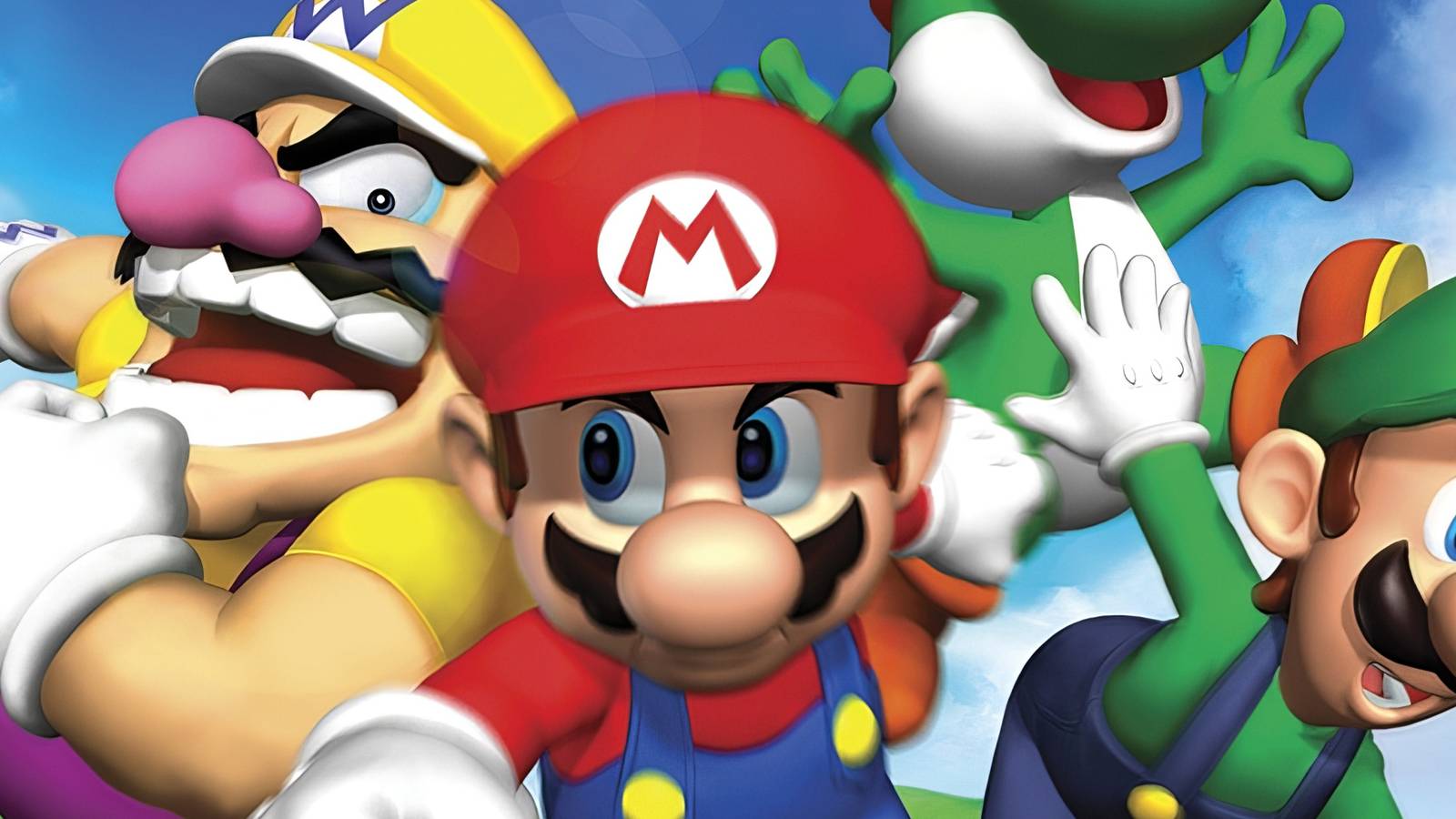
Image via Nintendo EAD Published Jul 30, 2026, 7:04 AM EDT Diego Pineda has been a devout storyteller his whole life. He has self-published a fantasy novel and a book of short stories, and is actively working on publishing his second novel. A lifelong fan of watching movies and talking about them endlessly, he writes reviews and analyses on his Instagram page dedicated to cinema, and occasionally on his blog. His favorite filmmakers are Andrei Tarkovsky and Charlie Chaplin. He loves modern Mexican cinema and thinks it's tragically underappreciated. Other interests of Diego's include reading, gaming, roller coasters, writing reviews on his Letterboxd account (username: DPP_reviews), and going down rabbit holes of whatever topic he's interested in at any given point. Sign in to your Collider account Video games are still a very young medium, which makes their evolution from the almost-comically primitive games of the '50s and '60s to the gargantuan AAA titles of today all the more admirable. But no matter how great or revolutionary they are, all of the best games being released nowadays stand on the shoulders of giants. Over the course of the medium's birth, boom, and evolution throughout the 20th century, many games were made which have proven to be massively influential as the years have passed. Whether that influence comes in the form of game-changing mechanics, technological innovations, new genre and design principles, or new industry standards altogether, the most influential games of the 20th century were all essential to gaming getting to where it is today. 10 'Half-Life' (1998) Image via Sierra Studios The debut product of famed developers, publishers, and hardware manufacturers Valve was Half-Life, a first-person shooter that also features prominent exploration and puzzle-solving. It spawned a highly prolific franchise, but not very many Half-Life sequels have ever been able to match the level of quality and impact of the original, one of those sci-fi games that are perfect throughout. Half-Life brought an unprecedented focus on narrative, physics, and never taking control away from the player. Half-Life 2 was also a technological marvel and could be counted among the most influential video games of the 2000s, but what Half-Life did for the FPS genre can hardly be put into words. Distancing itself from the arcade-style shooters that had characterized the genre for so long, Half-Life instead brought an unprecedented focus on narrative, physics, and never taking control away from the player. 9 'Pokémon Red' and 'Pokémon Blue' (1996) Image via Nintendo Nowadays, Pokémon needs virtually no introduction, seeing as it's the highest-selling media franchise of all time. But even the biggest giants have to start small at some point, and in this franchise's case, that start was two RPGs released by Nintendo for the Game Boy, Pokémon Red and Pokémon Blue. Both games were hailed by critics all across the board, and immediately kickstarted the Pokémon craze that still fills the world to this day. They're two of the most replayable Pokémon games, and for good reason. Aside from establishing a multi-billion-dollar media empire, Pokémon Red and Blue proved hugely influential thanks to their social multiplayer gameplay and the introduction of unprecedentedly deep handheld games. The cultural impact of these two masterpieces cannot be overstated. 8 'Pong' (1972) Image via Atari Arcade gaming was the grandparent of modern video gaming, and Atari was essential to arcade gaming entering the consumer market. It was Atari who developed and published Pong, created by Allan Alcorn as a training exercise assigned to him by Atari co-founder Nolan Bushnell. It's an abundantly simple two-dimensional game simulating a round of ping pong, a concept so simple that the game has actually aged beautifully. Pong was based on a game included with the first-ever home video game console, the Magnavox Odyssey, who actually later sued Atari for patent infringement. But while the Magnavox Odyssey may have originated the concept, it was Pong that was the first commercially successful game in history. Its influence in terms of gameplay, mechanics, or design stopped being felt very soon into video games' history, but its historical impact in making the game industry financially viable was massive. 7 'Space Invaders' (1978) Image via Taito Yet another instance of a '70s arcade game that made a huge splash at the time, Taito's Space Invaders is one of the best video games of the 20th century for its brilliant simplicity and infinite replayability alone. It was the very first fixed shooter and the very first game with endless gameplay, designed with cutting-edge new custom hardware and development tools. Where Pong proved that video games could be financially successful, Space Invaders proved that they could be a cultural phenomenon. People fell in love so deeply with its scaling difficulty, its infinite gameplay loop, and the blueprint it laid out for the action genre that the game famously triggered a shortage of 100-yen coins in Japan, because everyone and their grandmother wanted to check out Space Invaders and the revolutionary form of entertainment it had to offer. 6 'The Legend of Zelda: Ocarina of Time' (1998) Image via Nintendo EAD The Legend of Zelda has produced several of the greatest action-adventure video games in history, including the Citizen Kane of video games: The Legend of Zelda: Ocarina of Time, still regarded by some as the single greatest video game in history. But whether it is or isn't the best of all time is irrelevant; what's undeniable is that it's one of the most groundbreaking and influential games of all time. 3D gaming already existed by this point in time (all thanks to a certain other game on this list), but the way Ocarina of Time expanded on the concept is still hugely admirable to this day. 3D world design was made absolutely seamless, Hyrule proved that video game overworlds could be so perfectly interconnected that levels didn't need to be isolated anymore, and the introduction of Z-targeting was particularly revolutionary. 5 'Tetris' (1984) Image via Nintendo The experience of playing Tetris isn't a particularly deep one, but that's precisely what makes it one of the most genius video games ever made. It's mathematically perfect: You control a wave of four-block shapes and have to fit them together in a grid. This infinitely replayable gameplay loop (with a surprisingly high skill ceiling) makes it delightfully easy to just pick up Tetris for a quick five-minute round, enter flow state for the duration of that round, and then go right back to what you were doing. There's a ton of often-underappreciated value to games made with a pick-up-and-play design in mind, and Tetris proved that. It's a brilliant concept for such a shockingly simple game, making it one of the most perfect video games ever made. There's a ton of often-underappreciated value to games made with a pick-up-and-play design in mind, and Tetris proved that. Aside from turning handheld hardware into an international cultural juggernaut, this flawless gem of a game has also had an impact on virtually every single puzzle game that has been made since. 4 'Street Fighter II: The World Warrior' (1991) Image via Capcom It's astonishing that a game that has aged as poorly as the original Street Fighter produced a sequel that is, without exaggeration, the single most influential fighting game in the industry's history. Indeed, Street Fighter II: The World Warrior became the best-selling game since the Golden Age of arcade video games, and there are still active competitions taking place around the world to this day. That's because Street Fighter II is an absolute masterclass in making a timeless fighting game. It revitalized the then-lagging arcade game industry and laid the foundation for modern e-sports and competitive player-versus-player gaming culture. It's one of the best fighting video games ever made, a masterpiece of character and gameplay design that has aged like fine wine. 3 'Doom' (1993) Image via id Software There's an Internet running gag of Doom fans finding ways to port the game to virtually any and every piece of hardware that has a processor and a screen. That's only because it's a game worth porting to a smart fridge in the first place. It's the first-person shooter to end all first-person shooters, the single biggest and most important cornerstone of the shooter genre as a whole. It's one of those '90s video games worth playing over and over, and even though it definitely feels primitive when playing it today, that doesn't make it any less admirable of a game-changer. From its technological advancements, to its unprecedentedly fast pace, to its competitive multi-player, to the way it laid out the blueprint for FPSs going forward, calling Doom hugely influential would still be an understatement. 2 'Super Mario 64' (1996) Image via Nintendo The Nintendo 64 was one of the most revolutionary consoles of all time, and that's in no small measure because it was the home of the game that birthed true 3D gaming: Super Mario 64. Permeated by an aura of nostalgia, it's one of the most universally-beloved video games of all time, a cult classic that Nintendo fans still love exploring and diving deep into. But as fun as it is, Super Mario 64 was also massively influential. It technically wasn't the introduction of the third dimension to video games, but it was the first time that 3D gameplay had been truly and fully mastered, setting a new standard for the industry as a whole. Add to that its revolutionary sandbox level design, its groundbreaking controls and mechanics, and one of the most stunning hub worlds of the era, and it shouldn't be the last bit surprising that gaming was never the same again. 1 'Super Mario Bros.' (1985) Image via Nintendo It's only an ever-so-slight exaggeration to say that the video game industry would have died out without the release of Super Mario Bros. It, and the Nintendo Entertainment System along with it, single-handedly saved the North American home console industry from near-total extinction after the 1983 crash. And as if that weren't enough, the game also established the standard for modern level and game design. Playing it today, it definitely feels a bit dated in virtually all areas, but it's such a timeless concept that it's still one of the best video games of all time, the sort that everyone should play before they die. From its physics to its smooth side-scrolling to the way World 1-1 functions as a flawless textless tutorial, Super Mario Bros. wasn't just influential, nor just revolutionary: It was nothing short of transcendental. Collider Exclusive · Universe Personality Quiz Which Iconic Universe Do You Belong in the Most? Star Wars · Lord of the Rings · Harry Potter · Game of Thrones · Star Trek Five legendary universes. Five completely different visions of what the world could be — or already was. One of them is the world your instincts, your values, and your particular way of existing were built for. Eight questions will tell you which one. 🚀Star Wars 💍Lord of the Rings 🧙Harry Potter 👑Game of Thrones 🖖Star Trek FIND YOUR UNIVERSE → 01 What gives your life its deepest sense of meaning? Every universe is built around a different answer to this question. ABeing part of something larger than myself — a cause, a rebellion, a fight for freedom that outlasts me. BThe journey itself — the places I'll go, the companions beside me, the world I'll discover on the way. CLearning — unlocking what I'm capable of, understanding the world's hidden mechanics, growing into something more. DLegacy — the name I leave behind, the power I build, the mark I make before the world moves on without me. EUnderstanding — exploring what exists beyond the horizon and asking what it means to be alive in a universe this vast. NEXT QUESTION → 02 Which kind of world do you most want to inhabit? The environment shapes who you become. Choose carefully. AA galaxy of planets, each with its own culture — connected by conflict, trade, and the Force. BAncient lands of breathtaking beauty, deep history, and a creeping darkness at the edges. CA world hidden inside our own — full of wonder, community, and magic waiting to be learned. DA brutal, beautiful continent where power is everything and every alliance is a calculation. EA future where humanity has reached the stars — and must decide what kind of species it wants to be. NEXT QUESTION → 03 How do you prefer your conflicts resolved? The shape of a world's conflicts tells you everything about its soul. AThrough sacrifice and courage — someone has to make the impossible choice so others don't have to. BThrough fellowship — the impossible becomes possible when the right people walk the same road. CThrough growth — confronting what you fear, understanding what you lack, and becoming equal to the challenge. DThrough strategy — outthinking, outmaneuvering, positioning yourself so the outcome was never in doubt. EThrough dialogue — finding the third option, the peaceful resolution, the answer that doesn't require a body count. NEXT QUESTION → 04 Who do you want beside you when things get difficult? Your ideal companions reveal the world you were made for. AA small crew — a pilot, a rogue, a warrior — each broken in their own way, unbeatable together. BA fellowship of different kinds of people, bound by purpose and deepened by the long road. CFriends who grew up alongside me — who knew me before I knew myself, and stayed anyway. DAllies whose loyalty I've earned — and tested — and whose ambitions align with mine, for now. EA crew of brilliant, curious, principled people from every corner of known space. NEXT QUESTION → 05 What is your relationship with power? How you seek, wield, or resist power is the map of who you are. AI want to use it to protect — and I'm terrified of what I might become if I'm not careful. BI distrust it. The most important power in this story is the courage to give it up. CI want to earn it — through knowledge, through effort, through becoming someone worthy of it. DI want to wield it. Preferably before someone else decides to wield it against me. EI want to understand it — its structures, its limits, its ethical dimensions. Power without accountability is the real threat. NEXT QUESTION → 06 How does your universe treat good and evil? A world's moral architecture tells you more about it than any map. AThere is a dark side and a light side — and the choice between them is always present, always personal. BEvil is real and ancient and patient — and goodness, however small, is the only thing that can undo it. CGood and evil are real, but they live inside people — and people are complicated, always capable of both. DGood and evil are mostly a matter of perspective and proximity. Power is the only honest currency. EEvil is usually the result of ignorance, fear, or broken systems — and understanding it is the first step to solving it. NEXT QUESTION → 07 What role would you naturally fall into? Every universe has archetypes. Which one fits you without trying? AThe reluctant hero — ordinary origins, extraordinary moment, changed forever by the choice to act. BThe unlikely carrier — the one nobody expected to matter most, quietly bearing the weight of everything. CThe student — not yet who I'll become, learning through every mistake, growing into something the world needs. DThe player — sharp enough to see the game for what it is, ambitious enough to try to win it. EThe explorer — drawn to the unknown, driven by curiosity, most alive when standing somewhere no one has stood before. NEXT QUESTION → 08 What do you ultimately believe about the future? The answer to this is the clearest window into which universe already lives inside you. AThat hope is real — that even in the darkest galaxy, a new hope is always possible. CThat even the smallest person can change the course of the future, if they have the courage to try. CThat love and friendship and doing what's right will matter in the end, even when everything says otherwise. DThat the wheel keeps turning — that power shifts, winters end, and what endures is those willing to fight for it. EThat humanity — or whatever we become — is capable of extraordinary things, if we choose to be. REVEAL MY UNIVERSE → Your Universe Has Been Chosen You Belong In…Your answers point to the iconic universe your values, your instincts, and your particular way of seeing the world were built for. This is where you would find your people — and your purpose. Star WarsYou believe in the cause — in the idea that freedom is worth fighting for even when the odds are impossible and the empire is vast. You are drawn to the moral clarity of a universe where hope itself is a form of resistance. You'd find your people in the Rebellion — a ragtag coalition of true believers held together by conviction more than resources. Star Wars is fundamentally a story about ordinary people choosing to matter in an extraordinary conflict — and that is exactly your kind of story. The Force may or may not be with you. But the will to use it for something larger than yourself certainly is. Lord of the RingsYou understand, in the deepest part of yourself, that the journey matters as much as the destination — and that the world's beauty is worth protecting even at great cost. Middle-earth is a world of ancient wonder, deep friendship, and a darkness that only retreats when enough small acts of courage accumulate. You would thrive here because you value the fellowship more than the glory — the road more than the arrival. Tolkien's universe rewards patience, loyalty, and the willingness to carry something heavy across a very long distance. Those are not burdens to you. They are simply how you move through the world. Harry PotterYou believe that love, loyalty, and doing what's right are not naive sentiments — they are the most powerful forces in any world, magical or otherwise. The Wizarding World is a place of wonder hidden in plain sight, where learning is transformative and the bonds you form at school follow you into every battle. You would flourish here because you take both the magic and the friendships seriously — and you understand that one without the other is incomplete. Harry Potter's universe ultimately rewards those who choose to stand for something even when standing is terrifying. That choice — made quietly, without guarantee — is something you understand completely. Game of ThronesYou see the world clearly — its power structures, its hypocrisies, its brutal arithmetic — and you are not paralysed by that clarity. You use it. Westeros is a world that rewards intelligence, adaptability, and the willingness to understand that every alliance is also a negotiation. You would survive here — possibly thrive here — because you don't confuse the world as it is with the world as you'd like it to be. Game of Thrones is a story about what happens when the idealists and the realists collide. You are sharp enough to know which one lasts longer. Winter always comes. You are already prepared. Star TrekYou believe the future is worth building — that curiosity, cooperation, and the expansion of understanding are not just ideals but the most practical path forward for any civilisation. Star Trek is a universe where the questions matter as much as the answers, and where encountering something utterly alien is cause for wonder rather than fear. You would belong here because you are fundamentally optimistic about what intelligence and decency can achieve — while being honest about how hard that achievement is. The Federation is the universe's most ambitious thought experiment: what if we actually got better? You don't just hope that's possible. You think it's the only thing worth working toward. ↻ RETAKE THE QUIZ
10 Most Influential Video Games of the 20th Century
Full Article
Original Source
Read the full article at Collider →KhanList aggregates and links to publicly available news content. We do not host full articles from third-party sources. Always verify important information with original sources.