
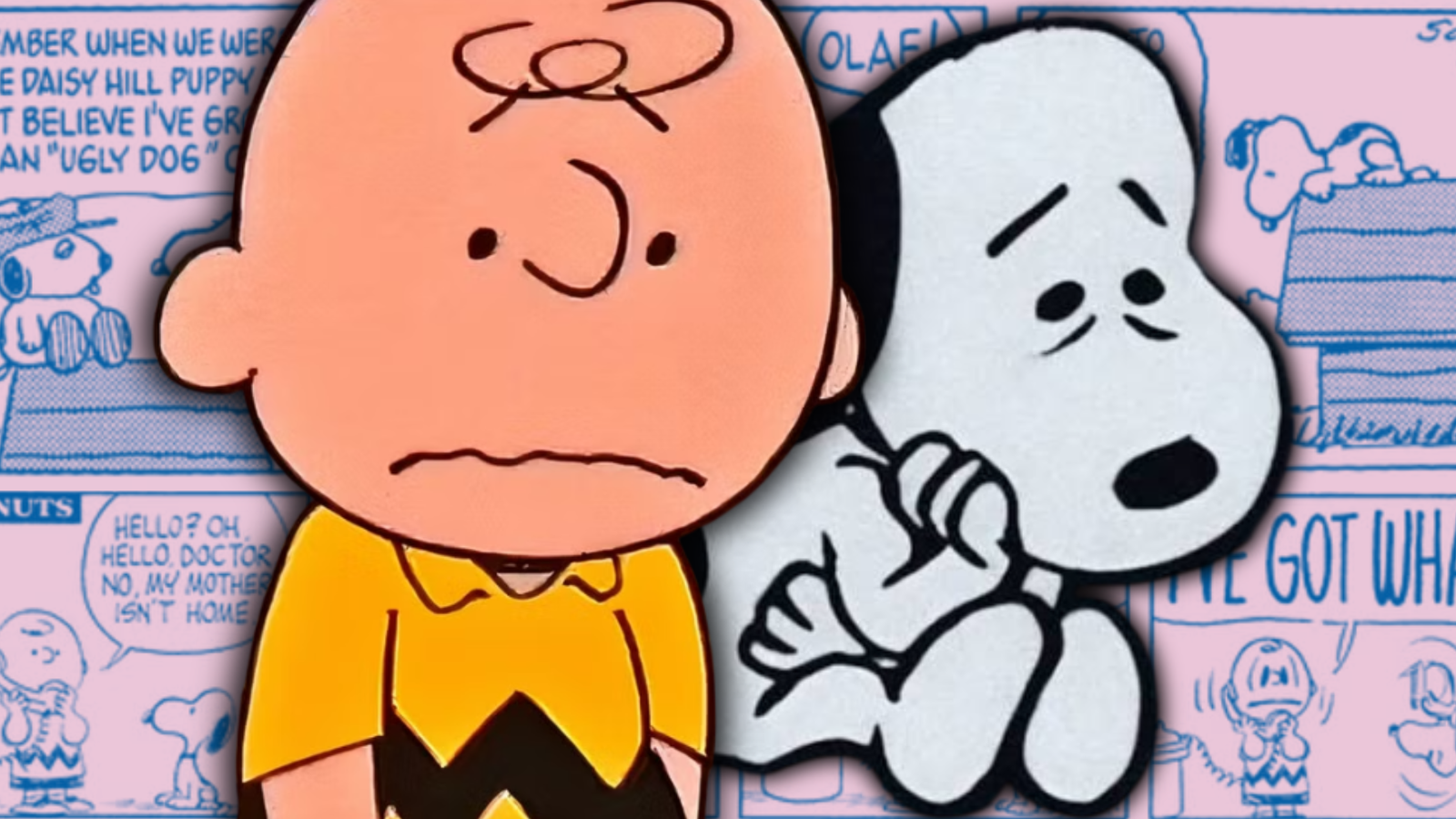
Custom Image by Hannah Diffey Published Sep 7, 2026, 10:00 AM EDT Hannah is a senior writer and self-publisher at ScreenRant. There, she focuses on writing news, features, and list-style articles about all things comics, books, anime, and manga. She works as a freelance writer in the entertainment industry, focusing on video games, anime, and literature. Her published works can be found on Screen Rant, FinanceBuzz, She Reads, and She Writes. Sign in to your ScreenRant account Peanuts has always been much stranger than its cheerful reputation suggests. Beneath Charlie Brown's failed kicks, Snoopy's elaborate fantasies, and Lucy's five-cent psychiatry booth, Charles M. Schulz repeatedly explored loneliness, anxiety, mortality, insecurity, and disappointment. The brilliance is that these subjects rarely arrive with dramatic music or heavy narration. Instead, Schulz slips them into four simple panels and lets the joke do the emotional damage. That mixture makes some Peanuts strips surprisingly bleak decades after they were first published. A child contemplating death, a kid left alone after school, or a lonely dog talking to a cactus might sound grim outside Schulz's world. Inside it, those ideas become comedy because the characters react with such blunt honesty. These are ten of the strip's darkest examples. 10 Charlie Brown's Midnight Existential Crisis This 1990 Peanuts strip begins with Snoopy unable to sleep and knocking on Charlie Brown's door. Charlie welcomes him into bed, assuming loneliness is the problem. Instead of simply comforting his dog, Charlie launches into a remarkably bleak meditation about lying awake in darkness, questioning existence, wondering why life matters, and thinking about whether anyone truly cares. The joke arrives when Snoopy's attention abruptly shifts to cookies. That contrast is classic Schulz: Charlie Brown is wrestling with enormous philosophical questions while Snoopy is thinking about snacks. What makes it depressing is how sincere Charlie's spiral feels before the punchline. The strip turns ordinary insomnia into a miniature crisis of meaning and isolation. 9 The Doctor's Call That Becomes Pure Nightmare Fuel The May 4, 1964, strip begins with Charlie Brown dealing with medical tests and waiting for results. His doctor calls after an X-ray, mentions another examination, and leaves Charlie visibly rattled. Schulz never tells readers exactly what the doctor says, which makes the scene more unsettling. The missing information forces imagination to fill the gap. The final panel does most of the emotional work. Charlie's enormous reaction, combined with Snoopy's alarmed expression and unusual body language, makes the phone call feel catastrophic. There is no tidy explanation and no reassuring punchline. Instead, Schulz creates comedy from Charlie's panic while leaving readers with the uncomfortable feeling that something terrible may have happened. 8 Peppermint Patty Faces Childhood's Latchkey Reality Peppermint Patty's three-strip latchkey storyline, beginning December 5, 1984, quietly introduces a very adult problem into the children's world. Patty explains that she goes home alone after school because her single father works. She treats the situation matter-of-factly, but the implication is anything but lighthearted: a child has learned to handle an empty house by herself. Her description of latchkey children as a “growing breed” gives the joke an unexpectedly social dimension. This is not merely a quirky fact about Patty. It suggests that many other children share the same experience. Schulz manages to make the strip funny through Patty's confidence while simultaneously highlighting the loneliness and responsibility placed on kids who have nobody waiting at home. 7 Linus Learns That Feeling Miserable Is Not So Easily Fixed Linus is usually one of the most thoughtful characters in Peanuts, but that intelligence often works against him. In a 1968 strip centered on his despair, he gives voice to the sort of gloomy thinking that Charlie Brown usually gets. His sadness is not presented as a dramatic crisis; instead, it emerges through an ordinary conversation that gradually becomes heavier than expected. Lucy, naturally, is the least convincing person imaginable to help. She proudly presents herself as a psychiatrist despite her questionable qualifications and frequently terrible advice. That mismatch creates the dark comedy. Linus genuinely wants emotional relief, while Lucy approaches suffering with the confidence of someone who absolutely should not be running a clinic. 6 Sally Discovers That Even the Stars Have an Expiration Date On June 9, 1963, Charlie Brown and Sally look at the stars while discussing how long celestial bodies last. Charlie explains that even stars eventually disappear, introducing Sally to mortality on a cosmic scale. The information is accurate enough to impress an older reader, but for Sally it immediately becomes emotionally devastating. Her reaction is one of the strip's most effective examples of childish innocence colliding with an adult truth. She is overwhelmed by the idea that something as beautiful and seemingly permanent as a star has an ending. Schulz does not need a complicated setup. A quiet nighttime conversation becomes a miniature existential horror story in four panels. 5 Spike's Desert Life Is Much Sadder Than the Cactus Joke Suggests Spike, Snoopy's brother, is often used for jokes about his isolated life in the desert. In a 1994 Peanuts strip, however, the familiar cactus gag takes on a more melancholy meaning. Spike's conversations with plants are funny precisely because he treats them like real companions, but the joke also exposes just how little human or animal company he has. That isolation makes Spike's situation surprisingly painful. He is not simply a bizarre character living somewhere unusual; he has effectively removed himself from the social world around Snoopy's family. Talking to a cactus becomes funny because it is absurd, yet it is also evidence of profound loneliness. Schulz lets the punchline and the sadness exist simultaneously. 4 Snoopy Loses His Doghouse Snoopy's doghouse catches fire in a memorable storyline, and the normally self-assured beagle is suddenly left without the little home that serves as the center of his universe. The premise sounds like classic slapstick, especially because Snoopy's possessions are so often treated as extensions of his elaborate imagination. October 2, 1950 – February 13, 2000 · 17,897 Strips How Well Do You Know Peanuts? “Good grief!” ⚾Charlie BrownGood Ol’ Chuck 🐕SnoopyThe Flying Ace 🧣LinusSecurity Blanket 🏈LucyPsychiatric Help 🐥WoodstockBest Friend PLAY BALL → 01 Before Peanuts launched in 1950, Charles M. Schulz drew a weekly cartoon panel for the St. Paul Pioneer Press. What was it called? ALi’l Folks BSmall Fry CThe Sandlot DJust Kids ✓ Correct! Li’l Folks ran from 1947 to 1950. When the syndicate renamed the new strip “Peanuts,” Schulz hated the title for the rest of his life. ✗ Not quite! It was Li’l Folks — and Schulz never forgave United Feature for rechristening his strip “Peanuts.” NEXT → 02 Which member of the gang is almost never seen without his security blanket — and waits every year in the pumpkin patch for the Great Pumpkin? ASchroeder BLinus van Pelt CPig-Pen DShermy ✓ Correct! Linus — Lucy’s little brother, the strip’s resident theologian, and the reason “security blanket” entered the dictionary. ✗ Not quite! It’s Linus van Pelt, whose blanket gave the English language the term “security blanket.” NEXT → 03 Schroeder hammers away at his toy piano in devotion to a single composer — whose bust sits on top of it. Who? AJohann Sebastian Bach BWolfgang Amadeus Mozart CLudwig van Beethoven DFrédéric Chopin ✓ Correct! Beethoven. Schroeder even observes Beethoven’s birthday every December 16 — while ignoring Lucy entirely. ✗ Not quite! It’s Beethoven — the one thing in the world Schroeder loves more than tuning out Lucy. NEXT → 04 When Snoopy climbs onto his doghouse in goggles and a scarf, he becomes the World War I Flying Ace — forever hunting which nemesis? AThe Cat Next Door BThe Head Beagle CThe Great Pumpkin DThe Red Baron ✓ Correct! The Red Baron — and the Sopwith Camel doghouse always goes down in flames, sending the Ace off to curse him in a French café. ✗ Not quite! It’s the Red Baron. Snoopy’s doghouse is a Sopwith Camel, and it never once wins the dogfight. NEXT → 05 Lucy runs a curbside psychiatric help booth out of a lemonade stand. What does she charge per session? A1¢ B5¢ C10¢ D25¢ ✓ Correct! Five cents, please. The nickel never went up in 50 years — and the advice was never once worth it. ✗ Not quite! It’s 5¢ — “The doctor is in.” Lucy held that price for half a century. NEXT → 06 Snoopy’s tiny yellow best friend went unnamed for years before Schulz finally christened him. What was he named after? AA brand of birdseed BSchulz’s hometown in Minnesota CThe 1969 Woodstock music festival DA character from a Beethoven opera ✓ Correct! Woodstock got his name in 1970, borrowed straight from the music festival held the summer before. ✗ Not quite! He’s named for the 1969 Woodstock festival — Schulz gave the bird the name in 1970, years after he first appeared. NEXT → 07 The jazz score for A Charlie Brown Christmas — including the immortal “Linus and Lucy” — was written by which musician? AVince Guaraldi BDave Brubeck CHenry Mancini DDuke Ellington ✓ Correct! Pianist Vince Guaraldi scored the 1965 special, and network executives were sure the jazz soundtrack would sink it. It became a permanent holiday fixture. ✗ Not quite! It’s Vince Guaraldi, whose trio gave Peanuts its unmistakable sound. NEXT → 08 Schulz drew every Peanuts strip himself for nearly 50 years. What made the final original Sunday strip — February 13, 2000 — so haunting? ACharlie Brown finally kicked the football BThe Little Red-Haired Girl was shown at last CIt was the only strip Schulz left unfinished DIt ran the morning after Schulz died ✓ Correct! Schulz died the evening of February 12, 2000 — and his farewell strip, signed off with “Charlie Brown, Snoopy, Linus, Lucy... how can I ever forget them,” appeared in papers the very next morning. ✗ Not quite! Schulz died on February 12, 2000 — hours before his own farewell strip ran in the Sunday papers. SEE YOUR SCORE → The Doctor Is In · Five Cents, Please Your Peanuts Report Card ⚾ / 8 Good grief — or good ol’ Charlie Brown? Either way, the football is still there. Wanna try again? ⤴ ONE MORE KICK Yet the image of Snoopy staring at the burned remains is genuinely heartbreaking. The doghouse is more than a prop: it is where Snoopy sleeps, dreams, writes, transforms into the World War I Flying Ace, and escapes reality. Seeing it destroyed strips away one of the safest constants in his life. The comedy lands, but so does the loss. 3 Charlie Brown Wonders Whether He Has Already Died During a late-1970s hospital storyline, Charlie Brown finds himself alone with far too much time to think. For most people, hospitalization would be stressful enough. For Charlie Brown, however, isolation immediately becomes fuel for catastrophizing. His thoughts move from worrying about his condition to contemplating death, eventually reaching the bizarre possibility that he may already be dead. That progression is funny because it is quintessential Charlie Brown logic: give him uncertainty and he will construct the worst possible explanation. Still, the joke contains a remarkably dark premise. A child in a hospital is left alone with thoughts about mortality, and instead of dismissing the idea, Schulz follows the spiral until it becomes an absurdly bleak punchline. 2 Charlie Brown's Loneliness Becomes a Running Joke One of the earliest turning points in Charlie Brown's characterization arrived on February 1, 1954, when loneliness became central to the character's identity. Earlier Charlie Brown was not yet the universally defeated figure audiences came to know. Schulz increasingly discovered the comedic possibilities of making one boy the target of life's little humiliations. That shift mattered because Charlie's sadness became more than an occasional gag. It became part of the emotional machinery of Peanuts. His disappointments, social awkwardness, and perpetual sense of being overlooked created endless comic scenarios, but they also gave the strip an unusual melancholy. Readers laughed because Charlie could not catch a break, then felt bad for laughing. 1 Olaf's “Ugliest Dog” Reputation Gets Disturbingly Dark Olaf, another of Snoopy's brothers, is repeatedly mocked for his appearance and even carries the cruel nickname “Ugly Olaf.” In a 1989 strip, those jokes take a much darker turn when Olaf becomes upset enough to attempt hurting himself. The situation is presented through the exaggerated logic of cartoon comedy, but the underlying idea is deeply uncomfortable. What makes the Peanuts strip especially grim is Olaf's admission that this is not his first attempt. Suddenly, the running joke about being unattractive has consequences. Schulz shows how constant ridicule affects the character rather than treating every insult as harmless. The result is a strange mixture of absurdity and sadness, with the laughter becoming increasingly uneasy as the implications sink in. TV Show(s) The Snoopy Show, Peanuts by Schulz First Film The Peanuts Movie Cast Christopher Shea, Kathy Steinberg, Bill Melendez, Sally Dryer, Peter Robbins, Noah Schnapp, Hadley Belle Miller, Mariel Sheets, Lisa DeFaria, Venus Omega Schultheis Created by Charles M. Schulz Movie(s) The Peanuts Movie, A Charlie Brown Christmas, A Boy Named Charlie Brown, Charlie Brown's All Stars!, A Charlie Brown Thanksgiving, It's the Great Pumpkin, Charlie Brown, It's the Easter Beagle, Charlie Brown Character(s) Charlie Brown, Snoopy, Lucy van Pelt, Linus van Pelt, Sally Brown, Pig-Pen, Marcie (Peanuts), Peppermint Patty, Woodstock
10 Most Depressing Peanuts Comics That Are Pure Dark Comedy
Full Article
Original Source
Read the full article at Screenrant →KhanList aggregates and links to publicly available news content. We do not host full articles from third-party sources. Always verify important information with original sources.