
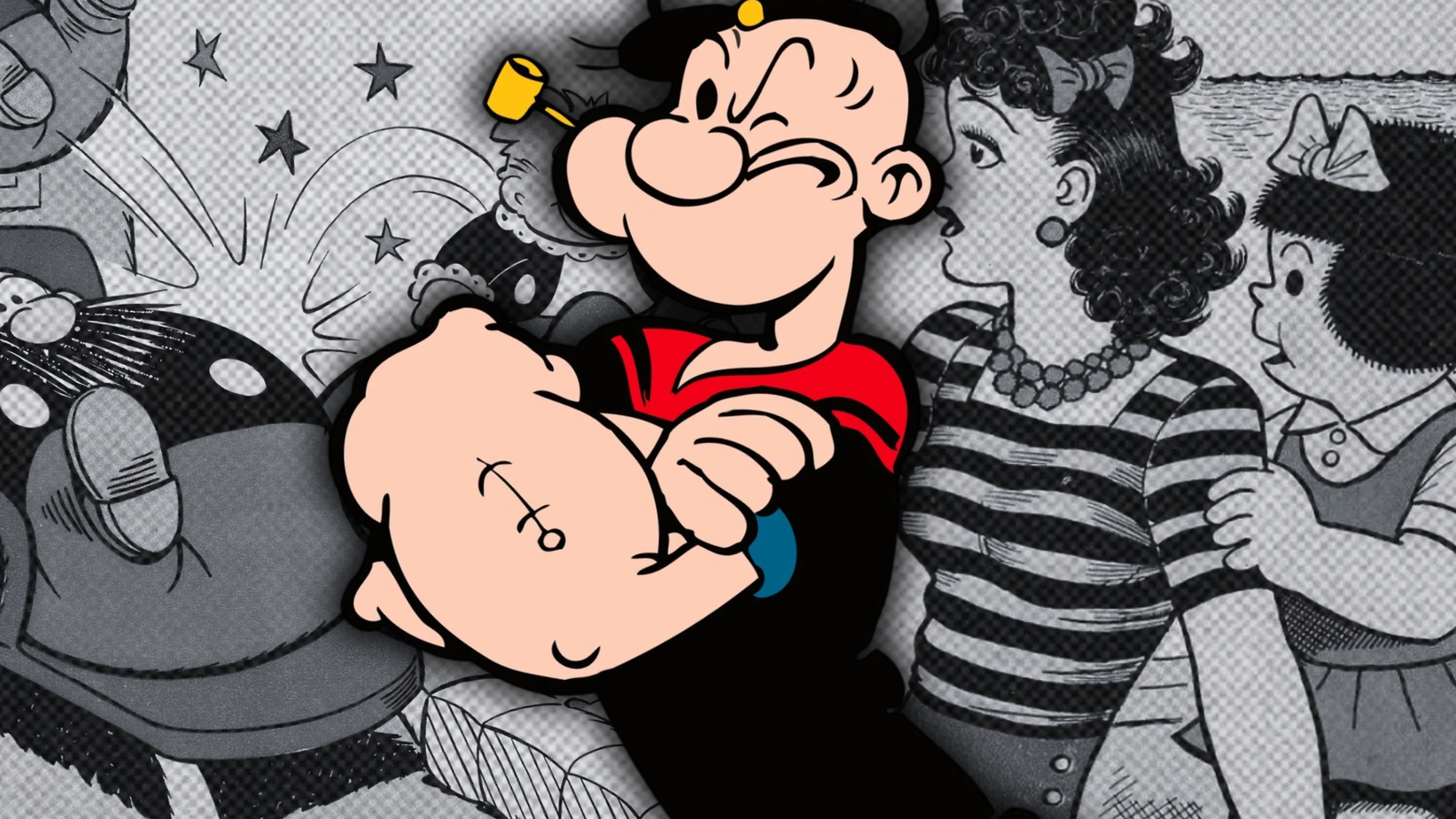
Published Nov 17, 2026, 6:00 PM EST Hannah is a senior writer and self-publisher at ScreenRant. There, she focuses on writing news, features, and list-style articles about all things comics, books, anime, and manga. She works as a freelance writer in the entertainment industry, focusing on video games, anime, and literature. Her published works can be found on Screen Rant, FinanceBuzz, She Reads, and She Writes. Comic strips have occupied newspaper pages for more than a century, and a surprising number have outlived the artists who created them. Some evolved from topical jokes into multigenerational family sagas, while others kept familiar characters in circulation through successive cartoonists. Their histories reveal how newspaper humor adapted to changing audiences, publishing habits and generations of readers. This selection combines exceptionally long publication histories with some of the most recognizable comics ever created. It is not a strict statistical ranking as The Far Side, for example, had a considerably shorter original run than the century-old newspaper classics. However, its influence, alongside the 50-year publication history of Peanuts, makes both important additions to any discussion of the medium's most long-lasting titles. 10 The Katzenjammer Kids (1897–2006) Rudolph Dirks launched The Katzenjammer Kids on December 12, 1897, in the New York Journal. Inspired by German illustrator Wilhelm Busch's Max and Moritz, the strip followed mischievous twins Hans and Fritz as they tormented adults. Its early use of speech balloons, sound effects and sequential action helped establish visual conventions that later comic strips adopted. The feature lasted through generations of cartoonists and changes in publishers, although a legal dispute eventually split its history. Dirks left Hearst and created a competing strip with the same characters, eventually titled The Captain and the Kids. New Katzenjammer Kids installments ended on January 1, 2006. King Features has continued circulating reprints rather than producing new episodes. 9 Gasoline Alley (1918–present) Frank King introduced Gasoline Alley on November 24, 1918, initially focusing on a group of automobile enthusiasts who gathered to discuss cars. Its premise changed dramatically in 1921, when bachelor Walt Wallet found an abandoned baby named Skeezix on his doorstep. That decision transformed a gag strip into an unusually ambitious chronicle of family life. Unlike most comic-strip characters, the residents of Gasoline Alley age as time passes. Readers have followed marriages, children, careers and old age across generations. King's successors included Dick Moores and Jim Scancarelli, who took over in 1986. The strip remains in publication, making it one of the oldest American newspaper comics still producing new material. 8 Barney Google and Snuffy Smith (1919–present) Billy DeBeck began Barney Google in July 1919 as Take Barney Google, F'rinstance. Its title character was a cigar-smoking sports fan who loved horse racing, poker and betting. The strip became popular enough to inspire a hit song in 1923, but its cast and focus changed considerably when DeBeck introduced another character during the following decade. Snuffy Smith arrived on November 17, 1934, bringing a rural setting and a different style of comic mischief. His growing popularity eventually pushed Barney into the background and gave the strip its familiar double-barreled title. Fred Lasswell, initially DeBeck's assistant, continued the comic after DeBeck's death in 1942. John Rose subsequently took over in 2001. 7 Thimble Theatre / Popeye (1919–present) E.C. Segar launched Thimble Theatre on December 19, 1919, years before its most famous character appeared. The early strip centered on Olive Oyl, her brother Castor and Olive's suitor Ham Gravy. Popeye entered the story on January 17, 1929, as a supporting character during an adventure involving a voyage to an island. The sailor quickly became the strip's biggest attraction, thanks to his distinctive speech, stubborn courage and extraordinary strength. Popeye's popularity was so overwhelming that many newspapers and readers began using his name for the feature. Segar died in 1938, but other cartoonists continued the property, keeping one of America's most recognizable comic characters in circulation. 6 Fritzi Ritz / Nancy (1922–present) The comic now known as Nancy began in 1922 as Fritzi Ritz, created by Larry Whittington. Ernie Bushmiller took over in 1925 and introduced Fritzi's niece Nancy in 1933. Readers quickly gravitated toward the outspoken youngster, and by 1938 the strip had been renamed Nancy to reflect its new main character. Bushmiller developed an instantly recognizable style built around crisp lines, economical backgrounds and carefully timed visual jokes. The strip has continued through several generations of cartoonists, despite a brief pause in the early 1930s. It currently appears in more than 100 newspapers, with Caroline Cash beginning her tenure on January 1, 2026. 5 Blondie (1930–present) Chic Young introduced Blondie on September 8, 1930, as a dating comedy about a carefree flapper and her wealthy boyfriend, Dagwood Bumstead. The strip found its lasting direction when the couple married on February 17, 1933. Dagwood was disinherited, and the feature shifted toward the everyday complications of married life and raising a family. That change gave newspapers a durable domestic comedy, complete with Dagwood's enormous sandwiches, frantic journeys to work and clashes with his boss, Mr. Dithers. Young continued the strip until his death in 1973, after which his son Dean and other cartoonists carried it forward. Blondie remains syndicated more than 96 years after its debut. 4 Dick Tracy (1931–present) Chester Gould's Dick Tracy debuted on October 4, 1931, introducing a hard-edged detective whose cases contrasted with the lighter family humor found in many newspaper comics. Gould built the strip around elaborate criminals, high-stakes investigations, and cool police technology. One of its best-known devices, Tracy's two-way wrist radio, appeared in 1946. Gould retired on December 25, 1977, after writing and drawing the strip for more than 46 years. Other creative teams continued the detective's adventures, preserving its combination of crime stories, unusual villains and gadgets. Dick Tracy is still in syndication, giving a character created during the Great Depression a place in modern newspaper comics. 3 Alley Oop (1932–present) V.T. Hamlin introduced Alley Oop on December 5, 1932, bringing a prehistoric caveman and his pet dinosaur Dinny to newspaper readers. The strip takes place in the fictional Kingdom of Moo, where Alley encounters characters including his girlfriend Ooola, friend Foozy and King Guz. Its original premise combined prehistoric slapstick with adventures involving dinosaurs and other unusual creatures. The strip briefly lost its original syndication after Bonnet-Brown folded in 1933, but the Newspaper Enterprise Association picked it up that August. Hamlin eventually introduced a time machine, allowing Alley to travel beyond the Stone Age and encounter different historical periods. The feature passed through several cartoonists and remains a recognizable example of adventure-oriented newspaper comics. 2 Peanuts (1950–2000) Charles M. Schulz's Peanuts debuted on October 2, 1950, in seven American newspapers. Its small cast of children and animals turned schoolyard worries, family tensions and everyday disappointments into a comic strip with surprising emotional depth. Charlie Brown, Snoopy, Lucy, Linus and the rest of the gang gradually became familiar figures far beyond the newspaper page. Schulz wrote, drew and lettered all 17,897 original strips himself, an extraordinary achievement across five decades. He announced his retirement in December 1999, and the final Sunday strip appeared on February 13, 2000, one day after his death. Reprints remain widely available, but no new original Peanuts newspaper strips have been produced since. 1 The Far Side (1980–1995) Gary Larson's The Far Side debuted in January 1980 and quickly stood apart from traditional newspaper comics. Rather than relying on recurring characters or multiframe stories, Larson usually delivered a complete joke in a single illustration. His surreal scenarios often involved animals, scientists, parents and children, with familiar situations pushed into bizarre and unexpected territory. Larson announced his retirement in October 1994, and the final syndicated cartoon appeared on January 1, 1995. Its original run lasted approximately 14 years, far shorter than most comics here, but its influence was considerable: it reached more than 1,900 newspapers worldwide and inspired numerous book collections. Its continued popularity makes it one of the most recognizable newspaper comics of its era.
10 Longest-Running Comic Strips Of All Time
Full Article
Original Source
Read the full article at Screenrant →KhanList aggregates and links to publicly available news content. We do not host full articles from third-party sources. Always verify important information with original sources.