
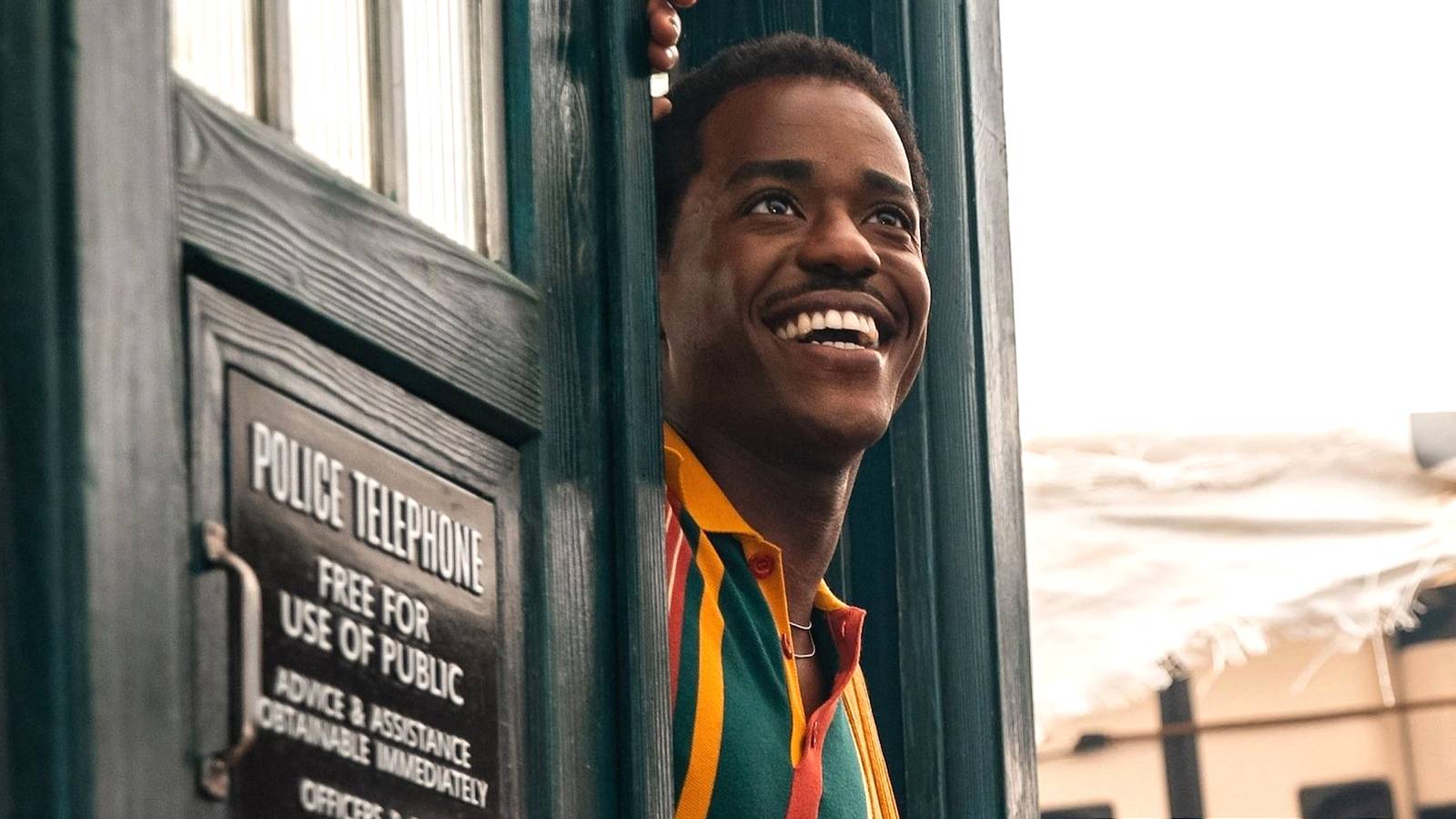
Image via Dan Fearon /©Disney+/BBC Studios/Bad Wolf/ Courtesy Everett Collection Published Sep 20, 2026, 6:59 AM EDT Diego Pineda has been a devout storyteller his whole life. He has self-published a fantasy novel and a book of short stories, and is actively working on publishing his second novel. A lifelong fan of watching movies and talking about them endlessly, he writes reviews and analyses on his Instagram page dedicated to cinema, and occasionally on his blog. His favorite filmmakers are Andrei Tarkovsky and Charlie Chaplin. He loves modern Mexican cinema and thinks it's tragically underappreciated. Other interests of Diego's include reading, gaming, roller coasters, writing reviews on his Letterboxd account (username: DPP_reviews), and going down rabbit holes of whatever topic he's interested in at any given point. Sign in to your Collider account Often, it's high-concept science fiction shows that end up being the best. These are shows driven by a single, easy-to-summarize "what if?" sort of premise, delivering serialized stories over the course of what can end up being several years. Indeed, some of the best long-running sci-fi shows ever ("long-running" here being considered any show that hit the 100-episode milestone at some point) were able to make a single bold idea last for years. Whether it's a foundational classic like The Twilight Zone or a more modern gem of high-concept sci-fi television like Person of Interest, these iconic series provide irrefutable proof that sci-fi television is often at its best when it's based on a single idea. That idea may seem simple at first, but these shows were so brilliant that they were able to flesh it out over the course of even several decades. 10 'Stargate Atlantis' (2004–2009) Image via SYFY Back in 1994, Roland Emmerich's sci-fi adventure film Stargate birthed the multimedia franchise of the same name, which would eventually lead to a massively successful television franchise that has aged like fine wine. Among the franchise's best shows is Stargate Atlantis, about a group of scientists and soldiers who discover that Atlantis is actually an ancient alien spaceship located in a distant galaxy. A group of people trapped inside a high-tech floating fortress in deep space without any apparent way of returning home? It's a pretty easy-to-grasp concept that allowed Stargate Atlantis to have plenty of gas in the tank over the course of 100 episodes and five seasons. Riveting lore, compelling characters, and exceptionally tight plotting are what have allowed this 2000s gem to remain one of the decade's most widely beloved sci-fi shows. 9 'Smallville' (2001–2011) Image via The WB Superman before he became Superman. It's one of the most remarkably simple premises a high-concept sci-fi show has ever been built on, but one with such rich source material to pull from that it shouldn't be surprising that Smallville stayed on the air for 10 seasons and a whopping 217 episodes. It is, all in all, one of the best coming-of-age superhero shows of all time. Some genre purists are opposed to the superhero genre being considered science fiction, but the elements are all there in Smallville's favor—and it's one of the best sci-fi shows of the 2000s, at that. By exploring Clark Kent's life as a grounded coming-of-age drama, Smallville put a twist on the usual superhero story formula, which allowed it to become one of the most beloved "monster of the week" shows of its era. 8 'Stargate SG-1' (1997–2007) Image via Showtime As great and worthy of praise as Stargate: Atlantis is, there's really not much of a question regarding what the best Stargate show is: It has to be Stargate SG-1, easily the most successful and prolific show in the entire franchise. Portal sci-fi at its best, this classic is about a military team using an ancient alien ring portal to explore the universe. It's the textbook definition of a high-concept premise, one so full of potential that Stargate SG-1 remained on the air for 10 seasons and 214 episodes, never becoming any less entertaining. The show always understood that it didn't need to spend hours explaining a new alien culture, which let it constantly raise the stakes and keep exploring everything that made its overarching world so fascinating. 7 'Fringe' (2008–2013) Image via FOX Fringe is one of the most brilliant and addictive science fiction TV shows that the small screen has seen in years. The idea? An FBI agent teams up with a mad scientist and his estranged son to investigate a series of bizarre, science-based crimes. But what began as a more episodic, "case of the week"-type show à la The X-Files soon transformed into something far more serialized. But while it became less episodic as it went on, Fringe always respected and stuck close to its high-concept roots, which allowed it to remain one of the best spooky cop shows on television for five seasons and a total of 100 episodes. Its high-concept premise made it hugely accessible, and the way its story evolved over the course of its run made it deeply compelling. Come for the cool sci-fi elements, stay for the wonderfully written story. 6 'Person of Interest' (2011–2016) Image via CBS Created by Jonathan Nolan, Person of Interest has long been widely regarded as one of the greatest sci-fi thrillers not just of the 21st century, but arguably even of all time. It is, at the very least, one of the best sci-fi shows with only five seasons, following a former assassin and a billionaire who use a mass-surveillance supercomputer to stop violent crimes before they happen. Just like Fringe, though, Person of Interest is yet another instance of a show that used a hugely accessible high-concept hook to Trojan-horse a surprisingly complex and intricate sci-fi masterpiece onto traditional network television. Through it all, though, the series remains fiercely loyal to its main idea and all of its philosophical and political implications, which allowed it to run for an admirable 103 episodes. Collider Exclusive · Sci-Fi Personality Quiz Which Sci-Fi Hero Are You Most Like? Paul Atreides · Captain Kirk · Princess Leia · Ellen Ripley · Max Rockatansky Five iconic heroes. Five completely different ways of facing an impossible universe. One of them shares your instincts, your values, and your particular way of refusing to back down. Eight questions will tell you which one. 🏜️Paul Atreides 🖖Capt. Kirk ✊Princess Leia 🔦Ellen Ripley 🔥Max Rockatansky FIND YOUR HERO → 01 How do you lead when the stakes couldn't be higher? The way you lead under pressure is the most honest thing about you. AI absorb everything — every variable, every pattern — and move only when I know the path forward. BI read the room, make the call, and own the consequences. Hesitation costs more than mistakes. CI rally people. A cause needs a voice, and I refuse to let fear be louder than conviction. DI assess the threat, establish what needs doing, and get it done without waiting for permission. EI don't lead. I act. Others can follow or not — I'm already moving. NEXT QUESTION → 02 What is your greatest strength in a crisis? The quality that keeps you alive when everything else fails. APrescience — the ability to see further ahead than anyone else and plan accordingly. BImprovisation — I'm at my best when the plan falls apart and I have to invent a new one. CConviction — I know what I'm fighting for, and that certainty doesn't waver under fire. DComposure — I stay functional when everyone around me is falling apart. Panic is a luxury. EEndurance — I outlast things. I take the hit and keep moving long after others have stopped. NEXT QUESTION → 03 What is the thing you'd sacrifice everything else for? Your deepest motivation is your truest compass. AThe survival and dignity of my people — even if I have to become something frightening to ensure it. BThe safety of my crew — every single one of them. No one gets left behind. CFreedom — for my people, for every world still crushed under the weight of an empire. DThe truth — what actually happened, what's actually out there, whether anyone believes me or not. EThe one person — or the one memory — that still makes any of this worth surviving for. NEXT QUESTION → 04 How do you relate to the people around you? Who you are to others under pressure is who you really are. AWith intensity and distance — I care deeply, but the weight I carry makes closeness complicated. BWith warmth and irreverence — I take the mission seriously, not myself. CWith directness and trust — I say what I mean, and I expect the people I work with to rise to it. DWith professional care but clear limits — I'll protect you, but I won't pretend we're family. EWith wariness that slowly becomes loyalty — I don't trust easily, but when I do, it holds. NEXT QUESTION → 05 You're facing a threat that no one else believes is real. What do you do? How you respond when you're the only one who sees it defines everything. APrepare in silence. If they won't listen, I'll be ready when they finally have to. BKeep pushing until someone listens — and if no one does, handle it myself. CBuild the case, find the allies, and make the threat impossible to ignore. DDocument everything. The truth matters even if no one believes it yet. EStop trying to convince anyone. Survive it. That's the only argument that counts. NEXT QUESTION → 06 What has your heroism cost you personally? Every hero pays. The question is what — and whether they'd pay it again. AMy innocence — I've seen what I'm capable of, and I can't unsee it. BPeople I loved — the command chair has a view, but it's a lonely one. CA normal life — I gave up everything ordinary the moment I chose the cause. DMy sense of safety — I know exactly what's out there now, and I can't pretend otherwise. EAlmost everything — and I'm still not sure what I'm carrying it all for. But I keep going. NEXT QUESTION → 07 How do you feel about the rules of the world you're in? Every hero has a relationship with the system. What's yours? AI understand them deeply — and I know exactly which ones must be broken, and why. BI respect the spirit of them and bend the letter when the situation demands it. CThe system is the problem. I'm not here to work within it — I'm here to dismantle it. DI follow protocol until protocol stops being useful. Then I make the call myself. EThe rules collapsed a long time ago. What's left is instinct, and mine are reliable. NEXT QUESTION → 08 When everything is on the line, what keeps you going? The answer is the most honest thing about you. ADestiny — or something that feels so much like it that the difference no longer matters. BThe people on my ship — their faces, their trust, the fact that they're counting on me. CThe belief that what we're fighting for is worth every sacrifice, including this one. DSheer refusal to let it win — whatever it is. I don't stop. That's just who I am. EI'm not sure anymore. But the road is still there, and I'm still on it. REVEAL MY HERO → Your Hero Has Been Identified Your Sci-Fi Hero Is…Your answers point to the iconic sci-fi hero who shares your instincts, your values, and your particular way of facing the impossible. Paul AtreidesYou carry a weight most people would crumble under — the knowledge of what you're capable of, and the burden of what you might have to become. You see further ahead than others and you plan accordingly, even when the vision frightens you. You are driven by loyalty to your people and a sense of destiny you didn't ask for but can't escape. Paul Atreides is not simply a hero — he is someone who understands the cost of power and chooses to bear it anyway. That gravity, that willingness to carry what others won't, is exactly you. Captain KirkYou lead with instinct, warmth, and an absolute refusal to accept a no-win scenario — because you've always believed there's a third option nobody else has thought of yet. You take the mission seriously without ever taking yourself too seriously. Your crew would follow you anywhere, not because you demand it, but because you've earned it. Kirk's genius isn't tactical — it's human. He reads people, bends rules with purpose, and wills outcomes into existence through sheer conviction. That combination of warmth, audacity, and relentless optimism is unmistakably yours. Princess LeiaYou are the kind of person who holds the line when everyone else is losing faith — not because you're fearless, but because giving up simply isn't something you're capable of. You lead through conviction. Your voice carries because your belief is unshakeable. You gave up everything ordinary the moment you chose the cause, and you've never looked back. Leia is not a supporting character in her own story — she is the moral centre of the entire rebellion. That same fierce, principled, unbreakable core is what defines you. Ellen RipleyYou are not reckless, not grandiose, and not particularly interested in being anyone's hero — you just refuse to stop when it matters. You see threats clearly, you document the truth even when no one listens, and when the time comes you handle it yourself. Ripley's heroism is earned, not performed. She doesn't have a speech — she has a flamethrower and a plan. You share her composure under the worst possible pressure, and her refusal to pretend the monster isn't there. When it counts, you don't flinch. That's everything. Max RockatanskyYou have been through fire that would break most people — and what came out the other side is something the world underestimates at its peril. You don't ask for help, don't need validation, and don't wait for anyone to tell you the rules no longer apply. Your loyalty, when it finally arrives, is absolute — but it's earned in silence and tested in action, not in words. Max is not a nihilist. He is someone who lost everything and found, against his will, that he still has something worth protecting. That bruised, stubborn, ultimately human core is exactly yours. ↻ RETAKE THE QUIZ 5 'Star Trek: The Next Generation' (1987–1994) Image via Paramount Television Back in 1966, Gene Roddenberry's Star Trek: The Original Series birthed one of the most immensely successful and universally beloved multimedia sci-fi franchises in history. Years later, Paramount tasked him with creating a new series set in the same universe. The result of that task was Star Trek: The Next Generation, generally regarded as the best show in the whole Star Trek franchise. It's a workplace drama in a sci-fi setting with the sort of optimistic, highly philosophical views of the future that make the Star Trek franchise so special. It's a high concept of tremendous thematic intricacy, one so layered and so timeless that The Next Generation's seven seasons and 178 episodes are still endlessly rewatchable gems today. 4 'Futurama' (1999–Present) Image via Hulu One of the genres that lend themselves most perfectly to a high concept that allows them to run for decades on end is the sitcom genre, which makes it unsurprising that a sci-fi sitcom as delightful as Futurama is still on the air. It's one of the most perfect sci-fi shows of the last 30 years, an animated classic that still continues to be perfectly charming all these many years later. While many animated sitcoms end up jumping the shark in one way or another years into their runs, Futurama has managed to stay fresh, funny, and entertaining over the course of 11 seasons and 176 episodes. It's all thanks to the brilliant simplicity of its downright faultless premise, following a pizza delivery boy from 1999 who's accidentally cryogenically frozen and awakes in the year 3000. 3 'The X-Files' (1993–2018) Image via FOX The X-Files is one of the most foundational and hugely influential classics in the history of science fiction television, a procedural that's still among the most fun shows of the 1990s. The concept? An FBI agent who believes in the paranormal and a skeptical medical doctor are paired together, investigating the government's hidden vault of supernatural secrets. The result? One of the biggest cult classics in the history of television. Indeed, The X-Files only keeps getting better and more timeless as it ages, and that's all thanks to how its high-concept premise allowed it to become one of the biggest pop-cultural phenomena of the '90s. The duality and chemistry between Mulder and Scully were the perfect anchor for that fresh idea, which is how the show was able to stay fresh for 218 episodes over the course of 11 seasons. 2 'The Twilight Zone' (1959–1964) Image via CBS If there is a single show worthy of being deemed the single most influential sci-fi series in history, it's almost undoubtedly Rod Serling's The Twilight Zone, one of the most essential sci-fi shows to watch before you kick the bucket. With it, Serling completely revolutionized both sci-fi television and the anthology television format as a whole. We're talking about five seasons and a total of 156 episodes, and though The Twilight Zone was definitely not without its share of dud episodes, many of them have gone down in history as some of the most memorable in the history of 20th-century sci-fi TV. Twilight Zone didn't invent anthology television, but it completely redefined it and crafted the undeniable blueprint for high-concept television. The medium as a whole was never the same again. 1 'Doctor Who' (1963–Present) Image via Disney+ It seems that, for now, Doctor Who is going back to sleep after its 2005 and 2023 revivals (which followed the hiatus that began in 1989) ran their course. However, with it being over 60 years old, nearly 1,000 episodes long, and technically still not canceled, it's officially the longest-running science fiction show in history by a pretty decent margin. The premise? An alien traveling through space and time with several different companions, who has the ability to regenerate into a new body after death. The very concept of regeneration only came up as a clever little trick to replace the original lead, William Hartnell, without having to cancel the series, and it's likely that the writers who came up with the idea couldn't have possibly foretold that it would allow Doctor Who to remain such a timeless, long-lasting pillar of sci-fi pop culture. Doctor Who Release Date 1963 - 1989-00-00 Network BBC One, BBC Television Cast Barry Jackson Gordon Lowery
10 Long-Running Sci-Fi Shows That Made One Brilliant Idea Last for Years
Full Article
Original Source
Read the full article at Collider →KhanList aggregates and links to publicly available news content. We do not host full articles from third-party sources. Always verify important information with original sources.