
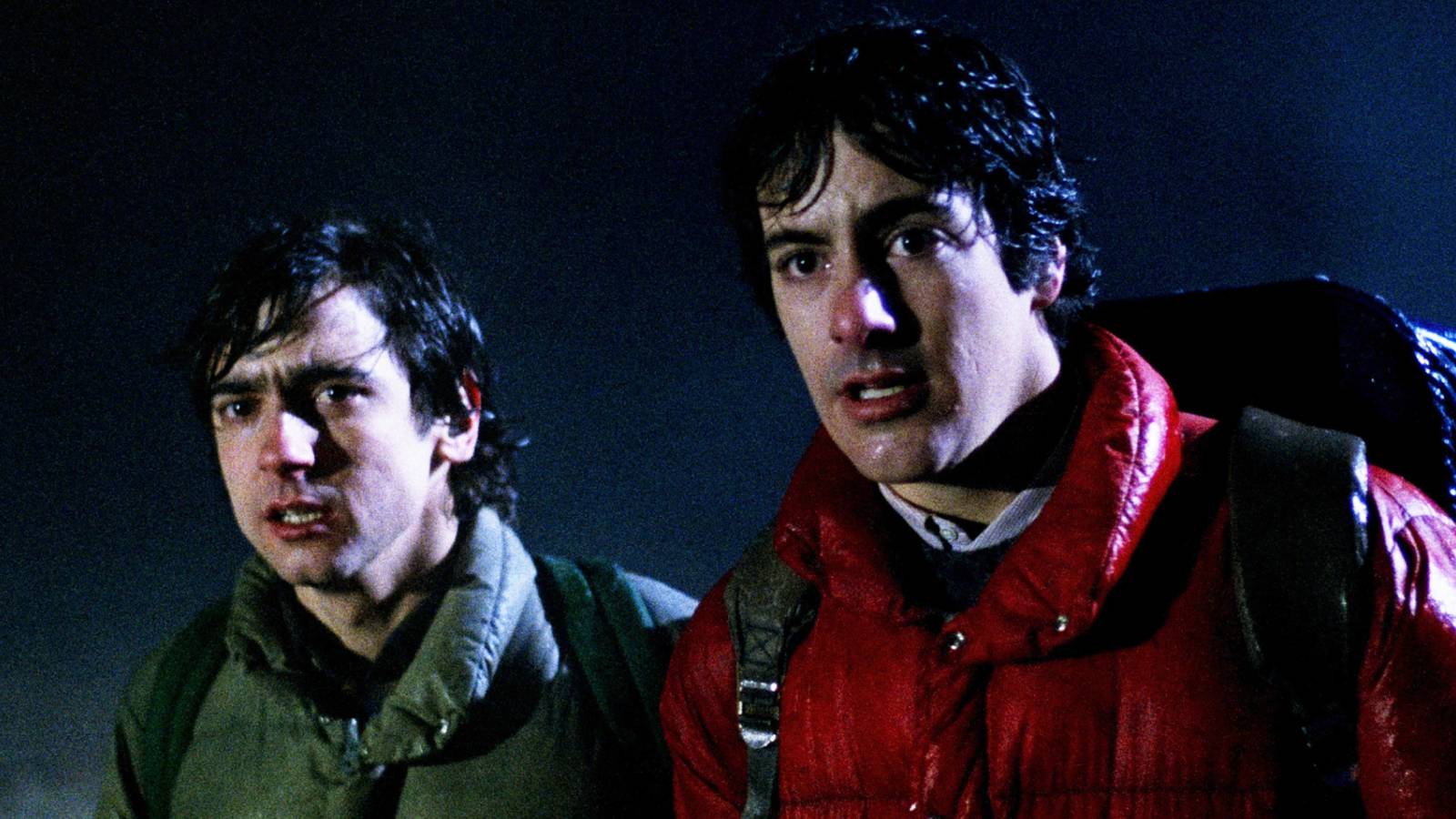
Image via Universal Pictures Published Oct 13, 2026, 5:43 AM EDT A New York native, Joe graduated from an avant-garde theater school upstate, where he was obsessed with sketch comedy. There, he and his lunatic friends founded The Sketchies — which still lives on at Skidmore College today. Living in New York City, a screenwriter friend of his then taught him how to write for film. This awakened a new passion in Joe. Since then his scripts have garnered over 200 festival selections, nominations, and wins all over the globe (including the BlueCat Best Feature award). Several of his screenplays have been made into feature films — some of them not that bad! Overall, he loves to create unique, hilarious, touching, and bizarre stories. Sign in to your Collider account Everyone in the horror community knows that The Exorcist, Halloween, and Jaws are just a handful of the classic horror movies that are considered virtually flawless. This list explores a bunch of those quintessential breeds as well as a few of the lesser talked-about horror films that are perfect nonetheless — that all open with a bang and close with a jaw-dropping, pants-wetting finale. From entries in the body horror sphere, such as the legendary The Thing, to films considered political horrors, like Under the Shadow, here are ten scary movies that thrill from their ominous opening scenes until their end credits creep onscreen. Perfection is only objectively possible in mathematics, but these eerie movies all add up to some seriously scary good times. 'Creepshow' (1982) Image via Warner Bros. Horror anthology films can be fun, but typically have their share of flaws. They can feel disjointed, tonally all over the place — and the lack of a central narrative can cause viewers to not be that invested. And then, there’s director George A. Romero and writer Stephen King’s Creepshow. The reason this film works is not only because it is firing on all the creepy cylinders needed to drive a horror film, but because the framing device is perfectly suited for a freaky flick: a scary comic book. With eerie animation galore, this five-chapter anthology is the perfect combo of horror and comedy, from the first frame to the last. The film opens with a naughty little boy, Billy (Joe Hill, King’s real-life son!) who loves horror comic books, but his overbearing, borderline abusive dad, Stan (Tom Atkins), isn’t having it. Anyway, lil Billy squirrels away with a comic, and we see the animated pages give way to live action. It’s such a cool transition each time. The first story involves a zombified dad who longs for the “Father’s Day” cake he never received. The next focuses on a hick, Jordy (King) and his newly discovered meteorite in “The Lonesome Death of Jordy Verrill.” The third installment is about an unfaithful wife, Becky (Gaylen Ross) and her pretty boy lover, Harry Wentworth (Ted Danson!), who are discovered by Becky’s wealthy husband, Richard Vickers (Leslie Nielsen!), who then buries them in the sand and lets the tide roll in…in “Something to Tide You Over.” The fourth, and most beloved, portion is titled “The Crate,” where a university professor finds an old box with a special surprise in it — especially for his hilariously verbally abusive wife, Wilma (Adrienne Barbeau). Finally, the fifth segment follows a reclusive, cantankerous, rich old guy who lives in an ivory tower…that soon becomes overrun with the most revolting of vermin, in “They're Creeping Up on You.” Naturally, the opening tale comes to a satisfyingly sinister conclusion, with the tyke exacting revenge on his overly stern pop with a voodoo doll. With laughs and chills to spare, this creeptastic collection is the perfect example of 80s horror fun — it’s even got monster makeup artist maven Tom Savini in a great cameo. 'Pet Sematary' (1989) Image via Paramount Pictures There are very few movies that feature a cat that’s actually terrifying. Pet Sematary, based on the chilling Stephen King novel (he also wrote the screenplay), not only has a scary cat, it’s also got a scary kid and a scary mom. Fully illustrating the point that while we may be tempted to defy the natural order, it always finds a way to right itself (summarized perfectly by Fred Gwynne as Jud Crandall, “Sometimes dead is betta”). Louis Creed (Dale Midkiff) is a doctor who’s just moved his family to the boonies of Maine so he can work as a physician at the local college. The only problem is that a major road runs right through their idyllic section of town, and long-haul truckers populate (and speed through) this stretch of asphalt. When the family pet cat, Church, is made a victim of the road, the Creed’s kindly old neighbor, Jud, shows Louis a way to “resurrect” the kitty: a pet cemetery. Allegedly built on a Native American burial site that contains the power to give the dead another shot at life, Jud and the good doctor bury Church — and he comes back. Only, different. So, it’s only a matter of time before Louis’s son, Gage (Miko Hughes, who is somehow able to be simultaneously adorable and horrifying) is hit by a truck and Doc utilizes the sacred soil once again…only, now, he really sees just how “sour” it has become. Everything in director Mary Lambert’s movie is terrifying, and if you think the cat and kid are bad, just wait until you see the ghastly sister Zelda (Andrew Hubatsek, a dude in crazy scary makeup). 'The Invisible Man' (1933) Image via Universal Pictures When someone is asked what superhero power they would love to have, and they quickly answer, “Being invisible,” one immediately should be suspicious of their motives (and tastes in general). Indeed, nobody does anything “positive” under the cloak of invisibility. This is evocatively evidenced in the classic horror movie The Invisible Man, where an ambitious scientist discovers the exact chemical compound to turn himself fully transparent, and then loses his mind (always read the label for side effects…) and wreaks havoc on all in his path. The H.G. Wells story turned James Whale-directed movie follows Dr. Jack Griffin (Claude Rains, later of Casablanca fame), a man with a brilliant brain…and slightly compromised morals. His serum “monocaine” (sounds like a prescription drug combined with a recreational one...) works all too well in turning him as clear as a glass of Crystal Pepsi, but also makes him grandiosely homicidal. The other problem is that he now can’t return to normal, and has to cover himself in gauze to be seen (plus he dons those rad sunglasses, which simultaneously hide his lack of eyes and also make him look like a badass). For its day, this movie was as frightening as it was innovative. Rains’s physicality alone was spectacular; his movements truly inspire fear with every little jerk and twist. 'The Bride of Frankenstein' (1935) Image via Universal Pictures Some classic horror fans contend that Frankenstein is the best film born from the renowned Mary Shelley story, while others argue that the sequel, The Bride of Frankenstein, is the superior film. Regardless of where this movie lands on one’s personal list of the best horror movies ever jolted to life, Bride is one heck of a wild, thought-provoking ride. Directed by the John Carpenter of his day, James Whale, the story picks up where the original left off (and actually incorporates one of the ideas that popped up in the novel that was never followed through on in the first film). The Monster (Boris Karloff, masterfully reprising his universally celebrated role), and his master, Henry Frankenstein (Colin Clive) — plot twist — somehow survived the angry villager arson kerfuffle. The Monster hints (grunts) at the fact that he really should be given a babe to spend his reanimated days with (there’s also a delightfully weird sub-plot with Dr. F’s contemporary, the enterprising physician Doctor Pretorius (Ernest Thesiger), who’s been growing lil’ humanoids in bottles). Doc Frank (against his better judgment) cobbles together a lovely creature for the Monster…but, like most arranged marriages, there is some friction. The Bride, aka The Monster’s Mate (Elsa Lanchester, who gave Karloff a true run for his money with her indelible performance), with her fabulous perm, is initially repulsed by the crude visage of the monster — who doesn’t take rejection well and burns it all down for good. With even deeper themes of humanity’s most salient desires and fears, this film delves into the most profound crevasses of the abyss of the mind. And, again, great Halloween costumes. 'The Thing' (1982) Image via Universal Pictures Paranoia. That’s the main theme of John Carpenter’s The Thing (a remake of a fairly decent movie, The Thing from Another World), and it’s explored in every conceivable way possible. Filmed during the height of nuclear war panic, when dread of an “outside attack” was omnipresent, this cleverly devised film captures a group of people whose most horrific fears actually come true. The story is set in the Antarctic, at a remote U.S. scientific base. Here works a diverse collection of men, from all different backgrounds, with one thing in common: a dread of the unknown. Led by MacReady (Kurt Russell), they realize that a lethal entity is among them, that is capable of copying any living organism. Now, the group has no way of knowing if anyone is who they outwardly purport to be. Now, let’s get to the actual thing itself. Conjured up and executed by Rob Bottin, (with an assist from the well-established horror FX innovator Stan Winston) a young SFX maverick, the practical effects achieved in this film were revolutionary — and have become legendary. The “thing” morphs from dog to human, all while revealing hints at its true, intergalactically disgusting self. This movie is a masterpiece, from the opening sequence of a barren space-scape, with an ominous spacecraft floating by, to the closing shot of MacReady and Childs (Keith David), the sole survivors, sitting alone in an icy landscape and facing certain death…still unsure of the real identity of the other. It’s a chilling commentary on how we can never really trust anyone else. Yeesh. Bleak, but oh-so-well-done. Collider Exclusive · 8 Questions · 2 Minutes What Is Your Biggest Horror Nightmare? Elm Street · Chucky · Scream · The Conjuring Four horror franchises. Four completely different ways of scaring you. One waits until you fall asleep. One makes sure nobody believes you. One is already in your group of friends. And one is in the house with your family. Answer eight quick questions about how you actually watch horror, and find out which nightmare was built for you. 😴Elm Street(Freddy Krueger) 🧸Chucky(Child's Play) 📞Scream(Ghostface) 🕯️The Conjuring(The Warren Files) FIND YOUR NIGHTMARE → 01 Which horror scene makes you cover your eyes? Four classic images. One of them is worse than the others for you. ASomebody falling asleep when they really should not. BA toy that has moved, and nobody touched it. CA phone ringing in an empty house. DA child talking to somebody who is not there. NEXT QUESTION → 02 You are home alone and you hear a noise. First thought? Everybody has one. It arrives before you have decided anything. AI am exhausted and my mind is playing tricks on me. BSomething in this room is not where I left it. CSomebody is in here with me. DThis house has never felt entirely right. NEXT QUESTION → 03 Which horror movie rule would you break first? Everybody thinks they would survive. Almost nobody actually does. ANever fall asleep. BNever leave it out of your sight. CNever answer the phone. DNever go down to the basement. NEXT QUESTION → 04 Something genuinely frightening happens. What do you do? Not in a film. In your actual living room, tonight. AConvince myself I imagined the whole thing. BTell someone, and brace for them not believing me. CWork out which person I know could be behind it. DGet everybody in the house into one room. NEXT QUESTION → 05 How do you actually watch a horror film? Be honest about this one. Nobody is checking. AFine during. Wide awake at two in the morning. BShouting at the screen that nobody is listening. CCalling the twist out loud before it lands. DThrough my fingers, holding on to something. NEXT QUESTION → 06 Somebody offers you serious money. Which do you still refuse? The amount does not matter. There is one on this list you are not doing. AFall asleep in a room I have never been in before. BKeep an old doll on the shelf facing my bed. CAnswer every unknown number that calls after midnight. DSpend one night alone in a house with a history. NEXT QUESTION → 07 Which feeling stays with you a week after the film? Good horror does not stop when the credits do. ANot wanting to turn the bedroom light off. BNot trusting one particular object in my house. CLooking twice at people I have known for years. DFeeling like something came home with me. NEXT QUESTION → 08 Something wakes you at 3am. What is the worst possibility? Eight questions in, this is the one that decides your nightmare. AThat I am still asleep, and it knows it. BThat the thing nobody believed me about is here. CThat somebody with a key is downstairs. DThat something is in the doorway, watching us sleep. REVEAL MY NIGHTMARE → The Lights Just Went Out Your Nightmare Is…Four franchises, four completely different ways of getting underneath your skin. This is the one built out of your particular fear, why it works so well on you, and what it would leave behind. Elm StreetYour nightmare does not wait outside the door. It waits for you to close your eyes, which you are going to have to do eventually, because nobody has ever won that particular argument. Freddy is horror's cruellest idea: a threat that lives in the one place you cannot guard, cannot lock, and cannot avoid forever. You are the one who is fine during the film and wide awake at two in the morning. Your own head is where this does its damage. These films understood exhaustion as a horror engine. The kids on Elm Street do not lose because they are weak. They lose because they are tired. You can lock every door in the house. You still have to sleep. ChuckyYour nightmare is not really the doll. It is the face of the person you tell, and the way they decide, very kindly, that you have imagined all of it. Chucky works precisely because he is absurd. That is the trap: the more accurately you describe him, the less anybody is going to believe you. You are the one shouting at the screen because the characters are not listening. You know that feeling from real life too. The franchise is at its best when the adults in the room are the real obstacle, and you have met those adults. By the time somebody finally believes you, you will have handled most of it on your own. ScreamYour nightmare has your number, knows your name, and has almost certainly been inside your house before. The worst part is that you already know them. Scream is the only one of these where the killer takes the mask off and turns out to be somebody who was at the party. You are the person who calls the twist out loud before it lands. You watch people the same way you watch films. The franchise made the rules of horror part of the plot, which means the survivors are the ones paying attention. You would be paying attention. Everybody is a suspect, including the person who just offered to walk you home. The ConjuringYour nightmare is not really about you. It is about the people asleep down the hall, and the feeling that whatever is here is not interested in leaving. The Conjuring films are domestic horror. The house, the family, the perfectly ordinary room that quietly stops feeling ordinary. Your instinct is to get everybody into one room. Your fear is protective rather than personal, which is rarer than it sounds. This is the one franchise where belief is the weapon. The people who come through it are the ones who are not alone and refuse to be. Whatever is here did not come for you. It came for the household, and you are the one standing in the hallway. ↻ RETAKE THE QUIZ 'Night of the Living Dead' (1968) Image via Continental Distributing While there were some (fairly mindless) zombie films before Night of the Living Dead, none made any kind of lasting impact on not only the genre of horror, but the world at large. Made on a shoestring budget, this instant classic redefined the zombie flick, as it is imbued with countless, meaty metaphors and scathing social commentary on mob mentality. George A. Romero’s debut feature is centered around an eclectic group who take shelter in an old farmhouse during a national zombie outbreak. A brief television broadcast hints at the cause of the undead’s unrest being triggered by nuclear radiation of some sort, amplifying the widespread fear that worldwide annihilation was possibly imminent. Of course, the real villains are not the brain-seeking corpses; they are the violent mobs roving around the country — and the distrustful, conniving people in the farmhouse. Lush with terrifying images of the walking dead, this black and white classic is still severely scary to this day — for a variety of reasons… 'His House' (2020) Image via Netflix Here is a horror film that has a 100% tomatometer score on Rotten Tomatoes…that hardly anyone talks about. Focused on the already harrowing refugee experience, director/co-writer Remi Weekes’s His House combines real-life terrors with supernatural ones, and the end result is bone-chilling. Merging generational trauma, ancient lore, and visceral modern threats, this film is brimming with menacing elements, all vying to consume the main characters from the inside out. Bol Majur (Sope Dirisu) and Rial Majur (Wunmi Mosaku) flee the war-torn country of Sudan, set out on a perilous journey at sea, and end up as refugees in an area on the outskirts of London (in a very restrictive “probational asylum” situation). Along the way, they try to help a little girl, Nyagak (Malaika Wakoli-Abigaba), escape with them, but she tragically dies during the trip. So, once they arrive in their new, government-run group home, an apeth (Sudanese hag of the night) surfaces and begins to terrorize them — along with some departed souls, angry with the fact that Bol and Rial made it over and they (the specters) are toast. The supremely clever hook to this story is that they can’t leave the house, as refugees, or else they’ll be deported; whisked back to the very land they fled. All these anxiety-inducing elements coalesce into a vividly terrifying tapestry — of hard cold reality and white-hot supernatural scares — that stays with the viewer long after the credits roll. 'An American Werewolf in London' (1981) Image via Universal Pictures The true horror-comedy is a very difficult beast to master. Finding the right balance of chuckles and jump scares is a Herculean task. John Landis, primarily known for his comedy directing (Coming to America, Trading Places), scribed and helmed this masterwork in the terrifying-humorous film sub-genre, and the result couldn’t be more sumptuously enthralling. Really, this movie is a howl. The story follows two backpacking dudes, Jack Goodman (Griffin Dunne) and David Kessler (David Naughton), who trek through England on a journey of self-enlightenment…and getting trashed. When they hit the moors (…paging Sherlock Holmes), a furry friend pops out of the marsh and slays Jack and bites David. By the time David is transferred to a hospital in London, he’s begun to show signs of wolfing out. Also, Jack’s decomposing corpse shows up to offer up some snarky quips and to advise David that he better murk himself before he goes full-wolf — and wolfs down unsuspecting London citizens. Spoiler alert: David doesn’t listen. There weren’t a ton of films produced up to this point that were capable of showcasing humans transforming into wolves (or, anything, really) in a realistic manner. Landis and his special FX crew, led by Rick Baker, not only achieved the realism aspect of the man-wolf transmogrification, but they did so in a truly spine-tingling manner. Talk about a culture clash. 'Lake Mungo' (2008) Image via Arclight Films. While there is no shortage of (super-cheap-to-produce) found footage horror films, the ones that are actually scary are few and far between. Lake Mungo is everything a found footage hopes to be, and more. Writer-director Joel Anderson’s film is a fabricated documentary, so the FF format seems totally appropriate here; it’s a completely natural way to tell a story, and a uniquely frightening one at that. The story follows a camera crew as they follow the Palmer family, a close-knit Australian clan that is grieving the loss of their daughter, Alice (Talia Zucker), who ostensibly died of drowning…but under quite strange circumstances. Things get even weirder as what can only be described as a supernatural presence reveals itself in their home. Mom, June (Rosie Traynor), is especially committed to the notion that Alice’s spirit lives on and is trying to make contact with them. They hire a paranormal psychologist who tries to connect with Alice, but this only leads to more weirdness. It’s revealed that Alice was living a sort of “double life,” complete with a juicy affair with a neighbor and the oddly prescient rumination that Alice herself was about to die. There are some more, very cleverly designed twists, but the climax of the film, at the titular Lake Mungo, is a guaranteed nightmare-maker. Anderson uses the scary imagery sparingly, and when he does, whoa, it’s highly effective. Utilizing the found footage/documentary format to the absolute hilt, this excellently executed film has got serious staying power. 'Under the Shadow' (2016) Image via Wagwam Films Genre mash-ups can be quite risky, from a producer’s point of view. Ostensibly, these hybrid films should bring two (or more) separate audiences together, but they sometimes result in a messy experiment where the expectations of neither genre are sufficiently met. The 99% RT international gem, Under the Shadow, is the prime example of a genre mix that works. On one hand, it’s a fully-realized political drama that shockingly displays the atrocities and heartache of war, and, on the other hand, it’s an absolutely frightening, fearsome flick, loaded with goosebump-inspiring sequences. Writer-director Babak Anvari’s tale is a complex, character-rich one, to say the least. The primary story focuses on Shideh (Narges Rashidi), a young mother living in Tehran during the Iraq-Iran war of the 80s. Shideh was once a promising medical student, but because of the oppression of the government, she wasn’t able to finish her studies. In any event, her husband (a doctor) has been enlisted to help in the war, and so Shideh is left alone with her small daughter, Dorsa (Avin Manshadi), to face the inevitable horrors of living “under the shadow” of, not only war, but the restrictive regime. Then, a missile crashes into their house, and Shideh’s weird neighbor says it carries a curse. Super. Now Shideh has to deal with all the insanity going on around her and a nasty little djinn that’s got its claws in Dorsa. Aside from all the intricate plot elements happening here, the scary parts are sublimely executed, with just the right amount of stirring revelations and subtle…shadowing.
10 Horror Movies That Are Perfect From the Opening Shot to the Last
Full Article
Original Source
Read the full article at Collider →KhanList aggregates and links to publicly available news content. We do not host full articles from third-party sources. Always verify important information with original sources.