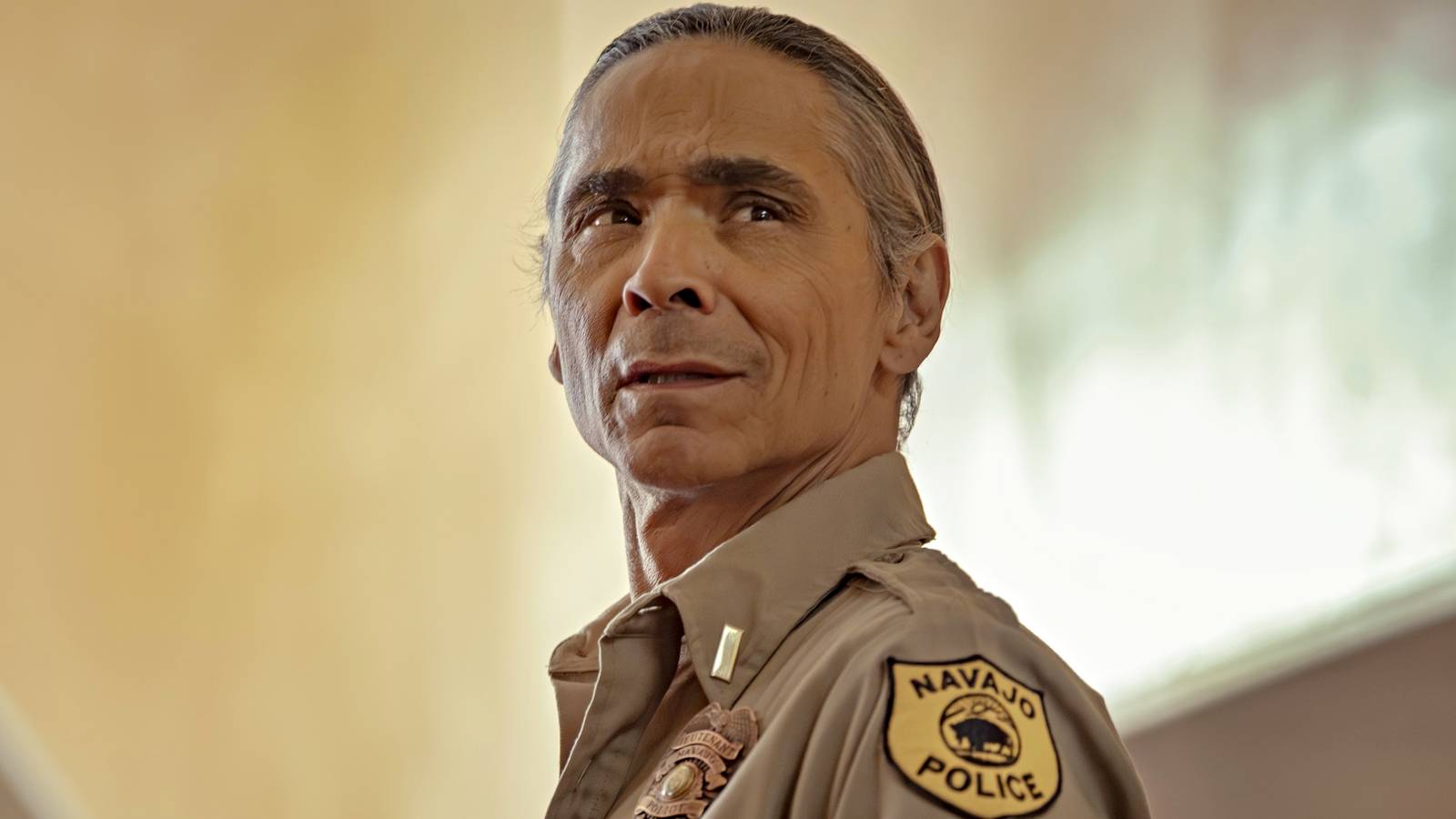
Image via AMC Published Aug 1, 2026, 8:34 PM EDT Michael John Petty is a Senior Author for Collider who spends his days writing, in fellowship with his local church, and enjoying each new day with his wife and daughters. At Collider, he writes features, reviews, recaps, and conducts interviews. In addition to writing about stories, Michael has told a few of his own. His novella, The Beast of Bear-tooth Mountain, was released in 2023. His Western short story, The Devil's Left Hand, received the Spur Award for "Best Western Short Fiction" from the Western Writers of America in 2025. Michael currently resides in North Idaho with his growing family. Sign in to your Collider account Book-to-screen adaptations can be challenging. On one hand, you want to bring as much of the original text to life as possible. On another, a television series or feature film is simply not the same narrative medium, and thus things will have to be changed and adjusted to tell the story as best as possible. It may surprise you to learn that many Western features began as novels or short stories, and that same practice has been true of television programs as well. Whether we're talking about neo-Westerns that are essentially mystery novels or crime dramas, or classic, old-fashioned Western yarn that speaks to the issues of the wild frontier, there are plenty of great Western shows out there that build upon the foundation first set on the page. While there are more Western novels than you can probably count, there are a handful of popular (and lesser-known) horse operas out there that are pulled directly from them. So, if you're looking for some riveting page-to-screen excitement, look no further than these Western television shows inspired by books. 'Centennial' (1978–1979) Image via NBC Centennial is a 12-part miniseries that is about exactly what it sounds like. Released a few years after America's 200th birthday, the television adaptation of James A. Michener's Centennial novel has been considered a cult classic. As one of the most expensive miniseries productions at the time, the NBC drama ran for over a month on the network, chronicling the founding and expansion of the fictional town of Centennial, Colorado. This is a Western series that would've thrived in the streaming era. With a robust cast and impressive visuals, Centennial is largely faithful to its source material, though it departs from the novel on occasion. The main difference is that while the novel uses contemporary magazine writer Lewis Vernor as a framing device, the miniseries sticks to a strict chronological ordering of events. Although the miniseries is 26 hours long, plenty was cut from the book for the sake of time. 'Joe Pickett' (2022–2024) Image via Paramount+ Although a neo-Western, Joe Pickett is about as old-fashioned as a contemporary take on the West can get. Based on the popular (and ongoing) novels by author C. J. Box, the series follows the adventures of the titular Wyoming-based game warden (Michael Dorman) as he wrestles with keeping his family afloat and stumbling upon every new mystery that makes his way into his backyard. Sometimes quite literally. A two-season Western series perfect for a quick binge, Joe Pickett tackles a novel or two each season. The first season, in particular, is quite true to Box's debut Pickett adventure, Open Season, though the series does depart from the source material in certain ways (namely in its depiction of Nate Romanowski). Still, fans of Box's novels (and newcomers alike) will enjoy this refreshing take on the neo-Western that couldn't be more different than something like Yellowstone. 'Justified' (2010–2015) Image via FX While there is some debate regarding whether Justified can actually be considered a neo-Western, the Kentucky-based crime drama certainly carries with it the spirit of the Old West. As U.S. Marshal Raylan Givens (Timothy Olyphant) finds himself back in his home state, he makes waves across the urban frontier as each new threat makes itself known — almost always connecting in some way to Walton Goggins' outlaw Boyd Crowder. Justified was based directly on the Elmore Leonard short story/novella "Fire in the Hole," though the Raylan Givens character appeared in two of the author's crime novels before that. Aside from the pilot, which is almost a 1:1 adaptation of "Fire in the Hole," Justified grew into its own. The best episodes of the show have nothing to do with Leonard's literary work, though the show's success would directly inspire his final novel, Raylan. 'The Sacketts' (1979) Image via NBC When you consider author Louis L'Amour's best Western novels, it's likely you'll end up revisiting The Daybreakers or some other installment in The Sackett Family series. If that sounds like you, then there's no better time to return to The Sacketts miniseries. Told in two parts by NBC, the miniseries was essentially a made-for-TV movie, but we'll give it a pass here on account that it feels more like a TV production. The miniseries combines both The Daybreakers (the first released installment of the Sackett books) and the next novel Sackett, following brothers Orrin (Tom Selleck) and Tyrel (Jeff Osterhage) as they head off to New Mexico to start anew. In conjunction with that second novel, it also chronicles the story of their older brother, Tell (Sam Elliott), a mountain man who ventures his way all across the west. Eventually, the trio all end up together, which is perhaps the biggest change from the books (though certainly a welcome one). Collider Exclusive · Taylor Sheridan Universe Quiz Which Taylor SheridanShow Do You Belong In? Yellowstone · Landman · Tulsa King · Mayor of Kingstown Four worlds. All of them brutal, complicated, and built on power, loyalty, and the price of survival. Taylor Sheridan doesn't write heroes — he writes people who do what they have to do and live with the cost. Ten questions will reveal which one of his worlds you were made for. 🤠Yellowstone 🛢️Landman 👑Tulsa King ⚖️Mayor of Kingstown FIND YOUR WORLD → 01 Where does your power come from? In Sheridan's world, everyone has leverage. The question is what kind. ALand, legacy, and a name that's been feared and respected for generations. BKnowing the deal better than anyone else in the room — and being willing to walk away first. CReputation. I've earned it the hard way, and everyone in the room knows it. DBeing the only person both sides will talk to. That makes me indispensable — and dangerous. NEXT QUESTION → 02 Who do you put first, no matter what? Loyalty in Sheridan's universe is always absolute — and always costly. AFamily — blood or chosen. The ranch, the name, the people who carry it with me. BThe company — or whoever's signing the cheques. Loyalty follows the contract. CMy crew. The men who stood with me when it counted — I don't abandon them for anything. DMy community — even when my community is a powder keg and I'm the only thing stopping it from blowing. NEXT QUESTION → 03 Someone crosses a line. How do you respond? Every Sheridan protagonist has a line. What matters is what happens after it's crossed. AQuietly, decisively, and in a way that sends a message to everyone watching. BI outmanoeuvre them legally, financially, and politically before they even know I've moved. CDirectly. Old school. You cross me, you hear about it to your face — and then you deal with the consequences. DI absorb it, calculate the fallout, and find the move that keeps the whole system from collapsing. NEXT QUESTION → 04 Where do you feel most in your element? Sheridan's worlds are as much about place as they are about people. AWide open land — mountains, sky, silence. Somewhere you can see trouble coming from a mile away. BThe oil fields of West Texas — brutal, lucrative, and indifferent to whoever happens to be standing on top of them. CA mid-size city where the rules haven't quite caught up yet — fertile ground for someone with vision and nerve. DA rust-belt town built around a prison — where everyone's life is shaped by what's inside those walls. NEXT QUESTION → 05 How do you feel about operating in the grey? Nobody in a Sheridan show has clean hands. The question is how they carry the dirt. AI do what has to be done to protect what's mine. I'll answer for it eventually — but not today. BGrey is just business. The line moves depending on what's at stake, and I move with it. CI have a code — it's not the law's code, but it's mine, and I don't break it. DI've made peace with it. Keeping the peace requires compromises most people don't have the stomach for. NEXT QUESTION → 06 What are you actually fighting to hold onto? Every Sheridan character is fighting a war. The real question is what they're defending. AA way of life that the modern world is doing everything it can to erase. BMy position — and the leverage that comes with being the person everyone needs to close a deal. CRelevance. I've been away, I've been written off — and I'm proving that was a mistake. DWhatever fragile order I've managed to build — because without it, everything burns. NEXT QUESTION → 07 How do you lead? Authority in Sheridan's world is never given — it's established, maintained, and constantly tested. ABy example and force of will. People follow me because they believe in what I'm protecting — and because they know what happens if they don't. BThrough negotiation and leverage. I don't need people to like me — I need them to need me. CBy being the smartest, most experienced person in the room and making sure everyone quietly knows it. DBy being the calm centre of a situation that would spiral without me — and accepting that nobody thanks you for it. NEXT QUESTION → 08 Someone new arrives and tries to change how things work. Your reaction? Every Sheridan show has an outsider disrupting an established order. Sometimes that outsider is you. AThey'll learn. Or they won't. Either way, the land was here before them and it'll be here after. BI figure out what they want, what they're worth, and whether they're an asset or a problem — fast. CI was the outsider once. I give them a chance — one — to show they understand respect. DNew players destabilise everything I've built. I assess the threat and manage it before it manages me. NEXT QUESTION → 09 What has your position cost you? Nobody gets to where these characters are without paying for it. The bill is always personal. AMy family's peace — maybe their innocence. The ranch demands everything, and I've let it take too much. BRelationships, time, any version of a normal life. The job eats everything that isn't nailed down. CYears. Decades in some cases. Time I can't get back — but I'm not done yet. DMy conscience, mostly. And the ability to ever fully trust anyone on either side of the wall. NEXT QUESTION → 10 When it's over, what do you want people to say? Sheridan's characters all know the ending is coming. The question is what they leave behind. AThat I held the line. That the land is still ours and everything I did was worth it. BThat I was the best at what I did and that no deal ever got closed without me at the table. CThat I built something real, somewhere nobody expected it, and I did it on my own terms. DThat I kept the peace when nobody else could — and that the town is still standing because of it. REVEAL MY SHOW → Sheridan Has Spoken You Belong In…The show that claimed the most of your answers is the world you were built for. If two tied, both are shown — you're complicated enough to straddle two Sheridan universes. 🤠 Yellowstone 🛢️ Landman 👑 Tulsa King ⚖️ Mayor of Kingstown You are a Dutton — or you might as well be. You understand that some things are worth protecting at any cost, and that the modern world's indifference to history, to land, to legacy, is not something you're willing to accept quietly. You lead from the front, you carry your family's weight without complaint, and when someone threatens what's yours, you don't escalate — you finish it. You're not cruel. But you are absolute. In Yellowstone's world, that combination of ferocity and loyalty doesn't make you a villain. It makes you the only thing standing between everything that matters and everyone who wants to take it. You thrive in the chaos of high-stakes negotiation, where the money is enormous, the margins are thin, and the wrong word in the wrong room can cost everyone everything. You're a fixer — the person called when a situation is already on fire and needs someone with the nerve to walk into it. West Texas oil country rewards exactly what you are: sharp, adaptable, unsentimental, and absolutely clear-eyed about what people want and what they'll do to get it. You're not naive enough to think this world is fair. You're smart enough to be the one deciding who it's fair to. You are a Dwight Manfredi — someone who has served their time, paid their dues, and arrived somewhere unexpected with nothing but their reputation and their wits. You adapt without losing yourself. You build loyalty through respect rather than fear, though you're not above reminding people that the two aren't mutually exclusive. Tulsa King is for people who are still standing when everyone assumed they'd be finished — who find, in an unfamiliar place, that they're more capable than the world gave them credit for. You don't need a throne. You build one, wherever you happen to land. You carry the weight of a system that is broken by design, and you do it anyway — because someone has to, and because you're the only one positioned to do it without the whole thing collapsing. Mike McLusky's world is for people who are comfortable operating where there are no good options, only less catastrophic ones. You speak every language: law enforcement, criminal, political, human. That fluency makes you invaluable and it makes you a target. You've made your peace with both. Mayor of Kingstown belongs to people who understand that keeping the peace is not the same as being at peace — and who do the job regardless. ↻ RETAKE THE QUIZ 'Dark Winds' (2022–Present) Image via AMC There's something about neo-Western mystery/crime novels that are just ripe for television adaptations. That was the case with Dark Winds, which is inspired (though quite loosely) by the Leaphorn and Chee series by Tony Hillerman. Hillerman's daughter, Anne Hillerman, has taken to continuing the novels in recent years, which run parallel to the AMC series. However, the show couldn't be more different — and for the most part, it actually works. Yes, Lieutenant Joe Leaphorn (Zahn McClarnon) and Sgt. Jim Chee (Kiowa Gordon) still work alongside each other, with Sgt. Bernadette Manuelito (Jessica Matten) by their side, but each season is almost more of a remix of the books than a proper adaptation. Some seasons pull from two novels at once, mixing the plots and character arcs together, while others pull from a single installment. Fans of the Hillerman books will likely still enjoy this underrated neo-Western drama, but expect some serious departures from the novels. 'Little House on the Prairie' (1974–1983) Image via NBC Speaking of television programs that are considerably different than the source material, Little House on the Prairie only departed further from the Little House novels by Laura Ingalls Wilder the longer it aired on NBC. What began with a television pilot film that was quite an accurate adaptation of the novel of the same name quickly turned into a family-friendly adventure that stuck to its moralistic guns and ran out of material to adapt. While elements of the books still find their way into the later seasons, Little House is very much its own thing. That said, the original Little House television series remains one of the most beloved long-running dramas of the 20th century. Michael Landon's Charles Ingalls defined the role for generations, and nobody played young Laura quite like Melissa Gilbert. While the novels have been adapted more faithfully on other occasions, the nine-season Little House is the perfect cozy drama. If you want to revisit the series before catching Netflix's latest reboot, give these Little House episodes a go — they're a bit more faithful to the text. 'The Virginian' (1962–1971) Image via NBC Though not the first adaptation of the famed novel, The Virginian: A Horseman of the Plains, by Owen Wister, The Virginian television series is the most well-known by far. Another incredibly loose adaptation, the NBC program featured James Drury in the title role opposite Doug McClure's Trampas and Lee J. Cobb's Judge Garth. Each episode chronicled its own new adventure, largely leaving the novel behind in favor of becoming another high-riding Western drama. Perhaps the biggest change from Wister's novel was turning Trampas from his villainous ways and making him essentially the Virginian's sidekick. Still, although the screen versions of these characters were little like what folks read in the book, The Virginian is still considered one of the best classic TV Westerns ever made. The episodic nature was quite common for horse operas in its day, and Drury and McClure headline the series with that flawless cowboy charm. For a more proper adaptation of Wister's masterwork, we'd recommend one of the many feature film adaptations instead. 'The Son' (2017–2019) Image via AMC For a book-to-screen adaptation that stays true to the novel, look no further than The Son. Unlike Dark Winds, this AMC drama was in part developed by author Philipp Meyer himself, alongside Lee Shipman and Brian McGreevy. The trio reworked Meyer's novel into a two-season Western epic that follows Texan cattleman Eli McCullough in both the past (played by Jacob Lofland) and his early 20th century present (played by Pierce Brosnan). This Western series will hook you from start to finish. The Son may depart in some ways from the novel-of-the-same-name, but it does so only with the blessing of the author. Meditating on themes of legacy, loss, and the high price of violence, this series puts Yellowstone to open shame. It chronicles the settling of the west, the foundation of modern cattle ranch operations, and the great pains it took to preserve them. 'Longmire' (2012–2017) As arguably the most popular neo-Western drama outside the Yellowstone Universe, Longmire is so beloved that fans still celebrate the show (and the novels that inspired it) annually by gathering in Buffalo, Wyoming, for Longmire Days. Based on the Walt Longmire Mysteries series by author Craig Johnson, the A&E-turned-Netflix drama follows Sheriff Walt Longmire (Robert Taylor) as he fights to preserve the peace of the fictional Absaroka County and the neighboring Cheyenne Reservation. That said, it's quite different from the books. While some episodes are based on specific novels — "Unfinished Business" is The Cold Dish, while "Unquiet Mind" feels like a direct riff on Hell is Empty — the show honored certain elements of the larger Absaroka world while blatantly ignoring others. But don't let that turn you off to this highly intelligent neo-Western drama. Johnson not only blessed the show, but continues to promote its return as he churns out new novels each year. It's a Western series that will satisfy your inner cowboy. 'Lonesome Dove' (1989) Image via CBS As if there was any doubt? Not only is Lonesome Dove the miniseries a powerful television epic that deserves high marks for its brilliant performances and sweeping visuals, but Lonesome Dove the novel by Larry McMurtry is often considered the Western novel. Following former Texas Rangers Augustus "Gus" McCrae (Robert Duvall) and Woodrow F. Call (Tommy Lee Jones) as they lead their Hat Creek Outfit from the Lone Star State all the way to Montana, it's an exceptional undertaking that has been cited as the best Western ever made. Lonesome Dove is essential Western TV viewing, not to mention reading if we're talking about the book. This CBS adaptation succeeds where so many book-to-screen operations fail by essentially using the novel as a roadmap. Every major bit is accounted for, and while it would have been impossible for this four-part miniseries to tackle every scene, it does its darnedest to bring the pages to life. Lonesome Dove Release Date 1989 - 1989-00-00 Main Genre Western Seasons 1
10 Greatest Western Shows Based on Books
Full Article
Original Source
Read the full article at Collider →KhanList aggregates and links to publicly available news content. We do not host full articles from third-party sources. Always verify important information with original sources.