
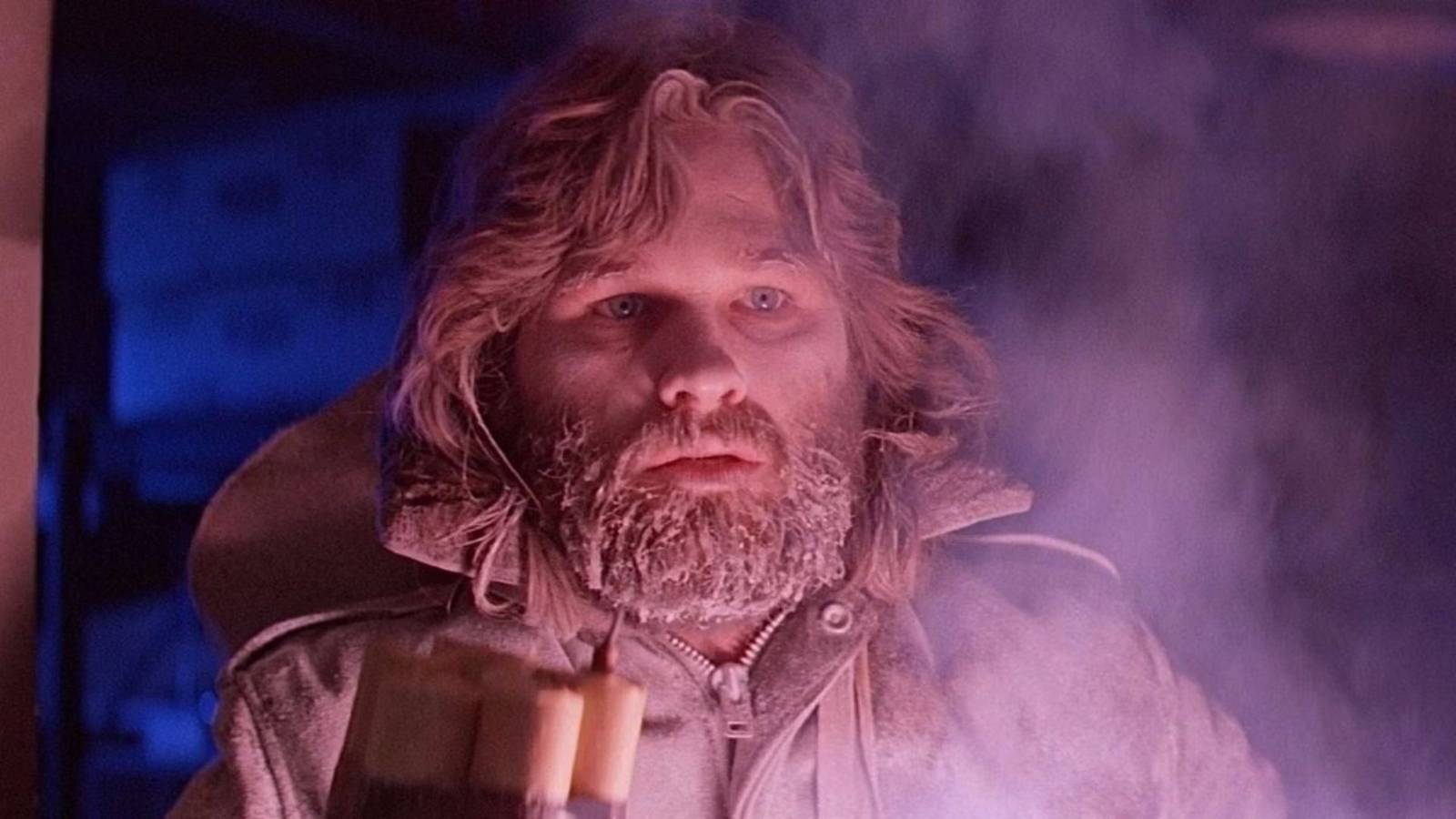
Published Oct 11, 2026, 3:30 PM EDT Senior Music Editor at Screen Rant, Sarah's love of sound and story drive the beat. A globetrotting brand whisperer and award-winning journalist, she’s built cross-cultural narratives around the world—but music has always been her true north. She launched DJ Mag North America, successfully introducing the iconic UK brand to the U.S. market. Previously, she carved a space for EDM inside the pages of VIBE, blending electronic and hip-hop culture long before it was trendy. Summary Survival horror weaponizes ordinary instincts—fear, trust and choices can be lethal. Isolation, dwindling resources, and betrayal make survival rules meaningless. These ten films turn claustrophobic settings into moral and physical deathtraps. Survival horror is particularly effective because its characters rarely have the luxury of making good decisions. Running might get them killed. Staying put could be worse. And the person offering to help may turn out to be the greatest threat of all. The best survival horror movies take ordinary instincts and turn them against their characters. Fear becomes a liability, trust can be fatal, and even the most resourceful people discover that staying alive sometimes requires doing things they never imagined themselves capable of. Watching them make those choices is half the appeal, especially when the audience knows exactly how badly things could go wrong. There is some crossover with wilderness survival movies, where isolation, hostile environments, and dwindling resources can be terrifying enough without introducing a monster. Survival horror takes those pressures further, placing its characters in situations where the normal rules of self-preservation are no longer enough. The genre encompasses everything from zombie outbreaks and home invasions to extraterrestrial threats, with filmmakers finding increasingly inventive ways to make escape seem impossible. Some of its greatest achievements unfold in a single location, while others transform entire cities into places where safety has become a distant memory. For this ranking, the determining factors are the intensity of the survival experience, the quality of the filmmaking, and each movie's lasting impact on horror. These 10 films represent survival horror at its most inventive and frightening, culminating in a masterpiece that makes the simple act of trusting another human being potentially fatal. 10 A Quiet Place (2018) John Krasinski's A Quiet Place introduces one of the most unforgiving survival scenarios in modern horror. The Abbott family lives in a world overrun by creatures that hunt using sound, making ordinary activities potentially deadly. Lee (Krasinski) and Evelyn (Emily Blunt) have managed to keep their children alive through meticulous planning, sign language, and an almost obsessive understanding of their surroundings. The brilliance lies in how thoroughly the movie makes audiences aware of every potential noise. A dropped object, a creaking floorboard, or an unexpected scream can have devastating consequences. The film's eventual revelation about the creatures' weakness provides a hard-earned opportunity for survival. Few horror movies make something as simple as breathing freely seem like an unimaginable luxury. 9 The Mist (2007) Frank Darabont's adaptation of Stephen King's The Mist traps a group of people inside a supermarket after a mysterious fog envelops their Maine town. David Drayton (Thomas Jane) initially believes the greatest danger lies outside, where enormous, barely comprehensible creatures have begun attacking anyone foolish enough to venture into the mist. ScreenRant previously ranked The Mist No. 1 among the greatest wilderness survival movies of all time, and its examination of human behavior under extreme pressure makes that distinction understandable. As religious fanaticism takes hold, the survivors turn against one another, culminating in one of horror's most devastating endings. Against the genre-defining classics on this list, it still deserves a prominent place. 8 Green Room (2015) Jeremy Saulnier's Green Room proves that survival horror requires neither supernatural monsters nor an apocalyptic catastrophe. A struggling punk band witnesses a murder after performing at a remote club operated by neo-Nazis. Trapped backstage, the musicians soon discover that the club's calculating owner, Darcy Banker (Patrick Stewart), has absolutely no intention of allowing them to leave alive. What follows is an exceptionally brutal struggle in which every attempted escape carries potentially fatal consequences. Anton Yelchin delivers a gripping performance as Pat, one of the musicians desperately trying to survive. The violence feels frighteningly physical, and the characters make believable mistakes under pressure. Green Room is particularly effective because its nightmare could happen without the slightest violation of reality. 7 Train To Busan (2016) Yeon Sang-ho's Train to Busan turns a high-speed passenger train into one of the most effective survival horror settings of the 21st century. Seok-woo (Gong Yoo) is traveling with his young daughter, Su-an (Kim Su-an), when a zombie outbreak of mysterious origins transforms their journey into a desperate fight to reach safety. Each carriage presents another obstacle, and every surviving passenger becomes a potential ally or liability. The movie's relentless pacing is matched by unusually strong emotional stakes. Seok-woo begins as a self-absorbed father whose priorities change dramatically as the situation deteriorates. Meanwhile, other passengers reveal just how destructive selfishness can become during a disaster. Train to Busan delivers spectacular zombie action, but its most heartbreaking moments concern what people are willing to sacrifice for someone else. 6 28 Days Later (2002) Danny Boyle's 28 Days Later helped revive zombie horror by making its infected terrifyingly fast. Jim (Cillian Murphy) awakens from a coma to discover that London has been abandoned following the outbreak of a highly contagious virus. With no understanding of what happened or how to survive, he must navigate a devastated Britain where one encounter with the infected can prove fatal. Alex Garland's screenplay makes the collapse of civilization feel disturbingly immediate. The survivors struggle to find food, shelter, and trustworthy companions, only to discover that uninfected humans can be every bit as dangerous. The filmmakers even considered several considerably bleaker alternate endings. More than two decades later, 28 Days Later remains one of the genre's defining modern achievements. 5 The Texas Chain Saw Massacre (1974) Tobe Hooper's The Texas Chain Saw Massacre remains astonishingly effective more than 50 years after its release. A group of young travelers exploring rural Texas encounters a family of cannibals, including the chainsaw-wielding Leatherface (Gunnar Hansen). What begins as an ordinary road trip becomes an increasingly desperate struggle to escape a place where seemingly every person represents another danger. The movie's oppressive heat, documentary-like cinematography, and relentless sound design make the experience almost physically exhausting. Although its supposedly true story was largely fictionalized, the horror feels frighteningly plausible. Marilyn Burns' extraordinary performance as Sally Hardesty established an enduring model for the genre: ordinary people trapped in extraordinary danger, with no reassuring promise that anyone will rescue them. 4 Night Of The Living Dead (1968) George A. Romero's Night of the Living Dead established the foundation for countless survival horror movies that followed. When the dead begin returning to attack the living, a group of strangers takes shelter inside an isolated farmhouse. Ben (Duane Jones) attempts to organize their defenses, but disagreements about how to survive quickly threaten the fragile cooperation keeping them alive. Romero's masterpiece remains frightening because the survivors' disagreements are every bit as important as the zombies outside. Arguments over barricades, escape plans, and leadership gradually undermine their chances. The movie's influence was so enormous that it eventually inspired a 1990 remake with some significant differences. Its stark photography and uncompromising ending make the 1968 original remarkably effective today. 3 The Descent (2005) Neil Marshall's The Descent begins with a premise that would be terrifying even without its eventual monsters. Six women embark on a caving expedition, only to become trapped deep underground in an uncharted system. Sarah (Shauna Macdonald), already struggling with overwhelming personal grief, must contend with collapsing passages, dwindling supplies, and the growing realization that nobody knows where the group has gone. Then the creatures appear. Marshall transforms the darkness into an almost unbearable source of tension, using narrow tunnels and limited visibility to make every movement dangerous. The women's increasingly desperate attempts to escape are complicated by personal betrayals and fractured loyalties. The Descent is among the few horror films capable of making audiences feel genuinely trapped alongside its characters, and its bleak original British ending makes the experience even more punishing. 2 Alien (1979) Ridley Scott's Alien remains one of cinema's most influential combinations of science fiction and survival horror. The crew of the commercial spacecraft Nostromo encounters a mysterious extraterrestrial organism that eventually begins hunting them aboard their own ship. With nowhere to escape and little understanding of what they're facing, the remaining crew members must improvise increasingly desperate methods of staying alive. Sigourney Weaver's Ellen Ripley emerges as one of horror's greatest survivors because she understands the importance of procedure, caution, and rational thinking. Her insistence on following quarantine protocols initially goes ignored, with catastrophic consequences. Scott's industrial production design and H.R. Giger-inspired creature effects make the Nostromo feel like a workplace transformed into a death trap. Nearly 50 years later, Alien remains extraordinarily tense. 1 The Thing (1982) John Carpenter's The Thing represents survival horror at its most psychologically devastating. An isolated American research team in Antarctica discovers an extraterrestrial organism capable of perfectly imitating other living creatures. Helicopter pilot R.J. MacReady (Kurt Russell) must determine who has been infected while his fellow researchers become increasingly suspicious of one another. Outside, the Antarctic wilderness offers almost certain death. The creature's grotesque transformations remain astonishing achievements in practical effects, but the movie's greatest horror comes from its destruction of trust. Every person becomes a potential enemy, and the survivors cannot even be certain that eliminating the creature will guarantee their safety. Carpenter's famously ambiguous ending leaves audiences with precisely the uncertainty that tormented the characters. No survival horror movie has more effectively made paranoia itself a matter of life and death. Release Date June 25, 1982 Runtime 109 minutes Director John Carpenter Writers Bill Lancaster, John W. Campbell Jr. Producers David Foster, Lawrence Turman Franchise(s) The Thing
10 Greatest Survival Horror Movies Of All Time, Ranked
Full Article
Original Source
Read the full article at Screenrant →KhanList aggregates and links to publicly available news content. We do not host full articles from third-party sources. Always verify important information with original sources.