
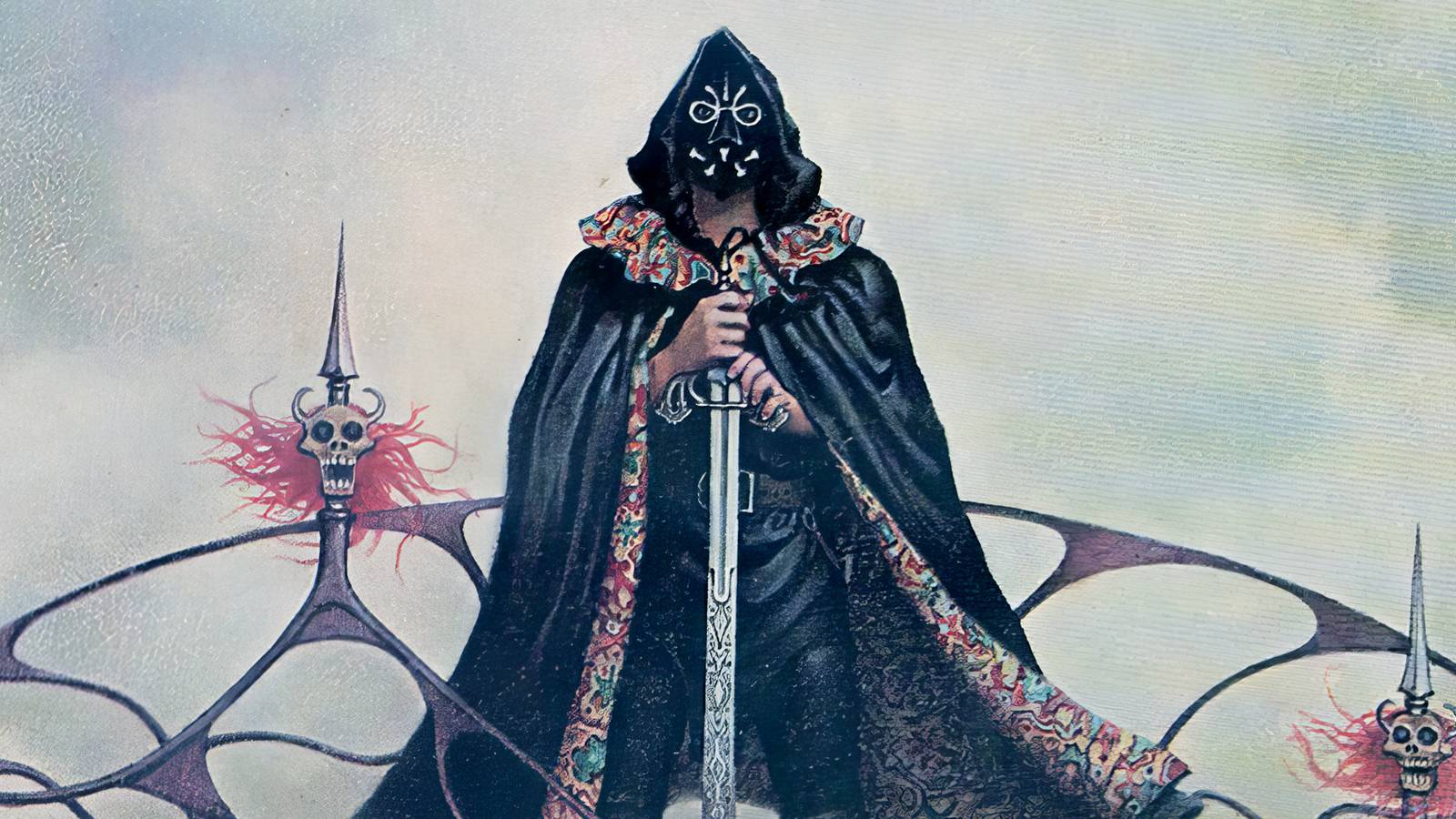
Image via Simon & Schuster Published Aug 12, 2026, 12:34 PM EDT Luc Haasbroek is a writer and videographer from Durban, South Africa. He has been writing professionally about pop culture for eight years. Luc's areas of interest are broad: he's just as passionate about psychology and history as he is about movies and TV. He's especially drawn to the places where these topics overlap. Luc is also an avid producer of video essays and looks forward to expanding his writing career. When not writing, he can be found hiking, playing Dungeons & Dragons, hanging out with his cats, and doing deep dives on whatever topic happens to have captured his interest that week. Sign in to your Collider account Science fiction tends to focus on advanced technology and speculative science, but some of the genre's greatest works take a different approach. The label "soft sci-fi" refers to stories that place their emphasis on characters, societies, psychology, politics, culture, and human behavior rather than on technical details. They're more interested in theme and emotion than the mechanics of their futuristic settings or technologies. Some soft sci-fi books use their genre elements to explore timeless questions; others simply serve up killer plots and quirky scenarios. The result is a subgenre that can be very entertaining, as well as thought-provoking. The books on this list are the epitome of soft sci-fi, offering thoughtful takes on the genre that are as evocative as they're thought-provoking and unforgettable. 10 'All Systems Red' (2017) Image via Tor.com "I could have become a mass murderer after I hacked my governor module, but then I realized I could access the combined feed of entertainment channels." All Systems Red is the first installment in Martha Wells' Murderbot series, recently made into a solid TV show starring Alexander Skarsgård. The main character is a security android that has secretly disabled the control system governing its behavior. He uses this freedom... to watch soap operas, mostly. However, when a scientific expedition comes under threat, Murderbot finds itself reluctantly stepping into the role of protector, facing dangerous alien life forms and dastardly schemes. This premise sets the stage for a charming action-comedy, anchored by a surprisingly likable protagonist. Although he's a machine, Murderbot's struggles feel pretty human, and his sarcastic inner monologue provides a constant source of humor. 9 'Here and Now and Then' (2019) Image via MIRA "Time changes everything. Sometimes it changes you." Here and Now and Then follows Kin Stewart, a secret government agent from the future who becomes stranded in the 1990s after a mission goes wrong. Unable to return home, Kin builds a life, marries, and raises a daughter. But years later, his former employers finally arrive to bring him back to the era he came from, forcing him to choose between two different lives. Refreshingly, the nitty-gritty details of how the time-travel works are kept to a minimum. Instead, the book leans hard into moral dilemmas and competing emotions. It's really about belonging and what we owe to the people we love. The protagonist also suffers PTSD from his missions, another (inter)dimension to his struggles. All in all, Here and Now and Then is a clever new take on some classic sci-fi tropes. 8 'The Dispossessed' (1974) Image via Avon Books "There was a wall. It did not look important." This is one of the classics by sci-fi/fantasy icon Ursula K. Le Guin, author of Earthsea. In The Dispossessed, physicist Shevek leaves the anarchist, communal, private property-less society of Anarres to visit the neighboring world of Urras. In contrast to his homeworld, Urras is a society defined by capitalism, inequality, aggressive competition, and strict hierarchies. As he moves between these two radically different political systems, Shevek becomes increasingly aware of the strengths and weaknesses of both places, contrasting them and offering poignant observations. In the process, the novel becomes a statement on political ideology, economics, freedom, and human nature, all conveyed through brilliant worldbuilding. These ideas were especially relevant when the book came out in 1974, with the Cold War still in full swing and debates raging about how societies and economies ought to be structured. 7 'The Hitchhiker's Guide to the Galaxy' (1979) Image via Pan Books "Don't panic." Possible the funniest, wittiest, cheekiest sci-fi book ever written, The Hitchhiker's Guide to the Galaxy begins when ordinary Englishman Arthur Dent learns that Earth is about to be demolished to make room for a hyperspace bypass. Rescued by his alien friend Ford Prefect, Arthur embarks on a wildly improbable journey across the galaxy, encountering bizarre civilizations, eccentric travelers, and countless cosmic absurdities along the way. While the story does include spaceships, aliens, and futuristic gadgets, author Douglas Adams' real focus is on philosophy, satire, and humor. In particular, he takes pulpy sci-fi concepts and pushes them to ludicrous extremes or flips them completely on their heads, delving into surprisingly deep questions about meaning, bureaucracy, and the absurdity of existence. These are tricky ideas to pull off, but the book works flawlessly thanks to the author's unique, deadpan voice. Collider Exclusive · Sci-Fi Survival Quiz Which Sci-Fi World Would You Survive? The Matrix · Mad Max · Blade Runner · Dune · Star Wars Five universes. Five completely different ways the future went wrong — or sideways, or up in flames. Only one of them is the world your instincts were built for. Eight questions will figure out which dystopia, galaxy, or desert wasteland you'd actually make it out of alive. 💊The Matrix 🔥Mad Max 🌧️Blade Runner 🏜️Dune 🚀Star Wars TEST YOUR SURVIVAL → 01 You sense something is deeply wrong with the world around you. What do you do? The first instinct is often the truest one. APull on every thread until I understand the system — then figure out how to break it. BStop asking questions and start stockpiling — food, fuel, weapons. Questions don't keep you alive. CKeep my head down, observe carefully, and trust no one until I know who's pulling the strings. DStudy the patterns. Every system has a rhythm — learn it, and you learn how to survive it. EFind the people fighting back and join them. You can't fix a broken galaxy alone. NEXT QUESTION → 02 In a world of scarcity, what resource do you guard most fiercely? What we protect reveals what we believe survival actually requires. AKnowledge. If you understand the system, you don't need resources — you can generate them. BFuel. Everything else — movement, power, escape — runs on it. CTrust. In a world of fakes and informants, a truly reliable ally is rarer than any commodity. DWater. And after water, information — the two things empires are truly built on. EShips and credits. The galaxy is big — you survive it by being able to move through it freely. NEXT QUESTION → 03 What kind of threat keeps you up at night? Fear is useful data — if you're honest about what you're actually afraid of. AThat reality itself is a lie — that everything I experience has been constructed to keep me compliant. BA raid. No warning, no mercy — just the roar of engines and then nothing left. CBeing identified. Once someone with power decides you're a problem, you're already out of time. DBeing outmanoeuvred — losing a political game I didn't even know I was playing. EThe Empire tightening its grip until there's nowhere left to run. NEXT QUESTION → 04 How do you deal with authority you don't trust? Every dystopia has a power structure. Your approach to it determines everything. ASubvert it from the inside — learn its rules well enough to weaponise them against it. BIgnore it and stay out of its reach. The further from any power structure, the better. CAppear to comply while doing exactly what I need to do. Visibility is the enemy. DManoeuvre within it carefully. You can't beat a system you refuse to understand. EResist openly when I have to. Some things are worth the risk of being seen. NEXT QUESTION → 05 Which environment could you actually endure long-term? Survival isn't just tactical — it's physical, psychological, and very much about where you are. AUnderground bunkers and server rooms — cramped, artificial, but with access to everything that matters. BOpen wasteland — brutal sun, no shelter, constant movement. At least the threat is honest. CA dense, rain-soaked city where you can disappear into the crowd and nobody asks questions. DMerciless desert — extreme heat, no water, and something enormous living beneath the sand. EThe fringe — backwater planets and busy spaceports where the Empire's attention rarely reaches. NEXT QUESTION → 06 Who do you want in your corner when things fall apart? The company you keep is the clearest signal of who you actually are. AA tight crew of believers who've seen behind the curtain and have nothing left to lose. BOne or two people I'd trust with my life. Any more than that and someone talks. CNobody, ideally. Alliances are liabilities. I work alone unless I have no choice. DA community bound by shared hardship and mutual survival — people who need each other to last. EA ragtag team with wildly different skills and total commitment when it counts. NEXT QUESTION → 07 Where do you draw the line — if you draw one at all? Every survivor eventually faces a moment that tests what they're actually made of. AI won't harm the innocent — even the ones who'd report me without hesitation. BI do what I have to to protect the people I've chosen. Everything else is negotiable. CThe line shifts depending on who's asking and what's at stake. DI draw a long-term line — nothing that compromises my people's future, even if it'd help now. ESome lines, once crossed, can't be uncrossed. I know which ones they are. NEXT QUESTION → 08 What would actually make survival worth it? Staying alive is one thing. Having a reason to is another. AWaking others up — dismantling the illusion so no one else has to live inside it. BFinding somewhere — or someone — worth protecting. A reason to keep moving. CAnswers. Understanding what I am, what any of this means, before time runs out. DLegacy — shaping the future in a way that outlasts me by generations. EFreedom — for myself, for others, for every world still living under someone else's boot. REVEAL MY WORLD → Your Fate Has Been Calculated You'd Survive In…Your answers point to the world your instincts were built for. This is the universe your temperament, your survival instincts, and your particular brand of stubbornness were made for. The MatrixYou took the red pill a long time ago — probably before anyone offered it to you. You're a systems thinker who can't help but notice the seams in things. You're drawn to understanding how the system works before figuring out how to break it. You'd find the Resistance, or it would find you — your instinct for spotting constructed realities is the machines' worst nightmare. You function best when you have access to information and the freedom to act on it. The Matrix built an airtight prison. You'd be the one probing the walls for the door. Mad MaxThe wasteland doesn't reward the clever or the well-connected — it rewards those who are hard to kill and harder to break. That's you. You don't need comfort, community, or a cause larger than the next horizon. You need a vehicle, a clear threat, and enough fuel to outrun it — and you're good at all three. You are unsentimental enough to survive that world, and decent enough — just barely — to be something more than another raider. In the wasteland, that distinction is everything. Blade RunnerYou'd survive here because you know how to exist in moral grey areas without losing yourself completely. You read people accurately, keep your circle small, and ask the questions others prefer not to answer. In a city where humanity is a legal designation rather than a feeling, you hold onto something that keeps you functional. You're not a hero. But you're not lost, either. In Blade Runner's world, that distinction is everything. DuneArrakis is the most hostile environment in the known universe — and you are precisely the kind of person it rewards. Patience, discipline, and political awareness are your core strengths — and on Arrakis, they're survival tools. You understand that the long game matters more than any single victory. Others come to Dune and are consumed by it. You'd learn its logic and earn its respect. In time, you wouldn't just survive Arrakis — you'd begin to reshape it. Star WarsThe galaxy far, far away is vast, loud, and in a constant state of violent political upheaval — and you wouldn't have it any other way. You find meaning in being part of something larger than yourself — a cause, a crew, a rebellion. You'd gravitate toward the Rebellion, or the fringes, or whatever pocket of the galaxy still believes the Empire's grip can be broken. You fight — not because you have to, but because standing aside isn't something you're capable of. In Star Wars, that willingness is what makes all the difference. ↻ RETAKE THE QUIZ 6 'Perdido Street Station' (2000) Image via Macmillan "The city was built on dreams and nightmares alike." Perdido Street Station is a pioneering work of so-called weird fiction, gleefully blending sci-fi, fantasy, steampunk, horror, surrealism, and action-adventure. At the center of the chaos is scientist Isaac Dan der Grimnebulin, who attempts to help a wingless bird-man regain the power of flight. His research accidentally unleashes a terrifying threat that places the entire city in danger. The novel's greatest achievement is its worldbuilding. Author China Miéville immerses us in the sprawling, richly realized world of New Crobuzon, a city whose every corner feels alive with possibility and danger. The streets are populated by all kinds of disturbing, wildly original characters, from gangsters and cyborgs to insect people, humanoid cacti, multi-dimensional entities, and even demons. The social systems are also complex, bursting at the seams with competing ideologies and antagonistic beliefs. It all makes for one of the most imaginative sci-fi tales ever. 5 'The Left Hand of Darkness' (1969) Image via Ace Books "Light is the left hand of darkness." Here we have another gem by Ursula K. Le Guin, this time setting its sights on gender. The main character is Genly Ai, an envoy sent to the frozen planet Gethen to convince its inhabitants to join an interstellar alliance. His mission is complicated by political intrigue and cultural misunderstandings, particularly because the people of Gethen do not possess fixed genders. Instead, they move between male and female characteristics throughout their lives. That conceit forms the story of The Left Hand of Darkness, a remarkably progressive work that is far more relevant today than ever before. Through the Gethens, the author raises all sorts of challenging questions around identity, politics, communication, and sexism. In other words, the speculative elements serve primarily as tools for examining real-world assumptions. Not for nothing, The Left Hand of Darkness continues to be taught in literature courses all over the world. 4 'The Shadow of the Torturer' (1980) Image via Simon & Schuster "We believe that we invent symbols. The truth is that they invent us." The Shadow of the Torturer is the first book in Gene Wolfe's masterful four-volume saga The Book of the New Sun, one of the most influential sci-fi/fantasy hybrids ever. The series centers on Severian, an apprentice torturer living in the far-future world of Urth. After showing mercy to a prisoner, he is exiled from his guild and begins a journey across a decaying civilization filled with mystery and forgotten technologies. Although there is violence and political intrigue here, the book's main concerns are perception, memory, morality, and storytelling itself. For instance, Severian is an unreliable narrator whose account forces us to constantly question what is actually happening and why. Every revisit to the text reveals new details and interpretations, while Wolfe's dense, elegant prose does the rest of the heavy lifting. 3 'Never Let Me Go' (2005) Image via Knopf Doubleday Publishing Group "Memories, even your most precious ones, fade surprisingly quickly." Never Let Me Go is one of Kazuo Ishiguro's very best novels, and it was also made into a great movie starring Oscar nominees Carey Mulligan, Keira Knightley, and Andrew Garfield. In it, Kathy H. reflects on her childhood at Hailsham, a seemingly idyllic English boarding school. But as she remembers her friendships with Tommy and Ruth, we gradually piece together the unsettling truth about the students' purpose and the society in which they live. Kathy, Tommy, and Ruth are clones, created to serve as organ donors for their wealthy doppelgängers. Their fates are sealed from birth, and they will never make it to old age. A more conventional sci-fi story might have seen the protagonists rebel against this injustice, taking up arms against the authorities and kickstarting a revolution. Instead, Never Let Me Go is all about the characters' psychology, how they grapple with certain, looming death. Tragic but poignant stuff, indeed. 2 'Dune' (1965) Image via Chilton Books "Fear is the mind-killer." Perhaps the definitive work of soft sci-fi that continues to exert a hold on the public imagination thanks to Denis Villeneuve's stellar film adaptation. Dune revolves around Paul Atreides, heir to a noble family assigned control of the desert planet Arrakis, the only source of the valuable substance known as spice. After betrayal destroys his family, Paul joins the native Fremen and becomes a central figure in a conflict that will reshape the future of the galaxy. Although Dune contains many elements associated with epic science fiction—interstellar travel, mind-boggling devices, and striking alien organisms, to name a few—it stands out with the way it looks at politics, religion, ecology, power, and mythology. Fundamentally, Frank Herbert was interested in culture, belief systems, and the dangers of messianic figures. These weighty ideas give Dune real thematic weight beyond the adventure plot. 1 'Brave New World' (1932) Image via Horizon Ridge Publishing "Words can be like X-rays if you use them properly." One of the greatest (and perhaps most prophetic) dystopian stories ever written. Set in a future society built on genetic engineering and relentless consumerism, Brave New World depicts a civilization where conflict, suffering, and individuality have largely been eliminated. Into this carefully managed world comes an outsider whose values challenge the assumptions underlying the system. This is the ultimate example of sci-fi as social commentary. Writer Aldous Huxley (who also penned the psychedelic classic The Doors of Perception) turns all this into a sharp, almost painfully plausible dissection of freedom, happiness, conformity, and human nature. Unlike Nineteen Eighty-Four, where the government is brutal and crushes individuality by force, Brave New World imagines a future where people have willingly surrendered their power and liberty in return for cheap pleasures and endless, shallow entertainment.
10 Greatest Soft Sci-Fi Books of All Time
Full Article
Original Source
Read the full article at Collider →KhanList aggregates and links to publicly available news content. We do not host full articles from third-party sources. Always verify important information with original sources.