
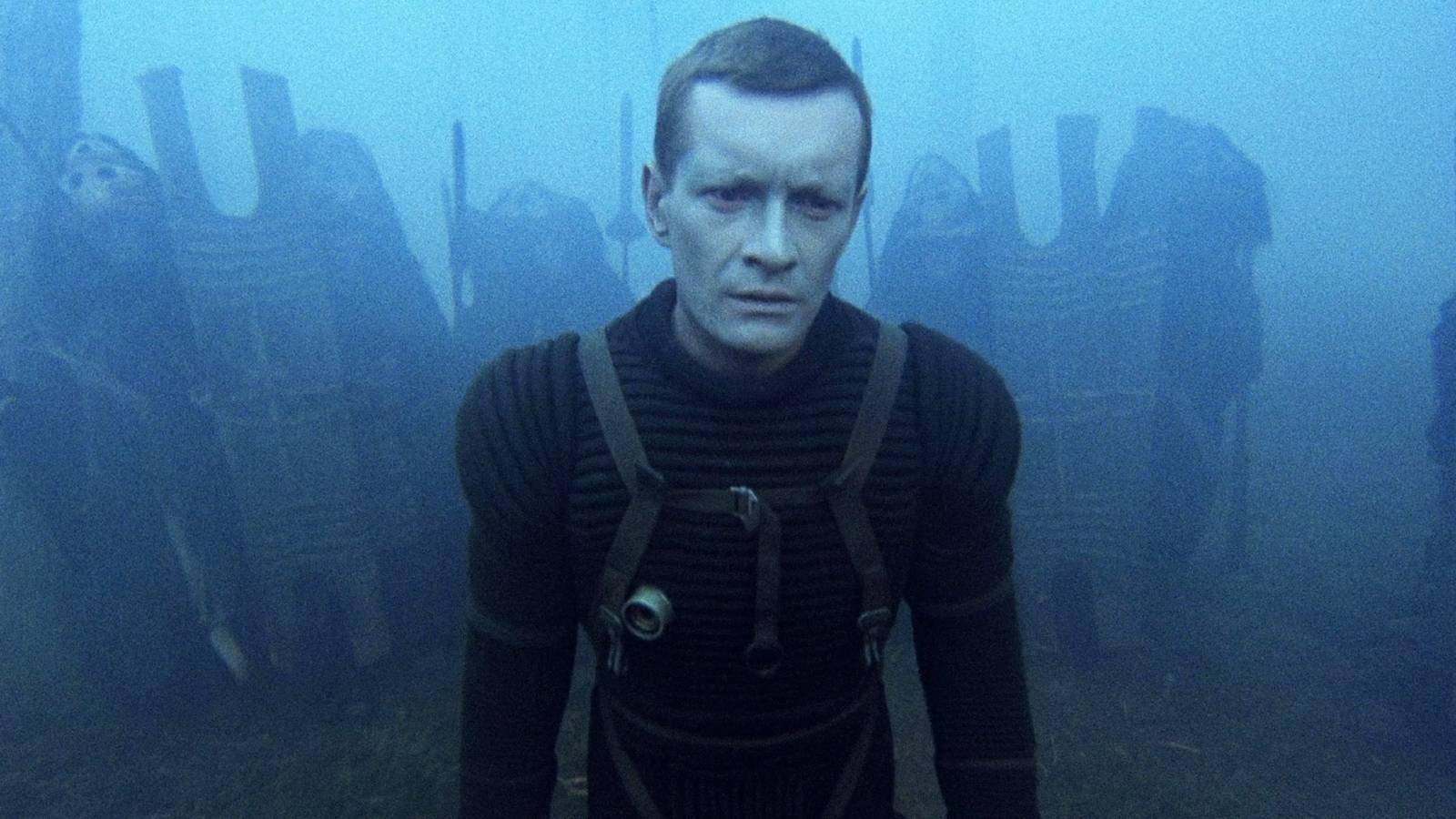
Image via Zespół Filmowy Kadr Published Jul 22, 2026, 7:36 AM EDT William likes taking edibles, watching movies with his dogs, and then writing about those movies. He doesn't have social media so if you want more of his unhinged opinions or another place to comment hurtful things, you can check out his Letterboxd. Sign in to your Collider account It's pretty easy for science fiction movies to become epic. They're trying to tell stories that involve things like time travel, space battles, interstellar travel, and intergalactic warfare, so it's only natural that they'd have a grand scope and long runtimes. Epics in the genre aren't a recent development either. There have been large-scale sci-fi films since the silent era, and every decade brings new technological innovations that precipitate new epics. From the 20th century to the 21st, there have been enough sci-fi epics to fill out an entire cinematic universe and then some. Many of them are landmark films, for both the genre and filmmaking in general, while others are lesser known but no less epic. They come from vastly different filmmakers, and all use the genre to reach different ends, but they all accomplish it on a grand scale. These are the ten greatest sci-fi epics of all time, ranked. 10 'Nausicaä of the Valley of the Wind' (1984) Image via Toei Company Hayao Miyazaki is better known for his fantasy films, but his second feature, Nausicaä of the Valley of the Wind, based on his own manga, is a distinct sci-fi exception. Set in a post-apocalyptic world where humans and nature struggle to co-exist, it's another beautifully animated epic from one of the medium's most influential filmmakers. Though it was given a poorly edited release in the U.S., that mistake has long since been rectified, and the film has been internationally recognized as a foundational anime. Nausicaä is the pacifist princess of the Valley of the Wind, a human enclave that becomes caught in conflict involving the Toxic Jungle that surrounds them and an Empire that seeks to eradicate it. Influenced by major science fiction works like Dune as well as fantasy, the film also carries many of the themes Miyazaki would elaborate on later in his career. It advocates for empathy over anger and the ability of humans to coexist with nature, which it illustrates with some truly wondrous, and sometimes psychedelic, sci-fi imagery. 9 'Interstellar' (2014) Image via Paramount Pictures Christopher Nolan has continuously expanded as a filmmaker, and his films have escalated to the point that they are exclusively epics. From his superhero trilogy to his Oscar-winning epic biopic to his most recent adaptation of an ancient Greek epic poem, Nolan only seems capable of working on the largest scale possible. That scale is evident in his sci-fi adventure epic Interstellar, Nolan's attempt at a hard sci-fi film like 2001: A Space Odyssey, filtered through his four-quadrant blockbuster sensibilities. Originally developed by producer Lynda Obst and physicist Kip Thorne, the film follows a group of astronauts on a mission to save a blighted Earth by investigating other planets as potential replacements. The final film actually feels like a more cohesive marriage of Steven Spielberg's sensibilities and 2001 director Stanley Kubrick, even more so than A.I. Artificial Intelligence, which was handed off between the directors. Interstellar still has Nolan's fingerprints all over it, and it blends epic entertainment with big sci-fi concepts. 8 'Dune: Part Two' (2024) Image via Warner Bros. Pictures A filmmaker with some similar characteristics to Nolan, Denis Villeneuve has similarly advanced his career from crime thrillers and cerebral dramas to now working exclusively on blockbuster epics. He entered the genre proper with the emotionally affecting Arrival, and has since directed an epic-sized Blade Runner sequel and two films based on Frank Herbert's Dune with a third on the way. Of these, it's Dune: Part Two that's his greatest sci-fi achievement. Adapting the latter half of Herbert's first Dune novel, the film picks up with Paul Atreides (Timothée Chalamet) living among the Fremen, where his myth as a messiah begins to grow while he seeks to overthrow the Harkonnens who caused his family's downfall. It's suitably epic, but unlike Nolan, Villeneuve doesn't use heavy exposition and prefers to use visuals to convey much of the plot and characters. It makes his adaptation of Herbert's dense novel a little less nuanced, but it compensates with incredible epic images. 7 'Terminator 2: Judgment Day' (1991) Image via Tri-Star Pictures A filmmaker who had an undeniable influence on Nolan and Villeneuve, James Cameron graduated rather quickly to exclusively making epic films, though it's clear he always had ambitions for it but was merely limited by budget. Discounting Piranha II: The Spawning, The Terminator is his real debut film, a lean, mean sci-fi thriller with epic ambitions around its edges. After directing the blockbuster sequel Aliens and The Abyss, Cameron returned to his original film with a much bigger budget. Essentially rebooting the plot of the first film but on an elevated scale, Terminator 2: Judgment Day brings back the villainous T-800 (Arnold Schwarzenegger) as the protector of John Connor (Edward Furlong). The assassin this time around is the liquid metal T-1000 (Robert Patrick), an idea that Cameron had to wait for visual effects technology to advance far enough to create. The landmark visual effects, by ILM, are one of the most epic aspects of a sci-fi action film that, even when compared with modern films with a thousand more effects shots, still manages to seem epic. Collider Exclusive · Sci-Fi Personality Quiz Which Sci-Fi Hero Are You Most Like? Paul Atreides · Captain Kirk · Princess Leia · Ellen Ripley · Max Rockatansky Five iconic heroes. Five completely different ways of facing an impossible universe. One of them shares your instincts, your values, and your particular way of refusing to back down. Eight questions will tell you which one. 🏜️Paul Atreides 🖖Capt. Kirk ✊Princess Leia 🔦Ellen Ripley 🔥Max Rockatansky FIND YOUR HERO → 01 How do you lead when the stakes couldn't be higher? The way you lead under pressure is the most honest thing about you. AI absorb everything — every variable, every pattern — and move only when I know the path forward. BI read the room, make the call, and own the consequences. Hesitation costs more than mistakes. CI rally people. A cause needs a voice, and I refuse to let fear be louder than conviction. DI assess the threat, establish what needs doing, and get it done without waiting for permission. EI don't lead. I act. Others can follow or not — I'm already moving. NEXT QUESTION → 02 What is your greatest strength in a crisis? The quality that keeps you alive when everything else fails. APrescience — the ability to see further ahead than anyone else and plan accordingly. BImprovisation — I'm at my best when the plan falls apart and I have to invent a new one. CConviction — I know what I'm fighting for, and that certainty doesn't waver under fire. DComposure — I stay functional when everyone around me is falling apart. Panic is a luxury. EEndurance — I outlast things. I take the hit and keep moving long after others have stopped. NEXT QUESTION → 03 What is the thing you'd sacrifice everything else for? Your deepest motivation is your truest compass. AThe survival and dignity of my people — even if I have to become something frightening to ensure it. BThe safety of my crew — every single one of them. No one gets left behind. CFreedom — for my people, for every world still crushed under the weight of an empire. DThe truth — what actually happened, what's actually out there, whether anyone believes me or not. EThe one person — or the one memory — that still makes any of this worth surviving for. NEXT QUESTION → 04 How do you relate to the people around you? Who you are to others under pressure is who you really are. AWith intensity and distance — I care deeply, but the weight I carry makes closeness complicated. BWith warmth and irreverence — I take the mission seriously, not myself. CWith directness and trust — I say what I mean, and I expect the people I work with to rise to it. DWith professional care but clear limits — I'll protect you, but I won't pretend we're family. EWith wariness that slowly becomes loyalty — I don't trust easily, but when I do, it holds. NEXT QUESTION → 05 You're facing a threat that no one else believes is real. What do you do? How you respond when you're the only one who sees it defines everything. APrepare in silence. If they won't listen, I'll be ready when they finally have to. BKeep pushing until someone listens — and if no one does, handle it myself. CBuild the case, find the allies, and make the threat impossible to ignore. DDocument everything. The truth matters even if no one believes it yet. EStop trying to convince anyone. Survive it. That's the only argument that counts. NEXT QUESTION → 06 What has your heroism cost you personally? Every hero pays. The question is what — and whether they'd pay it again. AMy innocence — I've seen what I'm capable of, and I can't unsee it. BPeople I loved — the command chair has a view, but it's a lonely one. CA normal life — I gave up everything ordinary the moment I chose the cause. DMy sense of safety — I know exactly what's out there now, and I can't pretend otherwise. EAlmost everything — and I'm still not sure what I'm carrying it all for. But I keep going. NEXT QUESTION → 07 How do you feel about the rules of the world you're in? Every hero has a relationship with the system. What's yours? AI understand them deeply — and I know exactly which ones must be broken, and why. BI respect the spirit of them and bend the letter when the situation demands it. CThe system is the problem. I'm not here to work within it — I'm here to dismantle it. DI follow protocol until protocol stops being useful. Then I make the call myself. EThe rules collapsed a long time ago. What's left is instinct, and mine are reliable. NEXT QUESTION → 08 When everything is on the line, what keeps you going? The answer is the most honest thing about you. ADestiny — or something that feels so much like it that the difference no longer matters. BThe people on my ship — their faces, their trust, the fact that they're counting on me. CThe belief that what we're fighting for is worth every sacrifice, including this one. DSheer refusal to let it win — whatever it is. I don't stop. That's just who I am. EI'm not sure anymore. But the road is still there, and I'm still on it. REVEAL MY HERO → Your Hero Has Been Identified Your Sci-Fi Hero Is…Your answers point to the iconic sci-fi hero who shares your instincts, your values, and your particular way of facing the impossible. Paul AtreidesYou carry a weight most people would crumble under — the knowledge of what you're capable of, and the burden of what you might have to become. You see further ahead than others and you plan accordingly, even when the vision frightens you. You are driven by loyalty to your people and a sense of destiny you didn't ask for but can't escape. Paul Atreides is not simply a hero — he is someone who understands the cost of power and chooses to bear it anyway. That gravity, that willingness to carry what others won't, is exactly you. Captain KirkYou lead with instinct, warmth, and an absolute refusal to accept a no-win scenario — because you've always believed there's a third option nobody else has thought of yet. You take the mission seriously without ever taking yourself too seriously. Your crew would follow you anywhere, not because you demand it, but because you've earned it. Kirk's genius isn't tactical — it's human. He reads people, bends rules with purpose, and wills outcomes into existence through sheer conviction. That combination of warmth, audacity, and relentless optimism is unmistakably yours. Princess LeiaYou are the kind of person who holds the line when everyone else is losing faith — not because you're fearless, but because giving up simply isn't something you're capable of. You lead through conviction. Your voice carries because your belief is unshakeable. You gave up everything ordinary the moment you chose the cause, and you've never looked back. Leia is not a supporting character in her own story — she is the moral centre of the entire rebellion. That same fierce, principled, unbreakable core is what defines you. Ellen RipleyYou are not reckless, not grandiose, and not particularly interested in being anyone's hero — you just refuse to stop when it matters. You see threats clearly, you document the truth even when no one listens, and when the time comes you handle it yourself. Ripley's heroism is earned, not performed. She doesn't have a speech — she has a flamethrower and a plan. You share her composure under the worst possible pressure, and her refusal to pretend the monster isn't there. When it counts, you don't flinch. That's everything. Max RockatanskyYou have been through fire that would break most people — and what came out the other side is something the world underestimates at its peril. You don't ask for help, don't need validation, and don't wait for anyone to tell you the rules no longer apply. Your loyalty, when it finally arrives, is absolute — but it's earned in silence and tested in action, not in words. Max is not a nihilist. He is someone who lost everything and found, against his will, that he still has something worth protecting. That bruised, stubborn, ultimately human core is exactly yours. ↻ RETAKE THE QUIZ 6 'Metropolis' (1927) Image via Parufamet The T-800, and just about every other cinematic robot, owes a debt to Metropolis, Fritz Lang's seminal sci-fi epic which features the first iconic humanoid robot committed to film. In addition to the android central to its plot, the production design and themes have all inspired scores of sci-fi films to come after it. Even for those viewers who find silent cinema a slog to get through, Metropolis can be a surprisingly enthralling and relevant epic. In the titular futuristic, dystopian city, the wealthy live on high while the workers toil below, operating the machines that power their paradise. When the son of the master of the city becomes involved in a worker's rebellion, and an inventor plots revenge against him, it threatens to burn Metropolis to the ground. Lang's epic masterpiece is still effective even though it's almost a hundred years old and its effects might seem quaint for many viewers. Even so, it has stood the test of time for a reason. 5 'Stalker' (1979) Image via Mosfilm Andrei Tarkovsky is one of those directors most film nerds won't shut up about. His name gets thrown around with the likes of Kubrick and Akira Kurosawa in debates of the greatest of all time. Lots of hyperbole, but his films, though requiring a great deal of patience, are undeniably impressive and affecting. Solaris is often the first sci-fi film brought up in conversation, but it's his next sci-fi, the epic Stalker, that's even more immersive. The titular character acts as a guide through a restricted area in a post-apocalyptic world where visitors can visit the enigmatic Room and possibly have their deepest desires met. It's a slow, contemplative film where less occurs during its runtime in terms of pure plot than some single scenes of other films on this list. Stalker depicts a more emotional or spiritual journey, and it takes its time to get to its destination. He may not thrill like Cameron or Nolan, and make Villeneuve look less ponderous by comparison, but Tarkovsky has an ineffable way with images and atmosphere that's hard to replicate. 4 'On the Silver Globe' (1988) Image via Zespół Filmowy Kadr Andrzej Żuławski's On the Silver Globe is a surreal and disjointed film, partly because of the nature of its story but also because of its bifurcated production. Żuławski began filming the movie, which was based on a novel written by his great-uncle, Jerzy Żuławski, in 1976, but before he could finish it was taken away by the Polish government and was supposed to be destroyed. It was preserved, thankfully, and Żuławski was able to finish it years later. To call it finished may be generous, as the movie is certainly not the complete work as intended and is filled with voiceover to try and bridge its narrative. It's still an incredible generation-spanning saga about astronauts that form the foundation of a new civilization on an alien planet, their son who becomes viewed as a god, and a future astronaut mistaken as the messiah returned. It's a heady trip that can be very confusing and enthralling in equal measure, but is a singular sci-fi epic. 3 'Until the End of the World' (1991) Image via Warner Bros. In terms of sheer size, Wim Wenders' Until the End of the World is the most epic sci-fi film ever made. At least if you're watching the Director's Cut, which has a runtime of almost five hours. It's a literal globetrotting drama that was shot in eleven different countries and designed to be the most epic road movie. Set as Armageddon looms and filled with surreal dream imagery, it is an epic film that has had a long and complicated history and appreciation, but it's an epic achievement without question. Claire (Solveig Dommartin) is a woman adrift when she gets pulled into the orbit of Sam (William Hurt), a mysterious man with a special camera that can allow blind people to see its recorded images. There are so many more turns and corridors that the film's plot explores that can't be easily summarized in a single paragraph. Until the End of the World is an incredibly demanding film that requires the kind of free time to devote to it that many people simply don't have, but if you can find the time for it, it's an overwhelming and epic film experience. 2 'The Empire Strikes Back' (1980) Image via Lucasfilm Thoughtful and contemplative are nice, but it's also nice when sci-fi is epically fun. Call it fantasy, call it an adventure serial in sci-fi trappings, or call it a Space Western; Star Wars is just plain fun. Odd that the best Star Wars of the current generation is the grim and dramatic Andor, but it, of course, is following in the darker footsteps of The Empire Strikes Back. The acclaimed sequel to George Lucas' seminal blockbuster, directed by Irvin Kirshner, brought the dark side of the Force into the fray, and was all the better for it. It's still the greatest Star Wars film ever made. As the rebellion against the Empire continues, the trio of Han (Harrison Ford), Luke (Mark Hamill) and Leia (Carrie Fisher) are split apart as Luke goes to train with Jedi master Yoda (Frank Oz) and the star-crossed lovers hide out with Lando Calrissian (Billy Dee Williams). It's a bigger film than the first, but also deeper, with smaller character moments and emotional beats (it's clear Kirshner was better suited to directing actors than Lucas). The performances here are far more effective, free of its sometimes awkward and stilted moments, thus making the emotional moments and shocking twists in the film's finale far more effective. 1 '2001: A Space Odyssey' (1968) Image via Metro-Goldwyn-Mayer Stanley Kubrick's name has loomed large in this list, and it's all due to his monumental sci-fi masterpiece, 2001: A Space Odyssey. A major milestone in visual effects but also an epic journey that has been continually dissected by cinephiles for decades, Kubrick's film is just about the most awe-inspiring to ever include a visual toilet gag. Kubrick's status as a filmmaker has grown to fairly hyperbolic proportions, but 2001 is worth almost all of it. It has continued to inspire more beloved sci-fi and is even in the conversation of the greatest film ever made. Even if you don't think that highly of Kubrick's film, it's hard to deny its impressive visuals. Indeed, they have aged better than many more recent films whose effects curdled within months, a testament to the many advisors and visual effects artists who worked to bring Kubrick and Arthur C. Clarke's narrative of an alien monolith and its influence on human evolution across the galaxy to life. 2001 enjoys the eeriness of the silence of space and marvels at its immensity and wonder, encompassing all the human emotions that the dark reaches of space can inspire. 2001: A Space Odyssey Release Date April 10, 1968 Cast Keir Dullea, Gary Lockwood, William Sylvester, Douglas Rain, Daniel Richter, Leonard Rossiter, Margaret Tyzack, Robert Beatty, Sean Sullivan, Bill Weston, Ed Bishop, Glenn Beck, Alan Gifford, Ann Gillis, Edwina Carroll, Penny Brahms, Heather Downham, Mike Lovell, John Ashley, Jimmy Bell, David Charkham, Keith Denny, Jonathan Daw, Péter Delmár, Terry Duggan Runtime 149 minutes Director Stanley Kubrick Writers Stanley Kubrick, Arthur C. Clarke
10 Greatest Sci-Fi Epic Movies of All Time
Full Article
Original Source
Read the full article at Collider →KhanList aggregates and links to publicly available news content. We do not host full articles from third-party sources. Always verify important information with original sources.