
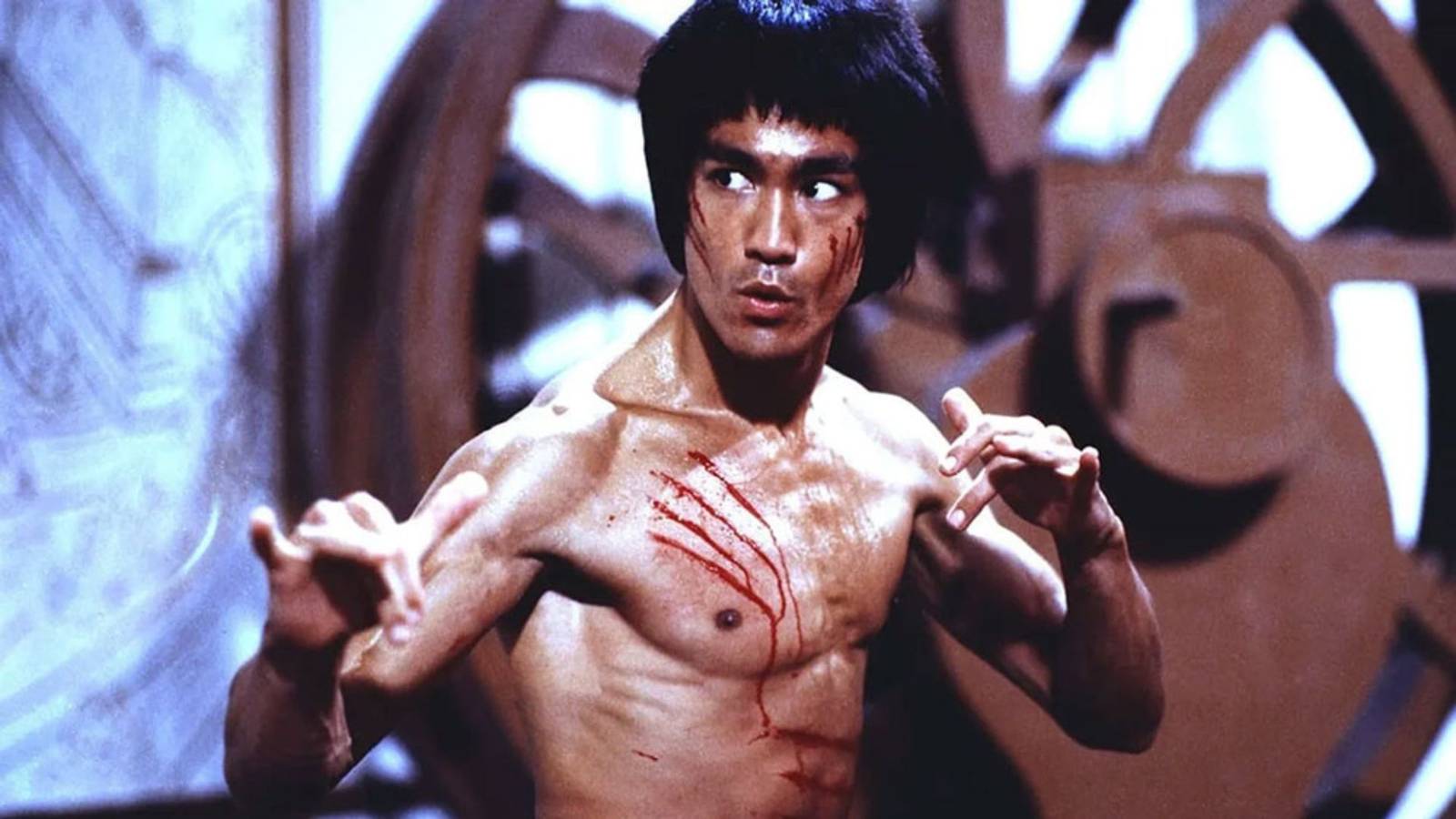
The greatest martial arts movies extend far beyond Enter the Dragon. Decades of spectacular fight choreography, influential performers, and innovative filmmaking prove that Bruce Lee's classic is not the genre's only masterpiece. Released in 1973, Bruce Lee's Enter the Dragon remains the benchmark against which martial arts movies are measured, combining his extraordinary physical ability with a tightly constructed spy thriller. The tournament structure allows Bruce Lee to demonstrate different fighting styles while building toward memorable confrontations, particularly his battle with Han in the hall of mirrors. Its influence on action cinema is absolutely enormous. However, the genre has evolved dramatically through Hong Kong action cinema, Japanese samurai films, Thai martial arts, Indonesian fight movies, and modern Hollywood productions. This ranking considers more than the quality of individual fight scenes. The placement of each movie reflects its choreography, performances, filmmaking innovation, influence on subsequent action cinema, and ability to use martial arts as part of a compelling story. The distinction matters because spectacular combat alone does not make a great martial arts movie. Further, this list omits movies that sit more firmly in a different genre, such as the sci-fi fusion of The Matrix and the tribute Kill Bill. Hero (2002) Zhang Yimou's Hero boasts martial arts sequences that are utterly magnificent but its deliberate pacing makes it less consistently thrilling than some others. Jet Li stars as Nameless, a warrior who approaches the King of Qin claiming to have defeated three legendary assassins. Hero's fights are staged like elaborate paintings, with Zhang using distinct color palettes to distinguish competing versions of events. The battle between Nameless and Sky turns swordplay into an almost abstract visual composition, while the confrontation between Broken Sword and Flying Snow uses beautifully flowing choreography rather than brute force. Hero is more visually sophisticated than several movies ranked above it, but its martial arts are integrated into a meditative political drama rather than driving every scene. Still, its influence on Western audiences and its extraordinary visual design make Hero essential. Fist Of Fury (1972) Bruce Lee's Fist of Fury showcases the actor's extraordinary screen presence while delivering a more focused martial arts narrative than many of his later films. Lee plays Chen Zhen, a student who investigates the suspicious death of his kung fu master and confronts the Japanese martial artists responsible. Fist of Fury's final fight is legendary, but its importance goes beyond Lee's famous nunchaku work. His rapid combinations, explosive kicks, and controlled movements established a screen-fighting style that felt radically different from the more theatrical choreography common in earlier Hong Kong cinema. Fist of Fury also uses martial arts to explore Chinese nationalism and resistance to Japanese imperialism, giving Chen's confrontations greater dramatic significance. Some of its supporting performances and pacing have aged less gracefully, but Lee's charisma and the film's historical importance remain undeniable. Drunken Master II (1994) Jackie Chan's physical performance in Drunken Master II is extraordinary even by his own almost absurdly high standards. Chan returns as Wong Fei-hung, a mischievous young man whose fighting style combines traditional kung fu with comic improvisation. The finale against Ken Lo, who plays John, is Drunken Master II’s greatest achievement. Chan incorporates drunken boxing, acrobatics, environmental objects, and brutal impacts into choreography that constantly changes rhythm. The sequence feels dangerous because Chan's movements are precise without appearing overly polished. Its placement reflects the fact that the film is more dependent on Chan's physical comedy than some of the dramatically richer movies above it. Nevertheless, Drunken Master II remains one of the definitive examples of Hong Kong action filmmaking, and Chan's commitment to performing elaborate stunts himself gives every fight a tactile quality. Ip Man (2008) Donnie Yen's controlled Wing Chun fighting in Wilson Yip's Ip Man provides some of the most satisfying close-quarters choreography in modern martial arts cinema. Yen plays the legendary martial artist during the Japanese occupation of Foshan, where Ip becomes increasingly unwilling to tolerate the brutality inflicted on his community. Ip's fight against ten Japanese black belts is especially thrilling. Rather than turning the encounter into a sprawling spectacle, the choreography emphasizes Wing Chun's rapid punches, short-range movements, and direct attacks. Ip Man’s historical portrayal is heavily dramatized, and the story simplifies several elements of Ip Man's life. Still, as a piece of martial arts entertainment, it is exceptionally effective. Yen's calm demeanor contrasts beautifully with the speed of his movements, making Ip appear formidable without requiring exaggerated theatrics. The Raid (2011) Gareth Evans transformed a simple siege premise into one of the most relentlessly physical action movies of the 21st century with The Raid. Iko Uwais plays Rama, a rookie member of an Indonesian SWAT team trapped inside a Jakarta apartment block controlled by crime lord Tama. The Raid's pencak silat choreography is brutally efficient. Rama and his teammates fight through cramped hallways, stairwells, and apartments, forcing the choreography to work within extremely restricted spaces. The fights rarely pause for exposition, allowing momentum to build almost continuously. Uwais, Yayan Ruhian, and Donny Alamsyah combine silat techniques with exhausting physical performances, creating a final fight that feels less like a polished demonstration and more like a desperate struggle for survival. The Raid's only reason for not ranking higher is its comparatively narrow story and relentless intensity. Ong Bak: Muay Thai Warrior (2003) Ong Bak introduced mainstream audiences to a spectacularly authentic-looking form of Muay Thai choreography that felt unlike the wire-assisted Hong Kong action dominating international cinema at the time. Tony Jaa plays Ting, a young villager who travels to Bangkok to recover the stolen head of a sacred statue. Ong Bak repeatedly emphasizes Jaa’s use of elbows, knees, kicks, and devastating strikes. Jaa's willingness to perform dangerous stunts himself gives the action an immediacy that digital effects could not replicate. Ong Bak helped establish Jaa as a major international action star and contributed to renewed Western interest in Thai martial arts cinema. Its story is relatively straightforward, and some supporting comedy has aged unevenly, but the action remains extraordinary. The nightclub scene is particularly effective because it demonstrates his technique against multiple opponents without hiding the physicality behind rapid editing. House Of Flying Daggers (2004) House of Flying Daggers takes fourth place because it demonstrates that martial arts cinema can be as romantic and visually poetic as it is physically explosive. Zhang Ziyi stars as Mei, a blind dancer who becomes entangled in a conspiracy involving the titular rebel organization. The famous Echo Game sequence exemplifies why House of Flying Dagger ranks so highly, transforming dance into a display of precision and combat ability. Later battles combine swords, staffs, acrobatics, and wire work against expansive natural landscapes. Zhang Yimou does not treat martial arts as disconnected spectacle; the choreography reflects shifting loyalties and romantic tension between Mei, Jin, and Leo. House of Flying Daggers ranks above Ong-Bak because of its more ambitious integration of action, cinematography, character, and story, making the entire film feel like a painting brought to life. Police Story (1985) Police Story earns the bronze medal because Jackie Chan effectively turned stunt work into a cinematic language. He plays Hong Kong police officer Chan Ka-kui, who must protect a key witness while being framed by a drug lord. The climactic shopping-mall chase is the decisive reason for its high ranking. Chan slides down a pole wrapped in electrical lights, crashes through glass, leaps between balconies, and descends multiple levels of the building with a level of physical commitment that remains astonishing. Unlike many martial arts films, Police Story consistently integrates fights with stunts and comedy. Chan's action scenes tell jokes through movement while maintaining genuine danger. Chan's combination of kung fu, slapstick timing, elaborate environments, and practical danger created an action formula that remains incredibly difficult to replicate. Kung Fu Hustle (2004) Stephen Chow's Kung Fu Hustle accomplishes something few martial arts movies even attempt. It managed to combine classic kung fu, Looney Tunes-style comedy, supernatural fantasy, and genuinely spectacular choreography without collapsing under the weight of its own absurdity. Chow plays Sing, a petty criminal who dreams of joining the Axe Gang before becoming involved with a group of secretly powerful martial artists. The humor frequently exaggerates traditional kung fu conventions, but its action is executed with remarkable precision. The Landlady and Landlord's battles demonstrate this perfectly, while the final confrontation with the Beast escalates into increasingly outrageous displays of martial arts ability. Yuen Woo-ping's choreography gives the fantasy fights a genuine martial arts foundation beneath the visual effects. Kung Fu Hustle is simultaneously hilarious, visually inventive, and expertly choreographed. Ang Lee's Crouching Tiger, Hidden Dragon takes the top spot because it combines exceptional martial arts choreography with character development, romance, philosophy, and breathtaking cinematography. Chow Yun-fat plays Li Mu Bai, and is joined by legends Michelle Yeoh as Yu Shu Lien and Zhang Ziyi as Jen Yu. The action is spectacular without becoming detached from the characters. Jen's rooftop duel with Shu Lien establishes her extraordinary talent and reckless confidence, while the bamboo-forest confrontation between Li Mu Bai and Jen turns wire-assisted movement into something of breathtaking beauty. Crouching Tiger, Hidden Dragon deserves the top ranking because every major fight advances the story. Its four Academy Awards, including Best Foreign Language Film, reflect its broader achievement. Crouching Tiger, Hidden Dragon proved martial arts cinema could be an emotionally complex international prestige film without sacrificing spectacular action, continuing the legacy established by Enter the Dragon. Release Date August 17, 1973 Runtime 102 minutes Director Robert Clouse Writers Michael Allin Producers Bruce Lee, Fred Weintraub, Paul M. Heller
10 Greatest Martial Arts Movies That Aren't Enter The Dragon
Full Article
Original Source
Read the full article at Screenrant →KhanList aggregates and links to publicly available news content. We do not host full articles from third-party sources. Always verify important information with original sources.