
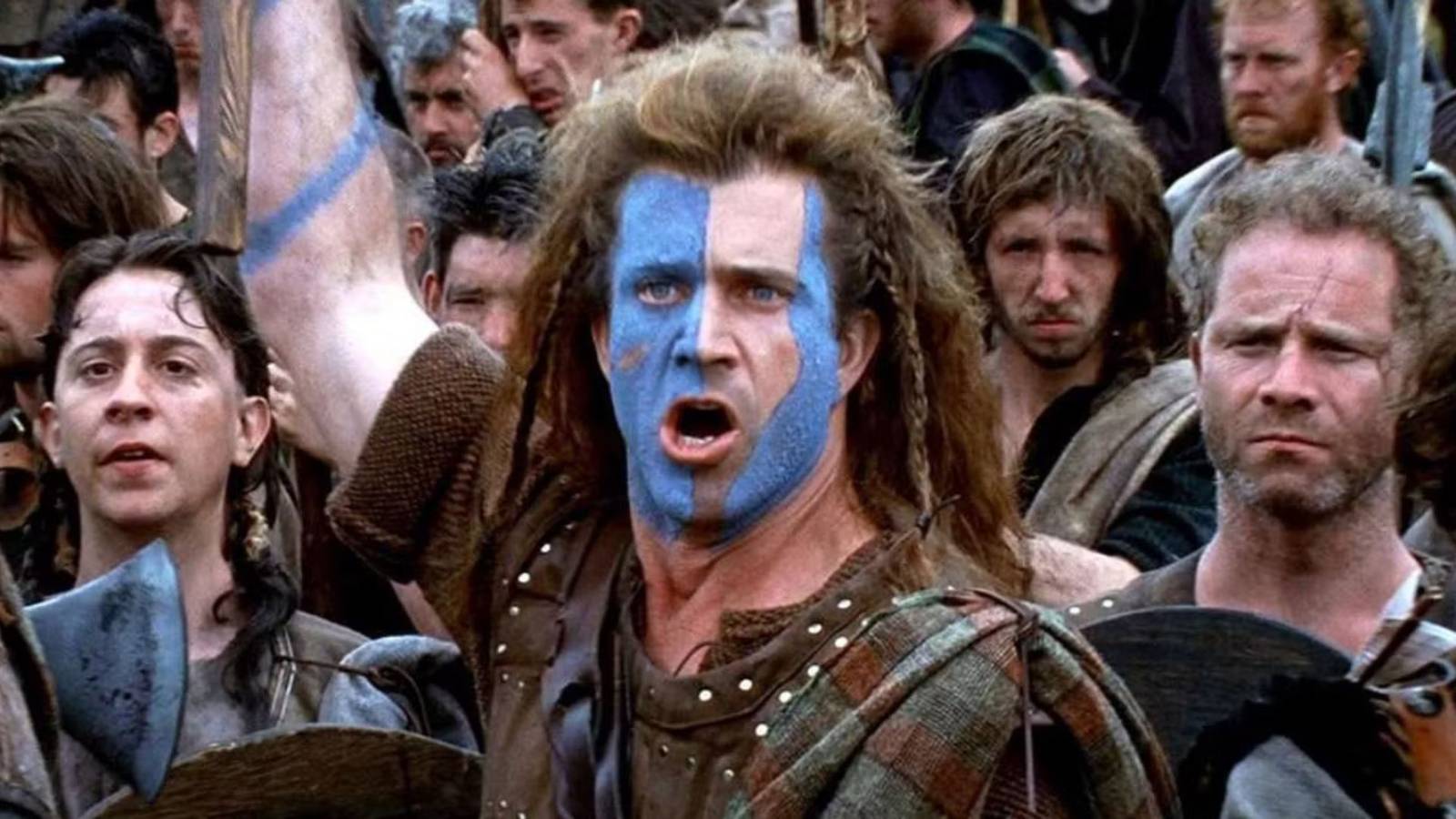
Published Aug 22, 2026, 10:13 AM EDT Senior Music Editor at Screen Rant, Sarah's love of sound and story drive the beat. A globetrotting brand whisperer and award-winning journalist, she’s built cross-cultural narratives around the world—but music has always been her true north. She launched DJ Mag North America, successfully introducing the iconic UK brand to the U.S. market. Previously, she carved a space for EDM inside the pages of VIBE, blending electronic and hip-hop culture long before it was trendy. Historical adventure movies offer a particular kind of escapism, taking audiences into another era while still delivering the scale and excitement of a great blockbuster. Some recreate real events with painstaking detail, while others take historical figures, famous battles, or ancient legends and reshape them for the screen. The best can make a centuries-old conflict feel immediate without pretending to be a history lesson. Christopher Nolan's The Odyssey has put large-scale historical adventure back in the spotlight in 2026, even if Homer's story sits somewhere between history and myth. It is also a reminder that strict accuracy has never been the only thing audiences want from these movies. Braveheart plays notoriously loose with the facts, while Troy strips much of the mythology out of The Iliad. Both still make the past feel like somewhere worth spending a few hours. For this ranking, historical accuracy was considered, but it wasn't the deciding factor. The greatest historical adventure movies need to transport audiences somewhere they could never go themselves, whether that's aboard a warship during the Napoleonic Wars or across an unforgiving desert with T.E. Lawrence. Film-making, performances, cultural impact, and how successfully each movie turns history into compelling cinema ultimately determined where each one landed. 10 The Patriot (2000) Roland Emmerich was never going to make a restrained Revolutionary War drama, and The Patriot is better approached with that understanding. Mel Gibson stars as Benjamin Martin, a veteran who wants no part of another war until violence reaches his family. His grief ultimately pushes him into leading a militia against the British forces occupying South Carolina. The movie's relationship with history is notoriously loose, but as an adventure, it remains enormously effective. Emmerich moves between guerrilla attacks, battlefield spectacle, and a deeply personal revenge story without letting the pace collapse beneath the nearly three-hour runtime. Jason Isaacs' Colonel Tavington also gives Benjamin a villain audiences can genuinely hate, ensuring that the larger war always feels personal. 9 The Adventures Of Robin Hood (1938) Any ranking of historical adventure movies should leave room for the film that helped define what a Hollywood swashbuckler could be. Errol Flynn's Robin Hood bounds through Sherwood Forest with an almost ridiculous amount of charisma, battling Prince John's forces while romancing Olivia de Havilland's Maid Marian and generally making outlaw life look irresistible. There have been many screen versions of Robin Hood, but the 1938 Technicolor classic remains the benchmark. Its sword fights move, its colors still pop, and Flynn understands that Robin should appear to be having more fun than anyone trying to capture him. Nearly 90 years later, The Adventures of Robin Hood remains one of the purest expressions of historical adventure ever put onscreen. 8 Troy (2004) Calling Troy historical requires a little flexibility, considering Wolfgang Petersen's blockbuster originates with Homer's Iliad rather than a straightforward historical account. The movie nevertheless strips away the gods and much of the mythology, imagining the Trojan War as a conflict driven by human ambition, political power, romance, and the pursuit of immortality through reputation. That approach turns Achilles into the center of a muscular old-school adventure, and Brad Pitt commits fully to the warrior's almost superhuman confidence. Eric Bana's Hector gives the movie its soul, particularly during their superbly staged duel outside Troy's walls. The film may reduce one of literature's foundational works to blockbuster proportions, but few modern historical adventures have looked or felt this satisfyingly enormous. 7 The Last Of The Mohicans (1992) Michael Mann might not be the first director associated with sweeping historical romance, which makes The Last of the Mohicans even more remarkable. Daniel Day-Lewis stars as Hawkeye, who becomes caught between British and French forces during the French and Indian War while protecting Cora Munro, played by Madeleine Stowe. The movie barely stops moving, but Mann never allows the action to overwhelm the romance or the characters caught inside a war they did not create. Ambushes explode suddenly from the forest, fort sieges feel chaotic rather than ornamental, and Trevor Jones and Randy Edelman's unforgettable score carries the movie into one of the great wordless climaxes of the 1990s. It is historical adventure stripped down to pursuit, survival, and impossible choices. 6 Kingdom Of Heaven: Director's Cut (2005) Image via 20th Century Studios There should almost be an asterisk beside any recommendation of Kingdom of Heaven: watch the Director's Cut. Ridley Scott's theatrical version was heavily shortened, but the restored cut turns the story into a richer and far more coherent examination of Jerusalem during the Crusades. Orlando Bloom's Balian travels to the Holy Land seeking redemption and eventually finds himself responsible for defending the city against Saladin's forces. The extra material gives far more weight to the political maneuvering, competing religious interests, and characters who seemed strangely underdeveloped in theaters. Scott himself has since discussed the film and its history at length, and the movie's reputation has changed dramatically in the years since its initial release. Kingdom of Heaven has become one of Ridley Scott's most celebrated historical epics, particularly in its intended form. Its enormous siege of Jerusalem is merely the payoff to an adventure that has spent hours asking what, exactly, its characters believe is worth fighting for. 5 Master And Commander: The Far Side Of The World (2003) Original SR Image by Shawn Lealos. Peter Weir's Master and Commander makes life aboard a British warship during the Napoleonic Wars feel so tangible that audiences can practically smell the saltwater and damp wood. Russell Crowe plays Captain Jack Aubrey of HMS Surprise, pursuing a larger and more powerful French privateer around South America while trying to keep his damaged ship and exhausted crew alive. The adventure comes as much from the pursuit as the eventual battles. Aubrey must constantly improvise against an enemy that appears to outmatch him, while his friendship with surgeon Stephen Maturin gives the film an intimate center. The enduring frustration that Master and Commander never received a sequel says plenty about how completely Weir created this world. More than 20 years later, few nautical adventures have come close. 4 Braveheart (1995) Nobody should use Braveheart to study for a history exam. Mel Gibson's account of William Wallace and the First War of Scottish Independence rearranges timelines, invents relationships, and turns historical figures into characters who better suit its dramatic needs. Yet the fact that its inaccuracies remain so heavily discussed three decades later has done surprisingly little to diminish the movie's grip on audiences. That's because Gibson understands how to construct a historical adventure around emotion. Wallace's rebellion grows from personal loss into something much larger, and the battle sequences remain bruising, muddy, and immediate. Braveheart continues finding audiences despite its historical controversies, because its power was never dependent on documentary fidelity. As cinema, its combination of romance, rebellion, brutality, and sacrifice remains extraordinarily difficult to resist. 3 Spartacus (1960) Stanley Kubrick may have had a famously complicated relationship with Spartacus, but the finished film helped establish a standard that historical epics have spent decades trying to match. Kirk Douglas stars as the enslaved Thracian gladiator whose rebellion grows into an army capable of challenging Rome itself. The scale remains astonishing precisely because so much of it is physically there. Armies stretch across landscapes, gladiatorial combat feels frighteningly close, and the Roman political scenes give Laurence Olivier, Charles Laughton, and Peter Ustinov enough room to turn conversations into another kind of combat. Yet spectacle alone would not have kept Spartacus alive for more than 60 years. Its adventure is ultimately built around freedom, loyalty, and a hero whose victory cannot simply be measured by whether he survives. 2 Gladiator (2000) Ridley Scott brought the Roman epic roaring back into mainstream cinema with Gladiator. Russell Crowe's Maximus begins as a celebrated Roman general before Commodus destroys his family and reduces him to slavery. His rise through the gladiatorial arena turns a political betrayal into one of cinema's most satisfying revenge stories. Maximus is fictional, and Gladiator takes substantial liberties with Roman history, but historical precision is hardly what audiences remember when the gates to the Colosseum open. Scott makes every arena fight advance Maximus toward Commodus, so the spectacle never feels detached from the character. Crowe's restrained performance, Joaquin Phoenix's wonderfully repellent emperor, Hans Zimmer and Lisa Gerrard's score, and the scale of ancient Rome combine into a movie that revived an entire genre. 1 Lawrence Of Arabia (1962) Plenty of historical adventures are enormous, but Lawrence of Arabia makes scale itself part of the story. David Lean's film follows British officer T.E. Lawrence through the Arab Revolt during World War I, tracing his relationship with Arab fighters as his role in the conflict becomes increasingly complicated. The famous desert photography is breathtaking, but the film's greatness comes from how that landscape affects the man moving through it. Peter O'Toole plays Lawrence as magnetic, arrogant, vulnerable, and increasingly difficult to understand. Desert crossings become ordeals, military victories carry uncomfortable consequences, and the heroic adventure gradually develops into something far more ambiguous. More than six decades later, Lawrence of Arabia still represents what the historical adventure can achieve at its absolute peak. It has the visual grandeur of an epic and the momentum of a great journey, but it refuses to flatten its central figure into an uncomplicated hero. Plenty of movies on this list transport audiences into history. David Lean makes it feel endless. Close, But Not Quite Top 10 Movie Why It Just Missed 300 (2006) Zack Snyder's wildly stylized Thermopylae adventure remains unforgettable, but its deliberate embrace of comic-book fantasy pushes it just beyond this particular top 10. Ben-Hur (1959) One of Hollywood's definitive epics and home to perhaps cinema's greatest chariot race, but its biblical drama ultimately outweighs its adventure elements. The Bridge On The River Kwai (1957) David Lean's war classic is unquestionably great, although psychological conflict is more central to the movie than traditional adventure. Apocalypto (2006) A ferociously effective survival movie with remarkable momentum, but the competition becomes brutal when there are only 10 slots. The Last Samurai (2003) Beautifully mounted, emotionally effective, and immensely rewatchable, but it falls just outside an exceptionally competitive top 10.
10 Greatest Historical Adventure Movies Of All Time, Ranked
Full Article
Original Source
Read the full article at Screenrant →KhanList aggregates and links to publicly available news content. We do not host full articles from third-party sources. Always verify important information with original sources.