
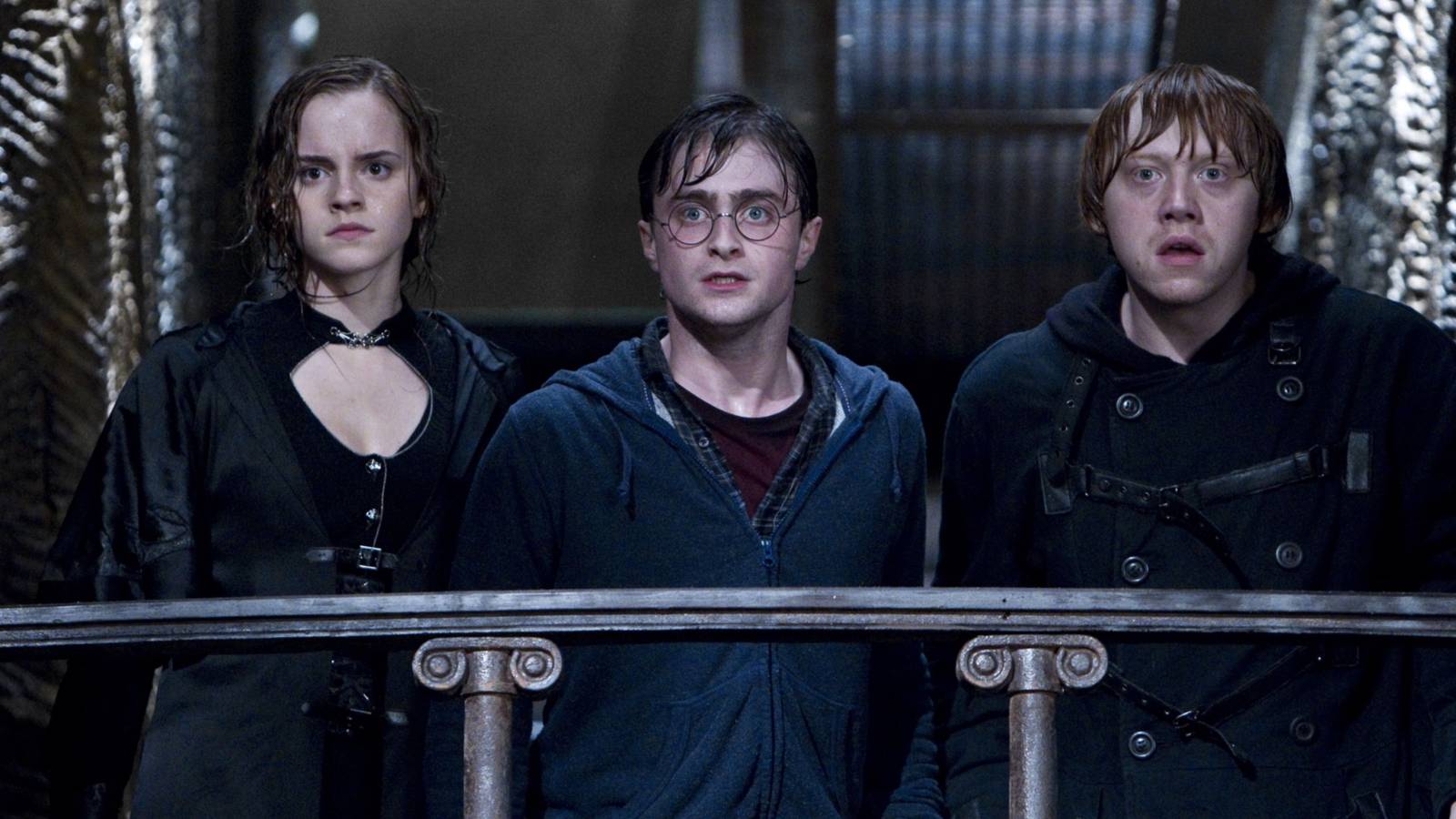
MovieStillsDB Published Aug 19, 2026, 10:01 AM EDT Senior Music Editor at Screen Rant, Sarah's love of sound and story drive the beat. A globetrotting brand whisperer and award-winning journalist, she’s built cross-cultural narratives around the world—but music has always been her true north. She launched DJ Mag North America, successfully introducing the iconic UK brand to the U.S. market. Previously, she carved a space for EDM inside the pages of VIBE, blending electronic and hip-hop culture long before it was trendy. Sign in to your ScreenRant account Adapting seven enormous Harry Potter novels into eight movies inevitably meant leaving things behind. Entire characters disappeared, subplots were condensed, and fan-favorite moments never made it onscreen. Those omissions still inspire arguments among readers, particularly as longtime fans discover how many Harry Potter details hit differently when revisiting the story as adults. What gets discussed less often is everything the movies added. While bringing one of cinema's most recognizable fantasy worlds to life, the filmmakers occasionally invented scenes, lines, and character moments that worked so well it is easy to forget they weren't written by J.K. Rowling. Not every addition was an improvement—the attack on the Burrow in Half-Blood Prince remains difficult to defend—but some became essential parts of the films. The best additions understood that movies communicate differently from books. A look or physical gesture could do the work of pages of internal thought, while other scenes simply gave the characters room to be teenagers before returning to Voldemort, Horcruxes, and war. These 10 movie-only moments became so memorable that imagining the Harry Potter films without them now feels almost impossible. McGonagall Teaches Ron How To Dance In Goblet Of Fire Few characters inspire more immediate obedience than Professor McGonagall, which makes Ron Weasley's horror when she selects him as her Yule Ball dance partner even funnier. In Harry Potter and the Goblet of Fire, McGonagall demonstrates the proper dance position by dragging Ron in front of his classmates while Harry desperately tries not to laugh. Fred and George assuring Ron that they will never let him forget it finishes the job. The Yule Ball is naturally in the novel, but McGonagall's hands-on demonstration was created for the movie. It gives Maggie Smith a chance to show the dry humor beneath McGonagall's formidable exterior while allowing Rupert Grint to do what he does best: look as though public humiliation may actually kill him. It also captures something the films sometimes lost amid the growing darkness—these world-saving wizards were still awkward schoolchildren. Harry Declares "But I Am The Chosen One" In Half-Blood Prince Harry spends much of the series deeply uncomfortable with being famous. By Harry Potter and the Half-Blood Prince, however, he has apparently discovered at least one advantage. When Hermione warns him that Romilda Vane is only interested because she thinks he is "the Chosen One," Harry pauses before smugly replying, "But I am the Chosen One." Hermione immediately smacks him with a newspaper. The exchange does not appear in Rowling's novel, but it may be one of Daniel Radcliffe's funniest moments in the entire franchise. More importantly, it gives Harry a personality beyond his increasingly grim responsibilities. Teenagers can be vain, ridiculous and amused by themselves even with Voldemort looming over everything. Hermione's immediate refusal to indulge him also tells viewers almost everything they need to know about their friendship. Harry And Hermione Dance In Deathly Hallows: Part 1 That friendship becomes far more important once Ron abandons the Horcrux hunt in Harry Potter and the Deathly Hallows: Part 1. The movie spends considerable time with Harry and Hermione alone in the wilderness, surrounded by silence and increasingly unsure of what to do next. Then Harry removes the Horcrux from Hermione's neck, turns up Nick Cave's "O Children" and invites her to dance. Nothing romantic needs to happen for the scene to feel intimate. Instead, it captures the strength of Harry and Hermione's friendship at a point when the Golden Trio has temporarily been reduced to two. Harry is simply trying to make his best friend happy for the length of a song, and Hermione briefly allows herself to forget how miserable she is. When the music ends, reality immediately settles over them again. The books capture the bleakness of Ron's absence, but this movie-only moment finds a beautifully visual way to show two exhausted friends trying to keep each other going. Hermione Offers To Go With Harry Into The Forest In Deathly Hallows: Part 2 MovieStillsDB By Deathly Hallows: Part 2, Hermione and Harry's friendship reaches its heartbreaking endpoint. After learning that he must allow Voldemort to kill him, Harry finds Ron and Hermione before heading toward the Forbidden Forest. Hermione understands what Harry has learned almost immediately. Instead of trying to stop him, she quietly tells him, "I'll go with you." In the novel, Harry deliberately slips away without saying goodbye to either of them. That works beautifully on the page because readers are inside Harry's head as he walks toward his death. The movie needs something different, and Emma Watson provides it. Hermione's offer is instinctive; if Harry has to die, she will at least make sure he does not face it alone. Harry's refusal and their embrace give the trio a farewell the film needed. Sirius Calls Harry "James" In Order Of The Phoenix Sirius Black loves Harry, but the books repeatedly suggest that his relationship with his godson is complicated by how much Harry reminds him of James. Harry Potter and the Order of the Phoenix reduces much of that tension for time, only to restore it with three words during the battle at the Department of Mysteries. After Harry holds his own against some of Voldemort's most dangerous dark wizards, Sirius beams and tells him, "Nice one, James." Seconds later, Bellatrix Lestrange kills him. The line never appears in the novel, but it distills a far larger piece of Sirius' characterization into one devastating slip. For a fraction of a second, Sirius is fighting beside his best friend again. Harry barely has time to process it before losing the closest thing to a father he has left. Snape Protects Harry, Ron & Hermione From Lupin In Prisoner Of Azkaban Severus Snape has spent most of Prisoner of Azkaban making Harry's life miserable when he finds himself standing between three students and a transformed Remus Lupin. Snape instinctively spreads his arms and pushes Harry, Ron and Hermione behind him, shielding them with his own body as the werewolf approaches. That physical gesture is absent from the novel, where Snape remains unconscious during Lupin's transformation. Alfonso Cuarón's movie changes the sequence and, in doing so, gives Snape one of his most revealing early moments. He may resent Harry and openly despise Lupin, but when actual danger arrives, his first response is to protect his students. Years before the full truth about Snape emerges, the film quietly tells audiences there is more happening beneath the hostility. Slughorn Tells Harry About Lily's Fish In Half-Blood Prince Horace Slughorn initially seems more interested in collecting talented students than forming meaningful relationships with them. That perception changes during one of Half-Blood Prince's finest scenes. While drinking with Harry and Hagrid after Aragog's funeral, Slughorn remembers a gift Lily Potter once gave him: a flower petal that transformed into a tiny fish he named Francis. Francis disappeared from his bowl on the day Lily died. The entire story was invented for the movie, yet it feels as though it could have come directly from the book. Jim Broadbent's performance turns a whimsical piece of magic into a painful memory, finally showing how deeply Lily's death affected Slughorn. It also explains why Harry's request for the unaltered Horcrux memory finally reaches him. Harry is no longer merely another famous student—he is Lily's son. Snape Finds Lily's Body In Deathly Hallows: Part 2 Lily's death leads naturally into one of the movies' most controversial but undeniably powerful additions. During Snape's memories in Deathly Hallows: Part 2, he enters the destroyed Potter home and finds Lily dead beside Harry's crib. Snape collapses beside her, cradling her body while baby Harry cries in the background. Snape never arrives at Godric's Hollow this way in the novel. The movie creates the image to make his grief immediate, and Alan Rickman's performance ensures it lands. Viewers have spent years watching a controlled, often cruel man reveal almost nothing about himself. The movies glossed over much of Snape and Lily's complicated history, so seeing that control disappear completely gives their relationship an emotional immediacy the adaptation otherwise struggles to convey. Hogwarts Raises Its Wands After Dumbledore's Death In Half-Blood Prince Dumbledore's death leaves Half-Blood Prince with an adaptation problem. Rowling's novel follows it with an elaborate funeral attended by mourners from across the wizarding world, but the movie omits the ceremony entirely. Instead, Harry kneels beside Dumbledore's body as the students and professors of Hogwarts gather around him. One by one, they raise their illuminated wands into the night sky. The combined light eventually clears the Dark Mark hovering above the castle. It is simple and almost entirely wordless, which is exactly why it works. Rather than attempt to compress Dumbledore's funeral, director David Yates gives Hogwarts its own ritual of mourning. The image of hundreds of wands raised together became one of the series' most recognizable expressions of grief. McGonagall Admits She's Always Wanted To Use That Spell In Deathly Hallows: Part 2 The Battle of Hogwarts gives McGonagall one final movie-only flourish. As Voldemort's army approaches, she casts Piertotum Locomotor, awakening Hogwarts' stone knights and sending them marching to defend the castle. Then, with the smallest hint of delight in Maggie Smith's delivery, she turns to Molly Weasley and admits, "I've always wanted to use that spell." There is an important distinction for book fans: McGonagall does animate Hogwarts' statues and armor in Deathly Hallows. What the movie adds is that wonderful little confession. It transforms an already impressive piece of magic into a perfect McGonagall character moment. After years of rules, discipline and barely concealed exasperation, Hogwarts is under attack and she can finally unleash everything she knows. Ending the series without letting McGonagall enjoy that for two seconds would almost feel cruel. TV Show(s) Harry Potter First Film Harry Potter and the Sorcerer's Stone First TV Show Harry Potter Cast Daniel Radcliffe, Emma Watson, Rupert Grint, Tom Felton, Alan Rickman, Matthew Lewis, Bonnie Wright, Evanna Lynch, Maggie Smith, Michael Gambon, Richard Harris, Ralph Fiennes, Helena Bonham Carter, Alfred Enoch, Harry Melling, Gary Oldman, Robert Pattinson, Warwick Davis, Oliver Phelps, James Phelps, David Bradley, David Thewlis, Katie Leung, Jason Isaacs, Imelda Staunton, David Tennant, Jamie Campbell Bower, Timothy Spall, Robbie Coltrane, Eddie Redmayne, Jude Law, Katherine Waterston, Ezra Miller, Dan Fogler, Alison Sudol, Johnny Depp, Mads Mikkelsen Created by J.K. Rowling Character(s) Harry Potter, Hermione Granger, Ron Weasley, Dumbledore, Minerva McGonagall, Rubeus Hagrid, Dobby the House Elf, Draco Malfoy, Sirius Black, Ginny Weasley, Voldemort
10 Greatest Harry Potter Movie Scenes That Weren't In The Books
Full Article
Original Source
Read the full article at Screenrant →KhanList aggregates and links to publicly available news content. We do not host full articles from third-party sources. Always verify important information with original sources.