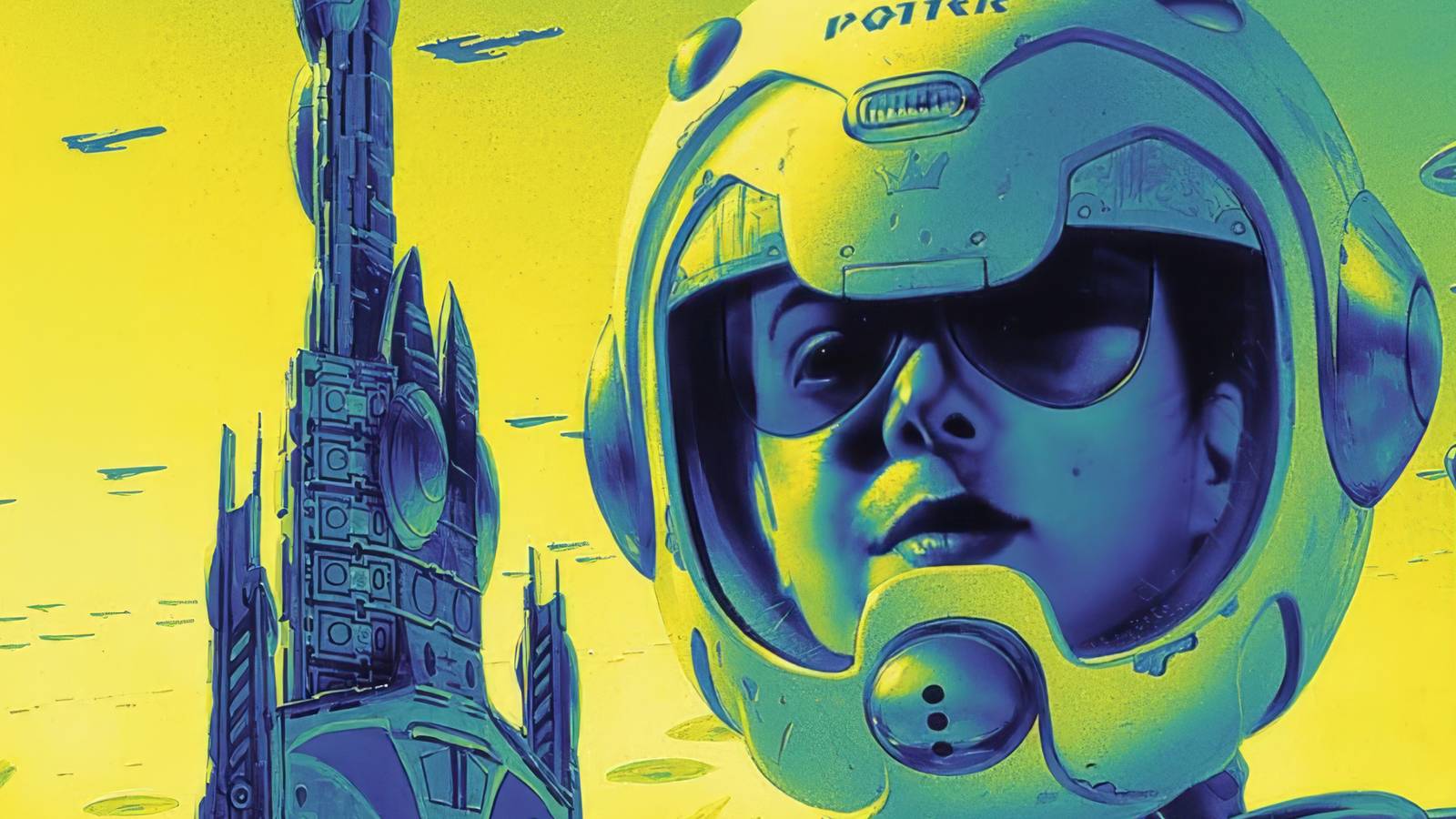
Image via Chris Moore/Gollancz / Millennium Published Aug 8, 2026, 5:30 PM EDT Diego Pineda has been a devout storyteller his whole life. He has self-published a fantasy novel and a book of short stories, and is actively working on publishing his second novel. A lifelong fan of watching movies and talking about them endlessly, he writes reviews and analyses on his Instagram page dedicated to cinema, and occasionally on his blog. His favorite filmmakers are Andrei Tarkovsky and Charlie Chaplin. He loves modern Mexican cinema and thinks it's tragically underappreciated. Other interests of Diego's include reading, gaming, roller coasters, writing reviews on his Letterboxd account (username: DPP_reviews), and going down rabbit holes of whatever topic he's interested in at any given point. Sign in to your Collider account There are very few things that a science fiction fan enjoys more than a grand, inventive, well-written sci-fi epic. These are stories that take the genre's focus on technology, futuristic worlds, and advanced science to its absolute limit, delivering deep conflicts on a quasi-mythical scale. When done right, they can result in some of the greatest speculative fiction novels ever written. Whether it's a foundational classic that influenced all sci-fi epics that came after, like the Foundation series; or a groundbreaking modern gem like the many exceptional installments of the Expanse series, the greatest sci-fi epic books of all time are perfect demonstrations of the gargantuan potential of the genre. 10 'Ringworld' (1970) Image via Gollancz Ringworld is the origin of the saga of the same name, a subseries of Larry Niven's overarching Known Space series of books and short stories. It's one of those masterful sci-fi books that won both the Hugo and Nebula Awards, and fans of the genre nowadays still widely hail it as one of the best and most important sci-fi books ever written. It's a thoroughly fun adventure on a massive scale, and the tremendous impact that its story and worldbuilding have had on sci-fi pop culture since 1970 simply can't be overstated. The book set the gold standard for the "Big Dumb Object" concept, wherein a mysterious object of unknown origin and immense power drives the momentum of a narrative. It's big, perfectly paced, and a must-read for epic sci-fi fans. 9 'Heir to the Empire' (1991) Image via Random House Worlds Seeing as it's perhaps the biggest franchise of epic sci-fi stories in the history of media, it should be no surprise that Star Wars has produced several great books over the years. Not all of them fall under the "epic" umbrella, but a few of the best ones do. And out of them, it's rather easy to single out Timothy Zahn's Heir to the Empire, the first installment in the trilogy of the same title, as the best of the bunch. Even though the book is no longer part of the Star Wars canon, it's still a delectably rich and layered read even for those whose familiarity with the franchise is limited to the iconic original trilogy. Zahn's timeless prose is spectacularly cinematic, greatly elevating the epic tone of the story and helping the many expansions to the Star Wars lore feel all the more vivid. 8 'A Fire Upon the Deep' (1992) Image via Tor Books Several of the greatest sci-fi novels of all time are space operas, and there are few better examples of that fact than Vernor Vinge's A Fire Upon the Deep. Winner of a Hugo Award, it is often regarded as one of the best sci-fi books of the 1990s, and for good reason. As great as its prequel and sequel are, there is simply no beating the original. The high-stakes cosmic scope through which Vinge approaches this story works flawlessly, dealing with themes as complicated as love, science, and genocide in endlessly compelling ways. And as if that thematic depth weren't enough, Fire Upon the Deep also happens to be built on one of the most creative central concepts in the history of sci-fi literature: the Zones of Thought, four regions where the laws of physics and the limits of human intelligence apply differently. 7 'Tiamat's Wrath' (2019) Image via Orbit Written by James S. A. Corey, the pen name of Daniel Abraham and Ty Franck, The Expanse series of novels is one of the greatest in the history of modern sci-fi. It contains not just one or a couple, but several of the best sci-fi books of the past 20 years. Though many may point to Leviathan Wakes, the series' first chapter, as the best of the bunch, that one doesn't really play out as a full-on sci-fi epic. On the other hand, the series' conclusion, Tiamat's Wrath, is nothing if not a grand-scale epic. The pacing is entertainingly relentless, and the way all character arcs are brought to a satisfying endpoint is admirable; that's only the tip of the iceberg when it comes to the quality of Tiamat's Wrath. The plot wastes no time in not only continuing to raise the stakes until the very end, but also offering an epic sense of payoff to virtually every question the series had set up up to that point. Collider Exclusive · Sci-Fi Survival Quiz Which Sci-Fi World Would You Survive? The Matrix · Mad Max · Blade Runner · Dune · Star Wars Five universes. Five completely different ways the future went wrong — or sideways, or up in flames. Only one of them is the world your instincts were built for. Eight questions will figure out which dystopia, galaxy, or desert wasteland you'd actually make it out of alive. 💊The Matrix 🔥Mad Max 🌧️Blade Runner 🏜️Dune 🚀Star Wars TEST YOUR SURVIVAL → 01 You sense something is deeply wrong with the world around you. What do you do? The first instinct is often the truest one. APull on every thread until I understand the system — then figure out how to break it. BStop asking questions and start stockpiling — food, fuel, weapons. Questions don't keep you alive. CKeep my head down, observe carefully, and trust no one until I know who's pulling the strings. DStudy the patterns. Every system has a rhythm — learn it, and you learn how to survive it. EFind the people fighting back and join them. You can't fix a broken galaxy alone. NEXT QUESTION → 02 In a world of scarcity, what resource do you guard most fiercely? What we protect reveals what we believe survival actually requires. AKnowledge. If you understand the system, you don't need resources — you can generate them. BFuel. Everything else — movement, power, escape — runs on it. CTrust. In a world of fakes and informants, a truly reliable ally is rarer than any commodity. DWater. And after water, information — the two things empires are truly built on. EShips and credits. The galaxy is big — you survive it by being able to move through it freely. NEXT QUESTION → 03 What kind of threat keeps you up at night? Fear is useful data — if you're honest about what you're actually afraid of. AThat reality itself is a lie — that everything I experience has been constructed to keep me compliant. BA raid. No warning, no mercy — just the roar of engines and then nothing left. CBeing identified. Once someone with power decides you're a problem, you're already out of time. DBeing outmanoeuvred — losing a political game I didn't even know I was playing. EThe Empire tightening its grip until there's nowhere left to run. NEXT QUESTION → 04 How do you deal with authority you don't trust? Every dystopia has a power structure. Your approach to it determines everything. ASubvert it from the inside — learn its rules well enough to weaponise them against it. BIgnore it and stay out of its reach. The further from any power structure, the better. CAppear to comply while doing exactly what I need to do. Visibility is the enemy. DManoeuvre within it carefully. You can't beat a system you refuse to understand. EResist openly when I have to. Some things are worth the risk of being seen. NEXT QUESTION → 05 Which environment could you actually endure long-term? Survival isn't just tactical — it's physical, psychological, and very much about where you are. AUnderground bunkers and server rooms — cramped, artificial, but with access to everything that matters. BOpen wasteland — brutal sun, no shelter, constant movement. At least the threat is honest. CA dense, rain-soaked city where you can disappear into the crowd and nobody asks questions. DMerciless desert — extreme heat, no water, and something enormous living beneath the sand. EThe fringe — backwater planets and busy spaceports where the Empire's attention rarely reaches. NEXT QUESTION → 06 Who do you want in your corner when things fall apart? The company you keep is the clearest signal of who you actually are. AA tight crew of believers who've seen behind the curtain and have nothing left to lose. BOne or two people I'd trust with my life. Any more than that and someone talks. CNobody, ideally. Alliances are liabilities. I work alone unless I have no choice. DA community bound by shared hardship and mutual survival — people who need each other to last. EA ragtag team with wildly different skills and total commitment when it counts. NEXT QUESTION → 07 Where do you draw the line — if you draw one at all? Every survivor eventually faces a moment that tests what they're actually made of. AI won't harm the innocent — even the ones who'd report me without hesitation. BI do what I have to to protect the people I've chosen. Everything else is negotiable. CThe line shifts depending on who's asking and what's at stake. DI draw a long-term line — nothing that compromises my people's future, even if it'd help now. ESome lines, once crossed, can't be uncrossed. I know which ones they are. NEXT QUESTION → 08 What would actually make survival worth it? Staying alive is one thing. Having a reason to is another. AWaking others up — dismantling the illusion so no one else has to live inside it. BFinding somewhere — or someone — worth protecting. A reason to keep moving. CAnswers. Understanding what I am, what any of this means, before time runs out. DLegacy — shaping the future in a way that outlasts me by generations. EFreedom — for myself, for others, for every world still living under someone else's boot. REVEAL MY WORLD → Your Fate Has Been Calculated You'd Survive In…Your answers point to the world your instincts were built for. This is the universe your temperament, your survival instincts, and your particular brand of stubbornness were made for. The MatrixYou took the red pill a long time ago — probably before anyone offered it to you. You're a systems thinker who can't help but notice the seams in things. You're drawn to understanding how the system works before figuring out how to break it. You'd find the Resistance, or it would find you — your instinct for spotting constructed realities is the machines' worst nightmare. You function best when you have access to information and the freedom to act on it. The Matrix built an airtight prison. You'd be the one probing the walls for the door. Mad MaxThe wasteland doesn't reward the clever or the well-connected — it rewards those who are hard to kill and harder to break. That's you. You don't need comfort, community, or a cause larger than the next horizon. You need a vehicle, a clear threat, and enough fuel to outrun it — and you're good at all three. You are unsentimental enough to survive that world, and decent enough — just barely — to be something more than another raider. In the wasteland, that distinction is everything. Blade RunnerYou'd survive here because you know how to exist in moral grey areas without losing yourself completely. You read people accurately, keep your circle small, and ask the questions others prefer not to answer. In a city where humanity is a legal designation rather than a feeling, you hold onto something that keeps you functional. You're not a hero. But you're not lost, either. In Blade Runner's world, that distinction is everything. DuneArrakis is the most hostile environment in the known universe — and you are precisely the kind of person it rewards. Patience, discipline, and political awareness are your core strengths — and on Arrakis, they're survival tools. You understand that the long game matters more than any single victory. Others come to Dune and are consumed by it. You'd learn its logic and earn its respect. In time, you wouldn't just survive Arrakis — you'd begin to reshape it. Star WarsThe galaxy far, far away is vast, loud, and in a constant state of violent political upheaval — and you wouldn't have it any other way. You find meaning in being part of something larger than yourself — a cause, a crew, a rebellion. You'd gravitate toward the Rebellion, or the fringes, or whatever pocket of the galaxy still believes the Empire's grip can be broken. You fight — not because you have to, but because standing aside isn't something you're capable of. In Star Wars, that willingness is what makes all the difference. ↻ RETAKE THE QUIZ 6 'The Book of the New Sun' (1980–1987) Image via Simon & Schuster Gene Wolfe's The Book of the New Sun consists of four volumes and a coda, published over eight years. Technically, it's not a series, but rather one huge multi-volume epic unlike anything else that the sci-fi genre has ever delivered. It's one of the most perfectly written sci-fi masterpieces in the history of literature, a cult classic that only keeps getting better with every re-read. From George R. R. Martin to Ursula K. Le Guin, many celebrated authors over the years have expressed their admiration for the unparalleled marvel that Wolfe created here. Structured like a profoundly layered puzzle, which only makes the richly detailed worldbuilding even more immersive, The Book of the New Sun may not be an easy read, but its density and depth are precisely its biggest strengths. Told by an unreliable narrator that's among the most interesting in all of science fiction, it's a masterpiece that everyone who loves sci-fi epics should check out sometime. 5 'Hyperion' (1989) Image via Doubleday Dan Simmons' Hyperion is the origin of his beloved Hyperion Cantos series, and it's also among the best sci-fi books of the last 50 years. Borrowing the structure of The Canterbury Tales, this '80s classic tracks multiple timelines and several different points of view. Indeed, it's soft science fiction at its grandest and most epic, remaining consistently engrossing in just a little under 500 pages. A deeply moving and intellectually stimulating space opera that serves as a masterclass in everything the genre ought to do. It's not such a long novel considering the scale and scope of its narrative. Blend that accessible length with an exquisitely genre-blending tone and genuinely surprising philosophical depth, and you get a deeply moving and intellectually stimulating space opera that serves as a masterclass in everything the genre ought to do. It's a mixture of high art and pulpy sci-fi influences that results in an irresistibly complex work of literature. 4 'Foundation' (1951) Image via Gnome Press Isaac Asimov is one of the greatest and most important authors in the history of science fiction. Throughout his hugely productive and illustrious career, he revolutionized the genre through his unprecedentedly deep and complex understanding of technology, having coined the very term "robotics." And though there are over 500 published works in his massive bibliography, there's hardly much of a debate regarding what his most iconic and widely celebrated work is: It has to be the Foundation series. The entire epic saga is exceptional beyond description, but the original Foundation is particularly historic, one of the best sci-fi book masterpieces of all time. Asimov's prose is very dry and functional, and the character writing may not be the deepest, but that's not what makes this book special. Rather, the reason why Foundation is a masterpiece is its conceptual genius, turning an entire civilization into the protagonist of such a massive story. 3 'Rendezvous With Rama' (1973) Image via Victor Gollancz Ltd Futurist and scientist Arthur C. Clarke was one of the most revolutionary authors in the history of science fiction, so it's no shocker that he wrote several of the best books in the genre's history. Case in point: Rendezvous With Rama, regarded by many as Clarke's magnum opus. Winner of the Hugo, Nebula, and Locus awards upon release, it has aged wonderfully as one of the best hard sci-fi books of all time. It's a space epic all about the pure wonders of exploration and discovery, a love letter to the concept that has always served as the foundation of science fiction itself: the unknown. Even though Clarke's prose feels clinical and relatively unadorned, he's still able to convey a sense of amazement better than most other science fiction authors. 2 'The Forever War' (1974) Image via St. Martin's Press Joe Haldeman's bibliography is admirably diverse, but he's probably best-known for having revolutionized military sci-fi with what's perhaps the subgenre's best book of all time: The Forever War, yet another fully-deserving winner of the Hugo-Nebula-Locus trifecta. Heavily inspired by Robert Heinlein's Starship Troopers and Haldeman's experiences during the Vietnam War, it's a must-read military sci-fi masterpiece even for those who don't typically love the subgenre. On top of being the most essential cornerstone of military science fiction, The Forever War is also one of the greatest works of epic sci-fi in all of literature. The scale of the story is undeniably epic, but what really sets it apart is that far from feeling like pro-militarism propaganda, it instead feels like a surprisingly intimate portrayal of the trauma and alienation caused by war. Sci-fi epics don't get much more complex or refreshingly personal than this. 1 'Dune' (1965) Image via Chilton Books There's really no question about it: no 20th-century sci-fi novel is better or more foundational than Frank Herbert's Dune, and as such, there is obviously no better work of epic science fiction. It's a space opera unlike any other, a masterpiece which revolutionized sci-fi by proving how thematically complex, politically sharp, and artistically driven it could be when in the hands of authors as brilliant as Herbert. A cautionary tale against religious fanaticism and charismatic leaders, a study of humanity's relationship with technology and the environment, and a character-driven epic that never forgets to be irresistibly entertaining—Dune really is one of the most engrossing speculative fiction books ever published. It's perfectly paced, full of richly imagined worldbuilding, and essential reading for anyone and everyone even slightly interested in the history of sci-fi. Dune Release Date September 15, 2021 Cast Timothée Chalamet, Rebecca Ferguson, Oscar Isaac, Jason Momoa, Stellan Skarsgård, Stephen McKinley Henderson, Josh Brolin, Javier Bardem, Sharon Duncan-Brewster, Chang Chen, Dave Bautista, David Dastmalchian, Zendaya, Charlotte Rampling, Babs Olusanmokun, Benjamin Clémentine, Souad Faress, Golda Rosheuvel, Roger Yuan, Seun Shote, Neil Bell, Oliver Ryan, Stephen Collins, Charlie Rawes, Richard Carter Runtime 155 minutes Director Denis Villeneuve Writers Denis Villeneuve, Eric Roth, Jon Spaihts, Frank Herbert
10 Greatest Epic Sci-Fi Books of All Time
Full Article
Original Source
Read the full article at Collider →KhanList aggregates and links to publicly available news content. We do not host full articles from third-party sources. Always verify important information with original sources.