
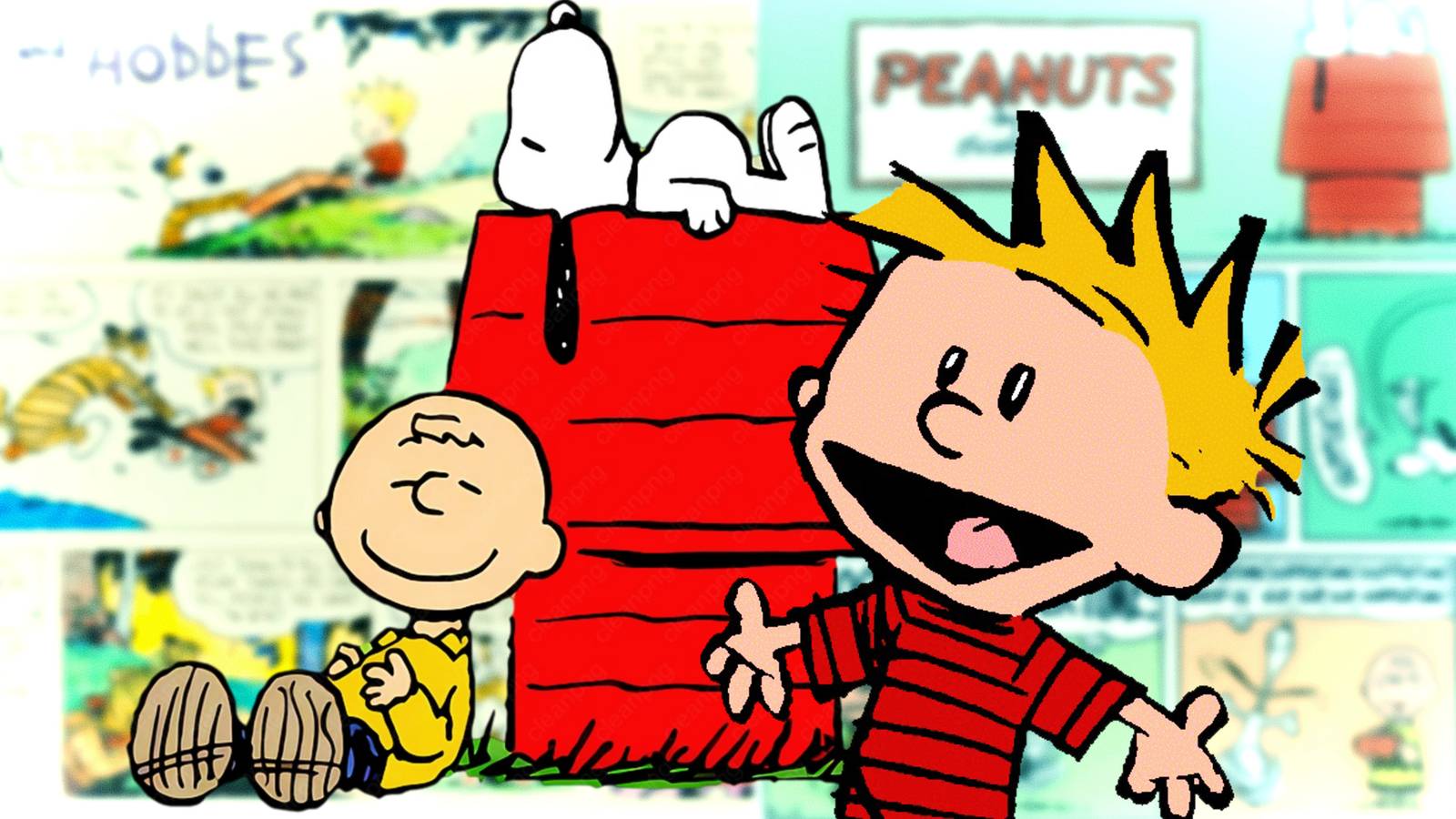
Custom Image by Vanessa Piña Published Sep 7, 2026, 10:45 PM EDT Vanessa Piña has been writing as a journalist for over two years. As a senior writer, she focuses on timely coverage of the latest anime releases and popular comic franchises. Sign in to your ScreenRant account Over the course of their lives, most people have likely enjoyed reading comic strips. From daily newspaper features to those published less frequently, a vast number of stories in this format have been released over the years. However, while some comic strips failed to secure a significant place in the collective memory, others became timeless classics and massive international hits, evolving into franchises that spawned all kinds of content. The things that make a comic strip stand out are usually its memorable characters, original storylines, and the universal appeal of its themes. But although there are many syndicated comic strips that have been published for decades, the ones that become global icons are those that, with just a single glance, transport readers back to their childhood or evoke memories through a single phrase. By transcending the printed format, the most iconic comic strips are those that shaped generations and changed pop culture forever. The Far Side Gary Larson's The Far Side is arguably the most popular and culturally influential single-panel strip worldwide. The Far Side relies on surreal alternative humor and specific Western pop culture references, but despite its use of English wordplay, the comic strip was translated into 17 languages and published all over Europe, Latin America, and parts of Asia. This is because The Far Side plays with universal themes, such as nature, evolution, aliens, and farm animals, making it accessible to a very broad audience. The impact of The Far Side on popular culture is remarkable, especially considering it lacked a continuous plot or recurring characters. Even so, the work helped pave the way for modern, international absurdist comedy. In fact, the term "thagomizer," coined by Larson in a 1982 comic to describe the spikes on a Stegosaurus's tail, is used today by paleontologists worldwide. Mafalda The Argentine comic strip Mafalda is the most popular in Latin America. Created by Joaquín Salvador Lavado, known as Quino, the work follows a revolutionary girl named Mafalda who hates soup and loves the Beatles and is capable of making all kinds of witty remarks and asking uncomfortable questions that provoke reflection. Thus, beneath its child-focused humor, Mafalda serves as a complex and biting social satire. With signature sharp wit, Mafalda advocates for education, challenges political economic structures, and champions environmental causes. While Mafalda is primarily known in Spanish-speaking countries, the character also became an icon in Europe, and her comic strips were even published in Asian countries. The greatest testament to Mafalda's impact is that she became a symbol for UNICEF to promote children's rights and will be turned into an animated series on Netflix more than six decades after its release. Dennis The Menace Created by Hank Ketcham, Dennis the Menace is one of the most recognizable characters in American comics. The comic strip revolves around Dennis, a troublemaker blond boy who wears red overalls and a striped shirt. It follows his mischief with other neighborhood children, as well as the torment he inflicts on his next-door neighbor, Mr. Wilson. Dennis the Menace debuted on March 12, 1951, and spawned three live-action movies and television adaptations, including an animated series and even a video game. The comic strip popularity stems from the story's universal appeal, as everyone has encountered, or once was, a mischievous, imaginative child who is always getting into trouble. Dennis the Menace appeared in 48 countries, and the strip remains relevant today, continuing to be published. The Phantom The Phantom is a comic strip created by Lee Falk that debuted on February 17, 1936. Following a vigilante operating in a fictional country, the work was highly influential, though it also serves as a case study of a comic that achieved greater fame outside its country of origin. While it didn't have a massive impact in the United States, The Phantom was a success in Australia, India, and Europe and has been published in more than 60 countries worldwide. The comic strip also received multiple live-action films and TV show and animated adaptations. While it's not as popular today, The Phantom is considered a proto-superhero, being the first fictional crime fighter to wear a costume, thereby laying the groundwork for what would become the formula of major characters from DC and Marvel. The Phantom is a true comic exponent and one of the longest-running strips in history. Dick Tracy Created by Chester Gould in 1931, Dick Tracy marked a turning point in the detective genre and became one of the most famous detectives in the world of comics. Centered on a sharp, tough-as-nails detective, the work began as a daily newspaper strip that combined action and suspense with a dramatic noir visual style, standing out particularly for its gallery of bizarre villains. Chester Gould's work didn't shy away from depicting violent, highly realistic stories set in the criminal underworld, something uncommon for comic strips of that era. Dick Tracy left a mark on global popular culture, reaching around 100 countries, and its influence extended beyond the newspaper strip to comic books, film adaptations, and TV shows. Furthermore, many later series drew inspiration from Dick Tracy's narrative style, and the strip even helped popularize the famous phrase "Crime doesn't pay," retaining a significant following even decades after its inception. The Smurfs Although many may not be aware of their origins, The Smurfs began as a Franco-Belgian comic strip created by Peyo in 1958. Due to their immense popularity, the small blue creatures who live in the village of mushroom-shaped houses received their own comic series, originally titled Les Schtroumpfs in French, starting in 1959, with The Smurfs eventually becoming a massive success across various media, including films, animated series, and video games. Unlike the animated series, the original Smurfs comic stories often tackled more satirical themes, social allegories, and screwball comedy, even reflecting factional divisions and other political struggles within the village. While the main series featured more extensive storylines, Peyo also created numerous short, single-page gag-based strips. The Smurfs comics were published in the Belgian magazine Spirou for over two decades and continue to be released in various collections. Beyond being a classic of children's comics, The Smurf's characters are truly timeless and enjoy worldwide recognition. The Adventures of Tintin In 1929, the Belgian illustrator Hergé created the comic strip The Adventures of Tintin, featuring a young journalist and his white fox terrier. Hergé used gags and cliffhangers to keep readers engaged, and the series became one of Europe's most popular and influential comics. The Adventures of Tintin grew so much that it made the leap to more significant platforms, including collected editions, specialized magazines, theater, TV shows, and a film directed by Steven Spielberg. The Adventures of Tintin mixed humor and action, but what stood out was not just the intriguing nature of the globe-trotting journeys or the way Tintin solved historical mysteries and found himself in dangerous situations, but also the characters who accompanied him on his travels, such as Captain Haddock. The adventure comic strip ceased publication after Hergé's death, but the legacy of The Adventures of Tintin endures even decades later. Calvin and Hobbes Custom Image by Hannah Diffey Calvin and Hobbes is one of the most iconic newspaper comic strips in history. Created by Bill Watterson in 1985, it follows a young boy and his stuffed tiger, who is very real to him and serves as his partner in all kinds of adventures. The strip became an ode to creativity and childhood innocence, even exploring deep, existential themes, a natural fit, given that the protagonists' names were inspired by great philosophers. Although it ran for only a decade, Calvin and Hobbes is a timeless pop-culture classic, published in dozens of countries and a symbol of nostalgia. The only thing that prevented the franchise from becoming even larger was Watterson’s famous refusal to license his characters for merchandise, movies, or TV shows; yet, this did not stop Calvin and Hobbes from transcending its medium and becoming a fundamental part of childhood for many readers around the globe. Garfield Garfield may be the world's most famous cat, rivaled only by Hello Kitty, but comparing to him in terms of impact as a comic strip is a whole other story. Since its debut in 1978, Garfield has become one of the best-selling comic series of all time, earning the Guinness World Record for the most widely syndicated comic strip. A fat, lasagna-loving cat and the epitome of laziness, Garfield won readers' hearts by focusing on everyday themes like daily routines, the comforts of home, and the joy of delicious food. The Garfield comic strip was not only funny but highly relatable, reaching far beyond just cat lovers to become a global multimedia empire featuring merchandise, TV shows, and movies. While the strip is still being published, Garfield himself remains a pop-culture icon whose face is plastered on all sorts of products and who is frequently quoted by others who also hate Mondays. Peanuts Some comic strips possess a special quality that instantly connects with the audience, and Peanuts clearly has it. Charles M. Schulz’s first Peanuts strip was published in 1950, and more than seven decades later, it would be hard to find someone who doesn't know who Snoopy is. Despite never showing any adults, Peanuts is not a comic strip just for children. While it depicts all kinds of childhood scenarios, such as playing outside with friends and school, it explores profound themes like depression, melancholy, life, and daily struggles. The comic strip was translated into dozens of languages and inspired television specials and movies that fans revisit year after year. To this day, Snoopy merchandise is found worldwide, and new adaptations continue to be produced, demonstrating that Schulz's legacy remains alive and continues to connect with new generations. Thus, more than a comic strip series, Peanuts is a masterpiece that became a global icon.
10 Greatest Comic Strips That Became Global Icons
Full Article
Original Source
Read the full article at Screenrant →KhanList aggregates and links to publicly available news content. We do not host full articles from third-party sources. Always verify important information with original sources.