
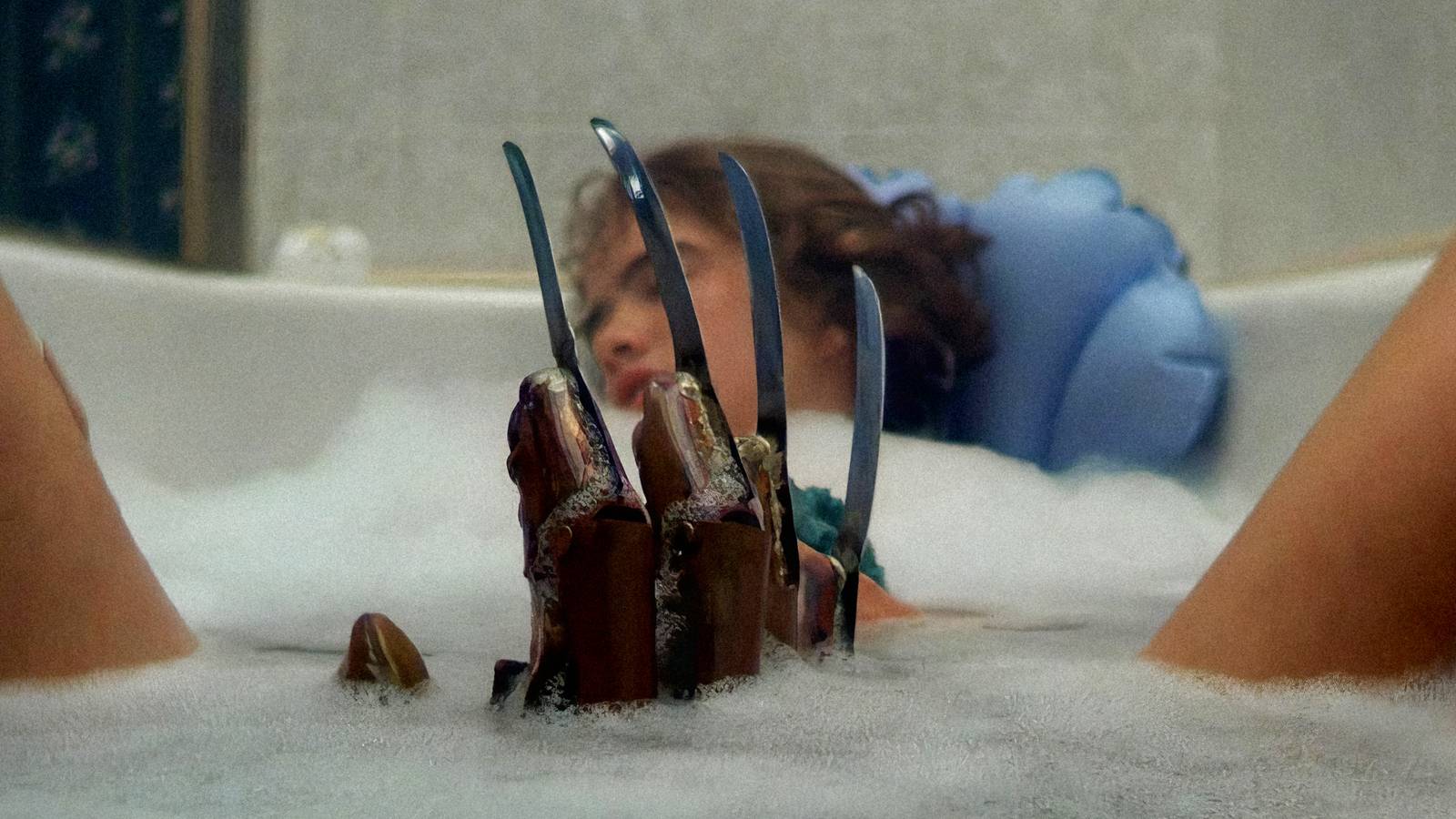
Image via New Line Cinema Published Aug 16, 2026, 5:55 PM EDT A New York native, Joe graduated from an avant-garde theater school upstate, where he was obsessed with sketch comedy. There, he and his lunatic friends founded The Sketchies — which still lives on at Skidmore College today. Living in New York City, a screenwriter friend of his then taught him how to write for film. This awakened a new passion in Joe. Since then his scripts have garnered over 200 festival selections, nominations, and wins all over the globe (including the BlueCat Best Feature award). Several of his screenplays have been made into feature films — some of them not that bad! Overall, he loves to create unique, hilarious, touching, and bizarre stories. Sign in to your Collider account Over the last one hundred years, American horror movies have had significantly haunting highs and loathsome lows. While the genre waxed and waned in popularity, there have always been frightful filmmakers crafting spooky cinematic sensations. These range from the first vampire films of note, like Dracula, to more modern slasher classics, such as Halloween. In any eerie event, every decade has produced several unforgettably fearsome, unequivocally American horror movies. Here are the best American horror classics that the (under)world has even known. From creepy counts living in the extremities of (made-to-look-like) Romania to skin-mask-toting lunatics in the actual Southwest USA, all the essential horror figures can be found right here (even if you have to crack open a casket or two to unearth them). In fact, there are so many stellar classics (all featuring iconic villains) that many couldn’t even fit onto this list, like Frankenstein, The Mummy, Bride of Frankenstein, The Wolf Man, and The Creature from the Black Lagoon (one million apologies, Boris Karloff, Elsa Lanchester, and Claude Rains). So, put your most judgmental spectacles on and see if these films stack up to your personal horror classic favorites. 10 'Dracula' (1931) Image via Universal Pictures Most people outside the coveted horror-buff-nerd circle aren’t even aware that Tod Browning and Karl Freund’s Dracula was far from the first vampire film — it’s not even the first Dracula film (that honor goes to Nosferatu, the unlicensed version of the Bram Stoker novel). While the 1915 film The Afterlife Wanderer is cited as the first “surviving” (get it?) vampire feature, Dracula was the first American talkie that featured the titular character from the book. Drenched in German Expressionist shadows, this peak inside the coffin of cinema’s most famous bloodsucker is a real hoot, and has certainly stood the test of time. The tale is really a love story, at its (stake-through-the) heart. Jonathan Harker (David Manners) is sent to Transylvania, Romania, to close a real estate deal. Shouldn’t be that difficult, right? Well, when the buyer is a count (Bela Lugosi) residing in a gigantic Gothic castle who has a particular penchant for exsanguinating his guests, things can get a little prickly. Harker tries to put his fears aside and secure the deal (he really wants that commission), but when Drac spies an image of Johnny’s betrothed, Mina (Helen Chandler), the Count becomes obsessed with her, and decides to take a little boat ride to London (a.k.a. a soundstage at Universal Pictures) to meet IRL. Everything about this film is so creepily executed and chillingly brought to life. The pacing is impeccable, as the filmmakers knew just how to build tension and then shock their audience (which, at the time, had never seen anything like this). 9 'Night of the Living Dead' (1968) Image via Continental Distributing As with all great films, the subject is never really the subject. The zombies here in Night of the Living Dead (in, by the way, the first modern American zombie movie ever) are metaphorical entities, representing the decay and deterioration of America at the time — and the mindless, mob-like mentality of many societal groups. As the horde of zombies descends on the country (caused by a spacecraft’s radiation — clearly a nod to the country’s collective fear of nuclear war repercussions), the real monsters are revealed to be the seemingly everyday folk who become savagely violent themselves. Now, commentary and messaging aside, this is a truly awesome and terrifying film all around. It’s amazing that this was director and co-writer George Romero’s first feature. Things start out innocently enough. A woman, the infamous Barbara (Judith O'Dea) and her brother, Johnny (Russell Streiner), take a stroll near a graveyard. The undead unearth themselves and the human flesh and brain devouring begins. Barbara escapes to a farmhouse, where an eclectic crew of others are hiding out (with the fierce Duane Jones assuming the male lead as Ben). As the dead attempt to break in, the crew scrambles to keep them out. When one dude’s daughter dies and turns into one of the mindless munchers, things take an even darker turn. This film is obviously the quintessential zombie flick (that inspired a billion knock-offs), and it never gets old — refusing to die over the decades, just like the ghouls themselves. 8 'A Nightmare on Elm Street' (1984) Image via New Line Cinema While Freddy is a darkly humorous figure, with tons of cheeky zingers to spare, he is still one of the most iconic horror villains of all time — and A Nightmare on Elm Street is one of the best all-around horrors ever made. Wes Craven, always ahead of his time, did a morbidly masterful job of combining the most wicked elements of various sub-genres: dark comedy, teen drama, suburban mystery, and, of course, nightmare-inducing terror. This film started one of the most prolific franchises in horror history, as there are seven Nightmare movies out there (not to mention a couple others where Freddy pops up, tickling viewers with his knife-glove). Nancy Thompson (Heather Langenkamp) is a normal high school girl, just trying to get good grades and keep her handsome yet handsy boyfriend, Glen Lantz (Johnny Depp in his screen debut), at bay. When her classmates start dying in their sleep, Nancy’s fear and curiosity are piqued. When the murderer, Freddy Krueger (bad dream maven Robert Englund) then decides to make her his next delicious victim, Nancy undergoes some growing pains as she is forced to confront mortality and basically morph into a little Nancy Drew. She uncovers the motivation for this maniac evil spirit’s slashing spree: all the parents in her town once conspired to take justice into their own hands and kill a child predator, the notorious Freddy. Naturally, that came to stab them all in the butts, as karmic retribution is nothing to mess with. The themes here of revenge and moral relativity are just as juicy as the creative kill scenes (this movie is a slasher like no other). Freddy will forever haunt our dreams, but we wouldn’t have it any other way. 7 'The Texas Chainsaw Massacre' (1974) Image via Bryanston Distributing Company Those who watched the Monster: The Ed Gein Story series were treated to some pretty eye-opening (if semi-fictional) insight into how the cult favorite film, The Texas Chainsaw Massacre, was blithely birthed. Indie filmmaker Tobe Hooper was inspired by the true story of Ed Gein, a deranged man who wore a mask of skin from one of his victims. Ergo, Leatherface was introduced to the movie-going public, along with a new sub-genre of film: the All-American, gore-packed slasher. The story follows a rowdy (believe it or not) group of late teens in Texas in search of a good time (road trip!). They run out of gas and Sally (Marilyn Burns, the first “final girl” in cinema history), her brother, Franklin (Paul A. Partain), and their friends seek help at a nearby farmhouse. Big. Mistake. There they encounter quite the tight-knit family, each member more zesty (dangerously insane) and unique than the last. As this family systematically tortures and kills every one of the college-aged kids (except the wily Sally), their ingenuity and creativity for depravity is shown in vivid color. This movie is one of the best horrors because it was not only groundbreaking for its shock value, but it really was a scathing commentary on the brutality of humans, and, Americans in particular, since the people in power at the time had the country embroiled in the (what many thought was senseless) Vietnam War. 6 'Halloween' (1978) Image via Compass International Pictures All that can be said is thank goodness that Halloween was renamed to its current title from the originally proposed one: The Babysitter Murders. It’s hard to imagine a nearly fifty-year-spanning franchise with that name… Nevertheless, Halloween was one of the first horror movies to say, hey, you don’t need a big budget to create big, lasting scares. Armed with merely a William Shatner mask and a dream, director/co-writer John Carpenter took a simple concept and turned it into an international sensation (and that’s not even counting all the Michael Meyers dancing memes). Laurie Strode (the ever-loved Jamie Lee Curtis, who was destined to become a scream queen — after all, her mom was Janet Leigh) was just an ordinary, nerdy babysitter looking to make some cash and score huge on her SATs. Her life was turned upside-down when a mental patient, Michael Meyers (Tony Moran, the original man behind the mask) escaped his facility and decided to wreak havoc on the (mostly promiscuous) teens of Haddonfield. A psychiatrist who treated Mr. Meyers, Dr. Samuel Loomis (Donald Pleasence), is all too aware of Michael’s murderous proclivities and tries in vain to get the local authorities to take the situation seriously. As the bodies stack up and Laurie becomes Mikey’s prime target, the tension escalates to a fever pitch. With its utterly unique, maddeningly catchy score, perfectly precise pacing, and one of the coolest silent villains in horror history, Halloween (and it’s subsequent thousand films) will forever be in the cultural zeitgeist…especially at the end of October. Collider Exclusive · Horror Survival Quiz Which Horror Villain Do You Have the Best Chance of Surviving? Jason Voorhees · Michael Myers · Freddy Krueger · Pennywise · Chucky Five killers. Five completely different ways to die — if you're not smart enough, fast enough, or self-aware enough to avoid it. Only one of them is the villain your particular set of instincts gives you a fighting chance against. Eight questions will figure out which one. 🏕️Jason 🔪Michael 💤Freddy 🎈Pennywise 🪆Chucky TEST YOUR SURVIVAL → 01 Something feels wrong. You can't explain it — you just know. What do you do? First instincts are the difference between the survivor and the first act casualty. ALeave immediately. I don't need to understand a threat to respect it. BStay quiet and observe. If I can see it, I can understand it. If I can understand it, I can avoid it. CStay awake. Whatever this is, I am not going to sleep until I feel safe again. DConfront it directly. Fear grows in the dark — I'd rather know what I'm dealing with. ECheck everything, trust nothing. The threat might be closer than I think — and smaller. NEXT QUESTION → 02 Where are you most likely to find yourself when things go wrong? Setting is everything in horror. Where you are determines which rules apply. ASomewhere remote — a cabin, a campsite, off the grid and away from people. BA quiet suburban neighbourhood where nothing ever happens. Except tonight. CIn my own head — the most dangerous place of all, depending on what's already in there. DWherever children are — because something about this place attracts the worst things. ESomewhere ordinary — a house, a toy store, a place where the last thing you'd expect is a threat. NEXT QUESTION → 03 What is your most reliable survival asset? Every survivor has a quality the villain didn't account for. What's yours? APhysical fitness — I can run, I can swim, I can outlast something that relies on brute persistence. BSpatial awareness — I always know the exits, the hiding spots, the fastest route out. CPsychological resilience — I've faced my worst fears before. They don't have the same power over me. DEmotional steadiness — I don't panic. Panic is what gets you caught. EScepticism — I don't underestimate threats because of how they look. Size is irrelevant. NEXT QUESTION → 04 What kind of fear is hardest for you to fight through? Knowing your weakness is the first step to not dying because of it. AThe unstoppable — something that will not stop, cannot be reasoned with, and is always getting closer. BThe invisible — a threat I can feel but can't locate, watching from somewhere I can't see. CThe psychological — something that uses my own mind and memories against me. DThe unknowable — something ancient, shapeless, that feeds on the fear itself. EThe mundane — a threat so ordinary-looking that no one will believe me until it's too late. NEXT QUESTION → 05 You're with a group when things start going wrong. What's your role? Horror movies are brutally clear about who survives group situations and who doesn't. AThe one who says "we need to leave" first — and means it, even when no one listens. BThe one who stays quiet, watches the others, and figures out the pattern before anyone else does. CThe one who holds the group together when panic sets in — because someone has to. DThe one who asks the questions nobody wants to ask — because ignoring them gets people killed. EThe one who takes the threat seriously when everyone else is laughing it off. NEXT QUESTION → 06 What's the horror movie mistake you're most likely to make? Honest self-assessment is a survival skill. Denial is not. AGoing back for someone — I know I shouldn't, but I can't leave them behind. BAssuming I'm safe once I've found a hiding spot. That's when it finds me. CFalling asleep when I absolutely cannot afford to. Exhaustion is its own enemy. DLetting my curiosity override my instincts — I always need to understand what I'm dealing with. EDismissing the threat because of how it looks. That's exactly what it wants. NEXT QUESTION → 07 What's your best weapon against something that can't be stopped by conventional means? Every horror villain has a weakness. The survivors are always the ones who find it. AThe environment itself — I use the terrain, the water, the geography against it. BPatience — I wait, I watch, and I strike at the one moment it doesn't expect. CLucidity — if I can stay in control of my own mind, it loses its primary weapon. DCourage — facing it directly, refusing to run, taking away the fear it feeds on. EImprovisation — I use whatever's at hand, however unconventional. Creativity over brute force. NEXT QUESTION → 08 It's the final scene. You're the last one standing. How did you make it? The final survivor always has a reason. What's yours? AI kept moving. I never stopped, never hid for too long, never let it corner me. BI figured out the pattern before anyone else did — and I used it against the thing following it. CI stayed awake, stayed lucid, and refused to give it the one thing it needed most. DI stopped being afraid of it. And the moment I did, everything changed. EI took it seriously from the start — and I never once made the mistake of underestimating it. REVEAL MY VILLAIN → Your Survival Odds Have Been Calculated Your Best Chance Is Against…Your instincts, your strengths, and your particular way of thinking under pressure point to one villain you actually have a fighting chance against. Everyone else — good luck. Jason VoorheesJason is relentless, but he is also predictable — and that is the gap you would exploit. He moves in straight lines toward his target. He doesn't strategise, doesn't adapt, doesn't outsmart. He simply pursues. Your ability to keep moving, use the environment, and resist the panic that freezes most victims gives you a genuine edge. The Crystal Lake survivors were always the ones who stopped running in circles and started thinking about terrain, water, and distance. You think like that. Which means Jason, for all his indestructibility, would face someone who simply refused to be where he expected. Michael MyersMichael watches before he moves. He is patient, methodical, and almost impossible to detect — until it's too late for anyone who isn't paying close enough attention. But you are paying attention. You notice the shape in the window, the car parked slightly wrong, the silence where there should be sound. Michael's power lies in the invisibility of ordinary suburbia — the fact that nothing ever looks wrong until it already is. Your spatial awareness and instinct to map every room, every exit, and every shadow before you need them is precisely the quality Laurie Strode had. You are not a victim waiting to happen. You are someone who already suspects something is wrong — and acts on it. Freddy KruegerFreddy wins by getting inside your head — using your own fears, your own memories, your own subconscious as weapons against you. That strategy requires a target who can be destabilised. You are harder to destabilise than most. You've faced uncomfortable truths about yourself and you haven't looked away. The survivors on Elm Street were always the ones who understood what was happening and chose to face it rather than flee from it. Freddy's greatest weakness is that his power evaporates in the presence of someone who refuses to give him the fear he feeds on. Your psychological resilience — the ability to stay grounded when reality itself becomes unreliable — is exactly the quality that keeps you alive here. PennywisePennywise is ancient, shapeshifting, and feeds on terror — but it has one critical vulnerability: it cannot function against someone who genuinely stops being afraid of it. The Losers Club didn't survive because they were braver than everyone else. They survived because they faced their fears together, and faced them honestly. You ask the questions others avoid. You look directly at what frightens you rather than turning away. That directness — the refusal to let fear fester in the dark — is Pennywise's worst nightmare. It chose the wrong target when it chose you. You are exactly the kind of person whose fear tastes like nothing at all. ChuckyChucky's greatest advantage is that nobody takes him seriously until it's already too late. He exploits the gap between how something looks and what it actually is. You don't have that gap. You take threats seriously regardless of how they present — and you never make the mistake of underestimating something because of its size or appearance. Chucky relies on surprise, on the delay between recognition and response. You close that delay faster than almost anyone. Your instinct to treat every unfamiliar thing with appropriate scepticism — rather than dismissing it because it seems absurd — is the exact quality that keeps you breathing. Against Chucky, not laughing is already winning. You are very good at not laughing. ↻ RETAKE THE QUIZ 5 'The Omen' (1976) Image via 20th Century Studios And now, the movie that forever ruined parents’ plans of naming their child “Damien.” In Richard Donner’s bone-chilling masterpiece The Omen, the Son of Satan is an adorable little scamp who is initially unaware of his Lucifer-like nature. It’s a film with some of the most memorable, singularly unique moments ever committed to celluloid. From the “It’s all for you, Damien!” nanny suicide to the priest getting impaled by the lightning rod to the final impish grin of a little Antichrist, this devilishly delightful film has got it all. While primarily shot in the U.K., The Omen is still a full-on, American masterpiece. The basic story here is that a U.S. diplomat in England, Robert Thorn (Hollywood heavyweight Gregory Peck), and his wife, Katherine (Lee Remick), have a child that is unfortunately stillborn. The crafty Robert keeps this info from Katherine, and surreptitiously replaces his own deceased baby with a newborn orphan (of highly questionable origins). Regardless, their family unit is finally complete. The only tiny issue is that this decoy boy, Damien (Harvey Stephens), bears the mark of the beast (y’know, that little 666 insignia, slightly protruding from his scalp skin). As Damien grows, bizarre and deadly occurrences seem to follow him around (don’t even think about taking him to the zoo). Eventually, Robert journeys to Italy and then Israel to learn of Damien’s true origins…and then things completely fly off the rails. One of the best parts of this film is the casting of little Damien — as the kid manages to appear innocently sweet and simultaneously devilishly wicked. Exploring themes of deceit, unmitigated power, and the fear of the unknown (that we willingly accept into our homes and lives), The Omen is not just about the Devil, but it’s also about the Devil We Know. 4 'Rosemary’s Baby' (1968) Image via Paramount Pictures Disgraced (yet, arguably, genius) filmmaker Roman Polanski really wrote the cinematic book on new motherhood (well, when the babe is the spawn of Satan, that is). Rosemary’s Baby is also a stark examination of city living, where one’s neighbors are not only mere inches away (plaster can only be so thick), but they can also inject themselves into your life, invited or not. The claustrophobic dissection of extreme closeness that is the crux of this film is just one of the things that make it so unforgettable. Polanski really knows how to shock and awe his viewers. This film is really a masterpiece of subtextual messaging; themes of a male-dominated society, lack of free will, unwilling child rearing, strategic spousal manipulation, and a host of other head-trippy things proliferate the dark action. So, Rosemary Woodhouse (Mia Farrow, sporting a hairstyle that launched a million pixie cuts), and her husband, the struggling actor Guy Woodhouse (John Cassavetes), move into an old building on the Upper West Side of Manhattan. Within mere moments, their neighbors, who are as hysterical as they are annoying, ingratiate themselves into the young couple’s lives. Rosemary senses that something is amiss, and yada yada yada, the Devil knocks her up. Few films up to this point had shown the perspective of a mother who wasn’t feeling connected to their unborn child. One can look at this movie as the first examination of postpartum, or on an even more simplistic level, the first hot take on women not only not trusting their spouses but also the thing relentlessly growing inside of them. 3 'The Exorcist' (1973) Image via Warner Bros. Pictures This movie is so good it will make your head spin. Indeed, William Friedkin’s The Exorcist may not only be the scariest movie ever made, it’s also a tremendous film in general (and one of the only horror movies made up to this point to score a ton of Oscar nominations). The images depicted in it are beyond iconic, and beyond terrifying (they’re haunting, actually). The fact that this movie was loosely based on an allegedly true story (to an extent) is chilling in its own right. Since 1973, little girls with issues have been taken way more seriously…and pea soup sales have never quite recovered. The story follows a mother, famed actress Chris MacNeil (Ellen Burstyn), who has a wee bit of an issue with her child, Regan (Linda Blair). She’s possessed by a demon and urinates on the floor, curses like a sailor, and pukes copious amounts of bilious vomit at will (…and you thought Gen Alpha was bad). After trying conventional means of quelling her child (homeopathic remedies don’t always work on diabolical denizens of the underworld), she contacts the good old Catholic Church and orders a grade-A exorcism. Two priests (who, luckily, make house calls) show up at their Washington, D.C. residence and prepare to wrangle the demonic entity out of poor Regan. There’s the old timer, Father Merrin (Max von Sydow), who does things by the (holy) book, and the newbie, Father Karras (Jason Miller), who is a bit of a renegade with his own troubled past (nothing apparently beats classic Catholic guilt). Soon after, the demon does its damned(to Hell)nest to remain in the child. Friedkin utilizes a ton of certifiably scary set pieces in the telling of this macabre story, and the scarred images of Regan have been seared into the collective consciousness of audiences the world over. You can also thank this film for inspiring basically every other exorcism movie since, good or…evil. 2 'The Shining' (1980) Image via Warner Bros. Pictures It’s no secret that moviegoers took a real shine to this film. Yes, Stanley Kubrick was already known for his inspired filmmaking, but he had never tackled pure horror before. The result was one of the scariest and most riveting (also, most quotable) horror films of all time. With some of the coolest set and art direction ever, epically sprawling and then intensely intimate cinematography, spine-tingling scoring, and the most delightfully unhinged performances, The Shining took an already highly compelling, brilliantly terrifying novel (thank you, Mr. Stephen King) and made a moving picture that will never, ever be forgotten. Jack Torrance (the legend himself, Jack Nicholson) is a writer. He takes his small family, including his wife, Wendy (a perfectly gobsmacked Shelley Duvall), and their son, Danny (Danny Lloyd), to a large, shuttered resort hotel in the Colorado Rockies, where he has accepted a job as the caretaker for the winter. What better place to get some writing done, right? Well, the hotel seems to be littered with ghosts, all of whom share the same motivation: drive Jack nuts and feed on Danny’s “shine” (his psychic ability). That’s one of the more clever parts of this film; each specter uses a different tactic to lure, and then break down, Jack. As these ghouls slowly drive Jack insane (or, rather, turn him into a dull boy), he becomes homicidal. The Shining is chilling in every sense of the word, as the tale culminates in a snowy, lethal hedge maze sequence. Kubrick is renowned as one of the best filmmakers of all time, and this entry into his oeuvre only helped to cement that reputation — even if it was later revealed that he relentlessly tormented Ms. Duvall to get the truly terrified performance out of her. 1 'Psycho' (1960) Image via Paramount Pictures Few films can genuinely be classified as “perfect,” but Psycho sure as heck comes close. Sir Alfred Hitchcock certainly reinvented and redefined what a horror movie could be. A true innovator, a genuine visionary, he subverted just about every American cinematic expectation with this film. From the way shots were framed, to the manner in which protagonists were also framed (depicted), he really had a knack for creative screen-crafting and inspiring unadulterated tension. For anyone who’s been living under a cinematic rock for the last 60-plus years, the plot is centered on Norman Bates (Anthony Perkins, in his career-defining — for good or bad — role), a chap with mommy issues. He runs a mediocre-looking motel with a dope-looking Victorian house looming over the property. Anyway, a beautiful young woman, Marion Crane (Janet Leigh), decides to pilfer the cash from her job and goes on the run. She ends up at the infamous Bates Motel to crash for a bit before she heads to parts unknown. Little does she know that someone is watching her… Hitchcock was the first filmmaker ever to employ the “let’s kill our big star off early on” tactic (later revisited in Scream — R.I.P. Drew Barrymore’s Casey). Just like in The Texas Chainsaw Massacre, Hitchcock was inspired by the skin-crawling Ed Gein story. That’s where the dressing up like the deceased mother motif comes from (sorry for any spoiling here, but if you haven’t seen Psycho, you’re a little late to the psychotic party). Psycho also takes the (rotten) cake for having the singular best score in movie history (sorry, Halloween and Jaws, but nothing holds a candle to the piercing violins heard here). When viewed with a modern lens, Psycho may come off as somewhat insensitive to the mentally ill, but, Norman’s struggle between his two personalities is still quite palpable today — and let’s face it, Psycho is the very definition of the classic horror movie. Psycho Release Date September 8, 1960 Runtime 109 minutes
10 Greatest Classic American Horror Movies
Full Article
Original Source
Read the full article at Collider →KhanList aggregates and links to publicly available news content. We do not host full articles from third-party sources. Always verify important information with original sources.