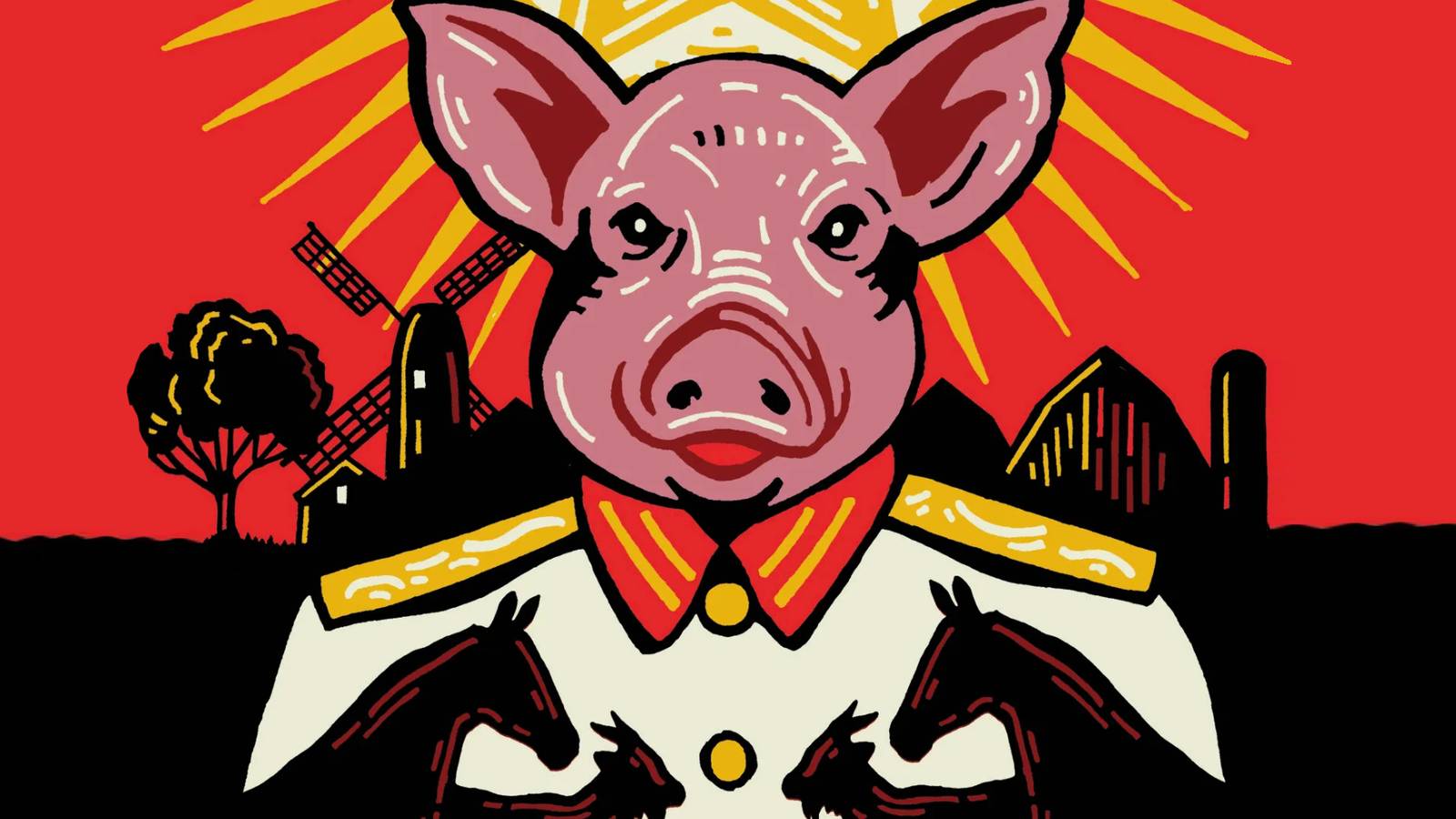
Image via HarperCollins GB Published Aug 17, 2026, 8:09 PM EDT Jeremy has more than 2700 published articles on Collider to his name, and has been writing for the site since February 2022. He's an omnivore when it comes to his movie-watching diet, so will gladly watch and write about almost anything, from old Godzilla films to gangster flicks to samurai movies to classic musicals to the French New Wave to the MCU... well, maybe not the Disney+ shows. His favorite directors include Martin Scorsese, Sergio Leone, Akira Kurosawa, Quentin Tarantino, Werner Herzog, John Woo, Bob Fosse, Fritz Lang, Guillermo del Toro, and Yoji Yamada. He's also very proud of the fact that he's seen every single Nicolas Cage movie released before 2022, even though doing so often felt like a tremendous waste of time. He's plagued by the question of whether or not The Room is genuinely terrible or some kind of accidental masterpiece, and has been for more than 12 years (and a similar number of viewings). When he's not writing lists - and the occasional feature article - for Collider, he also likes to upload film reviews to his Letterboxd profile (username: Jeremy Urquhart) and Instagram account. He has achieved his 2025 goal of reading all 13,467 novels written by Stephen King, and plans to spend the next year or two getting through the author's 82,756 short stories and 105,433 novellas. Sign in to your Collider account Epic books are cool and all, but one doesn’t always have the time for War and Peace, The Lord of the Rings, and Infinite Jest. Like, one should try to find the time for those (especially the first two; someone not really vibing with the third would be understandable), but they do require a lot of time. Plenty of other amazing books have hundreds upon hundreds of pages to get through, too, and even if you have an audiobook on your side, a book that’s about 1000 pages long might equal 35 to 40 hours of audio, which is still quite the time commitment. So, if you want books that can be churned through much faster, you're in luck. These ones can be counted among the greatest books of all time that can be read in perhaps a single sitting, or at least a whole day (maybe 50 pages in the morning, the remaining 100 or so in the evening). Most can be gotten through within a matter of hours each, depending on your reading speed, and all of them are well worth devoting that time to. Image via Simon & Schuster Maybe there would be a way to extend a story about a guy waking up one day as an insect, but Franz Kafka wasn’t really interested in making The Metamorphosis an epic, to put it mildly. That would feel fitting if the protagonist were also made tiny (you know, small bug, small book), but The Metamorphosis is about poor old Gregor becoming a giant bug, probably human-sized. Well, his life is limited, once he’s a bug, and so that limitation is reflected by The Metamorphosis also being limited with its page count. There. No, but it is a classic for good reason, since there’s a real simplicity to it all on a narrative front, and then so much that can be unpacked or read into once you’ve gotten through the book and feel ready to break down what it could all mean, and also what it might well be saying about human nature. 9 'Point Omega' (2010) Image via Scribner Don DeLillo has written one very long novel in the past (1997’s Underworld), though most of his other major works fit within the relatively standard 300-400-ish page range. If you venture out and read some of his later books, though, you get quite a few that are almost novella-length, like Point Omega, with the first edition of that one coming in at just under 120 pages. It’s all very postmodern, being hard to describe in terms of plot, but a slow-motion version of Alfred Hitchcock's Psycho is something emphasized and returned to throughout, and there are a few other people who… well, they're citizens of DeLillo-land. It is all very DeLillo-ish. Parts of it are very striking, though, and so even if it can’t quite live up to something like White Noise or Libra, it’s a good way to (if you imagine Don DeLillo as a pool) get used to him in the shallow end. Not that Point Omega is shallow. You know. Writing is hard. 8 'Carrie' (1974) The first of Stephen King’s published novels, Carrie, really is straight-to-the-point. It’s got coming-of-age themes, to some extent, like plenty of his other stories, but the titular character here also has telekinetic powers. The book’s structured in a way that lets you know they are going to be unleashed in a dramatic capacity, at some point, and then it builds suspense getting to that point. Also, Carrie surprises with how explosive it does get, and it pushes things a little further than the climax of the movie did. It’s not hugely expanded, compared to that adaptation, though, with Carrie riding the line between novel and novella, honestly. The main thing is that it does a lot within a fairly slim number of pages, and then Carrie is also difficult to put down, once you start, meaning it’s rather effortless, as far as “read in one day” books go. 7 'The Crying of Lot 49' (1966) Image via J. B. Lippincott & Co. If any Thomas Pynchon book can be called approachable, it’s probably The Crying of Lot 49, and even then it’s approachable by Pynchon’s standards, which isn't saying a ton. There is also Inherent Vice, admittedly, which got adapted into one movie and then potentially inspired another, but The Crying of Lot 49 doesn’t have as much room to spiral off into as many directions, since it’s overall very short. Page-wise, The Crying of Lot 49 is unlikely to exceed 200, unless the margins are particularly wide and the font is rather large. It’s a novel about a woman trying to unravel a mystery that can be read in a couple of hours… though working out what it’s really about (if anything) might take more than just an afternoon or evening. So, The Crying of Lot 49 is admittedly the kind of novel you might have to re-read, or research. Still, in any event, that first readthrough can technically be done quite fast. 6 'Animal Farm' (1945) Image via Wordsworth Classics The only reason you might not want to read Animal Farm in a day is because there’s a pretty good chance you’ve read it already. It’s one of those books that often gets assigned at school, but there might well be a reason to revisit it, if it’s been a few years. You get some of what it’s about, if you're being taught Animal Farm, yet there is a lot more to it once you're older. Animal Farm is about politics, class, and division, among other things, tackling a whole heap of subjects a bit like what George Orwell also did with Nineteen Eighty-Four. Not that it was ever a children’s book or anything, but more just one that can be used to get younger people on board with what books are capable of doing beyond “just” telling stories. Animal Farm is about politics, class, and division, among other things, tackling a whole heap of subjects a bit like what George Orwell also did with Nineteen Eighty-Four. That one, though, is probably a little too long for just the one sitting, and the fact it might well be even heavier doesn’t help it feel as easily readable, either (but it is, like Animal Farm, an essential read nonetheless). 5 'A Clockwork Orange' (1962) Image via Penguin Books Since the movie is a bit over two hours long, A Clockwork Orange is one of those rare cases where you could almost get through the source material at the same speed as it would take to get through the film. Famously, or maybe infamously, though, Stanley Kubrick’s adaptation of A Clockwork Orange left out the final chapter, so having “more” to read does mean things might take a bit longer. Otherwise, it’s a rather faithful adaptation, with both having the same difficult protagonist who’s hard to define; even the “antihero” label doesn’t feel appropriate here. And speaking of “infamously,” A Clockwork Orange – in both its forms – does prove confronting, and more than willing to ask a whole heap of difficult questions. Like The Crying of Lot 49, it’s a case of fewer than 200 pages to read, but a lot more to think about once those pages have been gotten through. 4 'Man's Search for Meaning' (1946) Image via Beacon Press In Man’s Search for Meaning, Viktor Frankl draws from his experiences of a monumentally devastating event, and condenses various big psychology-related ideas into a very short book. The subject matter is such that a handful of sittings may be preferable, and you definitely don’t have to read something heavy like this in one go, but Frankl writes well, and he doesn’t write a lot, so the readability and page count are on your side, if you're pressed for time. Frankl survived concentration camp imprisonment during World War II, but doesn’t delve too far into his personal experiences, instead tying some of what he lived through to various psychological and philosophical ideas. Man’s Search for Meaning is one of those ubiquitous titles that often shows up on any given “X Books You Must Read At Least Once in Your Life,” but for good reason. It’s well and truly earned a place on the bunch of them. 3 'A Night to Remember' (1955) Image via R & W Holt This might sound morbid, but you can read A Night to Remember and essentially “experience” the sinking of the Titanic in real time. That’s the point, because the night referred to in the title is that infamous one in 1912, but things really do kick off right when the iceberg is hit, and if you stay reading without getting up or taking a break, you might finish about three hours later, because it’s not a long book. The ship itself sank 160 minutes after the iceberg was hit, and so reading A Night to Remember is pretty close to real time, if you're reading it at a decent speed. There are other ways to get some of the story found here (including that rather popular 1997 movie, and also, this book itself got a movie adaptation in 1958), but A Night to Remember – as in the book – remains feeling like the most essential document of that whole night (oh, and taking into account the fact that some of the information is dated… but for 1955, it was as accurate and visceral as things could get). 2 'And Then There Were None' (1939) Image via Collins Crime Club The work of Agatha Christie can usually be relied upon if you want well-paced and exciting mysteries (plenty of those mysteries being of the murder variety), but she went one step beyond with And Then There Were None. It might well be her masterpiece, with most of the book set on a small island with only a few people on it at the same time… and then they start dying one by one. It’s very immersive, being easy to put yourself in the action and feel the desperation of the characters as they try to figure out the truth behind all the murdering. And Then There Were None is not a long book, yet it flies by in a way that feels even shorter than its fairly short page count might otherwise have you believe, and few books of its age feel quite so easy to recommend to just about anyone. 1 'Rita Hayworth and Shawshank Redemption' (1982) Image via Scribner Book Company It’s a novella that’s part of Different Seasons, admittedly, but Rita Hayworth and Shawshank Redemption has also been sold on its own, and it’s not too much shorter than Carrie, so it’s being included here as a second Stephen King story. This one is probably not as well known as its movie adaptation, but that’s only because The Shawshank Redemption (1994) just has a reputation that’s out of control with its immensity, at this stage. Still, it’s very easy to recommend the source material if you liked the movie, and owing to the movie’s popularity, there’s a very small chance you're someone who didn’t like the movie. Rita Hayworth and Shawshank Redemption might well go a step further than many of the books here and be difficult not to finish in one sitting, since it’s so well-paced and compelling as a prison drama (and something that’s successfully about so many broad things thematically that it’s all hard not to be moved by it).
10 Greatest Books You Can Read in a Day
Full Article
Original Source
Read the full article at Collider →KhanList aggregates and links to publicly available news content. We do not host full articles from third-party sources. Always verify important information with original sources.