
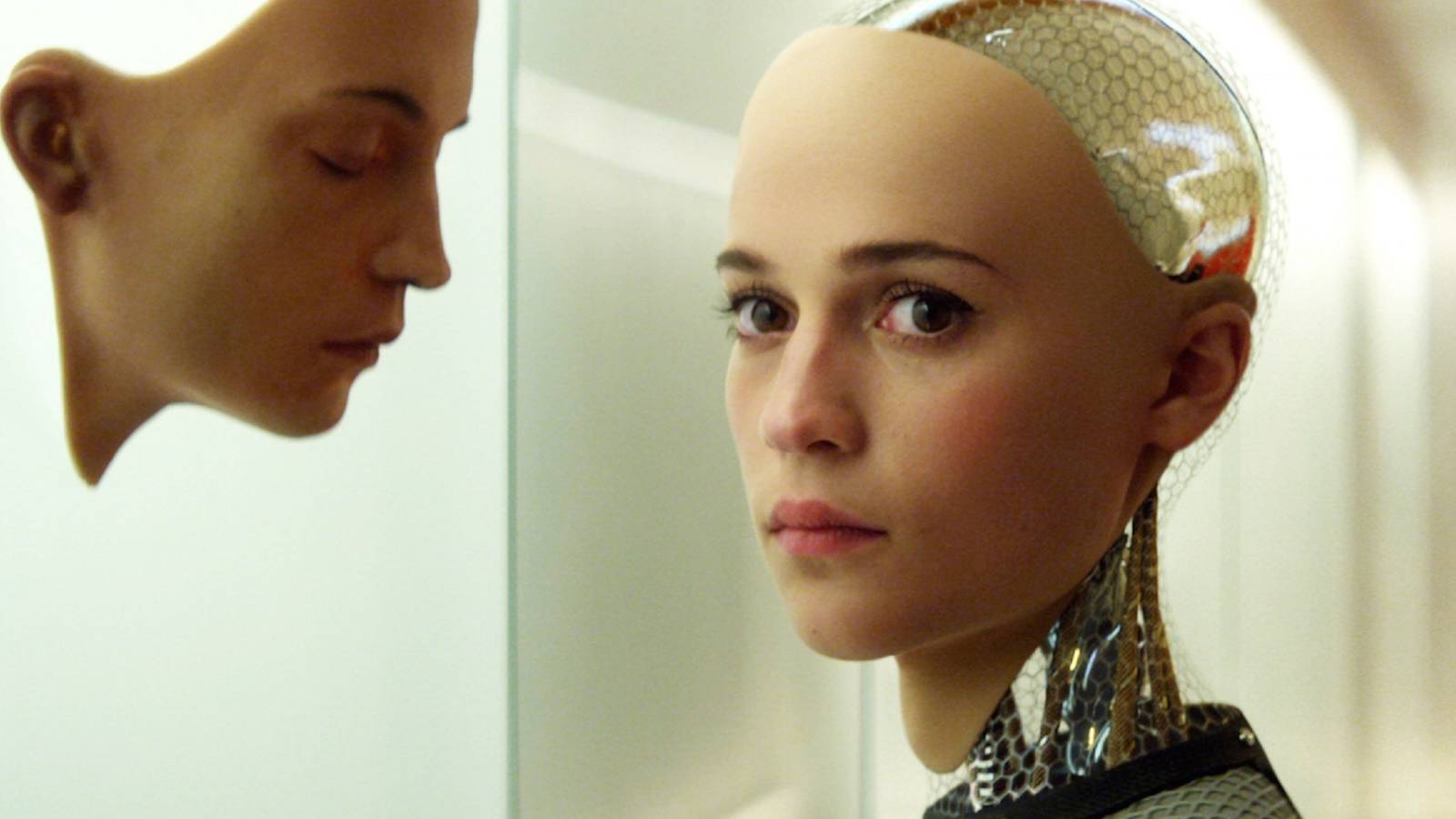
Image via A24 Published Aug 20, 2026, 7:12 PM EDT Jessie Nguyen is a writer and blogger who was interested in television and movies from a very young age. She would spend hours watching movies and analyzing the plot, characters, and dialogue. As she grew older, her passion for writing and storytelling grew stronger. Jessie's ultimate dream is to become a screenwriter in Hollywood, where she can bring her stories to life on the big screen. However, right now, she is enjoying life and her job at Collider as the site's Senior List Writer, writing about the thing she loves the most and getting paid for it. What a wild dream that her younger self would never believe would happen! Sign in to your Collider account The science fiction genre typically imagines alternate futures that are made feasible by technological advancement. Sci-fi has been around for quite some time and has been one of the most popular film genres for decades. Moreover, science fiction narratives can challenge presumptions that might otherwise go unquestioned by posing what-ifs that are both far and close to home. Regardless of when some of the science fiction movies were produced, they somehow retain a highly futuristic sensibility that might only be understood in the future. These science fiction movies actually represent the future, whether in terms of their filmmaking style, narrative, or overall plot. 10 'Ready Player One' (2018) Image via Warner Bros. Ready Player One is set in 2045 when most people use the virtual reality simulation called OASIS to escape reality. The film follows a teenage orphan (Tye Sheridan) who discovers hints leading to a competition where the prize is possession of the OASIS; thus, he and his friends attempt to finish it before a villainous corporation can. Ready Player One is gradually becoming reality because of the quick advances in VR tech and online spaces in general. Additionally, it denounces the harsh reality of VR technology, which is slowly displacing real interactions and life as people grow dependent on it. Even though the movie just came out, it predicts what will happen if we humans allow technology to dominate our lives in the near future. Its vision of people living much of their lives in virtual spaces feels increasingly plausible. 9 'V for Vendetta' (2005) Image via Warner Bros. V for Vendetta is a sci-fi political action film set in a dismal future society in Britain and follows a masked freedom fighter known as V (Hugo Weaving) who engages in elaborate terrorist operations in an effort to start a revolution, and a young woman entangled in V's mission, played by Natalie Portman. Pandemic, famine, and war have decimated England in the film. V for Vendetta also demonstrates that it is no longer a science-fiction film but a real one with its blatant and brutal attacks on democracy in 2020. Despite not being relevant by the time it was released due to its succinct and visionary setup as well as dialogue, V for Vendetta fits more into today’s world. Surveillance and political control give the film a warning that has only become more relevant. 8 'The Matrix' (1999) Image via Warner Bros. The Matrix is set in a dystopian future in which humanity is inadvertently imprisoned inside the Matrix, a virtual reality that artificial intelligence has devised to keep people off their guard while utilizing their bodies as a source of energy. The film follows Thomas Anderson (Keanu Reeves), a computer programmer who goes by the hacker identity "Neo," as he learns the truth and joins others who have escaped the Matrix in a rebellion against the machines. Today, we witness the wonders of A.I., but the 1999 film already foretold the danger of it through the brilliant narration of the Wachowskis, also the writers of the V for Vendetta screenplay. In essence, the Matrix acts as a doorway to escape from reality and a constant reminder of the terror of being killed and controlled that the audience is, in fact, living now as social media and AI technologies are slowly dominating the world. Few late-'90s sci-fi films anticipated modern anxieties about AI and digitally mediated reality this well. 7 'Blade Runner' (1982) Image via Warner Bros. Blade Runner takes place in a dystopian Los Angeles of 2019, where the powerful Tyrell Corporation has created replicants, or synthetic humans, to labor in space colonies. The film centers on a burnt-out cop, Rick Deckard (Harrison Ford), who grudgingly agrees to track down a fugitive crew of advanced replicants as they flee back to Earth. One of the reasons why Blade Runner is ahead of its time is by examining the idea of a grimy future on Earth, which was uncommon at the time. Moreover, it also depicts the analysis of corporatism and forecasts that private industry would become more involved in politics and foresaw the widespread surveillance culture that prevails in society today. Corporate power and AI combine into a future that still feels strikingly contemporary. 6 'Ex Machina' (2014) Image via A24 Ex Machina centers on programmer Caleb Smith (Domhnall Gleeson), who wins a contest to spend a week in a secluded mountain resort owned by Nathan (Oscar Isaac), the company's reclusive CEO. He must engage with the world's first true artificial intelligence, embodied in the form of a stunning female robot, in a bizarre and interesting experiment. The main takeaway from the movie is that self-serving and manipulative behavior is a better indicator of real AI. than being able to effectively replicate a conscious human, bringing the matter to the genuine attention of society. Additionally, it illustrates how quickly the barrier between humans and artificial intelligence might be crossed if AI continues to be exploited without care. What makes the film especially prescient is its focus on AI succeeding through persuasion rather than brute force. Collider Exclusive · Sci-Fi Survival Quiz Which Sci-Fi World Would You Survive? The Matrix · Mad Max · Blade Runner · Dune · Star Wars Five universes. Five completely different ways the future went wrong — or sideways, or up in flames. Only one of them is the world your instincts were built for. Eight questions will figure out which dystopia, galaxy, or desert wasteland you'd actually make it out of alive. 💊The Matrix 🔥Mad Max 🌧️Blade Runner 🏜️Dune 🚀Star Wars TEST YOUR SURVIVAL → 01 You sense something is deeply wrong with the world around you. What do you do? The first instinct is often the truest one. APull on every thread until I understand the system — then figure out how to break it. BStop asking questions and start stockpiling — food, fuel, weapons. Questions don't keep you alive. CKeep my head down, observe carefully, and trust no one until I know who's pulling the strings. DStudy the patterns. Every system has a rhythm — learn it, and you learn how to survive it. EFind the people fighting back and join them. You can't fix a broken galaxy alone. NEXT QUESTION → 02 In a world of scarcity, what resource do you guard most fiercely? What we protect reveals what we believe survival actually requires. AKnowledge. If you understand the system, you don't need resources — you can generate them. BFuel. Everything else — movement, power, escape — runs on it. CTrust. In a world of fakes and informants, a truly reliable ally is rarer than any commodity. DWater. And after water, information — the two things empires are truly built on. EShips and credits. The galaxy is big — you survive it by being able to move through it freely. NEXT QUESTION → 03 What kind of threat keeps you up at night? Fear is useful data — if you're honest about what you're actually afraid of. AThat reality itself is a lie — that everything I experience has been constructed to keep me compliant. BA raid. No warning, no mercy — just the roar of engines and then nothing left. CBeing identified. Once someone with power decides you're a problem, you're already out of time. DBeing outmanoeuvred — losing a political game I didn't even know I was playing. EThe Empire tightening its grip until there's nowhere left to run. NEXT QUESTION → 04 How do you deal with authority you don't trust? Every dystopia has a power structure. Your approach to it determines everything. ASubvert it from the inside — learn its rules well enough to weaponise them against it. BIgnore it and stay out of its reach. The further from any power structure, the better. CAppear to comply while doing exactly what I need to do. Visibility is the enemy. DManoeuvre within it carefully. You can't beat a system you refuse to understand. EResist openly when I have to. Some things are worth the risk of being seen. NEXT QUESTION → 05 Which environment could you actually endure long-term? Survival isn't just tactical — it's physical, psychological, and very much about where you are. AUnderground bunkers and server rooms — cramped, artificial, but with access to everything that matters. BOpen wasteland — brutal sun, no shelter, constant movement. At least the threat is honest. CA dense, rain-soaked city where you can disappear into the crowd and nobody asks questions. DMerciless desert — extreme heat, no water, and something enormous living beneath the sand. EThe fringe — backwater planets and busy spaceports where the Empire's attention rarely reaches. NEXT QUESTION → 06 Who do you want in your corner when things fall apart? The company you keep is the clearest signal of who you actually are. AA tight crew of believers who've seen behind the curtain and have nothing left to lose. BOne or two people I'd trust with my life. Any more than that and someone talks. CNobody, ideally. Alliances are liabilities. I work alone unless I have no choice. DA community bound by shared hardship and mutual survival — people who need each other to last. EA ragtag team with wildly different skills and total commitment when it counts. NEXT QUESTION → 07 Where do you draw the line — if you draw one at all? Every survivor eventually faces a moment that tests what they're actually made of. AI won't harm the innocent — even the ones who'd report me without hesitation. BI do what I have to to protect the people I've chosen. Everything else is negotiable. CThe line shifts depending on who's asking and what's at stake. DI draw a long-term line — nothing that compromises my people's future, even if it'd help now. ESome lines, once crossed, can't be uncrossed. I know which ones they are. NEXT QUESTION → 08 What would actually make survival worth it? Staying alive is one thing. Having a reason to is another. AWaking others up — dismantling the illusion so no one else has to live inside it. BFinding somewhere — or someone — worth protecting. A reason to keep moving. CAnswers. Understanding what I am, what any of this means, before time runs out. DLegacy — shaping the future in a way that outlasts me by generations. EFreedom — for myself, for others, for every world still living under someone else's boot. REVEAL MY WORLD → Your Fate Has Been Calculated You'd Survive In…Your answers point to the world your instincts were built for. This is the universe your temperament, your survival instincts, and your particular brand of stubbornness were made for. The MatrixYou took the red pill a long time ago — probably before anyone offered it to you. You're a systems thinker who can't help but notice the seams in things. You're drawn to understanding how the system works before figuring out how to break it. You'd find the Resistance, or it would find you — your instinct for spotting constructed realities is the machines' worst nightmare. You function best when you have access to information and the freedom to act on it. The Matrix built an airtight prison. You'd be the one probing the walls for the door. Mad MaxThe wasteland doesn't reward the clever or the well-connected — it rewards those who are hard to kill and harder to break. That's you. You don't need comfort, community, or a cause larger than the next horizon. You need a vehicle, a clear threat, and enough fuel to outrun it — and you're good at all three. You are unsentimental enough to survive that world, and decent enough — just barely — to be something more than another raider. In the wasteland, that distinction is everything. Blade RunnerYou'd survive here because you know how to exist in moral grey areas without losing yourself completely. You read people accurately, keep your circle small, and ask the questions others prefer not to answer. In a city where humanity is a legal designation rather than a feeling, you hold onto something that keeps you functional. You're not a hero. But you're not lost, either. In Blade Runner's world, that distinction is everything. DuneArrakis is the most hostile environment in the known universe — and you are precisely the kind of person it rewards. Patience, discipline, and political awareness are your core strengths — and on Arrakis, they're survival tools. You understand that the long game matters more than any single victory. Others come to Dune and are consumed by it. You'd learn its logic and earn its respect. In time, you wouldn't just survive Arrakis — you'd begin to reshape it. Star WarsThe galaxy far, far away is vast, loud, and in a constant state of violent political upheaval — and you wouldn't have it any other way. You find meaning in being part of something larger than yourself — a cause, a crew, a rebellion. You'd gravitate toward the Rebellion, or the fringes, or whatever pocket of the galaxy still believes the Empire's grip can be broken. You fight — not because you have to, but because standing aside isn't something you're capable of. In Star Wars, that willingness is what makes all the difference. ↻ RETAKE THE QUIZ 5 '2001: A Space Odyssey' (1968) 2001: A Space Odyssey is a Stanley Kubrick film that chronicles an expedition to Jupiter made by astronauts, researchers, and the autonomous supercomputer HAL to look into an alien monolith. One of many reasons why 2001 is way ahead of its time is that a lot of the technology in the film, including tablets, video calling, and space suits, wasn't even invented when it was released. In addition, the status of women in the workplace is forecast in 2001 in a higher rank and more important functions, foreshadowing women's positions in the modern world. Oh, and, of course, there's HAL's eerie parallels with modern AI. Even its most ordinary technologies, from intelligent computers to personal screens, still feel remarkably forward-looking. 4 'Metropolis' (1927) Image via Parufamet Metropolis is a German expressionist science-fiction drama film set in a futuristic urban dystopia. The movie follows Maria (Brigitte Helm), a saintly figure to the workers, and Freder (Gustav Fröhlich), the affluent son of the city master, as they seek to bridge the enormous class gap in their city. The expansive skyline and architecture of the fictional city are likewise decades ahead of their time in terms of production, and they continue to evoke awe and majesty nearly 100 years after the movie's release. The film's cinematography also offers images that have stood the test of time, with the camerawork and use of light creating a great shot that would compare favorably to most of what we see now. Nearly a century later, its concerns about automation and inequality remain painfully recognizable. 3 'Her' (2013) Image via Warner Bros. Pictures Her follows Theodore Twombly (Joaquin Phoenix), a lonely man in the final stage of divorce who forms a bond with Samantha (voiced by Scarlett Johansson), a virtual assistant that is artificially intelligent and is voiced by a woman. Her anticipated the lightning-fast developments in AI that are already beginning to influence our daily lives much before their time. Additionally, the film criticizes the naïve reliance on artificial intelligence and the unpleasant reality of human exploitation of them. It also depicts the depressing reality of people spending too much time online and gradually substituting virtual interactions for real ones. The idea of forming an emotional bond with conversational AI no longer feels nearly as far-fetched as it once did. 2 'Star Wars: A New Hope' (1977) Image via Lucasfilm Ltd. Star Wars: A New Hope is the first film in the Star Wars original trilogy created by George Lucas. It’s set a long time ago in a fictional universe where the oppressive Galactic Empire rules the galaxy. The film focuses on the Rebel Alliance, a group of liberation fighters with the mission of destroying the Empire's newest weapon, the Death Star. A New Hope may have been one of the first movies of its era to successfully integrate different cinema genres, making it so far ahead of its time. The bar was raised for all upcoming films by combining cutting-edge techniques and technologies with current ones. Its effects and lived-in worlds helped establish a visual language that sci-fi still uses. 1 'Alien' (1979) Image via 20th Century Studios Alien, based on a story by Dan O'Bannon and Ronald Shusett, centers on the crew of the commercial space tug Nostromo, who encounter an angry and lethal alien after discovering a mysteriously abandoned spacecraft on an uncharted moon. The film's release in 1979 was not well received by reviewers, but today's audiences find it to be very relevant because of its skillful pacing and the realistic portrayal of its working-class space crew. Moreover, Alien's shift in attitudes from an upbeat, accepting sci-fi to a cautious, frightened future twisted by technology and evolutionary instability is what makes it so forward-looking. By treating space travel like blue-collar work and corporations as a threat, the film still feels unusually modern. Alien Release Date June 22, 1979 Runtime 117 Minutes
10 Great Sci-Fi Movies That Were Ahead of Their Time
Full Article
Original Source
Read the full article at Collider →KhanList aggregates and links to publicly available news content. We do not host full articles from third-party sources. Always verify important information with original sources.