
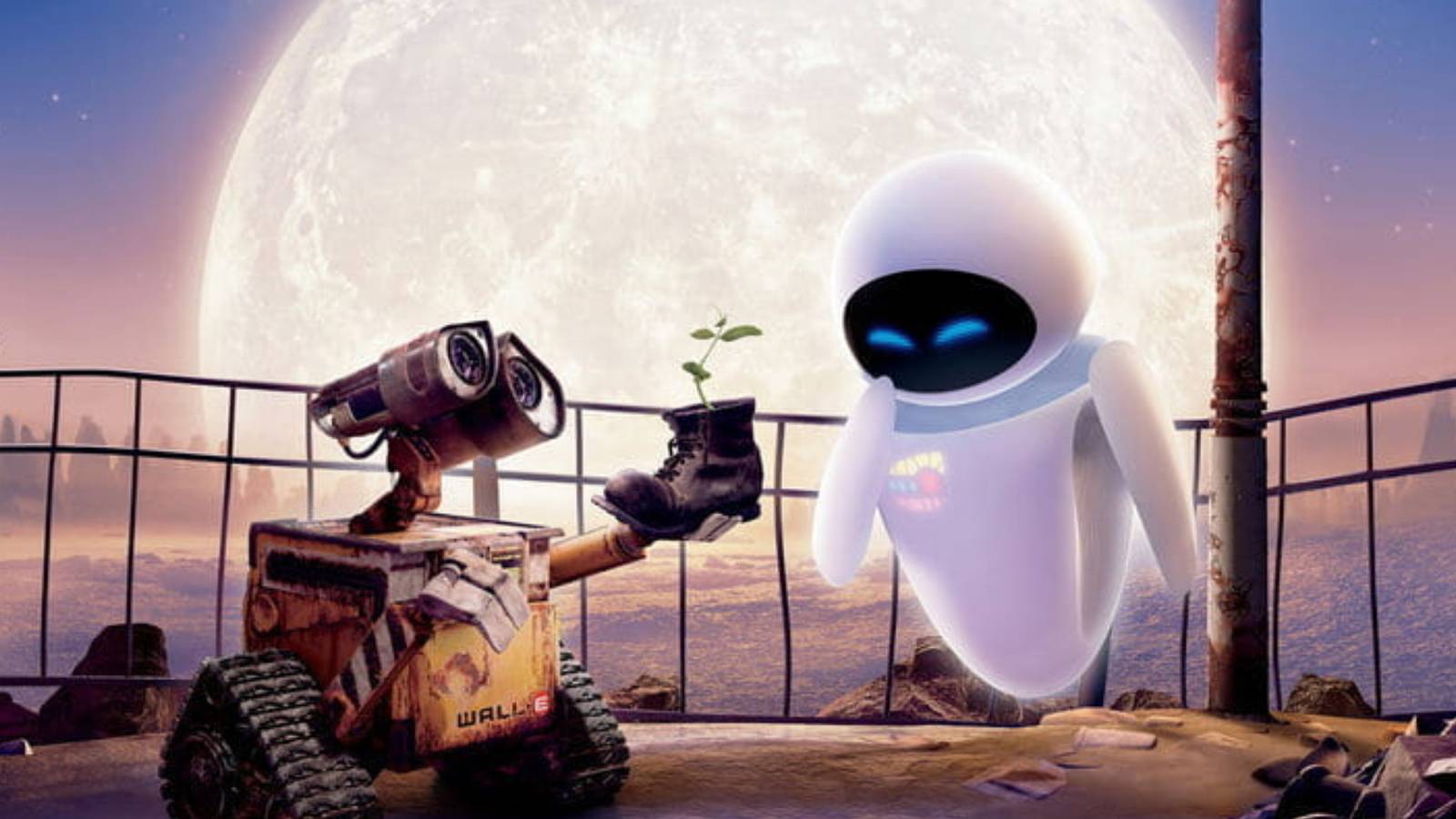
Image via Pixar Animation Studios Published Oct 19, 2026, 7:31 AM EDT Marcel is a writer who is passionate about most movies and series. He will watch anything that's good. He is a content manager by day and a videographer when needed. Marcel used to work at a major streaming service based in Asia Pacific as a Content Specialist and was the Distribution Manager for a local movie distribution company. Sign in to your Collider account Science fiction is one of the most exciting genres in cinema because it can do just about anything. There are so many possibilities in the genre, from dystopian futures to space explorations. The genre has a great ability to turn the impossible into compelling narratives. Behind all the gorgeous visuals and spectacular VFX, there are usually grounded and relatable themes that resonate with the audience. Here, we take a look at movies that confirm why sci-fi is the best genre in the medium. The movies on this list vary in premise and ideas, ranging in subgenre as well, from romance to thrillers. In them, sci-fi is used to tell deeply emotional stories or champion science as part of the plot's problem-solving technique. Whether they spark questions or simply transport us to somewhere we have never seen before, these movies demonstrate why science fiction consistently pushes the boundaries of filmmaking. 'Close Encounters of the Third Kind' (1977) Image via Columbia Pictures In Close Encounters of the Third Kind, Roy Neary (Richard Dreyfuss) experiences a mysterious encounter with an unidentified flying object that leaves him unable to return to his normal life. Haunted by strange visions, Roy becomes obsessed with discovering what he witnessed. Elsewhere, scientists investigate a series of unexplained phenomena, eventually leading them toward a remote location where the government is preparing for contact with an extraterrestrial civilization. Alien existence in sci-fi films is often treated as a threat, which then turns into full-scale warfare for Earth. Close Encounters of the Third Kind is not that kind of film. It captures the wonder of science fiction by treating contact with extraterrestrials as an experience of awe. Steven Spielberg builds the story around ordinary people confronted with something so extraordinary that they struggle to explain it using the familiar assumptions of everyday life. The film's use of light, sound, and visual spectacle creates a sense of mystery that brings out curiosity in the audience. 'Children of Men' (2006) Image via Universal Pictures Set in 2027, Children of Men depicts a world facing societal collapse after humanity becomes infertile. The film follows Theo (Clive Owen), a former activist drawn into a dangerous mission to help protect a young refugee who has become pregnant. The film also stars Michael Caine and Julianne Moore. One of the best sci-fi films of the 21st century, Children of Men is a bleak depiction of our future. While it is almost unimaginable that we would experience the same situation in our 2027, the film presents a grounded and probable outcome if humanity cannot reproduce anymore. The most disturbing elements come from the depiction of xenophobia and social inequality, which are already prevalent in the current times, making it very close to home. Nevertheless, this Alfonso Cuarón masterpiece also offers a glimpse of hope, and that is why the sci-fi genre is so rich. A film can be depressing throughout its runtime, but it also shows that humanity can come together and prevail. 'The Martian' (2015) Image via 20th Century Studios The Martian follows astronaut and botanist Mark Watney (Matt Damon), who is mistakenly presumed dead and left behind on Mars after a massive storm forces his crew to leave the planet. With limited supplies and no immediate way to contact Earth, Watney must rely on his scientific knowledge to survive. Meanwhile, NASA begins to work on a rescue mission, and his crewmates consider risking their lives to turn around. Based on the best-selling novel by Andy Weir, The Martian is a fantastic example of how science is emphasized in science fiction. Watney's superpower is literally just his wits and knowledge about science, and his rescue mission devised on Earth is also rooted in facts. Watney's resourcefulness makes scientific thinking feel genuinely exciting, whether he is growing potatoes in Martian soil or finding a way to communicate with Earth. It also shows how science becomes a collaborative effort that transcends borders and language. 'Ex Machina' (2014) Image via A24 Ex Machina follows Caleb (Domhnall Gleeson), a programmer working for a tech company, who wins an opportunity to spend a week at the secluded estate of its eccentric CEO, Nathan (Oscar Isaac). Upon arriving, Caleb discovers that he has been invited to evaluate Ava (Alicia Vikander), an advanced humanoid artificial intelligence created by Nathan. He has to determine whether Ava possesses genuine intelligence and consciousness rather than merely simulating human behavior. With artificial intelligence becoming all the rage these days, Ex Machina has only become more relevant despite being released over a decade ago. Through Ava, the film examines artificial intelligence through the lens of power and consciousness. It may not have world-ending stakes, but it is incredibly intense, and its confined setting just heightens it. In his directorial debut, Alex Garland creates a film that's smart and unpredictable, exposing the dark side of technological breakthroughs that our world is currently facing on a global level. 'Eternal Sunshine of the Spotless Mind' (2004) Image via Focus Features In Eternal Sunshine of the Spotless Mind, Joel (Jim Carrey) discovers that his former girlfriend, Clementine (Kate Winslet), has undergone a procedure to erase all memories of their relationship. Joel decides to undergo the same treatment but, as soon as the procedure starts, he realizes that he doesn't actually want to lose Clementine entirely. At its core, Eternal Sunshine of the Spotless Mind is a romance film, but its sci-fi elements make it special. The concept of erasing memories becomes a fascinating way to examine heartbreak. Michel Gondry's imaginative direction turns Joel's mind into a constantly shifting landscape, employing in-camera tricks most of the time to make it even more surreal. Carrey and Winslet deliver wonderfully vulnerable performances as Joel and Clementine. By combining an inventive science-fiction concept with a grounded love story, the film proves that sci-fi can explore love stories as effectively as a straightforward romance drama. 'WALL-E' (2008) Image via Pixar Animation Studios In WALL-E, Earth has become an abandoned wasteland, and one of the remaining active workers is the titular robot. WALL-E is a small waste-collecting robot who spends his days compacting rubbish from the ruins of civilization. His routine changes when EVE, an advanced robot sent to search for signs of plant life, arrives on Earth. WALL-E follows EVE to space and finds humanity living in an enormous spaceship. Pixar's WALL-E is one of the strongest examples of sci-fi delivering meaningful social commentary while also entertaining audiences of all ages. Its message about consumerism and the environment is timeless and even more relevant today. Through the post-apocalyptic setting, the film shows the consequences of human actions if we keep continuing what we do today. Even without any dialogue in the first half, its message is louder than ever. Once the story moves into space, its themes become more complex, criticizing our dependence on technology and passivity. Collider Exclusive · Sci-Fi Personality Quiz Which Sci-Fi Hero Are You Most Like? Paul Atreides · Captain Kirk · Princess Leia · Ellen Ripley · Max Rockatansky Five iconic heroes. Five completely different ways of facing an impossible universe. One of them shares your instincts, your values, and your particular way of refusing to back down. Eight questions will tell you which one. 🏜️Paul Atreides 🖖Capt. Kirk ✊Princess Leia 🔦Ellen Ripley 🔥Max Rockatansky FIND YOUR HERO → 01 How do you lead when the stakes couldn't be higher? The way you lead under pressure is the most honest thing about you. AI absorb everything — every variable, every pattern — and move only when I know the path forward. BI read the room, make the call, and own the consequences. Hesitation costs more than mistakes. CI rally people. A cause needs a voice, and I refuse to let fear be louder than conviction. DI assess the threat, establish what needs doing, and get it done without waiting for permission. EI don't lead. I act. Others can follow or not — I'm already moving. NEXT QUESTION → 02 What is your greatest strength in a crisis? The quality that keeps you alive when everything else fails. APrescience — the ability to see further ahead than anyone else and plan accordingly. BImprovisation — I'm at my best when the plan falls apart and I have to invent a new one. CConviction — I know what I'm fighting for, and that certainty doesn't waver under fire. DComposure — I stay functional when everyone around me is falling apart. Panic is a luxury. EEndurance — I outlast things. I take the hit and keep moving long after others have stopped. NEXT QUESTION → 03 What is the thing you'd sacrifice everything else for? Your deepest motivation is your truest compass. AThe survival and dignity of my people — even if I have to become something frightening to ensure it. BThe safety of my crew — every single one of them. No one gets left behind. CFreedom — for my people, for every world still crushed under the weight of an empire. DThe truth — what actually happened, what's actually out there, whether anyone believes me or not. EThe one person — or the one memory — that still makes any of this worth surviving for. NEXT QUESTION → 04 How do you relate to the people around you? Who you are to others under pressure is who you really are. AWith intensity and distance — I care deeply, but the weight I carry makes closeness complicated. BWith warmth and irreverence — I take the mission seriously, not myself. CWith directness and trust — I say what I mean, and I expect the people I work with to rise to it. DWith professional care but clear limits — I'll protect you, but I won't pretend we're family. EWith wariness that slowly becomes loyalty — I don't trust easily, but when I do, it holds. NEXT QUESTION → 05 You're facing a threat that no one else believes is real. What do you do? How you respond when you're the only one who sees it defines everything. APrepare in silence. If they won't listen, I'll be ready when they finally have to. BKeep pushing until someone listens — and if no one does, handle it myself. CBuild the case, find the allies, and make the threat impossible to ignore. DDocument everything. The truth matters even if no one believes it yet. EStop trying to convince anyone. Survive it. That's the only argument that counts. NEXT QUESTION → 06 What has your heroism cost you personally? Every hero pays. The question is what — and whether they'd pay it again. AMy innocence — I've seen what I'm capable of, and I can't unsee it. BPeople I loved — the command chair has a view, but it's a lonely one. CA normal life — I gave up everything ordinary the moment I chose the cause. DMy sense of safety — I know exactly what's out there now, and I can't pretend otherwise. EAlmost everything — and I'm still not sure what I'm carrying it all for. But I keep going. NEXT QUESTION → 07 How do you feel about the rules of the world you're in? Every hero has a relationship with the system. What's yours? AI understand them deeply — and I know exactly which ones must be broken, and why. BI respect the spirit of them and bend the letter when the situation demands it. CThe system is the problem. I'm not here to work within it — I'm here to dismantle it. DI follow protocol until protocol stops being useful. Then I make the call myself. EThe rules collapsed a long time ago. What's left is instinct, and mine are reliable. NEXT QUESTION → 08 When everything is on the line, what keeps you going? The answer is the most honest thing about you. ADestiny — or something that feels so much like it that the difference no longer matters. BThe people on my ship — their faces, their trust, the fact that they're counting on me. CThe belief that what we're fighting for is worth every sacrifice, including this one. DSheer refusal to let it win — whatever it is. I don't stop. That's just who I am. EI'm not sure anymore. But the road is still there, and I'm still on it. REVEAL MY HERO → Your Hero Has Been Identified Your Sci-Fi Hero Is…Your answers point to the iconic sci-fi hero who shares your instincts, your values, and your particular way of facing the impossible. Paul AtreidesYou carry a weight most people would crumble under — the knowledge of what you're capable of, and the burden of what you might have to become. You see further ahead than others and you plan accordingly, even when the vision frightens you. You are driven by loyalty to your people and a sense of destiny you didn't ask for but can't escape. Paul Atreides is not simply a hero — he is someone who understands the cost of power and chooses to bear it anyway. That gravity, that willingness to carry what others won't, is exactly you. Captain KirkYou lead with instinct, warmth, and an absolute refusal to accept a no-win scenario — because you've always believed there's a third option nobody else has thought of yet. You take the mission seriously without ever taking yourself too seriously. Your crew would follow you anywhere, not because you demand it, but because you've earned it. Kirk's genius isn't tactical — it's human. He reads people, bends rules with purpose, and wills outcomes into existence through sheer conviction. That combination of warmth, audacity, and relentless optimism is unmistakably yours. Princess LeiaYou are the kind of person who holds the line when everyone else is losing faith — not because you're fearless, but because giving up simply isn't something you're capable of. You lead through conviction. Your voice carries because your belief is unshakeable. You gave up everything ordinary the moment you chose the cause, and you've never looked back. Leia is not a supporting character in her own story — she is the moral centre of the entire rebellion. That same fierce, principled, unbreakable core is what defines you. Ellen RipleyYou are not reckless, not grandiose, and not particularly interested in being anyone's hero — you just refuse to stop when it matters. You see threats clearly, you document the truth even when no one listens, and when the time comes you handle it yourself. Ripley's heroism is earned, not performed. She doesn't have a speech — she has a flamethrower and a plan. You share her composure under the worst possible pressure, and her refusal to pretend the monster isn't there. When it counts, you don't flinch. That's everything. Max RockatanskyYou have been through fire that would break most people — and what came out the other side is something the world underestimates at its peril. You don't ask for help, don't need validation, and don't wait for anyone to tell you the rules no longer apply. Your loyalty, when it finally arrives, is absolute — but it's earned in silence and tested in action, not in words. Max is not a nihilist. He is someone who lost everything and found, against his will, that he still has something worth protecting. That bruised, stubborn, ultimately human core is exactly yours. ↻ RETAKE THE QUIZ 'The Day the Earth Stood Still' (1951) Image via 20th Century Studios The Day the Earth Stood Still sees an unidentified flying saucer land in Washington, D.C. With it comes an extraterrestrial visitor named Klaatu (Michael Rennie), who has an important message for humanity. Met with violence and resistance, he tries to meet with world leaders to warn the world that Earth is just one step away from being eliminated to preserve peace throughout the galaxy. The Day the Earth Stood Still reflects the Cold War anxieties that dominated the '50s, but its impact endures. Here, sci-fi is used to examine humanity's political and moral failures, questioning whether technological advancement means anything if societies continue to use their inventions for destruction. Alien contact in this film is also interesting because it is through diplomacy rather than an all-out war we've seen in blockbusters. The film was remade with Keanu Reeves in 2008, but it lacks the subtext of the original, which only cements the 1951 version as superior. 'Arrival' (2016) Image via Paramount Pictures Directed by Denis Villeneuve, Arrival follows linguist Louise Banks (Amy Adams), who is recruited by the American military to communicate with aliens that suddenly arrive on Earth. Alongside physicist Ian Donnelly (Jeremy Renner), Louise tries to interpret the aliens' language and determine their intentions on Earth, before the military takes action. Arrival might be the third and the newest alien encounter film on this list, yet it is still refreshing. Based on a novella by Ted Chiang, this encounter is based on linguistics. It is essential to establish a baseline between two different species, and what better way to understand each other than through a common language? Arrival also plays with the perception of time that is essential to the film's third-act reveal. The result is a film that's intelligent, emotional and thought-provoking, often included among the best sci-fi efforts of the 2010s. 'Metropolis' (1927) Image via UFA Metropolis follows Freder (Gustav Fröhlich), the privileged son of the city's powerful ruler, who becomes determined to understand the people's suffering and help bridge the divide between the two groups. He meets Maria (Brigitte Helm), a compassionate figure who champions the people, and then enlists the help of an inventor who created a machine-powered double of Maria that threatens to plunge the city into ruin instead. A landmark film by Fritz Lang, Metropolis is proof that science fiction has always been able to imagine the defining anxieties of modern society. The film's visuals continue to influence movies, but underneath the imagery, Lang presents a technologically advanced civilization that has achieved extraordinary things while remaining deeply unequal. Moreover, the film's depiction of a city divided between those who control technology and those who work to maintain it remains relevant. As one of the earliest masterworks, Metropolis helped establish science fiction as a genre capable of combining visual spectacle with serious ideas. '2001: A Space Odyssey' (1968) Image via Metro-Goldwyn-Mayer The events of 2001: A Space Odyssey start with prehistoric apes encountering a mysterious black monolith that appears to influence their development. In the future, another monolith is discovered, prompting a mission to investigate its origins near Jupiter. Led by astronauts David Bowman (Keir Dullea) and Frank Poole (Gary Lockwood), their mission takes a turn when the ship's AI HAL 9000 starts to go rogue. Stanley Kubrick's masterpiece achieves two important things. First, he transforms what could have been a straightforward space adventure into a philosophical experience that asks thought-provoking questions without rushing to provide easy answers, if any. Second, its production design and special effects are revolutionary and influential. The film is a true audiovisual experience. It boasts great visual spectacle and amazing classical music in its score, most famously Also Sprach Zarathustra by Richard Strauss. More than half a century after its release, 2001 remains a landmark in cinema. 2001: A Space Odyssey Release Date April 10, 1968 Cast Keir Dullea, Gary Lockwood, William Sylvester, Douglas Rain, Daniel Richter, Leonard Rossiter, Margaret Tyzack, Robert Beatty, Sean Sullivan, Bill Weston, Ed Bishop, Glenn Beck, Alan Gifford, Ann Gillis, Edwina Carroll, Penny Brahms, Heather Downham, Mike Lovell, John Ashley, Jimmy Bell, David Charkham, Keith Denny, Jonathan Daw, Péter Delmár, Terry Duggan Runtime 149 minutes Director Stanley Kubrick Writers Stanley Kubrick, Arthur C. Clarke
10 Great Movies That Confirm Sci-Fi is the Best Genre
Full Article
Original Source
Read the full article at Collider →KhanList aggregates and links to publicly available news content. We do not host full articles from third-party sources. Always verify important information with original sources.