
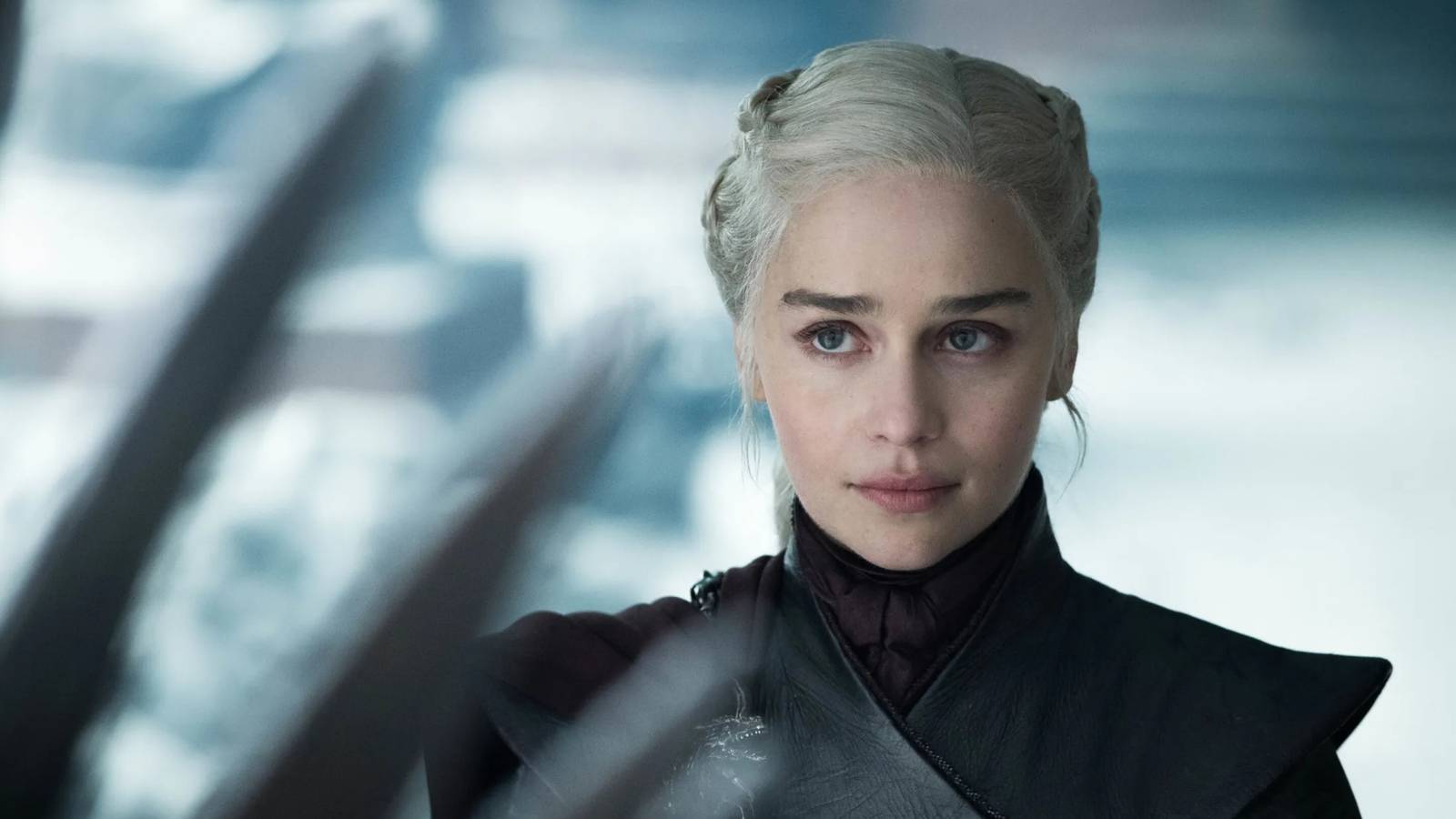
Published Nov 13, 2026, 7:22 AM EST Ryan Heffernan is a Senior Writer at Collider. Storytelling has been one of his interests since an early age, with his appreciation for film and television becoming a particular interest of his during his teenage years. This passion saw Ryan graduate from the University of Canberra in 2020 with an Honours Degree in Film Production. In the years since, he has found freelance work as a videographer and editor in the Canberra region while also becoming entrenched in the city's film-making community. In addition to cinema and writing, Ryan's other major interest is sport, with him having a particular love for Australian Rules football, Formula 1, and cricket. He also has casual interests in reading, gaming, and history. Sign in to your Collider account The following article contains spoilers.No matter how many seasons it lasts, what themes it focuses on, or even which genre it exists within, every television series must eventually reckon with how to execute a meaningful finale. Many series opt for a cathartic wind-down, a safe and comfortable ending that offers closure to the audience. However, some series do something a little different, opting to strive for more ambitious conclusions that have a more dramatic effect on viewers. Many of the series included ended with bold and brash big swings that completely reframed how viewers regarded the show. Others misfired as underwhelming resolutions to iconic titles, the backlash of which completely changed how television as a medium regards the art of delivering a climactic episode and season. All of these finales have made an undeniable impact on the format and its fans, and all stand as noteworthy chapters in HBO’s impressive and extended stay as the flagship brand of television excellence in the 21st century. 10 'The Wire' (2002–2008) Image via HBO It is a conclusive shift that isn’t necessarily restricted to the series finale. After all, a tone of realism and uncertainty permeates the entire five-season run, but The Wire’s conclusion does reframe the series quite substantially. Revolving around the complex criminal ecosystem of Baltimore, spanning from the street-level drug dealers to the politics of City Hall, The Wire delivers an all-encompassing, novelistic epic of modern American crime, one laced with dozens of focal characters on both sides of the law. Towards the end of the final season, it begins to become clear that creator David Simon has no intention of wrapping character arcs up in a neat little bow that will give viewers a sense of closure. Instead, The Wire ends as a grim meditation on the cyclical nature of organized crime, institutional corruption, and bureaucratic inefficiency. In the context of the series itself, it’s a thought-provoking conclusion about the nature of society and the way things both change and stay the same over time. Pertaining more to television at large, however, The Wire’s resolution proved that major series don’t need to end with clarity or cliffhangers to be compelling. 9 'Game of Thrones' (2011–2019) Image via HBO The air of infamy that surrounded Game of Thrones thanks to its final season has begun to dissipate — the success of House of the Dragon and A Knight of the Seven Kingdoms has been influential in this — but the impact of what the epic fantasy series actually changed is still being felt. This isn’t a reference to the plotting of the story, but rather to the way television as a medium changed in the wake of Game of Thrones’ finale and the outpouring of audience disgust. It shifted the paradigm of television storytelling. Suddenly, it wasn’t enough to run with an enticing premise and figure it out on the go. Showrunners and writers had to approach major, ongoing series with a mind to how the story would end, or risk facing strong backlash from the fanbase. Granted, some major series haven’t learned the lesson in the ensuing years, and the nature of television storytelling was already evolving due to the rampant rise in streaming services, but Game of Thrones’ conclusion has proven to be a cautionary tale of negligence and subversion, with most shows since opting to conclude in a manner that honors central themes and character dynamics of their respective stories. 8 'Barry' (2018–2023) Image via HBO Barry is one of those series that has come out since the fallout of Game of Thrones, one where the lessons HBO learned from its failure have been most evident. After four seasons following the violent hitman struggling to transition from a life of crime to a career on the stage, Barry ends with a poignant sense of inevitable tragedy that dismantles the antihero redemption trope, then closes with a 10-year time jump that sees Barry’s (Bill Hader) life being recontextualized and completely misinterpreted in an adoring Hollywood biopic. The thematic notes that Barry flaunted throughout the four seasons are beautifully handled in “wow,” which also adds a healthy dose of social commentary at the expense of glamorizing entertainment and the audiences that embrace it. The series as a whole is redefined in its final minutes, pivoting from a black comedy crime thriller to a scorching indictment of Hollywood sanitization. With every major character also facing appropriate ends to their arcs, Barry’s finale is a masterclass in how to end a story with thematic punch and emotional deftness. 7 'Curb Your Enthusiasm' (2000–2024) Image via HBO There have been plenty of series that have completely changed their own nature in their finale; some have even altered the fabric of television with their resolutions, but few have done what Curb Your Enthusiasm did with its swan song outing. The hit comedy series follows the sensationalized life of Larry David, the producer of Seinfeld, as he drifts through Hollywood aimlessly. After 12 seasons and 120 episodes, it ends with Larry on trial in Atlanta, with “No Lessons Learned” delivering a meta recreation of Seinfeld’s infamous and divisive finale. It’s clever, endearing, and cathartic for all who felt undermined by Seinfeld’s finale, especially as it ends on a twist that sees Larry walk free, leading him and Jerry Seinfeld to declare that would have been a better conclusion for their hit ‘90s sitcom. It’s an admission that Seinfeld was flawed that also serves as a perfect finale for Curb Your Enthusiasm in its own right, making it possibly the only TV show ever made with a finale that has directly changed the perception of a separate series. 6 'Show Me a Hero' (2015) Image via HBO Criminally underrated, Show Me a Hero is a breathtaking political drama that uses the tragic true story of the youngest mayor of Yonkers, New York, to explore the complexities of desegregation, the cost of political conviction, and how grassroots humanity clashes violently with institutional power. Oscar Isaac is brilliant as Nick Wasicsko, with much of the miniseries revolving around his desire to embrace a low-income housing project that many of his constituents are viciously opposed to. The miniseries adamantly rejects the comfort of white savior heroics, delving into the grim reality of the true story that sees Wasicsko grow paranoid after losing an election and eventually commit suicide. It shatters the tone of an idealistic, progressive politician navigating the red tape of city hall, highlighting Wasicsko’s egotistical knack for defining his self-worth through his career as a damning fault, while also illustrating the callous, arduous nature of true systemic change. COLLIDERInteractive War Council Westeros/Quizzes/Your House Collider QuizWhich Game of ThronesHouse Are You?8 Questions · 5 Great HousesFive great houses. Five completely different answers to the same question: how do you hold power in a world that will take it from you the moment you stop paying attention? Eight questions will determine where your loyalties, and your nature, truly lie.The Five Houses Stark Lannister Targaryen Baratheon Tyrell Find Your House Question 01HONOR 01Someone powerful is acting dishonorably and everyone knows it. What do you do?In Westeros, the answer to this question has ended more than one great house. ACall it out, openly and on the record. If honor means anything, it has to mean something when it's costly.BUse it. Information about someone else's dishonor is leverage, and leverage is power.CAct decisively to correct it, with or without the approval of those around me.DChallenge them directly. Strength settles disputes more honestly than courtroom maneuvering.ENavigate carefully. Build alliances, apply quiet pressure, and create a situation where the right outcome becomes inevitable. ← BackPick one, then Next Next Question Question 02STRENGTH 02What is the source of your power?Every house endures because of something. What is it for yours? AThe loyalty of people who trust me, earned over generations, not bought with gold.BWealth, intelligence, and the willingness to use both without sentiment.CA legacy so fearsome and a vision so total that opposition becomes unthinkable.DPhysical strength, military force, and the respect that comes from being the kind of person nobody wants to cross.ECharm, connection, and the ability to make powerful people feel that my success is also theirs. ← BackPick one, then Next Next Question Question 03LOYALTY 03Who do you truly fight for?Strip away the banners and the words. The honest answer tells you everything. AMy family and my people, those who depend on me and have kept faith with me through everything.BMy family, the ones who share my name, even when they exhaust me, even when they disappoint me.CMy cause, a vision larger than any single person, including me.DMyself, and those few who've proven themselves worth standing beside.EMy house: its name, its future, the position I intend to leave it in when I'm gone. ← BackPick one, then Next Next Question Question 04RIVALS 04How do you deal with your rivals?A house's method reveals its character as clearly as its words ever could. AHonestly. I face them directly, and I give quarter when it's warranted.BThoroughly. I don't leave loose ends, and I don't make the same rival twice.CDecisively. Fire answers questions that diplomacy only delays.DHead-on. I'd rather settle a dispute in the open than behind closed doors.EElegantly. I prefer to make former rivals into allies, or at least into people who owe me something. ← BackPick one, then Next Next Question Question 05RULE 05What kind of ruler do you believe in?Westeros is full of answers to this question. Most of them end badly. AA just one. Someone who serves the realm rather than using it, who leads by example rather than fear.BA capable one. Someone smart enough to navigate the game, ruthless enough to win it, and realistic about what winning costs.CA transformative one. Someone who doesn't just rule what exists but reshapes what's possible.DA strong one. Someone whose authority is beyond question because the alternative is obviously worse.EA wise one. Someone who understands that the realm is fed by more than armies, and that a full stomach keeps more peace than a show of force. ← BackPick one, then Next Next Question Question 06LOSS 06You suffer a devastating loss. How does your house respond?How a house handles defeat tells you more about it than how it handles victory. AWe grieve, properly and together, and then we endure, because endurance is what we do.BWe adapt. We reassess. And we ensure that whoever caused this loss comes to regret it completely.CWe burn hotter. Setbacks don't soften us, they clarify what needs to happen next.DWe hit back. Grief and reckoning are the same motion in our house.EWe regroup quietly, rebuild our position, and return when we're ready, on our terms, not theirs. ← BackPick one, then Next Next Question Question 07WORDS 07Which of these truths about Westeros do you most believe?Every house has a philosophy. This is yours. AThe lone wolf dies, but the pack survives. Nothing matters more than the people you protect.BA Lannister always pays their debts, in gold or in kind. Reputation is built on consistency.CI am of the dragon's line. Some destinies are written before the person who carries them is born.DOurs is the fury. When we move, we move completely, and we don't stop until it's done.EGrowing strong means knowing when to bloom and when to wait. Patience is its own kind of power. ← BackPick one, then Next Next Question Question 08THE THRONE 08The Iron Throne is within reach. What do you do?The answer reveals not just your ambition but your character. AClaim it only if the realm needs me to, and rule in a way that makes it worth having.BEnsure someone who owes us sits in it. The power behind the throne is safer than the throne itself.CTake it. It was always meant to be mine. I feel that in my bones.DSeize it, with both hands, without hesitation. Opportunity in Westeros does not wait to be asked.EPosition my house to be indispensable to whoever sits there. Influence outlasts any single reign. ← BackPick one, then Next Reveal My House The Maester Has SpokenYour House Is Your answers point to the great house whose words, values, and way of surviving in Westeros match your own. Bend the knee, or don't. That's very much up to you. The NorthHouse Stark“Winter Is Coming”Seat of WinterfellYou took the long view before anyone asked you to. Winter Is Coming, and you have always known it. You prepare not out of fear but out of duty, because the people who depend on you deserve someone who takes the long view.Why You Belong Here You lead with honor even when it costs you, because you understand that a reputation built on integrity is the only one worth having. Your loyalty to family and people runs deep, not as sentiment but as a code that doesn't bend when things get difficult. The North endures because Starks endure, not by being the cleverest players in the game, but by being the kind of people others are willing to follow into the cold. You are that kind of person. The pack survives. The lone wolf does not. You already know which one you are. The Long ViewThe PackWinterfell The WesterlandsHouse Lannister“Hear Me Roar”Seat of Casterly RockYou read the room before you walk into it. You understand the game: its rules, its exceptions, and exactly when the rules become the exception. You play it without illusions and without apology.Why You Belong Here You are sharper than most people realize, and you have learned to use that gap to your advantage. A Lannister always pays their debts, and you always keep your word, because your word is an instrument of power, and instruments must be kept in working order. You love your family with a ferocity that sometimes blinds you, and you know it, and you do it anyway. The lion doesn't concern itself with the opinion of sheep. Neither, in the end, do you. Plays The GamePays DebtsCasterly Rock The Iron ThroneHouse Targaryen“Fire and Blood”Seat of DragonstoneYou were never going to settle for the world as handed to you. You carry a sense of destiny that is difficult to explain and impossible to ignore, the feeling that you are not simply participating in the world but meant to reshape it.Why You Belong Here You are capable of extraordinary things, and you know it, and that knowledge is both your greatest strength and your most dangerous quality. The Targaryen words are not just words to you. They are a philosophy about what change requires and what it costs. The Targaryens at their best were transformative rulers who broke chains and defied the limits of what anyone thought possible. At your best, so are you. The dragon has three heads. You are one of them. DestinyTransformativeDragonstone The StormlandsHouse Baratheon“Ours Is the Fury”Seat of Storm's EndYou arrive in a room and the room knows it. You are a force: direct, powerful, and difficult to ignore when you enter a room or a disagreement. You do not negotiate with challenges. You meet them.Why You Belong Here Ours is the fury, and yours is a kind of intensity that commands attention, respect, and occasionally caution from those who underestimate what's behind it. You value strength and straight dealing. You'd rather know where you stand than navigate a web of courtly whispers. The Baratheons built their house on the back of one of the greatest military victories in Westerosi history, and then struggled with what came after. The lesson of your house is that winning is not the end of the story. Governing is. You are learning that too. DirectStraight DealingStorm's End The ReachHouse Tyrell“Growing Strong”Seat of HighgardenPower arrives with flowers and good wine. You understand that power does not always announce itself, that sometimes it arrives with flowers, good wine, and a smile that doesn't quite reach the eyes.Why You Belong Here Growing Strong is your house's motto, and you live it: patiently, strategically, always investing in the relationships and resources that will matter most when it counts. You are charming by choice and calculating by nature, a combination that makes you one of the most effective players in any room you enter. The Tyrells fed King's Landing and shaped its politics without ever sitting on the Iron Throne, and they were arguably more powerful for it. You know that the person who controls the food controls the kingdom. And you always know where the food is. PatientCharmingHighgarden Where Your Loyalty Lies 1· · ·0% 2· · ·0% 3· · ·0% Retake The QuizCopied A Collider InteractiveCOLLIDERMore quizzes at collider.com 5 'The Leftovers' (2014–2017) Image via HBO The Leftovers is one of those series that feels like everything changes every episode. While it is a slow and meditative show, the depth it invests in its characters constantly brings new revelations to the fold, not only in their own lives as they navigate heartache, frustration, and rage, but in accordance with overarching story themes of grief, trauma, and the human condition as well. Overall, The Leftovers unfolds in a world reeling from the “Sudden Departure”, an inexplicable event in which two percent of the world’s population vanished in an instant. The series finale, “The Book of Nora,” transpires years after the rest of the series, exploring an uneasy reunion between Nora (Carrie Coon) and Kevin (Justin Theroux). It revels in the surrealist intensity and compassionate dramatic might that defined the series at its best, ending on an unproven explanation as to what caused the Sudden Departure, then leans on empathy and choice in its final moments, rather than a traditional, plot-centered resolution. It’s a bold decision, but it perfectly suits the series’ overarching tone and brings touching closure to Kevin and Nora’s relationship. 4 'Succession' (2018–2023) Image via HBO Blending corporate satire with engrossing, high-stakes drama, Succession fast became one of HBO’s greatest ever series in its exploration of the vying for power that erupts between three siblings when their father, the aging founder and head of a multi-billion-dollar multimedia company, signals his intent to retire. It is a manic fight for power and position with no blow being deemed below the belt, and yet the fourth and final season still ends in a manner that leaves viewers numb and shocked. The kinship the Roy siblings display as they stand against Lukas Matsson’s (Alexander Skarsgård) efforts to buy Waystar RoyCo gives way to total desperation and betrayal. It proves that the inherited wealth and influence the Roys flaunted made them incapable of ever following in their father’s footsteps, and their festering animosity with one another, as their shared childhood trauma went unresolved, was instrumental in them fragmenting and losing everything they wanted. It is quite brilliant how a series that features such unlikable and conniving characters leaves the audience feeling hollow, if not completely rattled, at their failure. 3 'Sharp Objects' (2018) Image via HBO Based on Gillian Flynn’s novel of the same name, Sharp Objects is a methodical, meandering crime thriller that anchors its drama in Camille Preaker’s (Amy Adams) investigation of the murder of two young girls and the inner turmoil she experiences as she returns to her hometown of Wind Gap and is confronted with the ghosts of her traumatic childhood. It holds a captivating Southern Gothic atmosphere, a litany of exceptional performances, and a macabre balance of character drama and murder mystery, but its greatest asset is the festering sense of dreadful unpredictability it exudes throughout the entirety of its eight-episode run. Even with viewers accustomed to its volatile plot twists, Sharp Objects completely changes the nature of its story in its final episode. In fact, it does so many times. The most striking of which comes in the final minute of the series, revealing a horrifying truth that shatters Camille’s sense of self-growth and safety. Accompanied by a credits sequence intercut with shots that force the audience to bask in the terrifying truth, Sharp Objects delivers an unforgettable ending that elevates it from a gripping psychological thriller to a masterclass in nightmarish suspense. 2 'Six Feet Under' (2001–2005) Image via HBO Six Feet Under is essentially a tale of mortality and the human condition wrapped up in a dark comedy about the dysfunctional Fisher family and their management of a funeral home in the aftermath of their patriarch’s death. It’s funny, often poignant and sad, always thought-provoking and compelling, and it ends with what is arguably the greatest series finale in the history of television, a feat of storytelling steeped in catharsis, closure, and beautiful thematic touch. Within the context of the series itself, it recalibrated all the death and drama as being a simple fact within the wonder of life, transforming the show from being an acidic satirical dramedy to a powerful ode to family and existence itself. Its flash-forward montage and evocative use of Sia’s “Breath Me” only add to the emotional resolution. Through this, Six Feet Under even redefined the commercial possibilities for television, with the episode marking a major breakthrough for Sia that proved a perfect needle-drop moment could define a series’ legacy for decades to come. 1 'The Sopranos' (1999–2007) Image via HBO It should come as no surprise that The Sopranos’ finale altered the course of television history. After all, the series itself did so from its very first episode. Whether it was through presenting such a complex and challenging antihero in Tony Soprano (James Gandolfini), pioneering long-form serialized drama on the small screen, or simply through its stronger appetite for graphic material, The Sopranos revolutionized the modern age of television drama, and its finale marks another major evolutionary step for storytelling in the medium. It is iconic in its own right. The diner, the uneasy tension, Journey’s “Don’t Stop Believin’”, and, of course, the cut to black. It was divisive at the time, but it has come to be heralded as a stroke of genius. Almost 20 years on, people still discuss what they think happened to Tony, but from the perspective of television drama, it proved that series didn’t necessarily need to end with neat, conclusive closure to be rewarding. It proved ambiguity had a huge part to play in 21st-century television; it redefined how audiences engaged with television (especially as it coincided with the rising popularity of the internet and social media), and it remains one of the best and boldest TV finales of all time.
10 Great HBO Shows With Endings That Change Everything
Full Article
Original Source
Read the full article at Collider →KhanList aggregates and links to publicly available news content. We do not host full articles from third-party sources. Always verify important information with original sources.