
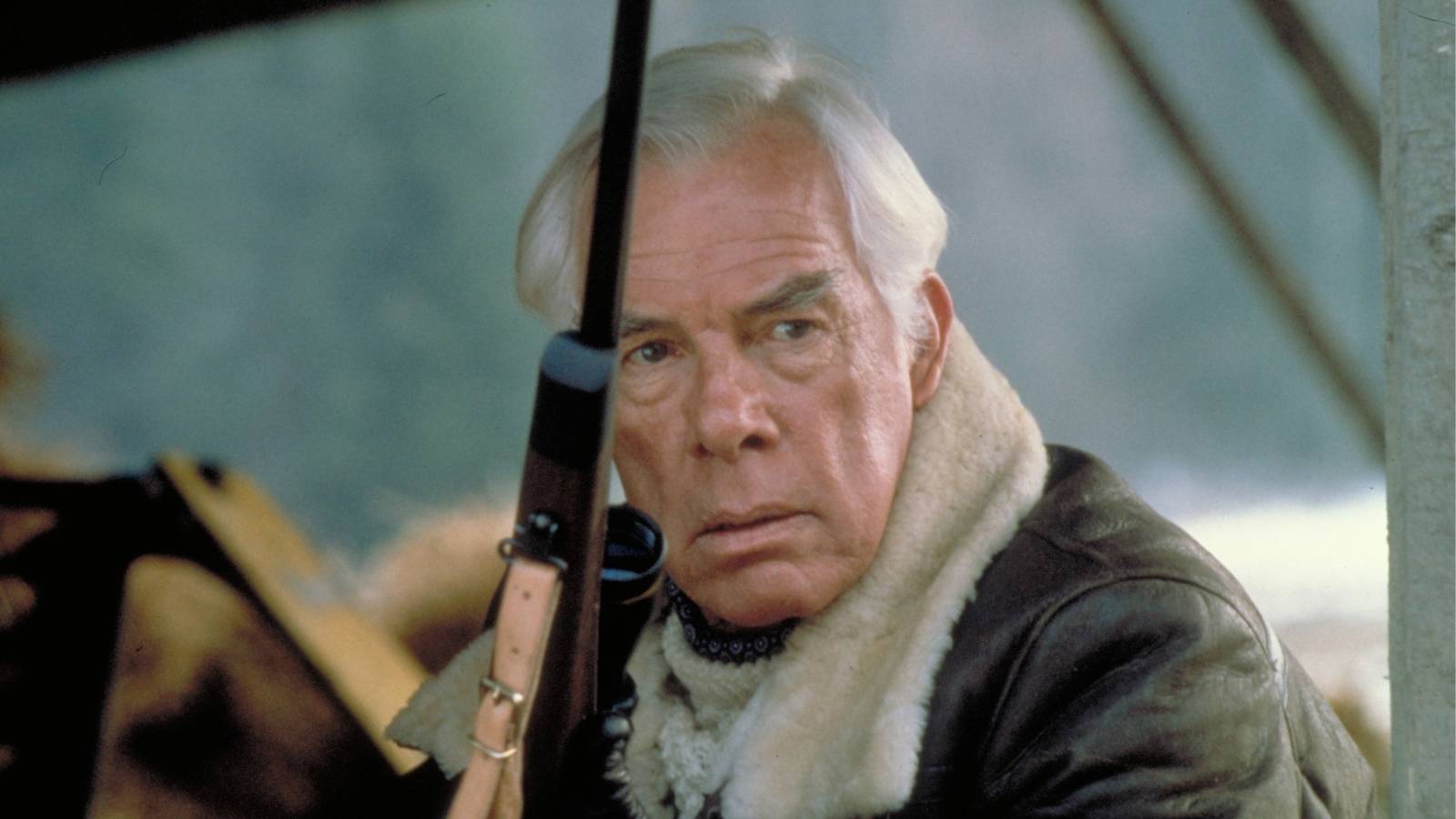
Published Sep 6, 2026, 11:00 PM EDT Shawn S. Lealos is an entertainment writer who is a voting member of the Oklahoma Film Critics Circle. He has written for Screen Rant, CBR, ComicBook, The Direct, The Sportster, Chud, 411mania, Renegade Cinema, Yahoo Movies, and many more. Shawn has a bachelor's degree in professional writing and a minor in film studies from the University of Oklahoma. He also has won numerous awards, including several Columbia Gold Circle Awards and an SPJ honor. He also wrote Dollar Deal: The Story of the Stephen King Dollar Baby Filmmakers, the first official book about the Dollar Baby film program. Shawn is also currently writing his first fiction novel under a pen name, based in the fantasy genre. To learn more, visit his website at shawnlealos.net. War movies have been a huge part of cinema since the early days of silent films. That said, there are also many movies that deal with the idea of war without actually taking place during a war. A great example of this came with a culture war that had the entire world in fear for more than two decades. The Cold War spanned from 1947 through 1991, and it seemed war was always around the corner. This included the Berlin Wall paranoia, the fear that Communists were living among people in America, and the entire paranoia about the CIA, Kremlin, and spies that had people in the real world always looking over their shoulders. This fear was ripe for movies about the Cold War, and throughout the entire period, films came out that touched on what scared everyone the most: the idea that anyone could betray them at any time. There are a lot of great Cold War movies, such as Dr. Strangelove, The Manchurian Candidate, The Spy Who Came in from the Cold, and The Hunt for Red October. However, while everyone talks about those movies, there are lesser-known Cold War movies that no one talks about, with stars like Michael Caine, Burt Lancaster, and Clint Eastwood, and directors like Sam Peckinpah, John Huston, and Don Siegel. 10 The Osterman Weekend (1983) Released in 1983, The Osterman Weekend was the final feature film that Sam Peckinpah directed in his incredible career. Based on the 1972 novel by Robert Ludlum (The Bourne Identity), The Osterman Weekend stars Rutger Hauer as a TV journalist named John Tanner. When a CIA agent named Fassett (John Hurt) convinces Tanner that his closest friends are Soviet agents, it sets up the Cold War plot. This movie plays into the Cold War paranoia that people can't even trust their own friends, who might be part of a KGB special ops group. The movie also showcases media manipulation and video surveillance, which puts it way ahead of its time for those ideas. While not up to the level of his Westerns, Peckinpah delivers a solid espionage thriller that has an ahead-of-its-time look at the surveillance state. 9 Gorky Park (1983) Released in 1983 and directed by Michael Apted, Gorky Park is based on Martin Cruz Smith's 1981 novel of the same name. William Hurt stars as Arkady Renko, a Soviet detective investigating three faceless, fingerless corpses found in Moscow's Gorky Park. He then discovers a sable-smuggling conspiracy that actually connects to both the KGB and Western corporations. Lee Marvin co-stars as American businessman Jack Osborne. The movie shows the Cold War from inside the Soviet Union, and it features an honest Moscow detective trying to solve a crime while dealing with KGB interference and government corruption. A slow-burn detective movie, it is often overlooked by people who expect more in a spy movie. However, Hurt's restrained performance as a sympathetic Soviet protagonist remains a highlight. 8 Firefox (1982) For anyone looking for more action from the Cold War thrillers, Clint Eastwood directed and starred in the movie Firefox in 1982. Eastwood stars as Major Mitchell Gant, a Vietnam veteran pilot who enters into a joint British-American military operation. His job is to get into the Soviet Union and steal the MiG-31 Firefox, a Mach-6, radar-invisible fighter with thought-controlled weapons. This aircraft is clearly fictional and invented for the story, but Eastwood was able to sell the story without making it feel overly false. The story about stealing Soviet technology at the height of the Cold War made it a modest success, mostly sold on the star power of Eastwood. As a rare techno-thriller for the actor, it deserves a second look, especially for his hardcore fans. 7 Hopscotch (1980) Released in 1980, Hopscotch is a movie directed by Ronald Neame with a screenplay by Bryan Forbes and Brian Garfield, based on a novel by Garfield. Walter Matthau stars as disillusioned, demoted CIA agent Miles Kendig. When he destroys his own files and threatens to publish a tell-all memoir, exposing the world's intelligence agencies, the CIA attempts to silence him. The Cold War plays a large role in this movie, as Kendig plays the East against the West, making the CIA think he has defected to the Soviets, while taunting both the U.S. and the U.S.S.R. with his manuscript. The novel won the Edgar Award for Best Novel, but the movie turned the story into more of a comedy, which is rare for a Cold War spy thriller. 6 Telefon (1977) Released in 1977 and directed by Don Siegel, Telefon is based on the novel by Walter Wager and stars Charles Bronson as KGB Major Grigori Borzov. Years ago, the KGB planted brainwashed sleeper agents across the United States. They were all programmed to commit sabotage when triggered by a line from a Robert Frost poem, and when a rogue clerk activates them, Borzov is sent to stop him. The Cold War themes are clear here, as it shows the Soviet Union creating a scheme to cripple the American infrastructure in case of a war. However, the film also differs because it shows that the current Soviet Union wants these dangerous sleeper agents buried. Siegel also directed Invasion of the Body Snatchers, which is one of the most famous Cold War horror movies. 5 Scorpio (1973) Released in 1973, the film stars Burt Lancaster as a veteran CIA agent named Cross, while Alain Delon is a freelance assassin named Scorpio. The plot here sees the CIA order Scorpio to assassinate Cross, Scorpio's former mentor, because the former agent allegedly knows too much. This sets off a cat-and-mouse chase all over Europe. This movie also turns the Cold War on its head, as the CIA has ordered the assassination of one of its own, while the former agent on the run takes refuge with his former Soviet counterpart. It presents a unique theme that shows that sometimes a person's own government is deadlier than the individuals that these governments taught their agents were the enemies. 4 The Kremlin Letter (1970) John Huston directed the 1970 Cold War thriller The Kremlin Letter, based on Noel Behn's 1966 novel. This movie has a massive cast, with Patrick O'Neal, Orson Welles, Bibi Andersson, Max von Sydow, George Sanders, Richard Boone, and Dean Jagger all part of the cast. The plot follows a team of aging Western spies who recruit a young officer with photographic memory to recover a compromising letter. This letter reveals information about a possible United States and U.S.S.R. attack on Communist China. The movie is as much a heist movie as it is a Cold War thriller, with the team members all possessing specific traits that make them perfect for this job. The Kremlin Letter is a cynical movie, and it might be the bleakest release in the subgenre. 3 A Dandy in Aspic (1968) A Dandy in Aspic is Anthony Mann's final movie of his career, as he died while directing the film, and Laurence Harvey finished the film. Harvey plays a double agent named Eberlin, whom British intelligence orders to hunt down and kill an elusive KGB assassin named Krasnevin. However, the twist here is that Eberlin and Krasnevin are the same person, so he is sent to kill himself. The movie is set in a divided West Berlin, and the film follows a Soviet mole embedded inside British intelligence who wants to defect back home. The movie was mostly forgotten thanks to Mann's death and the fact that many felt the film was unfinished when it was released. However, as a melancholy look at a spy who wants out, it is well worth the look. 2 Billion Dollar Brain (1967) Ken Russell directed the Cold War thriller Billion Dollar Brain, which was released in 1967. Unlike many obscure movies, this one is actually part of a franchise, with Michael Caine returning as the reluctant spy Harry Palmer. Based on Len Deighton's 1966 novel, Billion Dollar Brain follows Harry as he's hired to carry a mysterious container to Helsinki, where he crosses paths with Texas oil billionaire General Midwinter. This billionaire has control of a private supercomputer and an army, with the hopes of toppling the Soviet empire. The twist here is that the villain is not the Soviets, but an anti-Soviet zealot whose private crusade risks an actual world war. The movie's title refers to the supercomputer, making the movie an early-era techno-thriller. This was Russell's second movie, and it remains the lesser-known of the Harry Palmer franchise. 1 Funeral in Berlin (1966) Released in 1966, Funeral in Berlin was directed by Goldfinger director Guy Hamilton, who had just finished his James Bond movie. This is the second Harry Palmer movie in that franchise. In this Cold War thriller, Palmer (Michael Caine) is sent to Berlin to arrange the defection of a Soviet officer named Colonel Stok, who is in charge of stopping escapes over the Berlin Wall. Palmer then realizes the defection is a trap. The Berlin Wall is central to this plot, both as the setting and the engine for the story's plot. The story is built around a plan to cross from East to West. The movie was also shot on location in Berlin, with soldiers from the other side reportedly watching the filming intently. This movie is a more nuanced look at the superspies compared to the Bond movies, and its realistic atmosphere makes it a Cold War movie worth seeking out.
10 Great Cold War Thrillers That Don't Get Talked About Enough
Full Article
Original Source
Read the full article at Screenrant →KhanList aggregates and links to publicly available news content. We do not host full articles from third-party sources. Always verify important information with original sources.