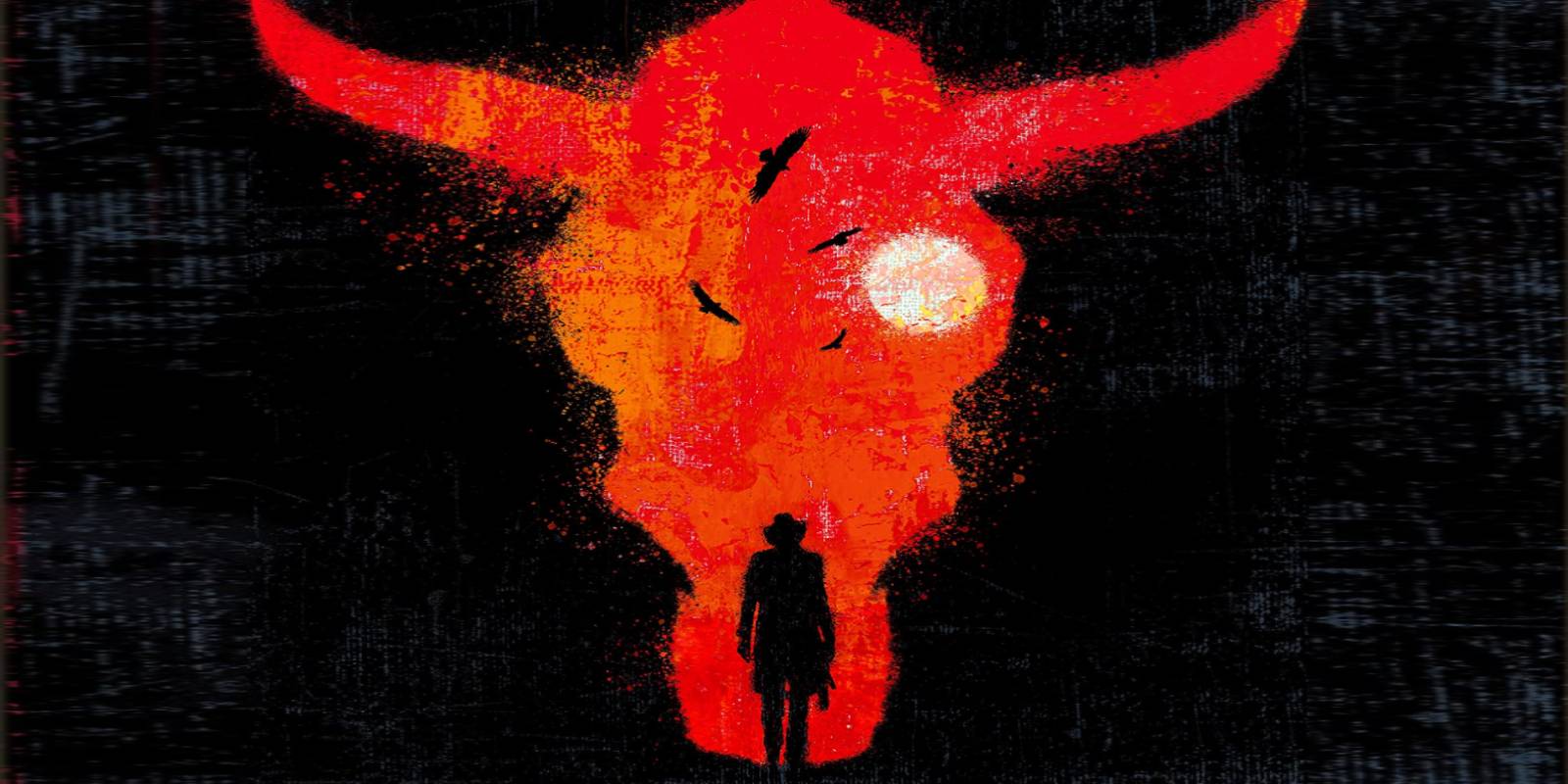
Image via Picador Published Jul 29, 2026, 5:29 PM EDT Jeremy has more than 2700 published articles on Collider to his name, and has been writing for the site since February 2022. He's an omnivore when it comes to his movie-watching diet, so will gladly watch and write about almost anything, from old Godzilla films to gangster flicks to samurai movies to classic musicals to the French New Wave to the MCU... well, maybe not the Disney+ shows. His favorite directors include Martin Scorsese, Sergio Leone, Akira Kurosawa, Quentin Tarantino, Werner Herzog, John Woo, Bob Fosse, Fritz Lang, Guillermo del Toro, and Yoji Yamada. He's also very proud of the fact that he's seen every single Nicolas Cage movie released before 2022, even though doing so often felt like a tremendous waste of time. He's plagued by the question of whether or not The Room is genuinely terrible or some kind of accidental masterpiece, and has been for more than 12 years (and a similar number of viewings). When he's not writing lists - and the occasional feature article - for Collider, he also likes to upload film reviews to his Letterboxd profile (username: Jeremy Urquhart) and Instagram account. He has achieved his 2025 goal of reading all 13,467 novels written by Stephen King, and plans to spend the next year or two getting through the author's 82,756 short stories and 105,433 novellas. Sign in to your Collider account Stephen King is one of the all-time greats, if you're after genuinely compelling horror books. Based on those he released in the 1970s alone, he’d be worthy of remembering, since his first three books were Carrie, ‘Salem’s Lot, and The Shining, but then he’s (obviously) remained prolific well beyond, with almost 70 published novels, and then a whole bunch of novellas and short stories on top of those, too. Lots of his stuff’s tied to the horror genre, but he’s also written his fair share of thrillers, science fiction stories, and works of fantasy… though if you keep on reading his stuff, you are going to run out eventually (as surprising as that might feel when you're in the middle of a King binge). So, if you do, here are some books that are well-worth reading if you're a fan of Stephen King, but either want to branch out from King, or, like, you’ve just run out of Stephen King. It'll happen, at a point. Everything ends, sadly. 10 'Ghost Story' (1979) Image via Coward, McCann and Geoghegan If you’ve read everything by Stephen King, then you’ve also written two books that are technically (also) written by Peter Straub, since King and Straub collaborated on The Talisman and its sequel, Black House. If you like those, or if you just like horror generally, then some of Straub’s “solo” work is probably also worth seeking out, and Ghost Story is the best place to start if you're doing just that. It’s unsurprisingly a novel that belongs to the horror genre, given its title and all, with it more specifically being about a writer making startling discoveries about his recently deceased uncle, including coming across an underground society of people obsessed with ghost stories. Therein does lie another similarity to Stephen King, because King also likes writing horror stories about characters who themselves are authors (with The Shining probably being the best example of this). 9 'King Sorrow' (2025) Image via William Morrow and Company This is an easy one, because Joe Hill is the son of Stephen and Tabitha King (the latter also being a writer, so it runs in the family and all). Hill does stand alone as a good author, though, and him publishing his work under the name Joe Hill is admirable, going some way to mitigating nepo baby allegations some may want to throw at him… though the resemblance he has to his father is hard to shake/deny. Hill’s written a fair few horror stories, including some that have been made into movies (like Horns and The Black Phone), but the most impressive novel he’s written to date is probably King Sorrow. It’s an epic that blends together various genres in the way some of Stephen King’s best chunky books have, and it ends up being a surprisingly easy read, even with it being almost 900 pages long all up. 8 'The Terror' (2007) Image via Little, Brown and Company Dan Simmons was probably best known for the books in the Hyperion Cantos, but he’d also tackled the horror genre in an effective and rather unique way on at least one occasion, and that one occasion really worth mentioning was The Terror. It’s a work of historical fiction about a real-life lost expedition from the 1840s, dealing with more grounded forms of horror before things eventually start feeling a bit more fantastical… possibly. There’s tension between the different sorts of horror here, and that’s a big reason why The Terror maintains a good deal of terror (it’s in the title and all) throughout. Also, The Terror is quite a long read, and if you're a fan of Stephen King, you're probably also fond of a fair few novels of his that don’t mind being hundreds upon hundreds of pages long (here’s looking at you, IT). 7 'Watchers' (1987) Image via Putnam Watchers is probably more of a thriller than an outright work of horror, and it’s also an oddly sentimental book, at times… but Stephen King can be a bit of a sentimentalist, so that makes Watchers worthy of a mention here, for present purposes. It’s about a handful of people who get wrapped up in a series of events that involve an unusually smart golden retriever and another bizarre creature that’s been the subject of a scientific experiment. It does some weird things with that whole premise, and regarding the sentimental side of it all, Watchers does also manage to be emotional in ways you might not expect, based on what the premise involves. It’s a somewhat messy novel, sure, but again, returning to the idea of Stephen King and novels that are a bit Stephen King-ish… like, yeah, some of his best stuff is more than a little messy, at times. 6 'The Black Dahlia' (1987) Image via The Mysterious Press The Black Dahlia is about the murder of Elizabeth Short, touching upon the case’s unsolved nature while also throwing a handful of fictional characters into the mix, so it’s not a strictly historical novel or anything. It does still explore the case effectively, all the while also working as a narrative about obsession, given how the murder impacts a pair of detectives who get wrapped up in the case. James Ellroy has a knack for writing confronting stories that blur fact and fiction, with The Black Dahlia being one of his best novels, and also one of his most straightforward. Other books of his, like American Tabloid and L.A. Confidential, might well be slightly better than The Black Dahlia, but there is a bluntness to this particular novel – and a comparative simplicity with its style and how much happens overall – that makes it a bit more likely to appeal to those who like Stephen King’s thrillers. 5 'House of Leaves' (2000) Image via Doubleday There are no Stephen King books quite as confounding as House of Leaves, which feels postmodern in a way King doesn’t really go for, at least not intentionally. The most baffling Stephen King stories are some of his more hallucinatory and not-so-great ones, like The Tommyknockers, Dreamcatcher, and From a Buick 8. House of Leaves, on the other hand, is trippy in the best of ways. It’s a dizzying and layered book that’s more or less about a haunted house, but also, about a documentary about said haunted house. Well, it’s about one man being driven mad by studying this supposed documentary. No, actually, it’s about another man looking into that first man who studied that documentary about that haunted house. And there’s at least one layer beyond that. House of Leaves cannot be experienced in any way other than reading it, and reading it is, perhaps unsurprisingly, one hell of a unique experience. 4 'Blood Meridian' (1985) Image via Random House Outside The Dark Tower, and maybe Desperation, Stephen King hasn’t really tackled the Western genre outright (and then even with those examples, neither are purely Westerns). Blood Meridian, on the other hand, is classifiable as a Western fairly directly, since it takes place during the mid-1800s and involves characters rampaging around the Old West in a manner you wouldn’t expect to see outside the context of the mid-19th century. Blood Meridian is no ordinary Western, being savage and downbeat enough at times to feel like an outright work of horror. Then again, Blood Meridian is no ordinary Western, being savage and downbeat enough at times to feel like an outright work of horror, and it’s all the horror here that makes it potentially recommendable to those who like Stephen King. Granted, it’s a good deal more savage than most Stephen King stories, and for as dark as King’s gotten, he’s probably never reached quite this level of despairing, so Blood Meridian does also have to be recommended somewhat cautiously. 3 'Boy's Life' (1991) Image via Simon & Schuster Since there’s one other post-apocalyptic story that'll be mentioned shortly, Swan Song can only really get an honorable mention here as something that definitely scratches the same itch as Stephen King’s best-known work of post-apocalyptic fiction. For another Robert R. McCammon book that’s not Swan Song, though, you do also have Boy’s Life, which is a bit more in line with something like IT, The Talisman, or “The Body” (the last of those being adapted into Stand by Me). It’s a coming-of-age story, essentially, with some fantastical elements thrown in, but not so many that it feels like an in-your-face kind of horror or fantasy story. Boy’s Life is set during the 1960s and proves effective in exploring some real-life issues of the time, feeling sincere as a book about growing up, and being occasionally unsettling/mysterious/intense at the same time, too. It does a lot all at once, and does all those things pretty well throughout. 2 'Lucifer's Hammer' (1977) Image via Del Rey Books The easiest Stephen King book to compare Lucifer’s Hammer to, by far, would be The Stand. Then again, they're both quite different, as far as post-apocalyptic books go. The Stand was published one year later, but it’d be hard to argue King stole anything from Lucifer’s Hammer, and the same could/would be said if Lucifer’s Hammer came out later. They are, however, both about the end of the world, and a few people who try to survive after most of humanity has been eradicated. With The Stand, it happens because of a superflu, and in Lucifer’s Hammer, it’s a comet that’s hurtling towards the Earth, and eventually responsible for nearly eradicating all life on the planet. There’s a pretty big emphasis on science fiction here, too, on top of the post-apocalyptic/(sort of) horror elements, and all in all, Lucifer’s Hammer does end up being a very compelling read. 1 'Uzumaki' (1998–1999) Image via Shogakukan Inc. There are a fair few Stephen King books about a town that experiences weird things, and then things, uh, spiral out of control. See ‘Salem’s Lot, Needful Things, and Under the Dome. Speaking of spirals, here’s Uzumaki. Technically, it’s a manga, or maybe a graphic novel (it has been collected within its own single book, after all), but it still feels worth mentioning here. The kind of horror Uzumaki contains is a bit Stephen King-esque, with the added benefit – or added horror, depending on your perspective – of things being visualized, which might well make it all the more nauseating. It’s about a bunch of people who are driven mad because they see spirals everywhere, and it’s impressive how paranoia-inducing it manages to be, because it becomes hard to look at anything vaguely spiral-like in real life without thinking of some of the stuff that goes down in Uzumaki. Uzumaki Release Date February 11, 2000 Runtime 90 Minutes Cast Eriko Hatsune Kirie Goshima Hinako Saeki Kyoko Sekino Shin Eun-kyung Chie Marayama
10 Great Books Stephen King Fans Should Read
Full Article
Original Source
Read the full article at Collider →KhanList aggregates and links to publicly available news content. We do not host full articles from third-party sources. Always verify important information with original sources.