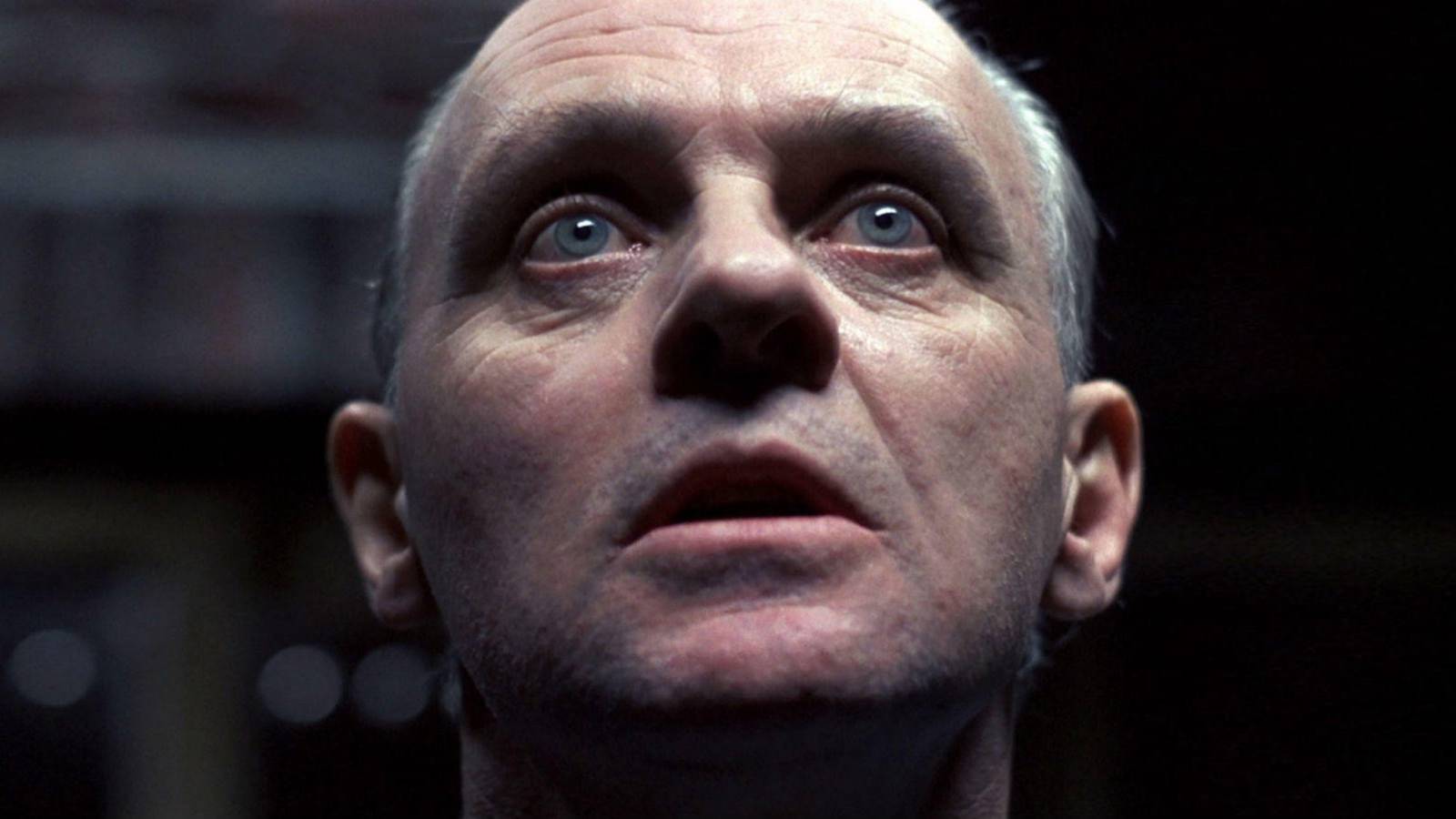
Image via Orion Pictures Published Aug 10, 2026, 7:31 AM EDT Sign in to your Collider account Perfect in this list doesn't mean these movies are comfortable to watch or that everyone likes them. But it means every choice on screen is doing exactly what it's supposed to do, and there's nothing you'd actually want to change if you sat down and really thought about it. Horror's a weird genre for that kind of list too, because so much of what makes it work depends on things that are basically impossible to fake, for instance, real dread building slowly, a cast that's actually exhausted or actually scared, a director who is willing to let a scene sit there uncomfortably instead of cutting away. These ten movies all pulled that off. Worst to best, and here they are. 10 'The Texas Chain Saw Massacre' (1974) Image Via Bryanston Distributing Company This whole movie cost about 140,000 dollars to make, and it still is considered as one of the most disturbing things ever put on film, mostly because Tobe Hooper barely shows you anything directly. Most of the actual violence happens off-screen or in quick flashes, and your brain fills in way worse stuff than the camera ever does. The cast filmed this in real Texas heat, while wearing the same clothes for weeks straight, and that exhaustion and misery is genuinely on their faces the whole time, not acted. Marilyn Burns actually got cut during that dinner table scene, and you can tell, because nobody's performance that frantic is fully faked. 9 'The Exorcist' (1973) Image via Warner Bros. Pictures People actually fainted and threw up in theaters when this came out, and that's not some urban legend, it's documented. William Friedkin fired guns off-camera during takes just to get real, startled reactions out of his actors, which is an insane thing to do but it clearly worked. Linda Blair was twelve years old during filming, and this became the first horror movie ever nominated for Best Picture, which still feels wild for something this genuinely disturbing. The head-spin effect is just a practical dummy, no digital trickery at all, and it's still more unsettling than most CGI horror movies today. 8 'The Thing' (1982) Image via Universal Pictures Rob Bottin worked himself to actual physical collapse building the creature effects for this movie, and every gross, twisted transformation you see is real latex and real puppetry, not a computer. It bombed in theaters, partly because it came out the same summer as E.T. and nobody wanted a mean alien right after that. The real horror here isn't even the insane creature that was built, honestly, it's that nobody in the crew knows who's still human anymore, and neither do you. Kurt Russell holds the whole thing together, and decades later, The Thing gets talked about as one of the best practical effects movies ever made, way more than it ever did on release. 7 'Rosemary's Baby' (1968) Image via Paramount Pictures Nothing jumps out at you in this entire movie, and that's exactly why it's terrifying. Mia Farrow plays Rosemary getting slowly gaslighted by everyone around her, her neighbors, her doctor, even her own husband, and Roman Polanski never gives you a clean moment where you're sure whether she's right or just paranoid. That confusion drives the entire film and as an avid viewer, it’s your fuel to keep watching. Ruth Gordon won an Oscar for playing the world's most dangerously weird neighbor, and the ending doesn't rescue Rosemary from anything. She just accepts what's happened to her, and the movie ends there, without any relief, which is a genuinely bold way to close out a horror film. 6 'The Silence of the Lambs' (1991) Image via Orion Pictures Anthony Hopkins is only on screen for about sixteen minutes total in this movie, and he still won Best Actor for it, which tells you everything about how efficient this script is. Jodie Foster gives her best as Clarice and depicts real vulnerability on screen that never once tips into weakness. Hannibal Lecter, on the other hand, never needs to raise his voice to be the scariest person in the room. This is one of only three movies ever to win all five major Oscars, picture, director, actor, actress, and screenplay, and it's also just a genuinely great crime thriller underneath the horror label. Not many movies manage both at once. Collider Exclusive · Horror Survival Quiz Which Horror Villain Do You Have the Best Chance of Surviving? Jason Voorhees · Michael Myers · Freddy Krueger · Pennywise · Chucky Five killers. Five completely different ways to die — if you're not smart enough, fast enough, or self-aware enough to avoid it. Only one of them is the villain your particular set of instincts gives you a fighting chance against. Eight questions will figure out which one. 🏕️Jason 🔪Michael 💤Freddy 🎈Pennywise 🪆Chucky TEST YOUR SURVIVAL → 01 Something feels wrong. You can't explain it — you just know. What do you do? First instincts are the difference between the survivor and the first act casualty. ALeave immediately. I don't need to understand a threat to respect it. BStay quiet and observe. If I can see it, I can understand it. If I can understand it, I can avoid it. CStay awake. Whatever this is, I am not going to sleep until I feel safe again. DConfront it directly. Fear grows in the dark — I'd rather know what I'm dealing with. ECheck everything, trust nothing. The threat might be closer than I think — and smaller. NEXT QUESTION → 02 Where are you most likely to find yourself when things go wrong? Setting is everything in horror. Where you are determines which rules apply. ASomewhere remote — a cabin, a campsite, off the grid and away from people. BA quiet suburban neighbourhood where nothing ever happens. Except tonight. CIn my own head — the most dangerous place of all, depending on what's already in there. DWherever children are — because something about this place attracts the worst things. ESomewhere ordinary — a house, a toy store, a place where the last thing you'd expect is a threat. NEXT QUESTION → 03 What is your most reliable survival asset? Every survivor has a quality the villain didn't account for. What's yours? APhysical fitness — I can run, I can swim, I can outlast something that relies on brute persistence. BSpatial awareness — I always know the exits, the hiding spots, the fastest route out. CPsychological resilience — I've faced my worst fears before. They don't have the same power over me. DEmotional steadiness — I don't panic. Panic is what gets you caught. EScepticism — I don't underestimate threats because of how they look. Size is irrelevant. NEXT QUESTION → 04 What kind of fear is hardest for you to fight through? Knowing your weakness is the first step to not dying because of it. AThe unstoppable — something that will not stop, cannot be reasoned with, and is always getting closer. BThe invisible — a threat I can feel but can't locate, watching from somewhere I can't see. CThe psychological — something that uses my own mind and memories against me. DThe unknowable — something ancient, shapeless, that feeds on the fear itself. EThe mundane — a threat so ordinary-looking that no one will believe me until it's too late. NEXT QUESTION → 05 You're with a group when things start going wrong. What's your role? Horror movies are brutally clear about who survives group situations and who doesn't. AThe one who says "we need to leave" first — and means it, even when no one listens. BThe one who stays quiet, watches the others, and figures out the pattern before anyone else does. CThe one who holds the group together when panic sets in — because someone has to. DThe one who asks the questions nobody wants to ask — because ignoring them gets people killed. EThe one who takes the threat seriously when everyone else is laughing it off. NEXT QUESTION → 06 What's the horror movie mistake you're most likely to make? Honest self-assessment is a survival skill. Denial is not. AGoing back for someone — I know I shouldn't, but I can't leave them behind. BAssuming I'm safe once I've found a hiding spot. That's when it finds me. CFalling asleep when I absolutely cannot afford to. Exhaustion is its own enemy. DLetting my curiosity override my instincts — I always need to understand what I'm dealing with. EDismissing the threat because of how it looks. That's exactly what it wants. NEXT QUESTION → 07 What's your best weapon against something that can't be stopped by conventional means? Every horror villain has a weakness. The survivors are always the ones who find it. AThe environment itself — I use the terrain, the water, the geography against it. BPatience — I wait, I watch, and I strike at the one moment it doesn't expect. CLucidity — if I can stay in control of my own mind, it loses its primary weapon. DCourage — facing it directly, refusing to run, taking away the fear it feeds on. EImprovisation — I use whatever's at hand, however unconventional. Creativity over brute force. NEXT QUESTION → 08 It's the final scene. You're the last one standing. How did you make it? The final survivor always has a reason. What's yours? AI kept moving. I never stopped, never hid for too long, never let it corner me. BI figured out the pattern before anyone else did — and I used it against the thing following it. CI stayed awake, stayed lucid, and refused to give it the one thing it needed most. DI stopped being afraid of it. And the moment I did, everything changed. EI took it seriously from the start — and I never once made the mistake of underestimating it. REVEAL MY VILLAIN → Your Survival Odds Have Been Calculated Your Best Chance Is Against…Your instincts, your strengths, and your particular way of thinking under pressure point to one villain you actually have a fighting chance against. Everyone else — good luck. Jason VoorheesJason is relentless, but he is also predictable — and that is the gap you would exploit. He moves in straight lines toward his target. He doesn't strategise, doesn't adapt, doesn't outsmart. He simply pursues. Your ability to keep moving, use the environment, and resist the panic that freezes most victims gives you a genuine edge. The Crystal Lake survivors were always the ones who stopped running in circles and started thinking about terrain, water, and distance. You think like that. Which means Jason, for all his indestructibility, would face someone who simply refused to be where he expected. Michael MyersMichael watches before he moves. He is patient, methodical, and almost impossible to detect — until it's too late for anyone who isn't paying close enough attention. But you are paying attention. You notice the shape in the window, the car parked slightly wrong, the silence where there should be sound. Michael's power lies in the invisibility of ordinary suburbia — the fact that nothing ever looks wrong until it already is. Your spatial awareness and instinct to map every room, every exit, and every shadow before you need them is precisely the quality Laurie Strode had. You are not a victim waiting to happen. You are someone who already suspects something is wrong — and acts on it. Freddy KruegerFreddy wins by getting inside your head — using your own fears, your own memories, your own subconscious as weapons against you. That strategy requires a target who can be destabilised. You are harder to destabilise than most. You've faced uncomfortable truths about yourself and you haven't looked away. The survivors on Elm Street were always the ones who understood what was happening and chose to face it rather than flee from it. Freddy's greatest weakness is that his power evaporates in the presence of someone who refuses to give him the fear he feeds on. Your psychological resilience — the ability to stay grounded when reality itself becomes unreliable — is exactly the quality that keeps you alive here. PennywisePennywise is ancient, shapeshifting, and feeds on terror — but it has one critical vulnerability: it cannot function against someone who genuinely stops being afraid of it. The Losers Club didn't survive because they were braver than everyone else. They survived because they faced their fears together, and faced them honestly. You ask the questions others avoid. You look directly at what frightens you rather than turning away. That directness — the refusal to let fear fester in the dark — is Pennywise's worst nightmare. It chose the wrong target when it chose you. You are exactly the kind of person whose fear tastes like nothing at all. ChuckyChucky's greatest advantage is that nobody takes him seriously until it's already too late. He exploits the gap between how something looks and what it actually is. You don't have that gap. You take threats seriously regardless of how they present — and you never make the mistake of underestimating something because of its size or appearance. Chucky relies on surprise, on the delay between recognition and response. You close that delay faster than almost anyone. Your instinct to treat every unfamiliar thing with appropriate scepticism — rather than dismissing it because it seems absurd — is the exact quality that keeps you breathing. Against Chucky, not laughing is already winning. You are very good at not laughing. ↻ RETAKE THE QUIZ 5 'Alien' (1979) Image via 20th Century Studios The actors filming the chestburster scene weren't fully told how graphic it was going to be, so those screams and that shock on their faces are mostly real. Honestly, directors doing it is cruel, but as a part of an audience who really wants horror films to look real, this seems necessary. Ridley Scott basically built a haunted house in space and let the dread build slowly instead of rushing to the scares, which shows. Sigourney Weaver as Ripley became one of the first genuine action heroines in a genre that mostly didn't have them yet, and H.R. Giger's creature design is still one of the most unsettling things anyone's ever put on screen. Practical models and animatronics the whole way through, and none of it looks dated even now. 4 'Psycho' (1960) Image via Paramount Pictures Alfred Hitchcock killed off his own lead actress about forty minutes into the movie, which nobody had really done before, and it's still a genuinely shocking structural choice decades later. The shower scene took seven days to film for about forty-five seconds of footage, more than seventy separate camera setups for one scene. He also made theaters agree not to let anyone in after the movie started, which had never really been done before either. Bernard Herrmann's screeching violin score, on the other hand, does half the work of scaring you. Plus, it's shot in black and white specifically to get the blood past the censors of the time. 3 'The Shining' (1980) Image via Warner Bros. The "here's Johnny" door scene took three days to film and destroyed over sixty actual doors, since Stanley Kubrick just kept going until he got exactly what he wanted. Shelley Duvall reportedly did over a hundred takes on some scenes, and the exhaustion on her face by the end isn't really acting anymore. Jack Nicholson goes fully unhinged in a way that still feels dangerous to watch, and Kubrick invented new Steadicam techniques just to follow a kid on a tricycle through those hallways. Stephen King famously hated this adaptation of his own book, and most people who've seen it would still call it the better version. 2 'The Wailing' (2016) Image via 20th Century Studios This movie runs two and a half hours, and almost all of the time it makes sure you have no idea who to actually trust. There is the mysterious stranger, the local shaman, and your own eyes. If you had given the chance, who would you have trusted? Na Hong-jin blends a police procedural with possession horror and Korean folk mysticism so thoroughly that by the end you're not even sure what genre you watched. Kwak Do-won plays a father who is just trying to protect his daughter while everyone around him gives him conflicting, dangerous advice, and the movie deliberately misleads you the same way it misleads him. A lot of critics consider this the best horror movie of its entire decade, and the slow burn is the whole reason it works. 1 'The Witch' (2015) Image via A24 Robert Eggers pulled the dialogues in this movie straight from real seventeenth-century court documents and Puritan journals, so every strange, stilted line of speech is basically historically accurate. He also shot the entire thing using only natural light and candlelight, no artificial lighting at all, which makes every scene feel colder and more isolated than it already is. Anya Taylor-Joy plays Thomasin, a teenage girl slowly getting blamed by her own family for a string of disasters that may or may not be supernatural, and the ending, her walking into the woods to join the witches, plays like an actual liberation. Even the family's goat, Black Phillip, became its own little internet legend after this came out. This is a debut film, and it's better than most directors' entire careers. The Witch Release Date February 19, 2016 Runtime 92 minutes
10 Genuinely Perfect Horror Movies, Ranked
Full Article
Original Source
Read the full article at Collider →KhanList aggregates and links to publicly available news content. We do not host full articles from third-party sources. Always verify important information with original sources.