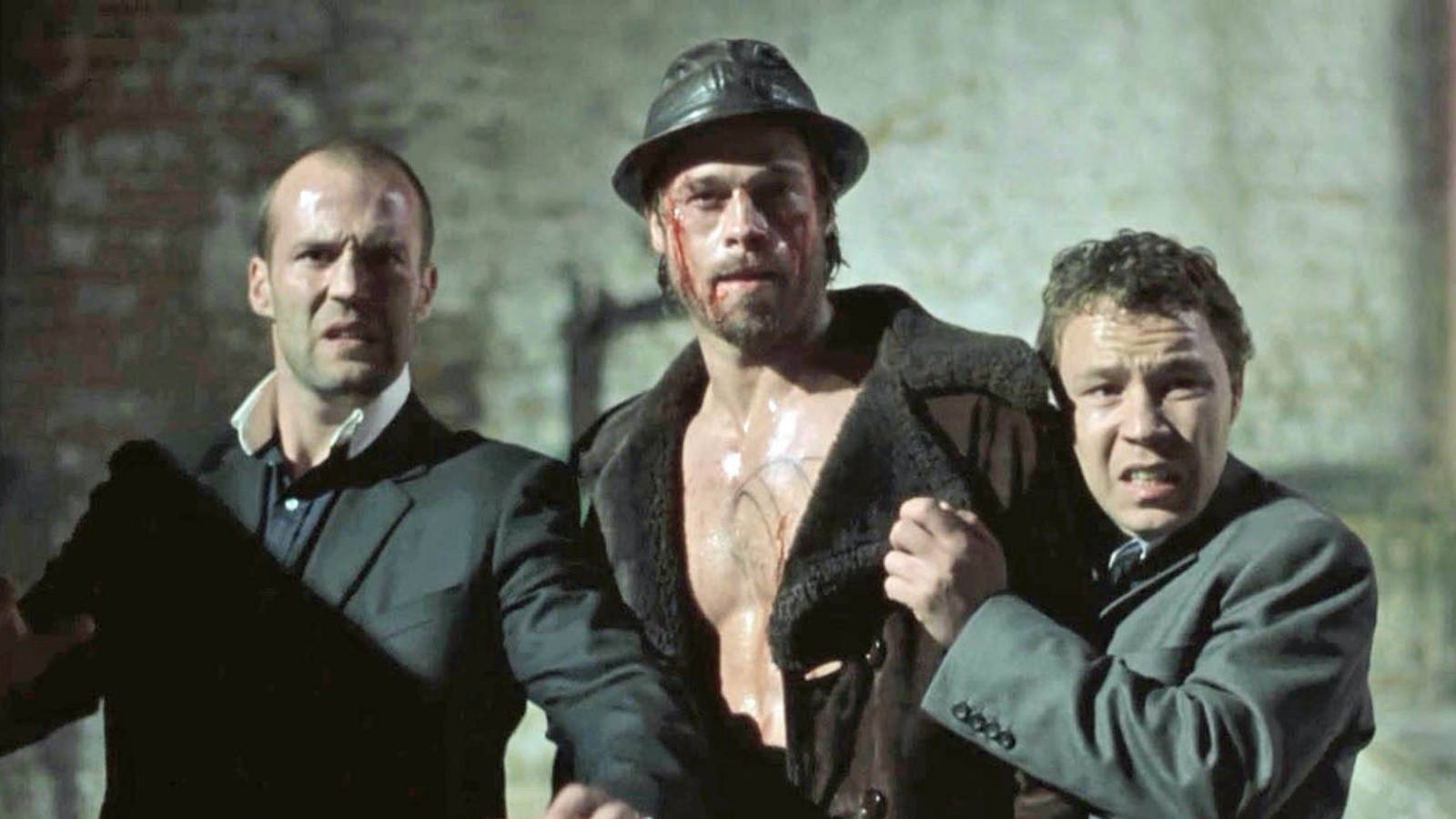
Image via Columbia Pictures Published Jul 31, 2026, 5:59 PM EDT Diego Pineda has been a devout storyteller his whole life. He has self-published a fantasy novel and a book of short stories, and is actively working on publishing his second novel. A lifelong fan of watching movies and talking about them endlessly, he writes reviews and analyses on his Instagram page dedicated to cinema, and occasionally on his blog. His favorite filmmakers are Andrei Tarkovsky and Charlie Chaplin. He loves modern Mexican cinema and thinks it's tragically underappreciated. Other interests of Diego's include reading, gaming, roller coasters, writing reviews on his Letterboxd account (username: DPP_reviews), and going down rabbit holes of whatever topic he's interested in at any given point. Sign in to your Collider account There are very few movies that are genuinely perfect—and even then, the quality of a film is always a highly subjective matter. Throughout history, however, there have been ten particularly great heist movies that are truly worthy of the label of perfection. They're absolute masterclasses in everything the genre should do, and they have all aged like fine wine. Whether it's a modern masterpiece like Ocean's Eleven or a genre-defining classic like Le Cercle Rouge, the most perfect heist movies ever made are all vastly different, but they share certain key elements in common: They're irresistibly exciting, awfully suspenseful, and incredibly entertaining from beginning to end. In other words, they're everything that a fan of the heist genre is looking for in a feature film. 10 'Ocean's Eleven' (2001) Image via Warner Bros. Pictures The 1960 Rat Pack film Ocean's 11 is a solid enough heist classic, but nothing particularly special. That only makes Steven Soderbergh's Ocean's Eleven, widely recognized as one of the best heist gems of the 21st century, one of those rare few movie remakes that are even better than the original. Led by a star-studded cast whose members are all at the top of their games, it's a 2000s classic that's among the heist movies most worth rewatching. The cast is already reason enough to watch Ocean's Eleven, but as if that weren't the case, the film is also an admirable balancing act between stylish flair and substantial narrative momentum. Whereas many crime capers of its kind inevitably end up favoring style over substance in a way that hinders their quality, Ocean's Eleven balances the two so perfectly that its entertainment value is impossible to deny. 9 'Nine Queens' (2000) Image via Walt Disney Studios Motion Pictures International Though it's the American and European film industries that have provided most of history's best and most widely-celebrated heist films throughout the years, the diverse national filmographies of Latin American hide several awfully underappreciated gems from the heist genre. Case in point: the Argentine masterpiece Nine Queens, written and directed brilliantly by Fabián Bielinsky. It's nothing short of one of the best heist movies since 2000, a suspense-filled drama so densely packed with twists until the very end that those who love being constantly surprised by heist thrillers, yet somehow still haven't seen Nine Queens, are in for the ride of a lifetime. Cleverly critiquing greed and corruption while offering endless amounts of entertainment, it's a masterfully-directed drama unlike any other. 8 'Sexy Beast' (2000) Image via Searchlight Pictures Jonathan Glazer has consistently made the best of the many opportunities he's had to prove himself as a hugely talented filmmaker, but even the greats have to start somewhere. In Glazer's case, that was Sexy Beast, which is easily one of the best English-language debut films of the 2000s. Starring a powerstone Ray Winstone and an explosive Ben Kingsley, it's one of the best-acted thrillers of its time. What sets Sexy Beast apart, aside from its incredible leading men and Glazer's quasi-surreal direction, is the fact that it doesn't actually focus on the heist part of the narrative. Instead, by leaving the actual heist to serve as the foundation of the story's breathtaking third act, Sexy Beast deconstructs the "one last job" subgenre in all sorts of genius ways. For all of that and more, it's one of those forgotten 2000s thrillers that have aged beautifully. 7 'The Killing' (1956) Image via Harris-Kubrick Productions Stanley Kubrick is regarded by many as the single greatest American filmmaker to have ever lived, and for good reason. Even still, it's typically his later masterpieces that tend to get the largest amount of mainstream love, leaving gems like the Golden-Age Hollywood noir The Killing as one of the most awfully underappreciated classics of the era. Told with a groundbreaking non-linear structure as its foundation and built like the tensest of tense chess games, The Killing remains one of the most timeless classic noirs of all time. Thematically sharp and masterfully successful, it's a flawless display of every aesthetic and thematic strength that still makes the noir genre so widely beloved to this day. 6 'Snatch' (2000) Image via Columbia Pictures Guy Ritchie is definitely not a director for everyone, and he can even be a bit of an acquired taste. But if there's something he has proven over the course of his career beyond a shadow of a doubt, it's that he wouldn't have it any other way. You could tell that you were in the presence of such a hugely idiosyncratic auteur as far back as 2000, when Ritchie released Snatch, his sophomore feature effort as a director. Though it's one of Jason Statham's most universally-beloved movies, Snatch benefits from an even larger cast full of stars that elevate its sense of energy and charm into the stratosphere. Hyper-kinetic in its style and incredibly intelligent in how its plot lines weave into each other, it's a masterclass in how to favor style over substance while also making the style feel like the substance itself. 5 'Reservoir Dogs' (1992) Quentin Tarantino has been one of the most immensely celebrated and acclaimed auteurs of his generation since the '90s. To be more precise, he gained international recognition as soon as Miramax Films released his stunning feature debut, Reservoir Dogs. It's nothing short of one of the best heist thriller movies of all time. Like many capers, Reservoir Dogs has an incredibly stacked cast full of stars delivering some of the best work of their careers, but that's far from being its only strong point. Instead, it's Tarantino's energetic direction and perfectly-paced screenplay that make this one of the most perfect crime thrillers of the '90s. Much in the same vein as Sexy Beast, Reservoir Dogs doesn't actually focus on the heist itself. Instead, it focuses on its explosive aftermath, and the result is one of the best heist masterpieces in film history. 4 'Dog Day Afternoon' (1975) Image via Warner Bros. Pictures Heist movies tend to be entirely fictional stories, which only sets Sidney Lumet's Dog Day Afternoon, one of the best movies of the New Hollywood film movement, further apart. This heist classic is based on the 1972 robbery and hostage situation led by John Wojtowicz and Salvatore Naturile at a Chase Manhattan branch in Brooklyn, and it's one of the best dramas based on true stories from the 1970s. It's also one of the most gripping single-location thriller movies ever made, boosted by Al Pacino and John Cazale delivering some of the strongest work of their respective careers. Flawless in terms of pacing, realism, quotable dialogue, and far-ahead-of-its-time social commentary, Dog Day Afternoon has aged as one of the most perfect films of the '70s, which were already the greatest decade for cinema in history. 3 'Le Cercle Rouge' (1970) Image via Les Films Corona Hollywood perfected the heist and caper films, but it was arguably the French film industry that served as the genres' father. For proof, one needn't look much further than Jean-Pierre Melville's Le Cercle Rouge (which translates to "The Red Circle"), one of the most deliriously enticing and climactic films in the history of the heist and crime genres alike. It's one of the best heist thrillers of the 20th century, a practically perfect drama that contains a jewel robbery that may very well be the greatest heist sequence in the history of cinema. Add to that Cinematographer Henri Decaë's timeless cinematography, the excellent cast, and the flawlessness of Melville's screenplay, and you get one of those films that deserve far more love from the mainstream. Collider Exclusive · Oscar Best Picture Quiz Which Oscar Best PictureIs Your Perfect Movie? Parasite · Everything Everywhere · Oppenheimer · Birdman · No Country Five Oscar Best Picture winners. Five completely different visions of what cinema can be — and what it can do to you. One of them is the film that was made for the way your mind works. Ten questions will figure out which one. 🪜Parasite 🌀Everything Everywhere ☢️Oppenheimer 🐦Birdman 🪙No Country for Old Men FIND YOUR FILM → 01 What kind of film experience do you actually want? The best movies don't just entertain — they leave something behind. ASomething that pulls the rug out — that makes me think I'm watching one kind of film and then reveals I'm watching another entirely. BSomething overwhelming — funny, sad, absurd, and genuinely moving, all at once. CSomething grand and weighty — a film that makes me feel the full scale of what I'm watching. DSomething formally daring — a film that pushes what cinema can even do. ESomething lean and relentless — pure tension with no wasted frame. NEXT QUESTION → 02 Which idea grabs you most in a film? Great films are driven by a central obsession. What's yours? AClass, inequality, and what people are willing to do when desperation meets opportunity. BIdentity, family, and the chaos of trying to hold your life together when everything is falling apart. CGenius, moral responsibility, and the catastrophic weight of a decision you can never take back. DEgo, legacy, and the terror of becoming irrelevant while you're still alive to watch it happen. EEvil, chance, and whether moral order actually exists or if we just tell ourselves it does. NEXT QUESTION → 03 How do you like your story told? Form is content. The way a story is shaped changes what it means. AGenre-twisting — I want it to start in one lane and migrate into something completely different. BMaximalist and genre-blending — comedy, action, drama, sci-fi, all in one ride. CEpic and non-linear — cutting between timelines, building a mosaic of cause and consequence. DA single unbroken flow — I want to feel like I'm living it in real time, no cuts to safety. ESpare and precise — every scene doing exactly what it needs to do and nothing more. NEXT QUESTION → 04 What makes a truly great antagonist? The opposition defines the protagonist. What kind of opposition fascinates you? AA system — invisible, structural, and almost impossible to fight because it has no single face. BThe self — the ways we sabotage, abandon, and fail the people we love most. CHistory — the unstoppable momentum of events that no single person can stop or redirect. DThe industry — the machinery of culture that chews up talent and spits out irrelevance. EPure, implacable evil — a force so certain of itself it becomes almost philosophical. NEXT QUESTION → 05 What do you want from a film's ending? The final note is the one that lingers. What do you want it to sound like? AShock and inevitability — a conclusion that recontextualises everything that came before it. BEarned emotion — I want to cry, laugh, and feel genuinely hopeful, even if the world is a mess. CDevastation and grandeur — an ending that makes me sit in silence for a few minutes after. DAmbiguity — something that leaves enough open that I'm still thinking about it days later. EBleakness — an honest refusal to pretend the world is tidier than it actually is. NEXT QUESTION → 06 Which setting pulls you in most? Where a film takes place shapes everything — mood, stakes, what's even possible. AA gleaming modern city with a hidden underside — beauty masking rot, wealth masking desperation. BA collapsing suburban life that opens onto something infinite — the multiverse of a single ordinary person. CThe corridors of power and science at a world-historical turning point — where decisions echo for decades. DThe grimy, alive chaos of New York and Hollywood — fame as both destination and trap. EVast, indifferent landscape — desert and highway where violence arrives without warning or reason. NEXT QUESTION → 07 What cinematic craft impresses you most? Every great film has a signature — a technical or artistic element that makes it unmistakable. AProduction design and mise-en-scène — every frame composed to carry meaning beneath the surface. BEditing and tonal control — the ability to move between registers without losing the audience. CScore and sound design — music that becomes inseparable from the dread and awe of what you're watching. DCinematography as performance — the camera not recording events but participating in them. ESilence and restraint — what's left unsaid and unshown doing more work than any dialogue could. NEXT QUESTION → 08 What kind of main character do you root for? The protagonist is the lens. Who you choose to follow says something about you. ASomeone smart and resourceful who makes increasingly dangerous decisions under pressure. BSomeone overwhelmed and ordinary who turns out to be capable of something extraordinary. CA brilliant, tortured figure whose gifts and flaws are inseparable from each other. DA self-destructive artist whose ego is both their superpower and their undoing. EA quiet, principled person trying to make sense of a world that has stopped making sense. NEXT QUESTION → 09 How do you feel about a film that takes its time? Pace is a choice. Some films sprint; others let tension accumulate slowly, deliberately. AI love a slow build when I know the payoff is going to be seismic — patience for a devastating reveal. BGive me relentless momentum — I want to feel breathless and emotionally spent by the end. CEpic runtime doesn't scare me — if the material demands three hours, give me three hours. DI want it to feel propulsive even when nothing is technically happening — restless energy throughout. EDeliberate and unhurried — I want dread to accumulate in the spaces between the action. NEXT QUESTION → 10 What do you want to feel walking out of the cinema? The best films leave a mark. What kind of mark do you want? AUnsettled — like I've just seen something I can't fully explain but can't stop thinking about. BMoved and energised — like the film reminded me what actually matters and gave me something to hold onto. CHumbled — like I've been in the presence of something genuinely important and overwhelming. DExhilarated — like I've just seen cinema doing something it's never quite done before. EHaunted — like a cold, quiet dread that stays with me for days. REVEAL MY FILM → The Academy Has Decided Your Perfect Film Is…Your answers have pointed to one Oscar Best Picture winner above all others. This is the film that was made for the way your mind works. ParasiteYou are drawn to films that operate on multiple levels simultaneously — that begin in one genre and quietly, brilliantly migrate into another. Bong Joon-ho's Parasite is a film about class, desire, and the architecture of inequality that manages to be darkly funny, deeply suspenseful, and genuinely shocking across a single extraordinary running time. Your instinct is for cinema that hides its true intentions until the moment it's ready to reveal them. Parasite is exactly that — a film that rewards close attention and punishes assumptions, right up to its devastating final image. Everything Everywhere All at OnceYou want it all — and this film gives you all of it. The Daniels' Everything Everywhere All at Once is one of the most maximalist films ever made: action comedy, multiverse sci-fi, family drama, existential crisis, and a genuinely earned emotional core that sneaks up on you amid the chaos. You are someone who responds to ambition, who doesn't want cinema to choose between being entertaining and being meaningful. This film refuses that choice entirely. It is overwhelming by design, and its overwhelming nature is precisely the point — because the feeling of being crushed by infinite possibility is exactly what it's about. OppenheimerYou are drawn to cinema on a grand scale — films that understand history not as a backdrop but as a force, and that place their characters inside that force and watch what happens. Christopher Nolan's Oppenheimer is a film about the terrifying gap between what we can do and what we should do, told with the full weight of one of the most consequential moments in human history behind it. You want your films to feel important without feeling self-important — to earn their ambition through sheer craft and the gravity of their subject. Oppenheimer does exactly that. It is enormous, complicated, and refuses easy comfort. BirdmanYou are drawn to films that foreground their own construction — that make the how of the filmmaking part of the what it's about. Alejandro González Iñárritu's Birdman, shot to appear as a single continuous take, is cinema examining itself through the cracked mirror of a fading actor's ego. You respond to formal daring, to the feeling that a film is doing something that probably shouldn't be possible. Michael Keaton's performance and Emmanuel Lubezki's restless camera create something genuinely unlike anything else — a film that is simultaneously about creativity, relevance, self-destruction, and the impossibility of ever truly knowing if your work means anything at all. No Country for Old MenYou are drawn to cinema that trusts silence, that refuses to explain itself, and that treats dread as a form of meaning. The Coen Brothers' No Country for Old Men is a film about the arrival of a new kind of evil — implacable, arbitrary, and utterly indifferent to the moral frameworks we use to make sense of the world. It is one of the most formally controlled films ever made, and its controlled restraint is what makes it so terrifying. You want your films to haunt you, not comfort you. You are not interested in resolution if resolution would be dishonest. No Country for Old Men is honest in a way that most cinema never dares to be. ↻ RETAKE THE QUIZ 2 'Heat' (1995) Image via Warner Bros. Michael Mann is one of the most important action and crime filmmakers of modern times, and though questions regarding his best work will always inevitably elicit many different answers, one title in particular is bound to come up more often than most: Heat, a slow-burning crime epic that's among the greatest motion pictures of the '90s as a whole. Led by Al Pacino, Robert De Niro, and Val Kilmer all in top form, the film may run for a whopping three hours, but every minute of that daunting runtime is filled with either adrenaline-pumping suspense, eye-popping action, or emotionally stirring character moments. Heat also happens to contain another one of the greatest heist sequences in film history, one of the best action scenes from any crime movie, which should be more than enough to get any fan of the genre to watch it. 1 'Rififi' (1955) Image via Pathé As if the perfection of Le Cercle Rouge weren't enough proof that no one does heist movies quite like the French, there's also Rififi, which happens to be the single most perfect film the genre has ever delivered. Directed by blacklisted American filmmaker Jules Dassin and based on Auguste Le Breton's novel of the same name, it's one of the most important precedents of the iconic French New Wave film movement of the late '50s and early '60s. Rififi is one of the most perfect heist thrillers ever made, made on a shoestring budget and without the presence of any major stars. It's that low-key nature that allowed Dassin to focus on an understated, minimalist approach, and it's that approach that allowed him to create such a gritty, realistic, tense, and emotionally weighty heist masterpiece. Built around yet another strong contender for the title of "best heist sequence ever filmed," it's a gem that set a new gold bar for the genre. Rififi Release Date June 5, 1956 Runtime 118 Minutes Director Jules Dassin Writers Auguste Le Breton, Jules Dassin, René Wheeler Cast
10 Genuinely Perfect Heist Movies, Ranked
Full Article
Original Source
Read the full article at Collider →KhanList aggregates and links to publicly available news content. We do not host full articles from third-party sources. Always verify important information with original sources.