
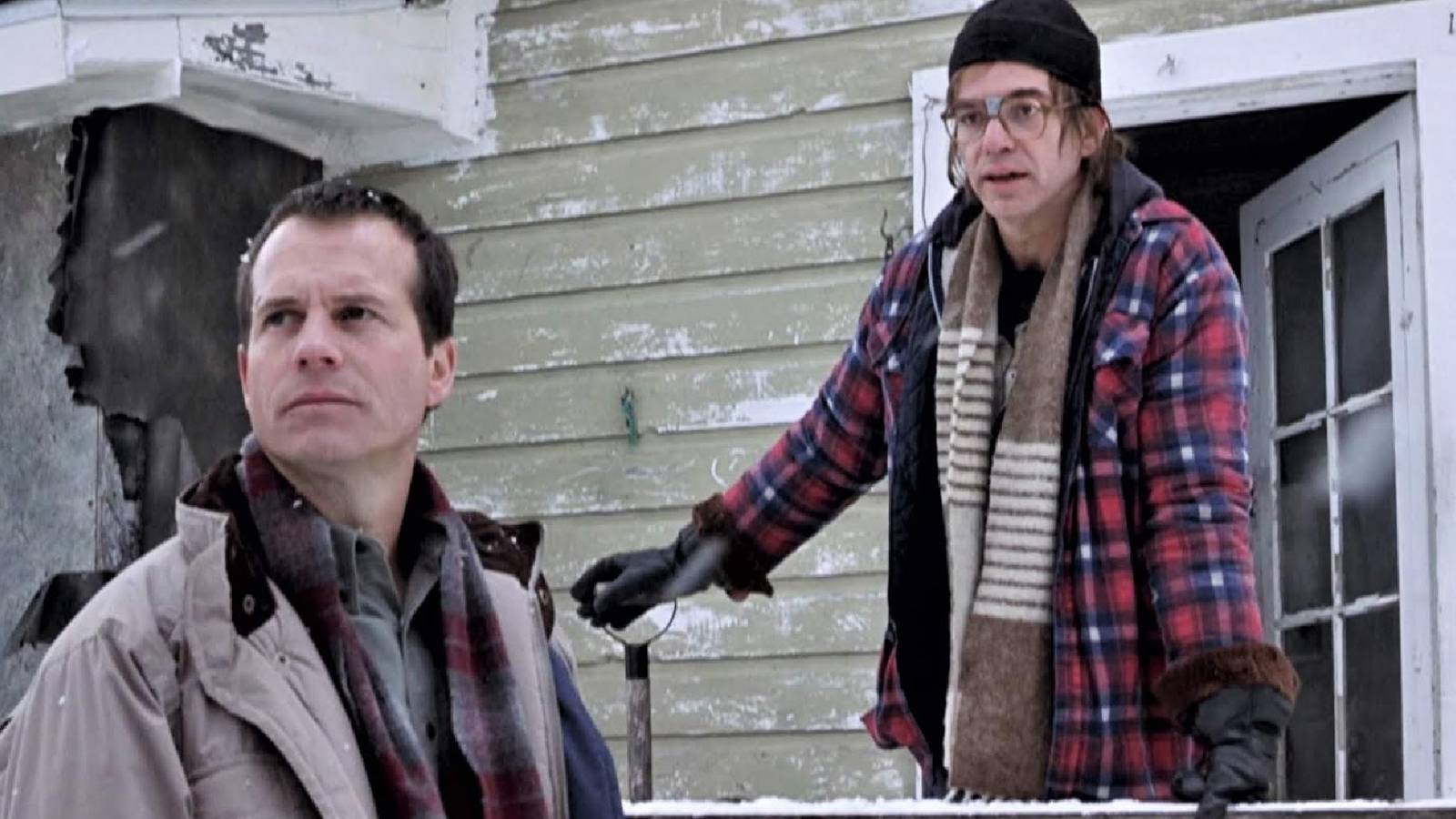
Image via Paramount Pictures Published Aug 11, 2026, 3:23 PM EDT William likes taking edibles, watching movies with his dogs, and then writing about those movies. He doesn't have social media so if you want more of his unhinged opinions or another place to comment hurtful things, you can check out his Letterboxd. Sign in to your Collider account As we close in on the final quarter of the year, many of us will be looking for those films that have slipped by us this past year. There are plenty, especially with the unforgiving algorithms that seem content to serve us up slop instead of the true pearls that remain buried within their streaming depths. I don't want to burden anyone already struggling to maintain their watchlists, if you want to call that a burden, but merely want to recommend a few more movies you might have forgotten. Not to add any more undue stress, but they're all thrillers too. From a crime classic of the '30s to a psychological thriller from the 2010s, this list is but an appetizer for the many undiscovered, overlooked, and underseen films that remain missing on many a cinephile's Letterboxd account. They aren't all complete classics, but there's more than enough in each film to recommend a viewing. In the interest of sharing the wealth, any additional thrillers should be recommended below to add to this list of forgotten films that are perfect to watch in 2026. 'The Petrified Forest' (1936) Image via Warner Bros. The Petrified Forest is a film based on Robert E. Sherwood's play that never escapes its staginess. It's distinctly of its era, filmed entirely on soundstages and heavy with dialogue. Yet, it's all delivered by incredible actors and anchored by a breakthrough performance by Humphrey Bogart, who originated his criminal role in the play. The role would break Bogart into movies in a major way, and while he would be typecast as gangsters for several years, he would eventually become one of the greatest leading men of the Golden Age of Hollywood. Taking place at a remote diner on the edge of the titular forest, the film follows a disparate group of characters, including British writer Alan (Leslie Howard) and waitress Gabrielle (Bette Davis), who dreams of leaving her life in the desert behind. Their lives all get more complicated by the arrival of Duke Mantee (Bogart), a notorious gangster on the run from the law who takes everyone in the diner hostage while he waits for a rendezvous. The old school acting and sharply written dialogue all drive this classic thriller of broken dreams and lost souls. 'Blast of Silence' (1961) Image via Universal Pictures A severely underrated noir with a distinct style and narration, Blast of Silence and its protagonist share just as much in common with the subgenre's classic melodramas and antiheroes as they do with Taxi Driver and Travis Bickle. It's a pessimistic portrait of an alienated man of violence wandering the cold streets of New York City while he's got time to kill. Directed by and starring Allen Baron, the film was shot on a low budget but captures a grittier side of the city far from the controlled environments of its soundstage-bound predecessors. Frankie Bono (Baron) is a hitman from Cleveland who has returned home to New York to carry out a hit over the holiday season. While killing time before he can kill his target, Frankie reconnects with old acquaintances while trying not to let the cracks in his psyche grow any wider. The film utilizes a unique second-person narration that emphasizes the unstable nature of its protagonist, as if he knows he's the lead in a crime story, but he's no Bogart. There's a violent undercurrent to the entire film that juxtaposes nicely with the Christmastime setting. It's a wicked alternative holiday film for anyone who enjoys other seasonal noirs like Lady in the Lake or Kiss Kiss Bang Bang. 'Sleeping Dogs' (1977) Image via Satori The recently deceased Sam Neill left behind a legacy of incredible performances that stretched across genres. His acting career began in his home country, but it wasn't until the political action thriller Sleeping Dogs that he came to international attention. As a man drawn into a conflict against his own will, Neill gives a frantic star-making turn as a man pushed to his breaking point that keeps the film grounded even when its more overwrought elements threaten to overwhelm its political edge. Smith (Neill) is a man just looking for a fresh start when he unwittingly becomes embroiled in a political revolution spurred by an authoritarian government led by a right-wing politician who declares martial law. The harder Smith tries to remain apolitical, the further he finds himself plunged into turmoil. There's obviously some thematic material within Sleeping Dogs that has continued to resonate, regardless of its setting. It's not as sharply made as similar films such as The Battle of Algiers or even the more recent One Battle After Another, but Roger Donaldson stages the action effectively, and Neill gives a powerhouse performance. 'Night of the Juggler' (1980) Image via Columbia Pictures Despite its bizarre title, which suggests a plot involving a killer circus performer, Night of the Juggler is an exemplary gritty thriller that captures the same kind of scuzzy New York City atmosphere of crime classics like Taxi Driver and features an extended car chase that rivals The French Connection. Despite its grimy authenticity and pulpy thrills, the film is practically nonexistent compared to its contemporaries, but has had a growing appreciation thanks to its remastered release in 2025. Sean Boyd (James Brolin) is a divorced former cop who is devoted to his daughter. When she's kidnapped by a crazed man who mistakes her for the child of a wealthy real estate developer, Boyd tears the city apart trying to get her back. Beginning with an audacious chase sequence, the film's pace never slows as Boyd faces opposition from cops and criminals alike, with a cadre of character actors including Dan Hedaya, Richard Castellano, and Mandy Patinkin. It certainly won't win any awards in terms of racial representation, but it's an unvarnished, perfect, and politically incorrect time capsule of a very specific period in New York City history. 'Diva' (1981) Image via Greenwich Film Productions A cult classic French thriller with a stylish neo-noir aesthetic, Diva has received critical acclaim in more recent years, despite remaining unsung compared to some of the grander, less effective thrillers from its era. The slow-burn suspense and character development that dominates its first half gives way to some thrilling action in the second, with a subterranean chase sequence a particular highlight. It's a vibrant crime thriller that was unjustly overlooked when it was originally released, but which is ripe for rediscovery. Jules (Frederic Andrei) is a postman in Paris with an affinity for opera music. He has a particular obsession with American singer Cynthia Hawkins (Wilhelminia Fernandez), whom he secretly records a performance of. Simultaneously, Jules comes into possession of a recording that exposes the criminal organization run by a high-ranking police official. Both tapes put Jules on the radar of criminal networks that begin to close in on him. Diva is a colorful descent into the underworld of Paris that offers slick thrills and incredible visuals that any fan of chase scenes or immaculate vibes should seek out. 'Deep Cover' (1992) Image via New Line Cinema A crisp '90s crime thriller anchored by two incredible performers, Deep Cover is another of the decade's neo-noirs that stands shoulder to shoulder with its best. Directed by actor turned eclectic filmmaker Bill Duke, the film is an undercover cop thriller that opts for a pulpier sensibility than any approaching authenticity, but that's what makes it such seamy fun. Duke handles the racial politics of the film far better than more acclaimed filmmakers, and he gets two award-caliber performances out of Laurence Fishburne and Jeff Goldblum. Russell Stevens (Fishburne) is a cop recruited by the DEA to serve as an undercover operative in the West Coast drug trade. His dedication leads him deep into the underworld, where he forms a connection with drug lawyer and trafficker Jason (Goldblum). The typical elements of double crosses, betrayal and moral compromise are all well represented, not trying to subvert expectations but simply digging deeper into the common themes of the genre. It's a cynical thriller made deeply effective by Duke's direction, Fishburne's layered performance, and Goldblum's deviously against-type one. 'A Simple Plan' (1998) Image via Paramount Pictures A Simple Plan is a chilly film that sees Sam Raimi taking a page out of his professional friends the Coen Brothers' book, specifically Fargo, for a cold-hearted neo-noir crime thriller. Unlike that Oscar-winning film, there's very little humor in Raimi's more dour film, and its legacy hasn't lingered as long, despite being nominated for two Academy Awards. It makes for a sterling counterpart to Fargo, with Raimi using it as an attempt to tell a more character-driven story that wouldn't rely on his signature wild visual style. Adapted by Scott B. Smith from his novel, the film is set in Minnesota. Mild-mannered accountant Hank (Bill Paxton), his socially awkward brother Jacob (Billy Bob Thornton), and the less scrupulous Lou (Brent Briscoe) come upon a crashed airplane with a bag filled with millions of dollars. In true noir fashion, the money causes all kinds of problems for the men and plenty of blood gets spilled by the end. All the actors are terrific, including Bridget Fonda as the small-town equivalent of Lady Macbeth, but it's the invisible direction by Raimi that's most impressive. A Simple Plan is a cold, restrained thriller with a somber tone and icy performances. Collider Exclusive · Oscar Best Picture Quiz Which Oscar Best PictureIs Your Perfect Movie? Parasite · Everything Everywhere · Oppenheimer · Birdman · No Country Five Oscar Best Picture winners. Five completely different visions of what cinema can be — and what it can do to you. One of them is the film that was made for the way your mind works. Ten questions will figure out which one. 🪜Parasite 🌀Everything Everywhere ☢️Oppenheimer 🐦Birdman 🪙No Country for Old Men FIND YOUR FILM → 01 What kind of film experience do you actually want? The best movies don't just entertain — they leave something behind. ASomething that pulls the rug out — that makes me think I'm watching one kind of film and then reveals I'm watching another entirely. BSomething overwhelming — funny, sad, absurd, and genuinely moving, all at once. CSomething grand and weighty — a film that makes me feel the full scale of what I'm watching. DSomething formally daring — a film that pushes what cinema can even do. ESomething lean and relentless — pure tension with no wasted frame. NEXT QUESTION → 02 Which idea grabs you most in a film? Great films are driven by a central obsession. What's yours? AClass, inequality, and what people are willing to do when desperation meets opportunity. BIdentity, family, and the chaos of trying to hold your life together when everything is falling apart. CGenius, moral responsibility, and the catastrophic weight of a decision you can never take back. DEgo, legacy, and the terror of becoming irrelevant while you're still alive to watch it happen. EEvil, chance, and whether moral order actually exists or if we just tell ourselves it does. NEXT QUESTION → 03 How do you like your story told? Form is content. The way a story is shaped changes what it means. AGenre-twisting — I want it to start in one lane and migrate into something completely different. BMaximalist and genre-blending — comedy, action, drama, sci-fi, all in one ride. CEpic and non-linear — cutting between timelines, building a mosaic of cause and consequence. DA single unbroken flow — I want to feel like I'm living it in real time, no cuts to safety. ESpare and precise — every scene doing exactly what it needs to do and nothing more. NEXT QUESTION → 04 What makes a truly great antagonist? The opposition defines the protagonist. What kind of opposition fascinates you? AA system — invisible, structural, and almost impossible to fight because it has no single face. BThe self — the ways we sabotage, abandon, and fail the people we love most. CHistory — the unstoppable momentum of events that no single person can stop or redirect. DThe industry — the machinery of culture that chews up talent and spits out irrelevance. EPure, implacable evil — a force so certain of itself it becomes almost philosophical. NEXT QUESTION → 05 What do you want from a film's ending? The final note is the one that lingers. What do you want it to sound like? AShock and inevitability — a conclusion that recontextualises everything that came before it. BEarned emotion — I want to cry, laugh, and feel genuinely hopeful, even if the world is a mess. CDevastation and grandeur — an ending that makes me sit in silence for a few minutes after. DAmbiguity — something that leaves enough open that I'm still thinking about it days later. EBleakness — an honest refusal to pretend the world is tidier than it actually is. NEXT QUESTION → 06 Which setting pulls you in most? Where a film takes place shapes everything — mood, stakes, what's even possible. AA gleaming modern city with a hidden underside — beauty masking rot, wealth masking desperation. BA collapsing suburban life that opens onto something infinite — the multiverse of a single ordinary person. CThe corridors of power and science at a world-historical turning point — where decisions echo for decades. DThe grimy, alive chaos of New York and Hollywood — fame as both destination and trap. EVast, indifferent landscape — desert and highway where violence arrives without warning or reason. NEXT QUESTION → 07 What cinematic craft impresses you most? Every great film has a signature — a technical or artistic element that makes it unmistakable. AProduction design and mise-en-scène — every frame composed to carry meaning beneath the surface. BEditing and tonal control — the ability to move between registers without losing the audience. CScore and sound design — music that becomes inseparable from the dread and awe of what you're watching. DCinematography as performance — the camera not recording events but participating in them. ESilence and restraint — what's left unsaid and unshown doing more work than any dialogue could. NEXT QUESTION → 08 What kind of main character do you root for? The protagonist is the lens. Who you choose to follow says something about you. ASomeone smart and resourceful who makes increasingly dangerous decisions under pressure. BSomeone overwhelmed and ordinary who turns out to be capable of something extraordinary. CA brilliant, tortured figure whose gifts and flaws are inseparable from each other. DA self-destructive artist whose ego is both their superpower and their undoing. EA quiet, principled person trying to make sense of a world that has stopped making sense. NEXT QUESTION → 09 How do you feel about a film that takes its time? Pace is a choice. Some films sprint; others let tension accumulate slowly, deliberately. AI love a slow build when I know the payoff is going to be seismic — patience for a devastating reveal. BGive me relentless momentum — I want to feel breathless and emotionally spent by the end. CEpic runtime doesn't scare me — if the material demands three hours, give me three hours. DI want it to feel propulsive even when nothing is technically happening — restless energy throughout. EDeliberate and unhurried — I want dread to accumulate in the spaces between the action. NEXT QUESTION → 10 What do you want to feel walking out of the cinema? The best films leave a mark. What kind of mark do you want? AUnsettled — like I've just seen something I can't fully explain but can't stop thinking about. BMoved and energised — like the film reminded me what actually matters and gave me something to hold onto. CHumbled — like I've been in the presence of something genuinely important and overwhelming. DExhilarated — like I've just seen cinema doing something it's never quite done before. EHaunted — like a cold, quiet dread that stays with me for days. REVEAL MY FILM → The Academy Has Decided Your Perfect Film Is…Your answers have pointed to one Oscar Best Picture winner above all others. This is the film that was made for the way your mind works. ParasiteYou are drawn to films that operate on multiple levels simultaneously — that begin in one genre and quietly, brilliantly migrate into another. Bong Joon-ho's Parasite is a film about class, desire, and the architecture of inequality that manages to be darkly funny, deeply suspenseful, and genuinely shocking across a single extraordinary running time. Your instinct is for cinema that hides its true intentions until the moment it's ready to reveal them. Parasite is exactly that — a film that rewards close attention and punishes assumptions, right up to its devastating final image. Everything Everywhere All at OnceYou want it all — and this film gives you all of it. The Daniels' Everything Everywhere All at Once is one of the most maximalist films ever made: action comedy, multiverse sci-fi, family drama, existential crisis, and a genuinely earned emotional core that sneaks up on you amid the chaos. You are someone who responds to ambition, who doesn't want cinema to choose between being entertaining and being meaningful. This film refuses that choice entirely. It is overwhelming by design, and its overwhelming nature is precisely the point — because the feeling of being crushed by infinite possibility is exactly what it's about. OppenheimerYou are drawn to cinema on a grand scale — films that understand history not as a backdrop but as a force, and that place their characters inside that force and watch what happens. Christopher Nolan's Oppenheimer is a film about the terrifying gap between what we can do and what we should do, told with the full weight of one of the most consequential moments in human history behind it. You want your films to feel important without feeling self-important — to earn their ambition through sheer craft and the gravity of their subject. Oppenheimer does exactly that. It is enormous, complicated, and refuses easy comfort. BirdmanYou are drawn to films that foreground their own construction — that make the how of the filmmaking part of the what it's about. Alejandro González Iñárritu's Birdman, shot to appear as a single continuous take, is cinema examining itself through the cracked mirror of a fading actor's ego. You respond to formal daring, to the feeling that a film is doing something that probably shouldn't be possible. Michael Keaton's performance and Emmanuel Lubezki's restless camera create something genuinely unlike anything else — a film that is simultaneously about creativity, relevance, self-destruction, and the impossibility of ever truly knowing if your work means anything at all. No Country for Old MenYou are drawn to cinema that trusts silence, that refuses to explain itself, and that treats dread as a form of meaning. The Coen Brothers' No Country for Old Men is a film about the arrival of a new kind of evil — implacable, arbitrary, and utterly indifferent to the moral frameworks we use to make sense of the world. It is one of the most formally controlled films ever made, and its controlled restraint is what makes it so terrifying. You want your films to haunt you, not comfort you. You are not interested in resolution if resolution would be dishonest. No Country for Old Men is honest in a way that most cinema never dares to be. ↻ RETAKE THE QUIZ 'Narc' (2002) Image via Paramount Pictures Joe Carnahan has had a directorial career that's uneven at best. He has delivered a number of gritty cult classics over the years, including the survival thriller The Grey and the time loop actioner Boss Level, but his peak is still his second feature, Narc. A throwback to the gritty cop films of the '70s, it's a Detroit-set thriller that features some adrenaline-pumping sequences and is bolstered by two committed performances by Ray Liotta and Jason Patric. Nick Tellis (Patric) is a narcotics officer who's still dealing with job-related trauma when he's tasked with investigating the death of another undercover officer. He's partnered with Lieutenant Oak (Liotta), who is notorious for using brutal methods. Their investigation leads them down a dark path of shaky morality that uncovers some painful personal secrets. Carnahan's direction is reminiscent of the work of filmmakers like William Friedkin and Sidney Lumet, and while Narc doesn't approach the quality of their greatest movies, it's a fitting homage and demands attention. 'Killer Joe' (2011) Image via LD Entertainment Speaking of Friedkin, he himself never reached the same career highs as his output in the '70s, but continued to deliver visceral thrillers with underrated films like his second-to-last narrative film, Killer Joe. It's a southern-fried crime thriller featuring one of Matthew McConaughey's most unhinged and terrifying performances. The extremeness of the film's content makes it difficult to watch and recommend, but it deserves more recognition within the filmographies of both Friedkin and McConaughey. Based on the play by Tracy Letts, who also wrote the screenplay, the film follows drug dealer Chris (Emile Hirsch), who hatches a dimwitted scheme with his father to kill his mother to collect the insurance money. To carry out the hit, they enlist corrupt cop Joe (McConaughey), who moonlights as a contract killer. Joe has dark motives, however, and the plot only gets more twisted by his involvement. Killer Joe is an intense Southern Gothic thriller with fully committed performances that's a testament to Friedkin's assured hand behind the camera. 'You Were Never Really Here' (2017) Image via Amazon Studios You Were Never Really Here focuses on another killer named Joe, except this one doesn't revel in his violent actions so much as use them as an outlet for his own unresolved traumas. Written and directed by Lynne Ramsay, based on the novel by Jonathan Ames, the film is an unconventional thriller that could have easily been adapted as a pulpy action movie, but is instead an introspective character study that interrogates the corrosive effect on a man's own mortal soul. It's made all the more effective by how and when Ramsay chooses to show its violence and the quietly intense lead performance by Joaquin Phoenix. Joe (Phoenix) is a mercenary who takes jobs saving trafficked children, and uses rather blunt and brutal methods to mete out justice to their abusers. When his next assignment uncovers a ring of high-profile pedophile politicians, Joe has to batter his way through a small army of goons to save a young girl. You Were Never Really Here is an unsettling film that has become all the more so in the wake of Jeffrey Epstein. It might offer a little sick satisfaction in watching Joe bring pedophiles to justice with a hammer, but it's far from exploitation. It's a lean, emotionally devastating thriller made by one of the most exciting filmmakers of the 21st century.
10 Forgotten Thrillers That Are Perfect To Watch in 2026
Full Article
Original Source
Read the full article at Collider →KhanList aggregates and links to publicly available news content. We do not host full articles from third-party sources. Always verify important information with original sources.