
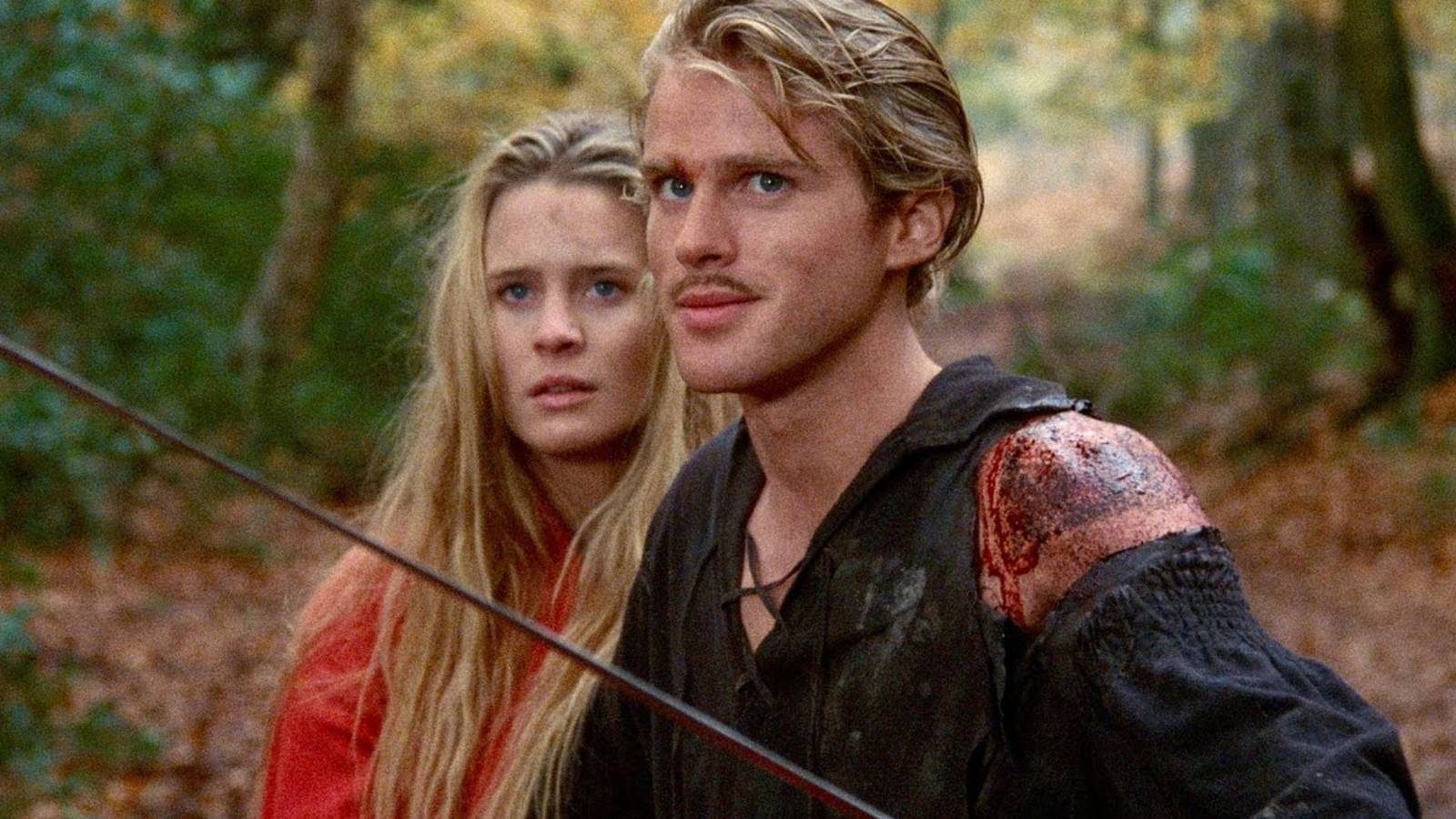
Published Aug 14, 2026, 7:45 AM EDT Senior Music Editor at Screen Rant, Sarah's love of sound and story drive the beat. A globetrotting brand whisperer and award-winning journalist, she’s built cross-cultural narratives around the world—but music has always been her true north. She launched DJ Mag North America, successfully introducing the iconic UK brand to the U.S. market. Previously, she carved a space for EDM inside the pages of VIBE, blending electronic and hip-hop culture long before it was trendy. Fantasy movies have always asked audiences to believe in the impossible, but some films make that leap considerably easier than others. Long before digital effects could conjure entire kingdoms, filmmakers were finding ingenious ways to create the kind of extraordinary fantasy worldbuilding that made gods, monsters, enchanted forests, and imaginary realms feel real. Yet visual spectacle alone does not make a fantasy movie a masterpiece. Narrowing an entire century down to 10 movies means leaving out plenty of beloved classics. Some forgotten fantasy movies have aged remarkably well, while cult favorites such as The NeverEnding Story and Return to Oz remain enormously influential. Conan the Barbarian helped define an entire strain of sword-and-sorcery filmmaking. The movies below, however, make an especially strong case for the word “masterpiece.” Together, they chart nearly 60 years of fantasy cinema, from the Technicolor wonder of Oz to the moral complexity of Princess Mononoke. The Wizard Of Oz (1939) Release Date August 25, 1939 Runtime 102 minutes Director Victor Fleming Cast Judy Garland Dorothy Gale Ray Bolger "Hunk" / Scarecrow Writers Edgar Allan Woolf, Florence Ryerson, Noel Langley, L. Frank Baum Producers Mervyn LeRoy It is difficult to imagine what The Wizard of Oz must have looked like to audiences in 1939. The transition from Dorothy's sepia-toned Kansas home to the riotous Technicolor of Oz remains one of the greatest fantasy movie openings, immediately announcing that the rules of reality have changed. Everything from the Yellow Brick Road to the Emerald City feels deliberately artificial without ever making the world less convincing. Countless fantasy movies have borrowed its basic journey since, but remarkably few feel as complete. That visual invention would mean considerably less if the movie did not also have such a sturdy emotional center. Judy Garland's Dorothy wants adventure until she understands what leaving home actually costs, giving the spectacle a bittersweet quality that is easy to overlook beneath the songs and iconography. Countless fantasy movies have borrowed its basic journey since, but remarkably few feel as complete. Fantasia (1940) Release Date November 13, 1940 Runtime 124 minutes Director Ben Sharpsteen, Bill Roberts, David Hand, Hamilton Luske, James Algar, Jim Handley, Norman Ferguson, Paul Satterfield, Samuel Armstrong, T. Hee, Wilfred Jackson Cast Deems Taylor Narrator - Narrative Introductions Walt Disney Mickey Mouse (segment 'The Sorcerer's Apprentice') (voice) Writers James Algar Producers Walt Disney Franchise(s) Fantasia, Disney Walt Disney's Fantasia remains one of the strangest gambles ever undertaken by a major American studio. Rather than telling a single conventional story, the film pairs classical compositions with wildly different animated sequences, moving from dancing mushrooms and mythological creatures to demonic imagery that still feels startling more than eight decades later. The famous “The Sorcerer's Apprentice” section could practically qualify as its own fantasy classic, but Fantasia is greater because of its willingness to keep transforming. Animation becomes abstract art in one sequence and a supernatural nightmare in another. Disney never again made another feature quite like it, and that singularity is part of what makes Fantasia still feel so audacious. The Seventh Seal (1957) Release Date February 16, 1957 Runtime 96 minutes Director Ingmar Bergman Cast Bengt Ekerot Death (Discworld) Max von Sydow Antonius Block Writers Ingmar Bergman Producers Allan Ekelund Ingmar Bergman's The Seventh Seal barely resembles the escapist fantasy people often associate with the genre. Like many of the greatest 20th-century war movies, it uses a historical setting to wrestle with much larger questions about humanity. Max von Sydow plays Antonius Block, a medieval knight returning from the Crusades who encounters Death and challenges him to a game of chess. Death is not a distant metaphor but an actual character who can sit across a chessboard and answer back. The supernatural premise allows Bergman to confront questions about faith, mortality, and whether human existence has any larger meaning. Death is not a distant metaphor but an actual character who can sit across a chessboard and answer back. That simple conceit produced one of the most recognizable images in movie history, yet the film's reputation rests on far more than iconography. It proves fantasy can be as philosophically demanding as any drama. Jason And The Argonauts (1963) Release Date June 13, 1963 Runtime 104 Minutes Director Don Chaffey Writers Beverley Cross, Jan Read Ray Harryhausen's stop-motion creations gave Jason and the Argonauts its immortality. The movie draws from Greek mythology as Jason and his crew pursue the Golden Fleece, encountering everything from a towering bronze giant to harpies and the many-headed Hydra along the way. Nothing, however, tops the climactic battle against an army of animated skeletons. Harryhausen had to synchronize the movements of stop-motion figures with live actors frame by painstaking frame, and the scene still has an uncanny energy precisely because the creatures possess physical imperfections. Modern effects can create smoother monsters, but few sequences capture the sensation of watching something impossible being painstakingly brought to life quite like this one. Excalibur (1981) Release Date April 10, 1981 Runtime 141 Minutes Director John Boorman Writers John Boorman, Rospo Pallenberg Arthurian legend has been adapted countless times, but few movies commit to its mythic grandeur as completely as John Boorman's Excalibur. The film follows Arthur's rise, the creation and collapse of Camelot, and the betrayals that ultimately destroy his kingdom, compressing generations of legend into one operatic fantasy epic. Boorman does not attempt to make the Middle Ages look understated or historically ordinary. The armor gleams unnaturally, forests seem permanently shrouded in mist, and Nicol Williamson's Merlin appears to exist somewhere between comic eccentricity and ancient supernatural force. Excalibur understands that Arthur's story is a legend rather than a history lesson, allowing the movie to feel enormous even when its characters are being undone by painfully human weaknesses. The Dark Crystal (1982) Release Date December 17, 1982 Runtime 93 minutes Director Frank Oz Cast Jen / High Priest, Ritual Master Kathryn Mullen Kira, a Gelfling Jim Henson and Frank Oz took an enormous creative risk with The Dark Crystal: there are no human performers visible anywhere in the film. Instead, the planet Thra is populated entirely by puppets and elaborate creatures, creating a fantasy world that looks unlike almost anything else produced for mainstream audiences at the time. The Skeksis remain particularly unforgettable. Diseased-looking and predatory, they bring a genuine sense of menace to a story that helped prove just how unsettling dark fantasy movies could become. What makes The Dark Crystal remarkable is not merely the technical achievement of its puppetry, however. Henson created an entire ecosystem with its own mythology and species, then trusted audiences to enter it without having everything explained. Labyrinth (1986) Release Date June 27, 1986 Runtime 102 minutes Director Jim Henson Writers Jim Henson, Terry Jones, Dennis Lee Producers David Lazer, Eric Rattray Labyrinth has only grown stranger and more beloved with age. Jim Henson surrounds teenage Sarah with riddles, impossible staircases, bizarre creatures, and goblins as she attempts to rescue her baby brother from Jareth, the Goblin King. Jennifer Connelly plays Sarah with the right mixture of adolescent confidence and vulnerability, while David Bowie makes Jareth impossible to imagine being played by anyone else. The movie also understands something crucial about childhood fantasy: imagination can be thrilling and frightening at exactly the same time. Sarah's journey through the labyrinth becomes an acknowledgment that growing up means taking responsibility without entirely surrendering the imaginative world of childhood. Its box-office reception may have been disappointing at the time, but its subsequent cultural life has been extraordinary. The Princess Bride (1987) Release Date September 25, 1987 Runtime 99 minutes Director Rob Reiner Cast Robin Wright The Princess Bride Writers William Goldman Producers Andrew Scheinman, Rob Reiner The Princess Bride manages a difficult trick by making fun of fairy tales without ever treating them with contempt. Rob Reiner's movie knowingly embraces princes, sword fights, giants, true love, and miraculous resurrections while allowing its characters to comment on the absurdity surrounding them. The Princess Bride genuinely believes in the story it is telling, which separates affectionate parody from simple mockery. That balance is why the movie remains so endlessly rewatchable. Cary Elwes and Robin Wright sell the central romance, but the supporting characters frequently steal the film, particularly Mandy Patinkin's Inigo Montoya. The script is extraordinarily quotable without feeling constructed solely around punchlines. Beneath all the comedy, The Princess Bride genuinely believes in the story it is telling, which separates affectionate parody from simple mockery. Edward Scissorhands (1990) Release Date December 14, 1990 Runtime 105 minutes Director Tim Burton Writers Caroline Thompson, Tim Burton Producers Denise Di Novi Tim Burton turned an immaculate American suburb into one of fantasy cinema's strangest landscapes in Edward Scissorhands. Johnny Depp plays Edward, an artificial young man left unfinished by his creator, who is discovered living alone in a Gothic mansion and brought into a neighborhood of pastel houses and carefully trimmed lawns. The contrast is funny at first, but Burton gradually reveals that the supposedly ordinary suburban world is more dangerous than Edward's gloomy castle. Depp says remarkably little, relying instead on movement and expression to make Edward sympathetic despite his frightening appearance. What begins like a whimsical fairy tale eventually becomes a melancholy story about conformity and the cruelty inflicted on anyone who cannot quite fit inside it. Princess Mononoke (1997) Release Date July 12, 1997 Runtime 133 Minutes Director Hayao Miyazaki Hayao Miyazaki's Princess Mononoke brought fantasy animation into territory that feels both mythic and startlingly complex. Set in medieval Japan, the story centers on Ashitaka, a young warrior caught between an expanding human settlement and the gods and spirits defending the surrounding forest. Miyazaki refuses to reduce that conflict to heroes and villains. Lady Eboshi is destroying the natural world, but she also protects people society has discarded. San fiercely defends the forest yet is consumed by hatred toward humanity. That moral complexity gives the movie unusual weight, while Studio Ghibli's animation makes its supernatural creatures feel ancient and unknowable. By the end of the 20th century, Princess Mononoke demonstrated just how far cinematic fantasy had evolved without losing the sense of wonder that defined the genre from the beginning.
10 Fantasy Movies From The 20th Century That Are Unquestionably Masterpieces
Full Article
Original Source
Read the full article at Screenrant →KhanList aggregates and links to publicly available news content. We do not host full articles from third-party sources. Always verify important information with original sources.