
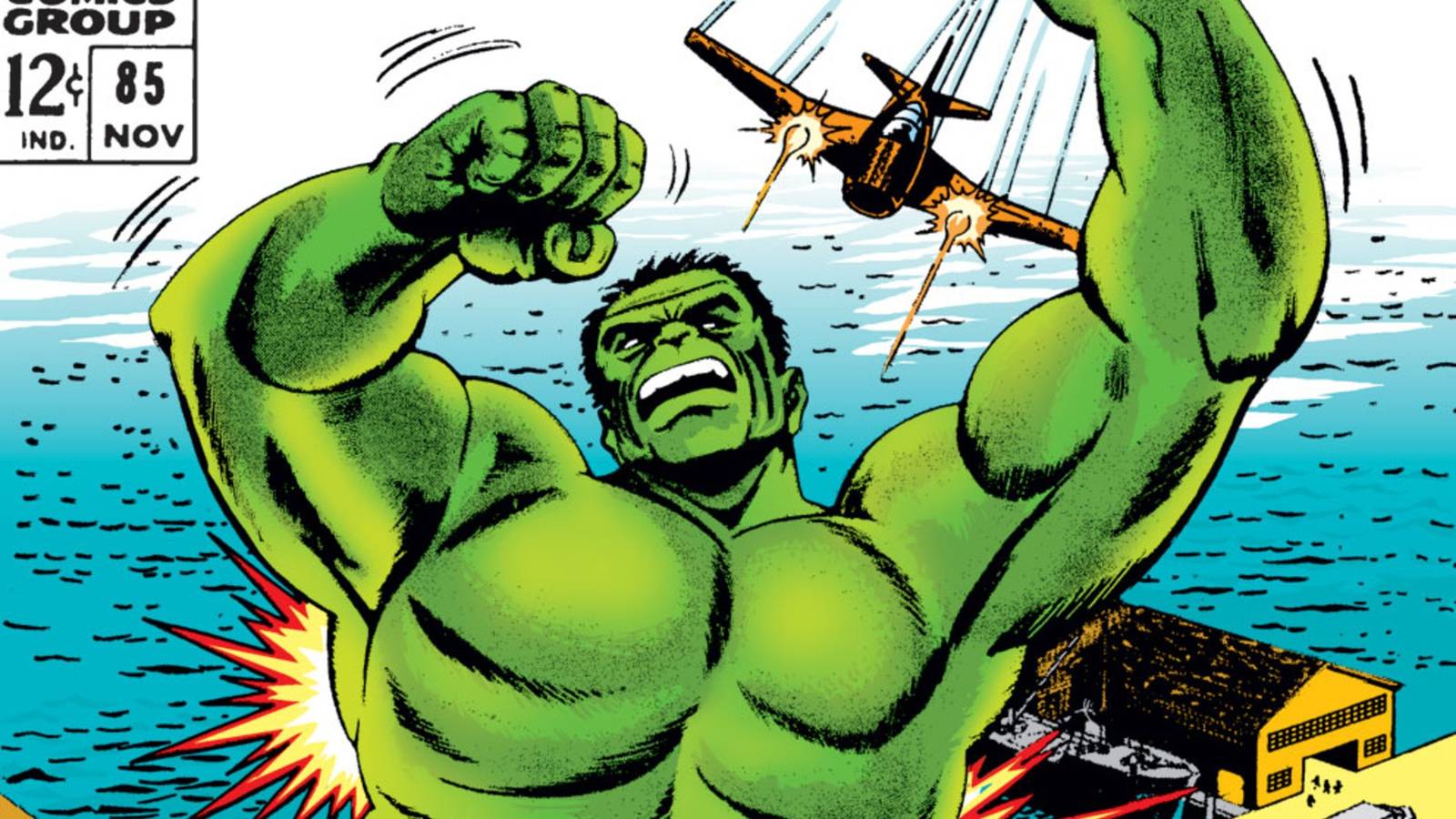
Published Nov 14, 2026, 1:30 PM EST Emedo Ashibeze is a tenured journalist and critic specializing in the entertainment industry. Before joining ScreenRant in 2025. he wrote for several major publications, including GameRant. Superhero comic-book history is filled with characters who eventually became household names, even though their earliest appearances offered little indication of the success awaiting them. Some debuted in stories that struggled to attract readers, while others arrived with concepts, costumes, or personalities that failed to connect with audiences at first. Yet an uncertain beginning did not always signal a character’s eventual fate, particularly when later writers found stronger directions for the original idea within the wider comic-book landscape. Changes to their origins, supporting casts, powers, roles, and much more helped some earn the recognition their first appearances had failed to attract from comic-book fans. 10 John Stewart John Stewart first appeared in Green Lantern #87 in 1971, introduced as a Detroit architect selected by the Guardians to serve as Hal Jordan’s backup. His early stories established his willingness to challenge injustice, but his original assignment kept him in reserve whenever Hal could not serve, leaving Jordan as the title’s central Green Lantern. Stewart’s wider fame arrived when the 2001 Justice League animated series selected him as its sole Green Lantern, giving viewers sustained exposure to the character. Voiced by Phil LaMarr, Stewart became a central team member whose rivalries, relationships, and extended storylines unfolded across five seasons of Justice League and its follow-up series. 9 The Punisher Frank Castle, better known as the Punisher, debuted in The Amazing Spider-Man #129 in 1974 as an armed antagonist hired by the Jackal to kill Spider-Man. Writer Gerry Conway originally conceived him as a secondary villain in that scheme, with no expectation that he would headline his own comic-book series. Marvel revealed his tragic history in Marvel Preview #2 (1975), where mobsters killed his wife and children, before a five-issue solo miniseries, Circle of Blood, followed in 1986. That revival led to a regular monthly comic in 1987, with the successful franchise expanding into several concurrent titles during the early 1990s. 8 Rocket Raccoon Rocket Raccoon began as a relatively obscure Marvel character, first appearing in Marvel Preview #7 in 1976 through a story by Bill Mantlo and Keith Giffen. Initially called Rocky, he resurfaced in The Incredible Hulk #271 in 1982, where his adventures on Halfworld featured Lylla and the planet’s intelligent animal inhabitants. Marvel then published a four-issue Rocket Raccoon miniseries in 1985, with Bill Mantlo writing and Mike Mignola illustrating his adventures protecting Halfworld. After years of sporadic appearances, he joined Star-Lord’s crew during Annihilation Conquest, then entered the 2008 Guardians lineup before reaching movie audiences in 2014 while being voiced by Bradley Cooper. 7 Moon Knight Moon Knight entered Marvel Comics in Werewolf by Night #32 in 1975, created by writer Doug Moench and artist Don Perlin. Otherwise known as Marc Spector, he initially worked as a mercenary hired by the Committee to capture Jack Russell. This painted him as an antagonist in another hero’s story before recognizing the werewolf’s humanity and changing sides. Marvel soon gave him a solo outing in Marvel Spotlight #28-29, followed by guest appearances and a backup feature in Hulk magazine. The 1980 series explored Marc’s identities and Khonshu’s influence, while a 2006 relaunch and Oscar Isaac’s 2022 television portrayal expanded his following among comics readers and viewers worldwide. 6 Peacemaker Peacemaker made his debut in Fightin’ 5 #40 in 1966, created by writer Joe Gill and artist Pat Boyette for Charlton Comics. Christopher Smith was introduced as a diplomat devoted to peace, yet his private arsenal and weaponized helmet revealed how readily he would fight to defend it at any cost. DC acquired Charlton’s heroes in the 1980s, then integrated Smith into its wider universe through Crisis on Infinite Earths and a four-issue miniseries published in 1988. His mainstream recognition grew decades later when John Cena portrayed him in The Suicide Squad (2021) and headlined the Peacemaker television series the following year. 5 Black Panther Black Panther arrived in Fantastic Four #52 in 1966, created by Stan Lee and Jack Kirby as Wakanda’s reigning monarch. His first story tested the visiting Fantastic Four in individual combat, then revealed Wakanda’s vibranium wealth, its guarded technology, and the threat Ulysses Klaw posed to its secluded homeland and people. After joining the Avengers, Black Panther headlined Jungle Action, where Don McGregor’s “Panther’s Rage” expanded Wakanda’s culture even further and introduced Erik Killmonger. His first self-titled series followed in 1977, but wider fame came after Chadwick Boseman’s 2016 Captain America appearance and the 2018 solo film, which crossed one billion dollars worldwide. 4 Deadpool Rob Liefeld and Fabian Nicieza introduced Deadpool in The New Mutants #98 in 1991, sending the masked mercenary after Cable as part of a larger conflict. In that opening story, he functioned as an enemy mercenary, with little indication that his wisecracks would later become central to his appeal among readers. His solo comic began with the four-part The Circle Chase in 1993, but Joe Kelly’s 1997 ongoing series established the voice that readers came to associate with him. The comic leaned into irreverent humour and fourth-wall breaks, features that expanded his appeal before Ryan Reynolds’ 2016 film introduced him to an even larger film audience. 3 Iron Man Few people outside comic-book circles knew Iron Man before 2008, despite decades of stories and his membership in the Avengers from the team’s earliest days. His story began in Tales of Suspense #39, where a weapons magnate escaped captivity by building an armored life-support system with scientist Ho Yinsen. Marvel launched Iron Man’s first ongoing solo title in 1968 after his feature shared Tales of Suspense with Captain America. David Michelinie and Bob Layton’s 1980s run strengthened his comic-book profile, but Robert Downey Jr.’s 2008 portrayal brought the armored hero to mass audiences and helped establish the Marvel Cinematic Universe. 2 The Hulk Despite becoming a founding Avenger in 1963, the Hulk’s first solo comic ended after just six issues, prompting Marvel to continue his stories in Tales to Astonish. That anthology feature ran for several years before the character regained an ongoing title with The Incredible Hulk #102 in 1968, restoring his solo billing. Television introduced him to viewers outside comic-book readership, with Bill Bixby and Lou Ferrigno starring in CBS’s The Incredible Hulk from 1978 to 1982. The five-season series was followed by other television movies, while later appearances in Marvel films such as The Incredible Hulk (2008) and The Avengers sustained his place with younger viewers across several generations. 1 Wolverine Wolverine first surfaced in the final pages of The Incredible Hulk #180 in 1974, before receiving his full introduction in the following issue. Created by Len Wein and drawn by Herb Trimpe, the Canadian government agent was sent to capture the Hulk, then fought alongside him against Wendigo in the Canadian wilderness. His recruitment into the new X-Men team in Giant-Size X-Men #1 (1975) let Chris Claremont develop his volatile temperament and complicated loyalties. A 1982 miniseries by Claremont and Frank Miller, an ongoing solo comic from 1988, the 1992 cartoon, and Hugh Jackman’s 2000 portrayal would all later propel him to much greater heights.
10 Famous Superheroes Who Were Complete Duds On Launch
Full Article
Original Source
Read the full article at Screenrant →KhanList aggregates and links to publicly available news content. We do not host full articles from third-party sources. Always verify important information with original sources.