
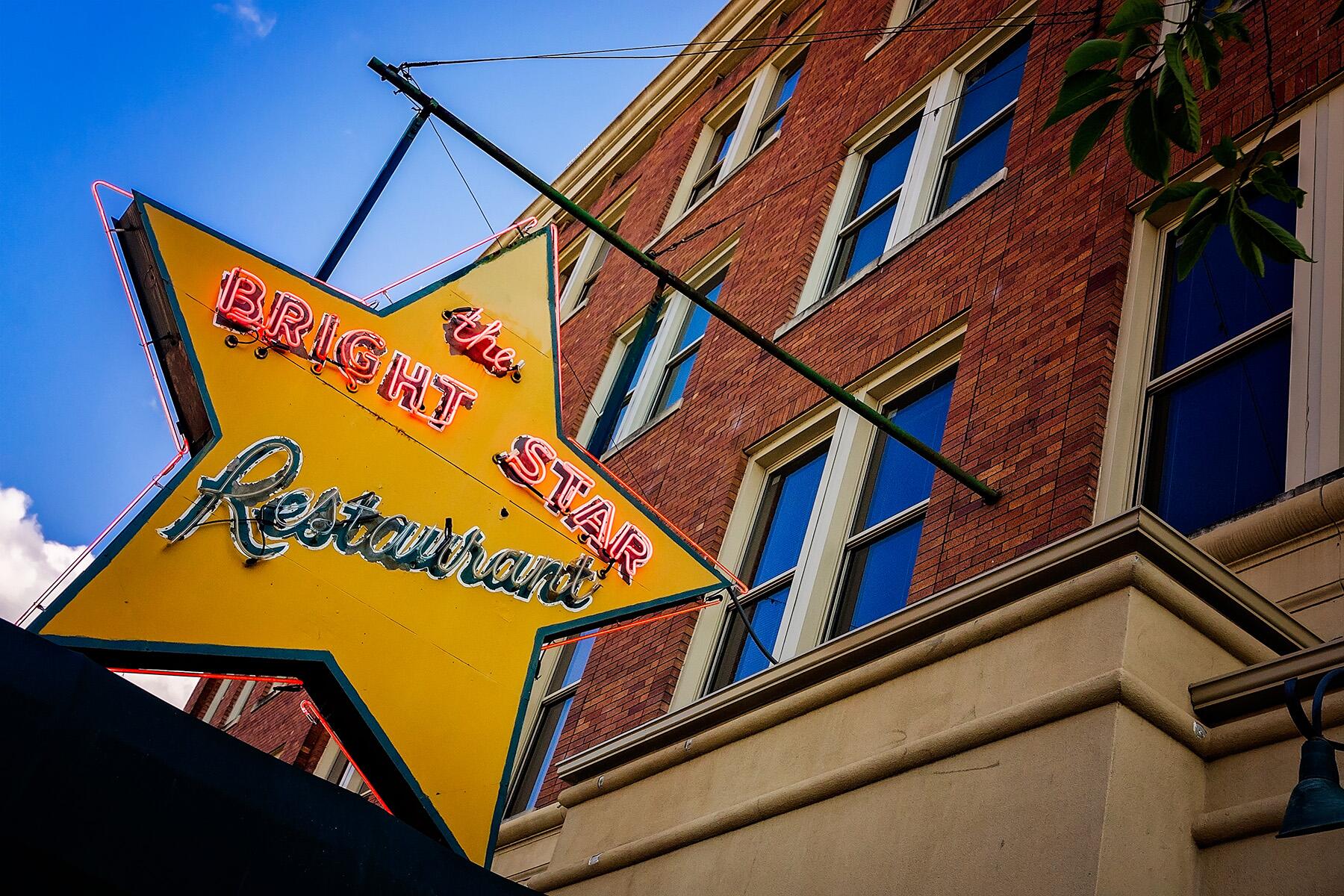
From Antoine's in New Orleans to Ben's Chili Bowl in Washington, D.C., these historic family-owned restaurants have preserved recipes, traditions, and hospitality for generations.Before they became legends, America’s oldest restaurants were long shots—a tiny chili stand, a corner produce market, a neighborhood tavern, an impossible dream. Many began with immigrants chasing a better life, armed with little more than family recipes and determination. Somehow, they survived wars, Prohibition, economic crashes, and generations of changing tastes. Even more remarkable, many are still in the hands of the families that opened their doors long ago. Here are 10 family-run restaurants that prove some recipes—and some dreams—don’t just endure; they become part of America’s story. 1 OF 10 Fossati’s Delicatessen (1882) WHERE: Victoria, Texas Locals are said to plan their week around Fossati’s chicken salad melt, though the muffuletta and Reuben have their devoted fans, too. This unassuming little deli in Victoria—strategically located within a two-hour drive from Houston, San Antonio, Austin, and Corpus Christi—is widely regarded as the oldest deli in Texas, and possibly the state’s oldest continuously operating restaurant. It all began in 1882, when Italian immigrant Fraschio “Frank” Napoleon Fossati opened a chili stand that soon became a 24-hour saloon. By 1905, he’d moved into the current building across the street and was serving sandwiches for the drinking crowd. Weekend shoppers soon followed. The deli has weathered closures and even a brush with demolition, but in 1985, 30 members of the Fossati family rescued it. More than four decades later, they’re still keeping a Texas—and family—tradition alive, one sandwich at a time. 2 OF 10 Antoine’s Restaurant (1840) WHERE: New Orleans, Louisiana Long before New Orleans became one of America’s food capitals, 18-year-old Antoine Alciatore arrived from Marseille, France, in 1840 and opened a modest boarding house. His French-trained son Jules later transformed it into one of the country’s most celebrated restaurants, where the still-secret recipe for Oysters Rockefeller debuted. Still run by the Alciatore family, Antoine’s is the nation’s oldest continuously operating family-run restaurant. Its 14 dining rooms, seating up to 1,000 guests (George Patton, Franklin D. Roosevelt, Mick Jagger, and Jimmy Buffett are among the slew of famous diners), feel as much a museum as a restaurant, packed with everything from early 19th-century family oil paintings to a decorative Civil War sword to krewe memorabilia. Fifth-generation family member Lisa Blount credits the restaurant’s remarkable staying power to “holding onto the legacy and continuing to evolve.” The menu now includes gluten-free and vegan options, but “Antoine’s remains rooted in the French-Creole traditions that made it famous.” INSIDER TIP“Call us and ask for one of the smaller rooms,” family member Lisa Blount says. “You don’t need a fancy event to eat in those rooms.” 3 OF 10 Duarte’s Tavern (1894) WHERE: Pescadero, California Frank Duarte paid just $12 in gold in 1894 for a weathered saloon and barbershop in tiny Pescadero, California, about an hour south of San Francisco. Before long, the Portuguese immigrant was feeding local farmers and fishermen, and generations of Duartes have kept the tradition alive ever since. Today, the fourth and fifth generations still serve the tavern’s legendary cream of artichoke soup, fresh cioppino (seafood stew), and towering olallieberry pie, made with berries from the family farm. The original mahogany bar even survived the fire that destroyed much of downtown Pescadero in 1923. More than 130 years after Frank Duarte bought the place, locals still gather, travelers still make the pilgrimage, and the pie is worth every mile. 4 OF 10 The Berghoff (1898) WHERE: Chicago, Illinois What do you do when you get shut out of the 1893 Chicago World’s Fair, where you planned to sell your family’s beer? If you’re German immigrant Herman Berghoff, you set up just outside the gates instead, draw huge crowds, and open your own tavern, famous for 10-cent steins and free sandwiches. During Prohibition, the family stayed afloat by brewing low-ABV near beer and root beer. When alcohol became legal again in 1933, Berghoff secured Chicago’s first post-Prohibition liquor license, which still hangs behind the bar. More than 125 years later, The Berghoff remains in the hands of the fourth generation of Berghoffs, serving schnitzel, bratwurst, sauerbraten, and its famous root beer (and beer) amid heavy oak, stained glass, checkerboard floors, and original murals that celebrate the World’s Fair that started it all. 5 OF 10 Ralph’s Italian Restaurant (1900) WHERE: Philadelphia, Pennsylvania Imagine surviving the Great Depression with nothing but spaghetti and meatballs. That’s part of the legacy of Ralph’s in Philadelphia’s Italian Market. Sicilian immigrant Francesco Dispigno opened the restaurant in 1900, and when the stock market crashed in 1929, the family lost nearly everything except the business. They stayed afloat by selling pasta out the front door for five cents a bowl. More than a century since opening, Ralph’s is widely believed to be the oldest Italian restaurant in the U.S., run by the fifth generation of the same family. “It’s not just about the recipes,” says owner Jimmy Rubino. “Each generation taught the next how to manage people, take care of customers, and keep the restaurant immaculate.” Step inside and little seems to have changed, from the mosaic-tiled floor to the walls of old-country photographs. “It’s a labor of love,” Rubino says. “You’d better love this business.” INSIDER TIPSkip overthinking the menu. “Order what your heart tells you,” says owner Jimmy Rubino—but if you want one of his favorites, go with the Veal Capricciosa, layered with eggplant, prosciutto, and mozzarella then baked in a stewed tomato sauce. 6 OF 10 The Bright Star (1907) WHERE: Bessemer, Alabama Deep-fried snapper throats? Yes, that’s a thing at what’s widely considered Alabama’s oldest family-run restaurant. The specialty dates to the 1930s, when the overlooked cut was first fried up for staff. “One of the co-owners, Gus Sarris, didn’t believe in wasting any part of the fish,” says general manager Sonya Twitty, who has worked here for more than 30 years. But the snapper throats are just the beginning. The Bright Star’s menu reflects founder Tom Bonduris’s Greek heritage and the bounty of the nearby Gulf, with favorites including Greek-style beef tips, fried snapper almondine, and pineapple-cheese pie. Remarkably, this 330-seat institution—the first Alabama restaurant to earn the James Beard Foundation’s America’s Classic Award in 2010—began as a 12-seat café in 1907. Murals painted in 1915 still grace the walls, and Bonduris’s descendants continue the family tradition of warm hospitality—something the Greeks and Southerners alike have long been known for. INSIDER TIPAll first-time visitors get a complimentary cup of seafood gumbo—”a closely guarded family secret,” general manager Sonya Twitty says. 7 OF 10 J.J. Foley’s (1909) WHERE: Boston, Massachusetts Boston’s South End may have changed over the past century, but J. J. Foley’s hasn’t forgotten its roots. Opened in 1909 by County Kerry immigrant Jeremiah J. Foley, this neighborhood favorite has been pouring pints for more than a century. Sure, nachos, fig and goat cheese pizza, and poutine weren’t exactly Irish pub staples back then, but you’ll still find fish & chips, steak tips, shepherd’s pie, and what many regulars swear is the country’s best Guinness. Still family-owned, the pub is now run by Foley’s grandson and his four sons. Vintage Boston and Irish memorabilia cover the walls, the TVs are always tuned to the game, and the Guinness is always flowing. Pull up a stool and you’ll quickly understand why J. J. Foley’s has outlasted just about everything around it. INSIDER TIPJ. J. Foley’s is opening The Backyard by Foley’s in Dennis Port, Massachusetts, billed as Cape Cod’s largest outdoor family-friendly venue. 8 OF 10 El Charro Cafe (1922) WHERE: Tucson, Arizona When the one-room El Charro Café opened in 1922, no one imagined it would become what is widely regarded as the nation’s oldest continuously operating Mexican restaurant. Well, its founder, Monica Flin, might have. Fearless and fiercely independent, she hunted and fished, served liquor in teacups during Prohibition, and opened a restaurant when few women owned businesses on their own. Cooking from her mother’s recipes, she served handmade tamales and tortillas alongside the duck and rabbit she hunted. Today, El Charro is renowned for its Sonoran-style Mexican cuisine, but its greatest culinary claim may be the chimichanga. According to family lore, Flin accidentally invented it after dropping a burrito into hot oil, then blurting out “chimichanga” instead of a Spanish swear word as children were nearby. Though the restaurant has been moved (not far from the original), expanded, and modernized over the years, it remains family-owned, with Flin’s descendants keeping both the family recipes and the family legend alive. 9 OF 10 Casale’s Halfway Club (1937) WHERE: Reno, Nevada At first glance, it looks like an ordinary old house. In fact, it is—though its glowing neon signs give it a neighborhood-tavern feel. But since opening in 1937, this humble home on the stretch of road halfway between Sparks and Reno (now eastern Reno) has been a beloved institution for Italian comfort food. Newly married Italian immigrants John and Elvira Casale first opened a small market in front of the house, where Elvira’s ravioli—made from treasured family recipes brought from Northern Italy—became a local sensation. Before long, the market expanded into a restaurant inside their home. Nearly a century later, the fifth generation of Casales welcomes diners through the same front door into the cozy, checkered-tablecloth dining room, where the pasta is still handmade, the wine is served by carafe, and everyone is treated like family. INSIDER TIPBe sure to reserve ahead—this intimate, 10-table restaurant fills up fast. 10 OF 10 Ben’s Chili Bowl (1958) WHERE: Washington, D.C. Ben’s may be the “youngster” on this list, but it’s packed more history into seven decades than many restaurants do in two centuries. When Ben and Virginia Ali opened the tiny U Street eatery in 1958, they served chili dogs, burgers, thick milkshakes—and half smokes that would make them famous. They could hardly have imagined it would become a Civil Rights Movement gathering place and one of the few businesses to remain open during the 1968 riots, feeding police officers, firefights, and activists. The walls are lined with photos chronicling its famous visitors, including Martin Luther King Jr. and Barack Obama. But the restaurant’s enduring connection to the neighborhood matters most. “A guy came in yesterday and said he remembered coming here as a kid when his family didn’t have money and we gave him food,” says family member Vida Ali. “When you truly serve a community, people don’t forget.” INSIDER TIP“We know you’re not a newbie when you walk in and simply say, ‘Half smoke all the way,’” says family member Vida Ali. That is—a coarse-ground smoked sausage made with beef and pork, served on a warm bun, and topped with meat chili, yellow mustard, and diced raw onions.
10 Family-Run Restaurants That Became Part of Americas Story
Full Article
Original Source
Read the full article at Fodors →KhanList aggregates and links to publicly available news content. We do not host full articles from third-party sources. Always verify important information with original sources.