
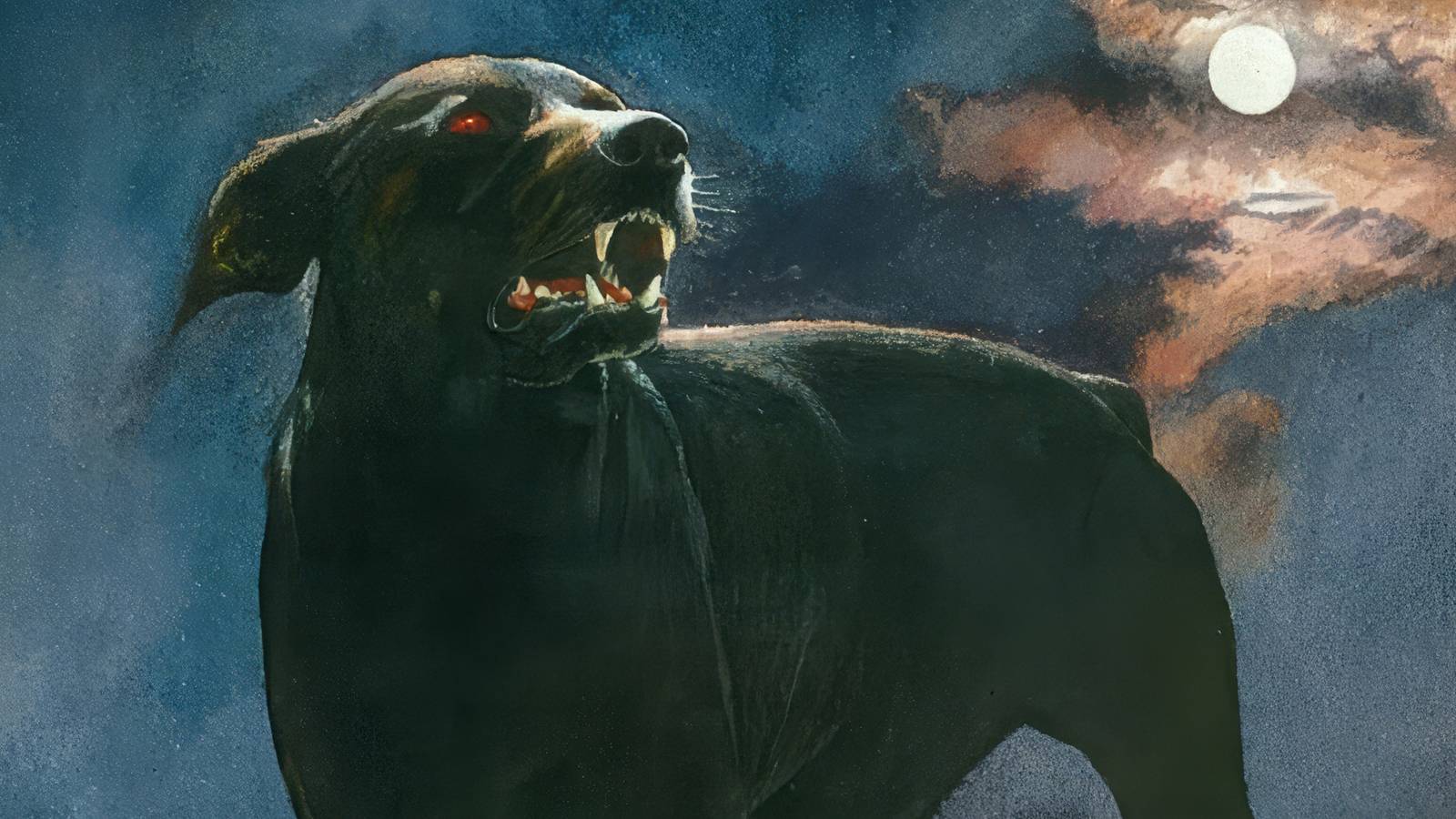
Image via Penguin Classics Published Sep 19, 2026, 5:14 PM EDT Luc Haasbroek is a writer and videographer from Durban, South Africa. He has been writing professionally about pop culture for eight years. Luc's areas of interest are broad: he's just as passionate about psychology and history as he is about movies and TV. He's especially drawn to the places where these topics overlap. Luc is also an avid producer of video essays and looks forward to expanding his writing career. When not writing, he can be found hiking, playing Dungeons & Dragons, hanging out with his cats, and doing deep dives on whatever topic happens to have captured his interest that week. Sign in to your Collider account The best detective novels invite the reader to participate in solving the mystery. Every suspicious conversation, seemingly irrelevant object, unexplained absence, or inconsistency might be the clue that cracks the entire case. This reels us in and keeps us hooked. In the best cases, the third-act revelations are surprising but make total sense in hindsight. With that in mind, this list looks at some of the most entertaining and readable detective books ever, from the foggy, supernatural-tinged moors of Sir Arthur Conan Doyle’s Victorian masterworks to the rain-slicked, neon-lit urban mazes of mid-century American noir. 10 'Last Bus to Woodstock' (1975) "That was the trouble with women. They left you to do all the thinking." This was the book that introduced Inspector Morse, one of the most iconic investigators in British crime writing (it spawned a long-running TV show, as well as a prequel show and a spin-off series). This one begins when two young women wait for a bus to Woodstock. When it fails to arrive, they decide to hitchhike instead. Later that night, one of them, Sylvia Kaye, is discovered murdered in a pub car park. The investigation moves through Sylvia's relationships and the lives of those around her, gradually exposing shocking lies and secrets. The tale contains all the essential ingredients that fans would come to love. Morse himself is the best part. He's a compelling character: intelligent, irritable, cultured, interested in attractive women, fond of alcohol, and entirely capable of becoming convinced by a theory that later turns out to be wrong. 9 'Cover Her Face' (1962) "For heaven's sake, Darling, keep your crusading instinct under control." Back in the '60s, this book put a modern gloss on the traditional Golden Age country house mystery. In Cover Her Face, Sally Jupp is a young unmarried mother who takes a position as a maid in the Maxie household at Martingale. Intelligent, difficult to read, and capable of provoking strong reactions from the people around her, Sally soon announces that Stephen Maxie has proposed marriage. By the following morning, she has been strangled in her locked bedroom. That leaves Detective Chief Inspector Dalgliesh with the wonderfully traditional problem of sorting through a limited group of people, several of whom have convincing reasons to dislike the victim. However, while author P.D. James takes obvious pleasure in the mechanics of the mystery, she's equally interested in the social tensions surrounding it. Class, respectability, family loyalty, jealousy, and resentment make this more complex than your average whodunit. 8 'Maigret Sets a Trap' (1955) "Does your responsibility not terrify you a little?" This is one of the stronger novels about French detective Inspector Maigret, who has appeared in some 75 books and 28 short stories. In Maigret Sets a Trap, Paris is reeling from a string of murders, and Maigret is facing the increasingly uncomfortable reality that conventional police work isn't producing results. He therefore tries something considerably more dangerous: instead of continuing to search for the murderer, he intends to manipulate the murderer into revealing himself. Maigret also develops a psychological theory about the killer, and tries to understand his warped thinking. In this regard, the book was something of a trailblazing psychological procedural, a precursor to the modern serial-killer subgenre. Likewise, the novel strips away any romanticized notion of detective work. Maigret is introduced as a man under siege, facing relentless heat from the public and press, and willing to make compromised personal decisions. 7 'The Nine Tailors' (1934) "The bells were ringing as he finished his breakfast." This landmark mystery novel is widely considered to be writer Dorothy L. Sayers' finest work. The Nine Tailors brings aristocratic detective Lord Peter Wimsey to the isolated village of Fenchurch St. Paul, where an unexpected accident leads him into the complicated history surrounding a church, a missing emerald necklace, and eventually an unidentified corpse. The mystery gradually stretches backward into old crimes and buried secrets, forcing Lord Peter to understand not merely who a dead man was but how events separated by years fit together. Plot aside, the atmosphere of the book is very memorable. The flat, flood-prone landscape of the Fens, the ancient church, and the myriad bells (this book is obsessed with bells) give The Nine Tailors an identity completely its own. It also wrestles with serious themes, particularly around providence, fate, retribution, and the limits of the law. 6 'The Daughter of Time' (1951) Image via Scribner "The truth of anything at all doesn't lie in someone's account of it. It lies in all the small facts of the time." This one flips a lot of the genre's tropes on their head. Most strikingly, the detective here never leaves his best. Scotland Yard Inspector Alan Grant is immobilized in hospital with a broken leg and nearly incapacitated by boredom. His interest is unexpectedly captured by a portrait of Richard III, and he sets out to solve a centuries-old mystery: did the king really order the murder of the Princes in the Tower? What follows is an investigation conducted through history books, documents, competing accounts, and logical inference. It's an ambitious gambit that could easily have crashed and burned, but author Josephine Tey has the skills to pull it off. On top of being a satisfying mystery, The Daughter of Time is a brilliant, postmodern statement on how history is written by the victors. 5 'The Cuckoo's Calling' (2013) "The dead could only speak through the mouths of those left behind, and through the signs they left scattered behind them." In this one, we meet one of the most intriguing protagonists in 2010s detective fiction: Cormoran Strike, a one-legged army veteran and son of a rock star, now broke, brokenhearted, and eking out an existence as a private investigator. He's hired to look into the apparent suicide of supermodel Lula Landry, who fell from the balcony of her luxurious London apartment. Along the way, Strike gradually gets closer to his temporary secretary, Robin Ellacott, who soon proves considerably more useful than either initially expects. Their developing partnership gives The Cuckoo's Calling warmth beyond the mechanics of its central mystery. The plot is brisk and entertaining, keeping the pages flying by, and Strike himself is deeply likable, despite being gruff and curmudgeonly. 4 'The Maltese Falcon' (1930) Image via Alfred A. Knopf "The cheaper the crook, the gaudier the patter." One of the great noir classics, The Maltese Falcon sees private investigator Sam Spade navigating a tangle of lies, double-crosses, and potentially dangerous people. Among them are Brigid O'Shaughnessy, who has already lied about her identity and intentions; the eccentric Joel Cairo; the imposing Kasper Gutman; and the volatile young gunman Wilmer Cook. All of these characters have some connection to the Maltese Falcon, a jewel-encrusted artifact whose history has inspired years of pursuit and betrayal. It's one of literature's all-time great MacGuffins. Back in 1930, this book was a big step forward for the genre, systematically dismantling the polite, intellectual puzzles of British detective stories and replacing them with a gritty, unsentimental look at human greed and urban corruption. In the process, it laid a noir blueprint that had been endlessly imitated in the decades since. 3 'The Murder of Roger Ackroyd' (1926) Image via HarperCollins "The truth, however ugly in itself, is always curious and beautiful to seekers after it." This is one of the defining bangers from Agatha Christie. At the start of The Murder of Roger Ackroyd, the title character learns that the woman he intended to marry had been blackmailed. Before he can fully disclose what he knows, he's found murdered. Fortunately, Hercule Poirot has retired to the village to grow vegetable marrows. The Belgian detective is quickly drawn into the investigation and receives assistance from local physician Dr. James Sheppard, who also narrates the novel. The rest of the book is a masterclass in misdirections. Christie plays the reader like a fiddle, seeming to provide us with ample clues while actually always making sure we interpret them in exactly the manner she wants. The novel's twist is rightly iconic, but the whole book remains worth reading. 2 'The Big Sleep' (1939) Image via Penguin "Dead men are heavier than broken hearts." Another quintessential noir novel. In The Big Sleep, the legendary Philip Marlowe enters the home of wealthy General Sternwood expecting a blackmail case. He quickly finds himself navigating pornography, gambling debts, missing people, murder, organized crime, and the spectacularly complicated personal lives of Sternwood's daughters. From here, the book plunges its detective deeper and deeper into a hydra-like Los Angeles where every answer seems to produce two additional problems. Once again, we have a book anchored by a great main character. Marlowe is a cynical romantic and a modern knight-errant. He plays chess against himself, drinks whiskey to take the edge off, and operates by an unyielding moral code in a completely decayed world. In addition, The Big Sleep boasts a famously labyrinthine plot, one so complex that the author himself has admitted that he doesn't know the solution to some of the subplots. 1 'The Hound of the Baskervilles' (1902) Image via George Newnes Ltd "Mr. Holmes, they were the footprints of a gigantic hound!" This may be the most well-rounded Sherlock Holmes story. In it, a supernatural beast supposedly stalks the Baskerville family across the fog-covered moors of Devon. Sir Charles Baskerville has been found dead near his ancestral home, and there are reports of enormous animal footprints in the area. It's exactly the kind of case that seems to require a supernatural explanation... which makes it exactly the kind of case the uber-rational detective cannot resist dismantling through reason. By placing the world's most fiercely logical detective into a scenario that feels genuinely supernatural, Arthur Conan Doyle hooks the reader instantly. On top of that, the plot is impressively tight when it comes to its puzzles. Doyle masterfully scatters clues that seem minor but carry massive weight, encouraging us to connect the dots ourselves. Collider Exclusive · Villain Personality Quiz Which Criminal Mastermind Would Be Your Nemesis? Lecter · Joker · Moriarty · Chigurh Four of the finest criminal minds ever put on screen. One of them would look at you and see something worth their time. Eight questions decide which one comes for you, why they picked you, and what they would want when they arrived. 🍷Lecter 🃏Joker ♟️Moriarty 🪙Chigurh MEET YOUR NEMESIS → 01 What would a criminal mastermind notice about you first? Great villains choose their opponents carefully. Something about you got their attention. AMy manners, and everything I am careful not to say. BThat I still believe people are basically decent. CThat I am clever, and quietly enjoy proving it. DThat I handle things myself, and always have. NEXT QUESTION → 02 How do they make first contact? The introduction tells you everything about what is coming next. AA polite letter. Beautiful handwriting. Quietly wrong. BSomething on fire, with a message left beside it. CA puzzle, left where only I would look. DNo contact. Just the aftermath, and a coin. NEXT QUESTION → 03 What do you actually believe about right and wrong? Every nemesis is really an argument about the thing you believe most. AThere are lines. Mine are private and absolute. BRules are the only thing keeping us from being animals. CMorality is a system, and systems can be solved. DThings happen. Most of it was never up to me. NEXT QUESTION → 04 What finally gets under your skin? Everybody has a pressure point. Finding yours is the whole plan. ABeing seen clearly by somebody I cannot read. BWatching good people do something ugly. CLosing to someone who was simply better prepared. DHaving no move left that changes anything. NEXT QUESTION → 05 They have made their move. How do you fight back? This is the part of the film where the audience finds out who you are. ACarefully, and never where they expect to be touched. BLoudly. I would rather lose than play their game. CWith a better plan. I can out-think this. DDirectly, once, with whatever is closest to hand. NEXT QUESTION → 06 What would they use against you? A good villain never brings a weapon you have not already handed them. AMy privacy. I have kept far too much to myself. BMy conscience. I will not cross the line they want. CMy ego. I cannot resist a worthy opponent. DMy certainty that I can handle it alone. NEXT QUESTION → 07 What do they actually want from you? The money is never the point. Something else always is. ATo understand me better than anyone ever has. BTo prove I am no better than they are. CTo finally be beaten by someone worth the trouble. DNothing at all. I stepped into the wrong path. NEXT QUESTION → 08 How does it end between the two of you? Eight questions in, this is the one that decides who comes for you. AA conversation I will be replaying for years. BA choice forced on me that has no clean answer. COne final move, and the better mind wins. DA coin in the air, and nothing I can say. REVEAL MY NEMESIS → The Case File Is Complete Your Nemesis Is…Four criminal masterminds. One of them was always going to be yours. Here is who comes for you, why they picked you out of everyone available, and what they want from the encounter. Hannibal LecterYour nemesis does not want to beat you. He wants to know you completely, and he is patient enough to wait for it. The frightening part is how good the conversation is. Lecter is the most dangerous kind of opponent: the one who finds you interesting. He never raises his voice, because he has never needed to. You keep a great deal to yourself and you are careful about what you show. That reserve is exactly the door he would knock on. The films understood something other thrillers missed. The horror is not the violence. It is being perfectly understood by the wrong person. He would be unfailingly polite about all of it. That is the worst part. The JokerYour nemesis is not after money, territory or revenge. He is after a demonstration, and you are the person he has chosen to prove his point on. The Joker only picks opponents who believe in something. Your decency is not a defence against him. It is the entire reason he showed up. He has no plan you can predict and nothing you can take away, which removes every tool you would normally reach for. His whole argument is that you are one bad day away from being him, and you would spend the rest of your life proving him wrong. He would call it a magic trick. You would call it the worst night of your life. MoriartyYour nemesis respects you, which sounds flattering until you work out what it means. He chose you because nobody else was worth his time. Moriarty is the original criminal mastermind, the template every later one borrows from: a mind the equal of the hero's, pointed the wrong way. You enjoy being the cleverest person in the room. He is counting on exactly that, and he has already built the room. This is the rare nemesis who would be genuinely disappointed if you lost badly. He needs the game to be worth playing. It ends the way these things always end. Two people, one problem, and only one way down. Anton ChigurhYour nemesis has no personal interest in you whatsoever, and that is precisely what makes him unsurvivable. You are not a rival. You are a stop on the way. Chigurh does not negotiate, gloat or explain. He arrives, he asks one question, and the answer was decided long before you opened your mouth. You trust yourself to handle things. He is the one problem in the world that has no interest in how capable you are. No Country for Old Men rewrote the screen villain by removing the thing audiences quietly rely on: the sense that talking might work. Call it. He will wait. ↻ RETAKE THE QUIZ
10 Detective Books That Are Page-Turners From Start to Finish
Full Article
Original Source
Read the full article at Collider →KhanList aggregates and links to publicly available news content. We do not host full articles from third-party sources. Always verify important information with original sources.