
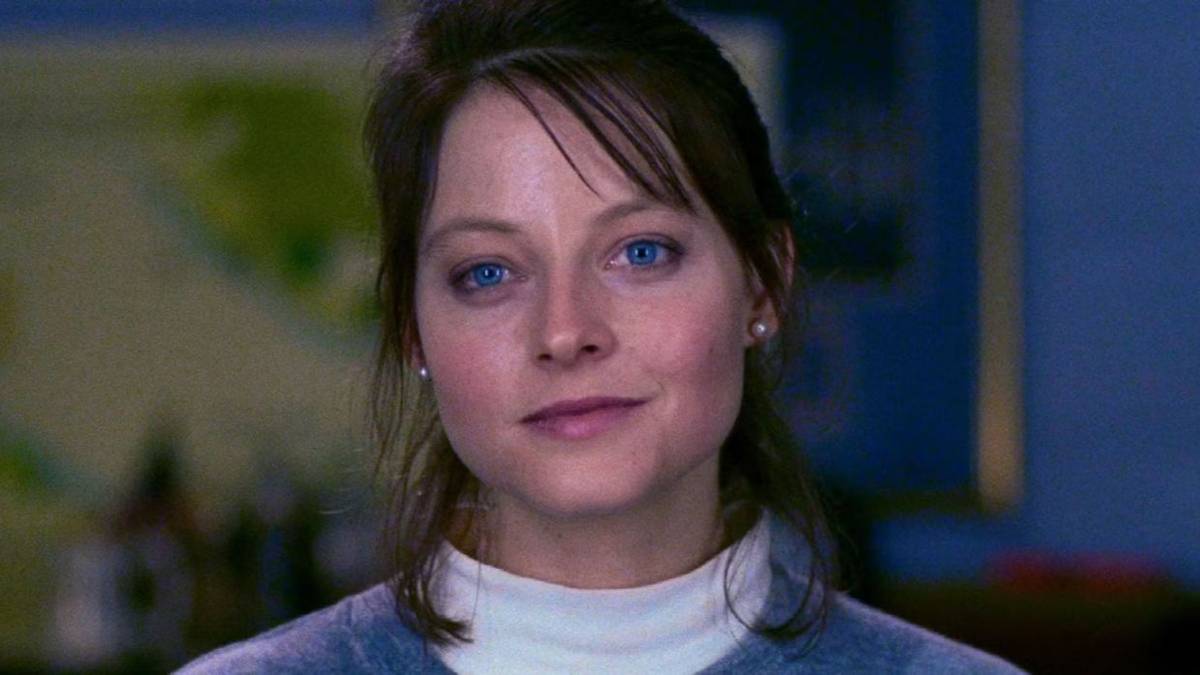
Image via Orion Pictures Published Aug 31, 2026, 6:02 AM EDT Michael Block is a 14 time GLAM Award nominated writer, producer, and host of the podcast Block Talk. Throughout his time in the entertainment industry, he has worked on and off Broadway as a stage manager, written several produced plays, critiqued hundreds of theatrical performances, drag and cabaret shows, and has produced events randing from drag competitoons to variety concerts! On Block Talk, he interviews nightlife personalities, covers the wide world of entertainment through features, ranking episodes, and recaps ALL of Drag Race, as well as Dragula and Survivor. He has interviewed hundreds of RuGirls that span the globe at DragCon NYC, DragCon LA, and DragCon UK. In his free time, he makes one-of-a-kind jewelry and gift baskets with his mom. He is a proud member of the LGBTQ+ community. Sign in to your Collider account There’s nothing like a movie that gets your heart racing and blood pumping. It’s why thrillers continue to be a beloved genre. The 21st century has played host to some extraordinary thrillers, but we wouldn’t have them had it not been for the classics that came before them. There have been countless greats, but there are truly only a few masterpieces. We are here to celebrate 10 classic thrillers that deserve 10s across the board. From black-and-white thrillers that became instant game-changers to crime stories that left your jaws on the floor, these 10 titles continue to impact the films made today. With well-crafted narratives, brilliant characters, and shocking twists and turns, these masterpieces had audiences talking for all the right reasons. 1 'Cape Fear' (1991) Image Via Universal Pictures Chances are you watched the Apple TV series, so now is the perfect time to explore the second film version. Directed by Martin Scorsese, the 1991 film Cape Fear lifts John D. MacDonald’s The Executioners for a full-throttle Southern Gothic thriller. Tattooed, menacing felon Max Cady (Robert De Niro) is released from prison after serving a 14-year sentence. He’s now out for vengeance as he inflicts psychological warfare against public defender Sam Bowden (Nick Nolte) and his family. Through an escalation of terror, Cape Fear serves as a rich exploitation of guilt through the psychological study of animalistic human nature. The film terrifyingly explores deep themes of retribution, faith, and the monsters that defy morality. A much darker take than the 1962 film, Cape Fear proves how evil is personified. De Niro provides an absolute masterclass in inflicting fear. He plays the psychopath with ease. Opposite him, Nolte plays a morally compromised man who simply fails to protect his strict rules of war. The film boasts a career-best performance from Juliette Lewis as Danielle, a moldable and fragile young woman. This film pushes flawed individuals to the forefront, as Bowden is far from innocent, blurring the lines of righteousness and horror. Scorsese uses an expressionist approach to build tension and fear. He added just the right amount of complexity to ensure his version of the film stood out. 2 'Chinatown' (1954) Image via Paramount Pictures There truly is no better neo-noir classic than Chinatown. The crime thriller tells the story of J. J. "Jake" Gittes (Jack Nicholson), a private eye in 1930s Los Angeles who is hired by a woman claiming to be Evelyn Mulwray (Faye Dunaway) to expose her husband's affair. In turn, he unspools a dark web of municipal corruption, murder, and family trauma tied to the city's water supply. A twisted drama with an ending you won’t believe, Chinatown serves as a metaphor for a hopeless place where bad luck and corruption prevail. Just because the story has a hero doesn’t mean they win in the end. If there ever was a perfect script, it was Robert Towne’s. Using real-world inspiration, his text began as a simple cheating scandal that turned into a massive political conspiracy thriller. Despite a sun-drenched setting, cinematographer John Alonzo transforms Los Angeles into a dark, dangerous criminal underworld, where politicians play the villains. The film doesn’t wrap up happily; the famous final scene shows how helpless ordinary people are against corruption. It’s a moral that we might feel is reflective of our current political climate. 3 'M' (1931) Image via Nero Films Hundreds upon hundreds of thrillers have been released since M in 1931, but it still remains a 10/10 masterpiece today. Directed by Fritz Lang, M follows a hunt through Berlin for child serial killer Hans Beckert (Peter Lorre). Because the heavy police presence disrupts their normal criminal activities, the city's crime syndicates and underworld bosses decide to hunt down Beckert themselves. The first sound film for Lang, M revolutionized early sound design while laying the foundation for modern crime thrillers through its profound exploration of morality, law, and the definition of justice. M did the unthinkable — humanized the villain by reminding the audience that the hunters are by no means morally clean. M is a tense crime thriller that still resonates today, not just because of its themes but because of the stellar storytelling. Dialogue is present, but the film’s power lies in its soundscape. It serves as an active narrative tool, most profoundly when the killer identifies himself before he reaches the screen through the whistling of Edvard Grieg’s "In the Hall of the Mountain King.” The audio motif is a mechanic that allowed for an extraordinary tension builder, on top of the overlapping audio, carrying a sound from one location into a completely different setting to connect ideas. M was an early indication of how crime investigations in film and television would evolve. Collider Exclusive · Oscar Best Picture Quiz Which Oscar Best PictureIs Your Perfect Movie? Parasite · Everything Everywhere · Oppenheimer · Birdman · No Country Five Oscar Best Picture winners. Five completely different visions of what cinema can be — and what it can do to you. One of them is the film that was made for the way your mind works. Ten questions will figure out which one. 🪜Parasite 🌀Everything Everywhere ☢️Oppenheimer 🐦Birdman 🪙No Country for Old Men FIND YOUR FILM → 01 What kind of film experience do you actually want? The best movies don't just entertain — they leave something behind. ASomething that pulls the rug out — that makes me think I'm watching one kind of film and then reveals I'm watching another entirely. BSomething overwhelming — funny, sad, absurd, and genuinely moving, all at once. CSomething grand and weighty — a film that makes me feel the full scale of what I'm watching. DSomething formally daring — a film that pushes what cinema can even do. ESomething lean and relentless — pure tension with no wasted frame. NEXT QUESTION → 02 Which idea grabs you most in a film? Great films are driven by a central obsession. What's yours? AClass, inequality, and what people are willing to do when desperation meets opportunity. BIdentity, family, and the chaos of trying to hold your life together when everything is falling apart. CGenius, moral responsibility, and the catastrophic weight of a decision you can never take back. DEgo, legacy, and the terror of becoming irrelevant while you're still alive to watch it happen. EEvil, chance, and whether moral order actually exists or if we just tell ourselves it does. NEXT QUESTION → 03 How do you like your story told? Form is content. The way a story is shaped changes what it means. AGenre-twisting — I want it to start in one lane and migrate into something completely different. BMaximalist and genre-blending — comedy, action, drama, sci-fi, all in one ride. CEpic and non-linear — cutting between timelines, building a mosaic of cause and consequence. DA single unbroken flow — I want to feel like I'm living it in real time, no cuts to safety. ESpare and precise — every scene doing exactly what it needs to do and nothing more. NEXT QUESTION → 04 What makes a truly great antagonist? The opposition defines the protagonist. What kind of opposition fascinates you? AA system — invisible, structural, and almost impossible to fight because it has no single face. BThe self — the ways we sabotage, abandon, and fail the people we love most. CHistory — the unstoppable momentum of events that no single person can stop or redirect. DThe industry — the machinery of culture that chews up talent and spits out irrelevance. EPure, implacable evil — a force so certain of itself it becomes almost philosophical. NEXT QUESTION → 05 What do you want from a film's ending? The final note is the one that lingers. What do you want it to sound like? AShock and inevitability — a conclusion that recontextualises everything that came before it. BEarned emotion — I want to cry, laugh, and feel genuinely hopeful, even if the world is a mess. CDevastation and grandeur — an ending that makes me sit in silence for a few minutes after. DAmbiguity — something that leaves enough open that I'm still thinking about it days later. EBleakness — an honest refusal to pretend the world is tidier than it actually is. NEXT QUESTION → 06 Which setting pulls you in most? Where a film takes place shapes everything — mood, stakes, what's even possible. AA gleaming modern city with a hidden underside — beauty masking rot, wealth masking desperation. BA collapsing suburban life that opens onto something infinite — the multiverse of a single ordinary person. CThe corridors of power and science at a world-historical turning point — where decisions echo for decades. DThe grimy, alive chaos of New York and Hollywood — fame as both destination and trap. EVast, indifferent landscape — desert and highway where violence arrives without warning or reason. NEXT QUESTION → 07 What cinematic craft impresses you most? Every great film has a signature — a technical or artistic element that makes it unmistakable. AProduction design and mise-en-scène — every frame composed to carry meaning beneath the surface. BEditing and tonal control — the ability to move between registers without losing the audience. CScore and sound design — music that becomes inseparable from the dread and awe of what you're watching. DCinematography as performance — the camera not recording events but participating in them. ESilence and restraint — what's left unsaid and unshown doing more work than any dialogue could. NEXT QUESTION → 08 What kind of main character do you root for? The protagonist is the lens. Who you choose to follow says something about you. ASomeone smart and resourceful who makes increasingly dangerous decisions under pressure. BSomeone overwhelmed and ordinary who turns out to be capable of something extraordinary. CA brilliant, tortured figure whose gifts and flaws are inseparable from each other. DA self-destructive artist whose ego is both their superpower and their undoing. EA quiet, principled person trying to make sense of a world that has stopped making sense. NEXT QUESTION → 09 How do you feel about a film that takes its time? Pace is a choice. Some films sprint; others let tension accumulate slowly, deliberately. AI love a slow build when I know the payoff is going to be seismic — patience for a devastating reveal. BGive me relentless momentum — I want to feel breathless and emotionally spent by the end. CEpic runtime doesn't scare me — if the material demands three hours, give me three hours. DI want it to feel propulsive even when nothing is technically happening — restless energy throughout. EDeliberate and unhurried — I want dread to accumulate in the spaces between the action. NEXT QUESTION → 10 What do you want to feel walking out of the cinema? The best films leave a mark. What kind of mark do you want? AUnsettled — like I've just seen something I can't fully explain but can't stop thinking about. BMoved and energised — like the film reminded me what actually matters and gave me something to hold onto. CHumbled — like I've been in the presence of something genuinely important and overwhelming. DExhilarated — like I've just seen cinema doing something it's never quite done before. EHaunted — like a cold, quiet dread that stays with me for days. REVEAL MY FILM → The Academy Has Decided Your Perfect Film Is…Your answers have pointed to one Oscar Best Picture winner above all others. This is the film that was made for the way your mind works. ParasiteYou are drawn to films that operate on multiple levels simultaneously — that begin in one genre and quietly, brilliantly migrate into another. Bong Joon-ho's Parasite is a film about class, desire, and the architecture of inequality that manages to be darkly funny, deeply suspenseful, and genuinely shocking across a single extraordinary running time. Your instinct is for cinema that hides its true intentions until the moment it's ready to reveal them. Parasite is exactly that — a film that rewards close attention and punishes assumptions, right up to its devastating final image. Everything Everywhere All at OnceYou want it all — and this film gives you all of it. The Daniels' Everything Everywhere All at Once is one of the most maximalist films ever made: action comedy, multiverse sci-fi, family drama, existential crisis, and a genuinely earned emotional core that sneaks up on you amid the chaos. You are someone who responds to ambition, who doesn't want cinema to choose between being entertaining and being meaningful. This film refuses that choice entirely. It is overwhelming by design, and its overwhelming nature is precisely the point — because the feeling of being crushed by infinite possibility is exactly what it's about. OppenheimerYou are drawn to cinema on a grand scale — films that understand history not as a backdrop but as a force, and that place their characters inside that force and watch what happens. Christopher Nolan's Oppenheimer is a film about the terrifying gap between what we can do and what we should do, told with the full weight of one of the most consequential moments in human history behind it. You want your films to feel important without feeling self-important — to earn their ambition through sheer craft and the gravity of their subject. Oppenheimer does exactly that. It is enormous, complicated, and refuses easy comfort. BirdmanYou are drawn to films that foreground their own construction — that make the how of the filmmaking part of the what it's about. Alejandro González Iñárritu's Birdman, shot to appear as a single continuous take, is cinema examining itself through the cracked mirror of a fading actor's ego. You respond to formal daring, to the feeling that a film is doing something that probably shouldn't be possible. Michael Keaton's performance and Emmanuel Lubezki's restless camera create something genuinely unlike anything else — a film that is simultaneously about creativity, relevance, self-destruction, and the impossibility of ever truly knowing if your work means anything at all. No Country for Old MenYou are drawn to cinema that trusts silence, that refuses to explain itself, and that treats dread as a form of meaning. The Coen Brothers' No Country for Old Men is a film about the arrival of a new kind of evil — implacable, arbitrary, and utterly indifferent to the moral frameworks we use to make sense of the world. It is one of the most formally controlled films ever made, and its controlled restraint is what makes it so terrifying. You want your films to haunt you, not comfort you. You are not interested in resolution if resolution would be dishonest. No Country for Old Men is honest in a way that most cinema never dares to be. ↻ RETAKE THE QUIZ 4 'Psycho' (1960) Image via Paramount Pictures We often hyperbolize how a project can be groundbreaking and influential, but the truth is that Psycho changed psychological horror films forever. Based on Robert Bloch’s novel, the Alfred Hitchcock-directed film follows a secretary named Marion Crane (Janet Leigh) on the run who stops at the mysterious Bates Motel. After being terrorized and brutally murdered by its proprietor, Norman Bates (Anthony Perkins), a race to find her begins as Norman’s true nature is revealed. Psycho reshaped the horror genre by shattering Hollywood norms through immaculate direction and gripping storytelling. Killing off a top-line star was largely unheard of, and Hitchcock did the unthinkable by murdering Leigh within the first act. The bold move proved no character was safe — and is something that many storytellers have been eager to try themselves since. In doing so, Hitchcock immediately heightened the suspense, keeping the audience glued to the screen, eagerly awaiting the next big twist. Movie monsters were often otherworldly beings. Psycho shattered that expectation by creating a foe that was just your ordinary neighbor. Hitchcock employed brilliant cinematography to create an enthralling journey of sheer terror. No film had ever been as twisted as Psycho. 5 'Rear Window' (1954) Image via Paramount Pictures Before Hitchcock shocked the world with the famous shower scene, he instilled suspense by keeping the action squarely within a confined space. Rear Window tells of L.B. "Jeff" Jefferies (James Stewart), a professional photographer stuck in a wheelchair with a broken leg. Confined to his New York apartment, he passes the time by spying on his courtyard neighbors and comes to suspect that one of them, Lars Thorwald (Raymond Burr), has murdered his wife. Rear Window is an extraordinary film that turns a story about boredom into a battle of life or death. Rear Window traps the audience inside the apartment with Jeff as he embarks on a potentially fatal journey of voyeurism. Hitchcock puts you in Jeff’s apartment, rarely allowing the camera to depart the space. This creative limit forces the audience to experience the same physical confinement and spatial restriction as the protagonist. By locking squarely into his binoculars, you’re turned into reluctant voyeurs, making us complicit in spying. Rear Window questioned the ethics of observing others without consent and the danger of knowing too much long before we monitor our digital neighbors on social media. Rear Window is simple in premise yet brilliant in execution. 6 'Se7en' (1995) Image via New Line Cinema If there’s one thing Se7en taught us, it’s to be wary of the contents of a box we didn’t expect. We’ve always had a fascination with the seven deadly sins, but Se7en glorified them for a dastardly reason in the David Fincher masterpiece. The film follows two homicide detectives, William Somerset (Morgan Freeman), a jaded veteran, and David Mills (Brad Pitt), an eager rookie, hunting a sadistic serial killer who bases his killings on the Seven Deadly Sins. John Doe (Kevin Spacey) hopes to leave a lasting impression through his commentary on society by fulfilling his mission, resulting in one of cinema’s most shocking conclusions. A truly chilling film, Se7en redefined the crime thriller through its oppressive atmosphere, visceral storytelling, and psychological focus. Fincher didn’t go for cheap thrills. Instead, he opted for tension created by the psychological weight of the crimes and human depravity. We only see the aftermath of the crime, and yet it still holds great weight as if we had watched the action on screen. Fincher builds a world of foreboding dread through a dark, rain-drenched urban everyplace. Written by Andrew Kevin Walker, Se7en uses the religious framework of the seven deadly sins to explore deep moral ambiguity and societal decay, making the film terrifyingly timeless. 7 'The Manchurian Candidate' (1962) Image via United Artists The definitive classic political thriller is none other than The Manchurian Candidate. Directed by John Frankenheimer, the original 1962 thriller centers around a group of American soldiers who are captured during the Korean War and brainwashed by communists to become unwitting sleeper assassins. Raymond Shaw (Laurence Harvey), falsely hailed as a national hero, receives the Medal of Honor, while Captain Bennett Marco (Frank Sinatra) suffers from terrifying, recurring nightmares when Shaw casually murders two of his own fellow soldiers during the brainwashing session. Marco embarks on a dark conspiracy-fueled investigation that results in a deep-state threat. A razor-sharp political satire, The Manchurian Candidate targets Cold War-era paranoia and McCarthyism hysteria through masterful storytelling and direction. The film isn’t a one-sided political assault. Instead, it targets all sides to explore the psychological trauma of the time. Frankenheimer’s pristine vision is filled with jarring cuts, deep-focus imagery, and surreal editing to trap the audience inside the depleting, brainwashed minds of the troops. Harvey and Sinatra bring anguish and tragedy into their respective characters, but it’s Angela Lansbury as Eleanor Shaw Iselin who brings a shockingly effective performance. She is absurdly chilling, creating a genuinely unsuspecting, perfect villain. The title literally became a permanent psychological and political shorthand for any unwitting, brainwashed sleeper agent, leaving a lasting legacy beyond the big screen. 8 'The Silence of the Lambs' (1991) Image via Orion Pictures Horror films tend to live in their own niche world. Then The Silence of the Lambs entered the scene and redefined the genre by earning a seat at the table. Directed by Jonathan Demme, The Silence of the Lambs follows FBI trainee Clarice Starling (Jodie Foster), who is tasked with interviewing the imprisoned, brilliant, cannibalistic psychiatrist Dr. Hannibal Lecter (Anthony Hopkins), hoping he can help them track down another active serial killer nicknamed "Buffalo Bill" (Ted Levine). Lecter agrees to offer psychological clues and profile Buffalo Bill, but only if Clarice reveals painful personal details about her own childhood. Blending sharp psychological tension in an airtight script with pristine performances, not only was The Silence of the Lambs a brilliant horror film, but it rightly walked away with the Big Five at the Academy Awards: Best Picture, Director, Actor, Actress, and Screenplay. Instead of physical action spectacles, the core of the film rests on psychological deconstruction through dialogue and mind-game sparring. Hopkins and Foster have a sensational dynamic, allowing their unique bond to define the film. With only 16 minutes on film, Hopkins does the most by crafting a chilling monster like cinemas had never seen. Demme frequently uses direct-to-camera close-ups, putting the audience into the mind of the characters. Rather than relying on cheap slasher violence, the film creates unbearable psychological dread. The Silence of the Lambs cemented itself as one of the greatest psychological horror masterpieces of all time. 9 'Vertigo' (1958) Image via Paramount Pictures It takes a profound masterpiece for a single film to essentially invent an entire filming technique. Such is the case for Vertigo. Detective John "Scottie" Ferguson (James Stewart) retires from the police force following a rooftop chase that ends in a fellow officer falling to his death, leaving Scottie with severe acrophobia and vertigo. An old college acquaintance named Gavin Elster (Tom Helmore) hires Scottie as a private investigator, tailing his wife, Madeleine (Kim Novak), claiming she is acting strangely, possessed by the ghost of a dead ancestor named Carlotta Valdes, and potentially suicidal. The mission results in a dangerous obsession where the haunting weight of the past, guilt, and the dangerous illusion of transforming another human being into an ideal fantasy become the central themes. Vertigo is a haunting masterpiece that revolutionized the “vertigo effect,” or the dolly zoom. The effect is a trick that stretches the visual perspective and makes viewers feel dizzy and panicked, which puts them straight into Scottie’s fear of heights. Hitchcock used vivid shades of green to represent mystery and fear and red to evoke burning desire and danger to tell the story without words. Every shot is meticulously framed to match the emotional state of the characters. Bernard Herrmann’s swirling, hypnotic score moves from obsession to dread, culminating in sheer madness. There are very few landmark psychological thrillers quite like Vertigo. 10 'Wait Until Dark' (1967) Image via Warner Bros. We may take our five senses for granted, so when they’re pulled from us, that’s when a chilling thriller is born. In Wait Until Dark, a recently blinded housewife, Susy Hendrix (Audrey Hepburn), is terrorized in her apartment by a group of criminals looking for a heroin-stuffed doll given to her husband, Sam (Efrem Zimbalist Jr.). When Susy realizes she is being lied to by the crooks posing as cops, she plunges her apartment into darkness in order to even the playing field. Wait Until Dark uses suffocating tension in a singular locale and the lack of sight to heighten the stakes and place you in the same situation as the protagonist. Rather than a flashy thriller, Wait Until Dark thrives in atmospheric world-building. Director Terence Young uses everyday noises, footsteps, and sudden silences to explore the disorienting perspective of Susy. Hepburn earned an Academy Award nomination for making a woman’s vulnerabilities her greatest strengths. She never made Susy weak, allowing her to build into a brilliantly strong woman. Opposite her was a chilling villain in Alan Arkin, who brought an unpredictable menace to Roat, the prime criminal. The epic conclusion, built entirely on audio cues and shadows, proves how tension and suspense are built in horror thrillers.
10 Classic Thriller Movies That Are 10/10 Masterpieces
Full Article
Original Source
Read the full article at Collider →KhanList aggregates and links to publicly available news content. We do not host full articles from third-party sources. Always verify important information with original sources.