
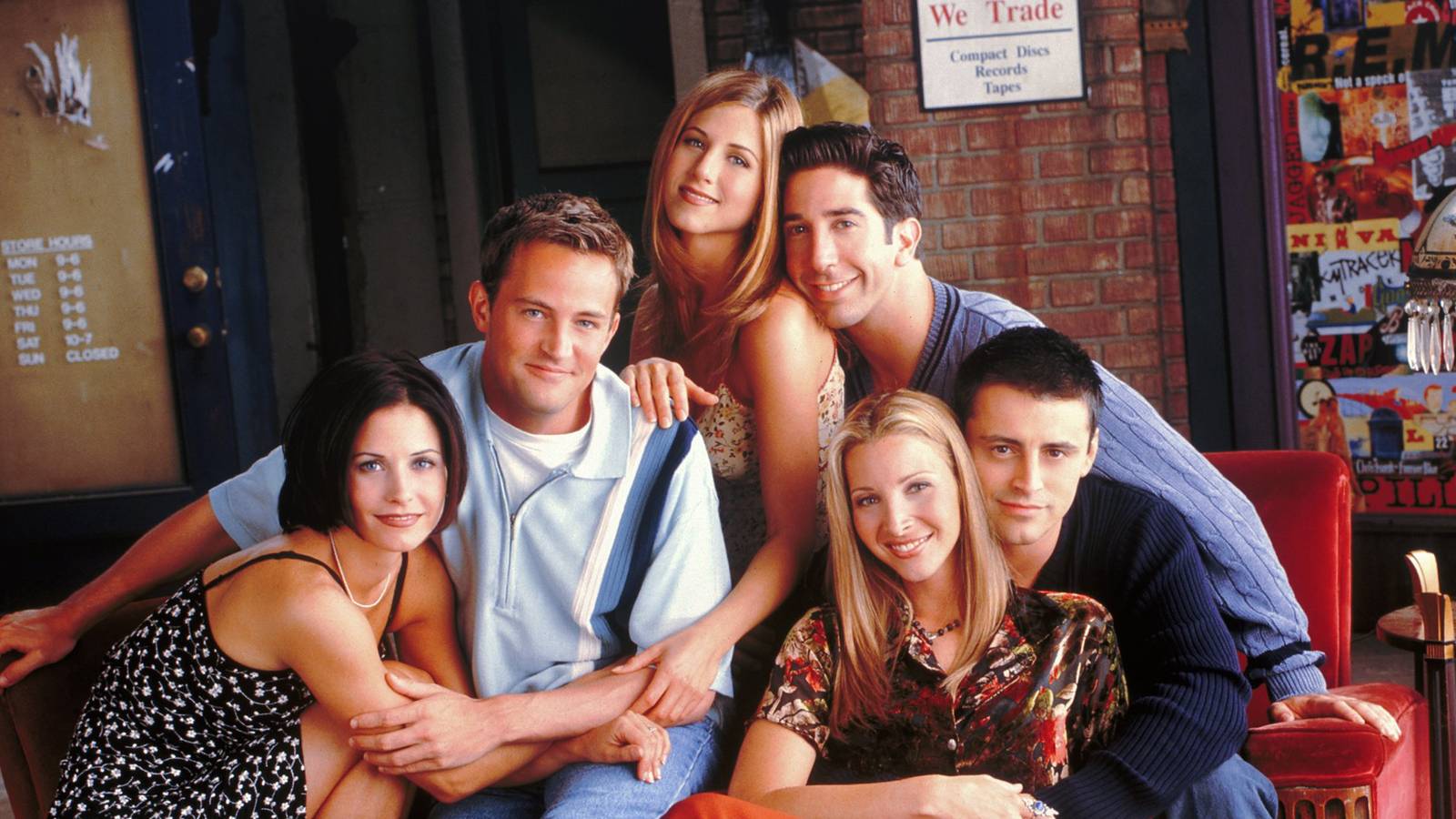
Published Nov 22, 2026, 9:00 PM EST Christine is a freelance writer for Collider with two decades of experience covering all types of TV shows and movies spanning every genre. With a particular affinity for dramas, true crime, sitcoms, and thrillers, if it's a top TV show, Christine has likely watched it and is eager to share her thoughts. When she's not furiously writing away, you can find her enjoying the next binge obsession with a glass of wine in front of the TV. Sign in to your Collider account Modern sitcoms have largely been about reboots, sequels, spin-offs, and continuations. There have been a few original concepts among the bunch that have solidified their place in TV history, like Modern Family, Abbott Elementary, and Schitt's Creek. But these are few and far between. What's more, even the best of the best don't hold a candle to some of the most classic sitcoms. While new-generation viewers might beg to differ, you won't find better modern sitcoms than some of the most iconic classic ones, point blank, period. They paved the way for all the ones that have come since, even if it's not immediately obvious what influence they had. All you need to do is rewatch or watch for the first time, and it becomes crystal clear that the classics have their fingerprints all over newer shows. 10 'I Love Lucy' (1951–1957) Image via CBS Is there any sitcom that can ever touch I Love Lucy? There's a magic in the show that simply can't be replicated, thanks to the brilliance of Lucille Ball. In one of the greatest classic American sitcoms, Ball plays Lucy Ricardo, who lives with her husband Ricky (Desi Arnaz). Their landlords and best friends are Ethel (Vivian Vance) and Fred (William Frawley), and Lucy and Ethel love to get up to plenty of hijinks when their husbands go off to work. Ball was a master of physical comedy, whether it was using her entire body or even just her facial expressions. Deep down, the show is about a bored housewife looking for more meaning in her life while her husband is trying to manage her antics so they don't get out of hand. Despite the outdated premise, I Love Lucy is still just as funny as it once was, one of those bucket list sitcoms you absolutely must watch. 9 'The Mary Tyler Moore Show' (1970–1977) Image via CBS Groundbreaking for its time, The Mary Tyler Moore Show wouldn't stand out as much today as it did in the 1970s. But back then, a show about a successful, unmarried woman in her 30s thriving in her career and making no apologies for the lifestyle she leads was progressive. The character, played by Mary Tyler Moore, was an inspiration for women at the time who were just starting to come into their own during the women's liberation movement. Beyond that, it was a sharply written, bitingly funny comedy that was unlike anything else on television. It was a sign of the times as well, covering topics like equal pay, birth control, and the role of women in the workplace. All these topics are just as relevant today as they were back then, but nothing can tackle them the same way The Mary Tyler Moore Show did at the time. 8 'Seinfeld' (1989–1998) Image via NBC Other shows can try, and Curb Your Enthusiasm, which hails from the same creator, Larry David, came close. But Seinfeld is still the gold standard for comedies about nothing. There's no plot, no real storylines that carry over from one episode to the next. It's just about four adult friends in New York sharing the minutiae of their daily lives. There are always antics, downright dumb conversations, and hilarious events. It's the combination of the acting, with the ensemble cast who fit like glue with one another, the witty writing, the long list of guest stars, and the ridiculous narratives that combine to make Seinfeld one of the best '90s shows. There's arguably no other show as quotable as the sitcom, which has created an entire language around its episodes, like "master of your own domain," "man hands," and "no soup for you!" 7 'Malcolm in the Middle' (2000–2006) Image via Fox Returning in 2026 for a four-episode revival, Malcolm in the Middle is a defining sitcom of the 2000s. The turn of the century marked a new era in television, and this sitcom was perfectly indicative of that. It pushed boundaries in a way others didn't, depicting a family that was not picture-perfect, not just getting by, but downright chaotic. The idea of Malcolm (Frankie Muniz) as the protagonist, breaking the fourth wall, has a The Wonder Years vibe to it. But the family dynamic with the screaming, anxious mom, the goofy, childlike dad, rebellious, unintelligent older brother, and constantly ignored younger brother was so absurd that families loved gathering to watch. They were constantly frantic, despised by their neighbors, and struggled to get by while the kids did deplorable things. The show gave kids a chance to live vicariously through the giggle-inducing antics of the brothers that were too absurd to even consider replicating. 6 'Friends' (1994–2004) Image via NBC The most known sitcom of the '90s, no show before, during, or after has had the same impact. While Living Single tackled the concept first, Friends broke out in a way no show ever has. It transcends every type of viewer. Anyone you talk to can probably recall watching at least one episode. The chemistry among the cast, the fantastic writing, the distinct personalities, and the ongoing storylines like the "will they, won't they" romance with Ross (David Schwimmer) and Rachel (Jennifer Aniston), kept fans glued to their TVs week after week. There isn't a show quite like Friends that you could watch today, more than 20 years after it ended, and still find it as consistently funny. Turn on the TV, and you can sink right into any episode from any season and laugh hysterically. So many shows have been inspired by Friends, and many have been hugely successful. But there can never be another Friends. It remains an essential sitcom that belongs on every fan's bucket list. Collider Exclusive · 8 Questions · 2 Minutes Which Iconic Fandom Should You Join? Harry Potter · Lord of the Rings · Star Wars · Star Trek Eight honest questions about how you actually are: what you put on when you need cheering up, how deep you go into the things you love, what you argue about, what you keep on your shelf. Answer them and we will tell you where you belong. Four of the biggest fandoms on earth are taking new members, and they could not be more different from one another. ⚡Harry Potter(Wizarding World) 💍Lord of the Rings(Middle-earth) ⚔️Star Wars(A Galaxy Far Away) 🖖Star Trek(The Final Frontier) FIND YOUR PEOPLE → 01 What do you put on when you need cheering up? Nobody is brave about this one. AThe same thing I have watched a hundred times. BSomething long, slow and beautiful. CSomething big and loud with a great score. DOne clever episode of something hopeful. NEXT QUESTION → 02 How deep do you go into something you love? There is no shallow end here, only different deep ends. AI know every character and all the gossip. BI have read the appendices and studied the maps. CI have a ranked opinion on every instalment. DI want to know how the world actually works. NEXT QUESTION → 03 What do you and your friends actually argue about? Every fandom has one argument it has been having for years. AWhich one of us is which type. BWhether the adaptation got it right. CWhether the new stuff ruined the old stuff. DWhether the right thing was actually done. NEXT QUESTION → 04 How do you feel about a room full of strangers? Every one of these comes with a very big room. AGreat, and I will know everybody by the end. BFine, as long as they take it seriously. CBrilliant, especially if there is something to dress up for. DHappy, provided the conversation is interesting. NEXT QUESTION → 05 Where would you rather spend a week? Pick on instinct rather than on budget. AAn old castle somewhere rainy. BMountains, long walks, no phone signal. CA desert with an unbelievable night sky. DA city built around a university. NEXT QUESTION → 06 What do you believe about people, mostly? All four of these stories have an answer, and they disagree. AMost of them turn out better than expected. BThe smallest ones decide the biggest things. CAnybody can change, even very late on. DWe work it out if we keep talking. NEXT QUESTION → 07 What is actually on your shelf? Look over at it before you answer. AEverything I owned when I was twelve. BHardbacks, in order, read more than once. CFigures, posters, and a few things still boxed. DBooks about how things work, plus a model or two. NEXT QUESTION → 08 What do you actually want from a story? Eight questions in, this is the one that picks your fandom. AA place I can go back to whenever I need it. BA world complete enough to get lost in. CSomething huge I can share with everybody. DAn idea that changes how I think. REVEAL MY FANDOM → Membership Confirmed Your Fandom Is…Four of the largest communities on the planet, and four completely different reasons to belong to one. Here is yours, what it would give you, and the argument you would be having within a week. Harry PotterYou belong to the fandom that is really about comfort. Hogwarts works on people because it is a place rather than a plot, and the pull is not the wizard war so much as the corridors, the food, the weather and the sense that somebody is expecting you. You are drawn to belonging, which is why this fandom sorted itself into houses within about five minutes and has never stopped. This is the most social of the four, and the one most likely to know which type every single person in your life would be. The books are built to be reread rather than analysed, and rereading is exactly what you do with things you love. The new HBO series is bringing the whole thing back one book at a time, which means the arguments are about to start all over again. Lord of the RingsYou belong to the deepest fandom on this list, the one where somebody has always read further than you and is quietly delighted to say so. Middle-earth rewards patience more than any other world in popular culture. You like the sense that the story you are reading is only the visible part of something enormous, which is precisely how Tolkien built it. This fandom takes adaptation seriously to a degree that other fandoms find slightly alarming, and it has good reasons for that. Your favourite thing about the books is probably the bit that is not action at all, which is the walking, the songs and the long goodbyes. Nobody here thinks heroism belongs to the powerful, and the whole story exists to make that argument. Star WarsYou belong to the loudest and largest tent of the four, the one where three generations are all watching the same thing and none of them agree about any of it. That disagreement is not a flaw in this fandom, it is the main activity. You want something you can share with absolutely everybody, from a six year old to a grandparent, and this is the only one on the list that really does that. Nobody argues like Star Wars fans argue, and the argument has been running since roughly 1980 with no sign of resolution. The pull here is sensory before it is narrative, since it is the sound design, the score and the look of a used and dented galaxy. You would be first in the queue, in costume, with strong opinions and a genuinely good time. Star TrekYou belong to the thinking fandom, the one that turns up for the argument rather than the explosion. Trek has always been a series of ethical problems in space, and the people who love it love being asked what they would have done. You are an optimist in a way that is currently unfashionable, and this is the only major franchise still willing to say the future might be better. The best episodes are the ones where nobody fires anything, which is a sentence that makes perfect sense to this fandom and to nobody else. Starfleet Academy brought the franchise back to a classroom in 2026, which is appropriate, because Trek has always been a bit of a seminar. You would want the conversation afterwards more than the episode itself, and here you will always find somebody willing to have it. ↻ RETAKE THE QUIZ 5 'Will & Grace' (1998–2006) Image via NBC Another show brought back for a second go-round, Will & Grace returned in 2017 and aired for three additional seasons plus a special. It fits with today's societal landscape but was hugely influential back in the late '90s as the first show with gay principal characters. Rather than focusing on their lives and sexuality, however, the series centered around the platonic friendship between Will (Eric McCormack) and Grace (Debra Messing), who once dated in college before Will came out. The show was praised for its portrayals and comedy, even if it initially received pushback for stereotypical handling of gay characters, especially with Jack (Sean Hayes). Fans began to recognize him as comic relief, completely outside of his sexuality. As the show developed, it became the benchmark for which all shows with LGBTQ characters could be molded. Interestingly, former President Joe Biden once publicly said that Will & Grace may have done "more to educate the American public" about LGBTQ+ issues than anything else at the time. 4 'Sanford and Son' (1972–1977) Image via NBC You might not have laughed and laughed at any show since Sanford and Son. It was that funny. In the classic sitcom, Fred G. Sanford (Red Foxx) is a junk dealer who is often butting heads with his more progressive son Lamont (Demond Wilson). As a sort of flipped script from All in the Family, Fred is an outwardly surly bigot who doesn't shy away from saying what he thinks and meaning what he says. This is to the chagrin of his more politically correct son, who wants to keep the peace and is embarrassed at times by his dad's behavior, harsh words, and worldviews. The get-rich-quick schemes and antics make for a hilarious story in every episode. Most notably, however, Sanford and Son was one of the first Black American sitcoms, paving the way for others to come since. While there have been many influential and entertaining Black American sitcoms since, many of which can be considered classics, none would have existed without Sanford and Son. 3 'Blackadder' (1983–1989) Image via BBC One There's nothing quite like a good British sitcom, and there are so many from which to choose. But Blackadder is a must-watch British sitcom, a period sitcom following antihero Edmund Blackadder (Rowan Atkinson) and his servant Baldrick (Tony Robinson). Separated into four series, each one covers a different time in history, from Richard IV to the Regency era and the Great War. So, it's like getting four different shows in one. The series boasts sharp writing and, of course, Atkinson's signature comedic style that expresses so much even when he isn't delivering dialogue. He and Robinson are accompanied by so many other great actors throughout as well, including well-known names like Stephen Fry and Hugh Laurie. The historical satire sub-genre has been explored many times since, but arguably no other show does it as well as Blackadder. 2 'The Golden Girls' (1985–1992) Image via NBC It's impossible to top The Golden Girls. The acting, the writing, the stories were so fresh and progressive. TV shows about later-in-life people, especially women, have been done again and again since. But The Golden Girls is what started it all. Following four mature women living out their second chapters, the idea was to show that life doesn't end once the kids grow up and/or you experience a partner's death or divorce. These women are relying on one another to get them through a stage in life that might otherwise be dreary and lonely. They're vivacious, lively, and get on one another's nerves all the time. But they couldn't do it without one another. Without The Golden Girls, we would not have had shows like Grace and Frankie or even Sex and the City. 1 'Designing Women' (1986–1993) Image via CBS Running concurrently with The Golden Girls, Designing Women set itself apart by following four women and a man working together at an interior design company. Set in Georgia, there are a lot of similarities between the shows, but Designing Women took a different approach with its own set of unique characters that were representative of working women of the time. The show focused on social commentary, female friendship, and a signature Southern drawl that gave it a different charm. It was one of the first sitcoms to tackle topical issues with passionate monologues, like when Julia Sugarbaker (Dixie Carter) went on a rant about women's rights. The show wasn't afraid to "go there" with serious topics like AIDS, domestic violence, racism, and body image. Some shows had already been doing this, but Designing Women opened the door for even sitcoms to welcome those "very special episodes" without losing their comedic energy. Designing Women Release Date 1986 - 1993-00-00 Network CBS Cast Delta Burke Suzanne Sugarbaker
10 Classic Sitcoms That Are Better Than Modern Streaming Originals
Full Article
Original Source
Read the full article at Collider →KhanList aggregates and links to publicly available news content. We do not host full articles from third-party sources. Always verify important information with original sources.