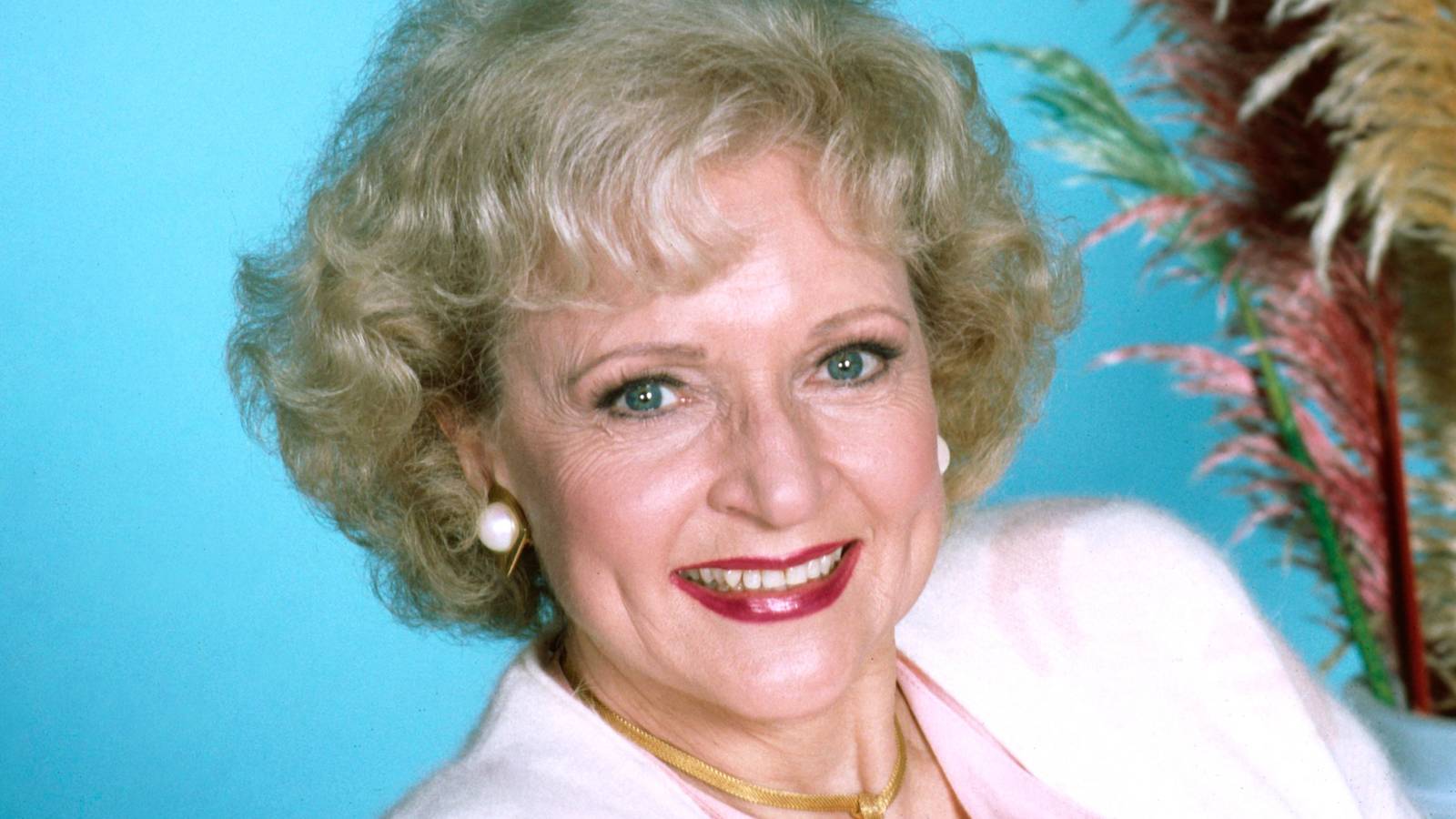
Image via Touchstone Television/Courtesy Everett Collection Published Aug 16, 2026, 11:22 PM EDT Michael Block is a 14 time GLAM Award nominated writer, producer, and host of the podcast Block Talk. Throughout his time in the entertainment industry, he has worked on and off Broadway as a stage manager, written several produced plays, critiqued hundreds of theatrical performances, drag and cabaret shows, and has produced events randing from drag competitoons to variety concerts! On Block Talk, he interviews nightlife personalities, covers the wide world of entertainment through features, ranking episodes, and recaps ALL of Drag Race, as well as Dragula and Survivor. He has interviewed hundreds of RuGirls that span the globe at DragCon NYC, DragCon LA, and DragCon UK. In his free time, he makes one-of-a-kind jewelry and gift baskets with his mom. He is a proud member of the LGBTQ+ community. Sign in to your Collider account Back in the day, sitcoms had a certain vibe. A je ne sais quoi that, even today, has a timeless element to it. Perhaps it was the situational storytelling week after week or the energy stemming from the live studio audience. Whatever it was, there's a reason why classic sitcoms continue to be our go-to when we need a pick-me-up. Many of the sitcoms of yore inspired many of the shows of today. Perhaps it was a leading lady who broke the mold of what a female comedian could be. Maybe it was proving the strength and unity of a solid ensemble cast. Or possibly it was creating a universe so farfetched that it opened up our imaginations to laugh. Whatever it may be, if you're looking to do your sitcom history, these iconic classic sitcoms must be watched once in your life. 'Three's Company' (1977–1984) Image via ABC Now, listen. You have to consider the times in which many of these shows were created before judging them through a completely modern lens. The premise of Three's Company may be a tad unconventional and politically incorrect today, but in the late '70s, when there was still a stigma regarding sexual liberation and sexuality in general, it made for a hilarious concept for a sitcom. The story followed three single roommates, Jack Tripper (John Ritter), Janet Wood (Joyce DeWitt), and Chrissy Snow (Suzanne Somers), as they put up a ruse that Jack is gay, as the complex's owners, Stanley and Helen Roper (Norman Fell and Audra Lindley), will only allow the three of them to stay on the belief that Jack was gay. In reality, he was a Lothario. Through hilarious hijinks and fantastical farces, when you heard the lyrics, "Come and knock on our door," being sung, you instantly knew that comedy was indeed waiting for you. Three's Company may seem "tame" to today's audience, but at the time, when many sitcoms were family-oriented, it was verging on adult content. Homosexuality was often used as a punchline, but being an out gay man was not as accepted and liberating as it is today. Additionally, when it came to the female characters, especially the trio of blondes, including Jenilee Harrison as Cindy Snow and Priscilla Barnes as Terri Alden after Somers' departure from the series, the ditzy "dumb blonde" archetype reigned supreme. With Ritter and DeWitt remaining with the series from start to finish, the other major casting change was when the Ropers departed for their own spin-off and were replaced by Don Knotts as the new building manager, Ralph Furley. There are essentially two iterations of Three's Company, so if you're looking to start somewhere, the series is best known for its time when Knotts and Ritter graced the screen together. If there's one thing to take away from Three's Company, it's the exceptional physical comedy by Ritter. This was a generation of sitcoms where watching a man fling himself about was comedy gold. And Ritter made it look effortless. 'The Facts of Life' (1979–1988) Image via NBC Now, while we may not be here to talk about the all-time greatest sitcom theme songs, I assure you that if we were, The Facts of Life would be high atop the list. "You take the good. You take the bad. You take them both, and there you have the facts of life." So profound, and so apropos to the show. Initially a spin-off of Diff'rent Strokes, The Facts of Life followed Charlotte Rae's Mrs. Edna Garrett as she became the housemother of Eastland School, an all-girls boarding school. Throughout the series, Mrs. Garrett would be on hand, giving her girls life advice as they grew up and dealt with every social and personal issue imaginable. Now, once again, times were different. You may often hear of shows swapping out actors, characters, or stories following the filming of a pilot, but The Facts of Life went an entire season before shifting gears and shrinking the cast. Before the iconic quartet of Tootie (Kim Fields), Blair (Lisa Whelchel), Natalie (Mindy Cohn), and Jo (Nancy McKeon), The Facts of Life had a much larger ensemble cast, which included a young Molly Ringwald. Not only did it end up being the best decision for the series, but it also opened up the window for greater stories to be told. The care that the series took when it came to the complexity of challenging issues spoke to the generation watching. There was no topic The Facts of Life was unafraid to tackle. Because of its sentimentality towards social issues while celebrating adolescent friendship, The Facts of Life is necessary viewing. 'The Jeffersons' (1975–1985) Image via CBS It took quite some time before visibility and representation were "movin' on up" toward the top of the television charts. Not since Amos 'N' Andy had television had a sitcom that featured Black actors in leading roles. A year after Good Times debuted came The Jeffersons. The sitcom was historic in the '70s as it celebrated the portrayal of a successful African American family, something that, at that time, was uncommon on-screen. Using it as the basis for laughs, The Jeffersons followed Louise Jefferson (Isabel Sanford) and her husband George (Sherman Hemsley), as they moved on up from Queens to Manhattan to a "deluxe apartment in the sky." Along with their black maid Florence (Marla Gibbs), and their neighbors Tom and Helen Willis (Franklin Cover and Roxie Roker), the show was a non-stop laugh fest that changed television history in the process. A spin-off of All in the Family, The Jeffersons evolved into a long-running classic sitcom all while touching on extremely topical stories ranging from interracial marriage, racism, and being transgender. The show was also one of many to repopularize old-style ethnic humor. Though marred by controversy during its ten-year run for its occasional dips and laps, falling into stereotypical tropes, The Jeffersons opened the door for future Black-led sitcoms, thanks to their willingness to be unconventional. 'All in the Family' (1971–1979) Image via CBS It's no secret that Norman Lear was a genius when it came to creating everlasting sitcoms. Arguably, one of his greatest, if not the most successful, was All in the Family. Revolving around a working-class family, the series was one of the most influential for its use of tackling complex issues head-on, something unheard of on mainstream network television at that time. Archie Bunker (Carroll O'Connor) is an outspoken, narrow-minded, prejudiced "against everyone not like him" man who is married to the sweet and understanding Edith (Jean Stapleton), whom he treats dismissively. Their daughter, Gloria (Sally Struthers), is a feminist, married to Michael (Rob Reiner), who emulates the counterculture of the '60s. The series watches as the two couples clash through a battle of the generations. Archie Bunker is a monumental character because he represented many viewers, while also becoming the representation of something other viewers couldn't stand. By tackling things like racism and the Vietnam War through a comedic tone and multiple perspectives, it opened up the opportunity for viewers to have real-life conversations. When discussing historic television moments, many people point right to Sammy Davis Jr.'s appearance when he kisses Archie. The series was a cultural phenomenon. You can head to the Smithsonian National Museum of American History and see Archie and Edith's chairs on display. Of course, we simply cannot neglect the impact the series has had on modern television. Just look at the Family Guy theme. It references All in the Family! Collider Exclusive · The Sorting Hat Awaits Which Hogwarts House Are You? Gryffindor · Slytherin · Hufflepuff · Ravenclaw Four houses. One destiny. The Sorting Hat has considered thousands of students — now it's your turn. Answer honestly and discover where you truly belong at Hogwarts School of Witchcraft and Wizardry. 🦁Gryffindor 🐍Slytherin 🦡Hufflepuff 🦅Ravenclaw PLACE THE HAT → 01 What quality do you value most in yourself? Answer as honestly as you can — the Hat always knows. ACourage — I act even when I'm afraid, because what's right matters more than what's safe. BAmbition — I know what I want and I have the drive and cunning to get there. CLoyalty — I show up for the people I love, no matter what it costs me. DWisdom — I think before I act and I'm always hungry to understand more. NEXT QUESTION → 02 A friend is being treated unfairly. What do you do? How you protect others says everything about who you are. AStep in immediately and confront whoever is responsible — I won't stand by. BWork out the best strategy to address it — a smart move beats a rash one. CBe by their side, support them, and help them through it however they need. DAnalyse what's actually happening and find the most reasoned, fair solution. NEXT QUESTION → 03 What does success look like to you? What you're working toward defines who you're becoming. ABeing remembered as someone who fought for what was right, whatever the odds. BAchieving the goals I set for myself — influence, status, and earned respect. CA life where the people I care about know I was there for them, always. DMastering my field, contributing something meaningful, and never stopping learning. NEXT QUESTION → 04 What is your greatest fear? Fear is the most honest thing about a person. ABeing a coward when it mattered — looking back and knowing I did nothing. BMediocrity — fading into obscurity without making my mark on the world. CLosing the people I love or letting them down when they needed me most. DIgnorance — being wrong and not knowing it, or never reaching my potential. NEXT QUESTION → 05 The rules say no. Your gut says go. What do you do? Every institution has rules. What you do with them is a choice. ABreak the rules — if it's the right thing to do, no rule should stop me. BFind a way to get what I want without getting caught. Rules are guidelines. CProbably follow the rules — but I'd find a way to help within them if I could. DThink it through carefully — is the rule unjust, or is my gut just impatient? NEXT QUESTION → 06 What kind of friend are you? Who you are to the people you love is who you really are. AThe protector — I will go to the ends of the earth for the people I care about. BThe strategist — I give sharp advice and I'm the one who figures out how to fix things. CThe constant — I'm always there, always reliable, and I never make it about me. DThe guide — I help people think things through and see perspectives they've missed. NEXT QUESTION → 07 You look into the Mirror of Erised. What do you see? The mirror shows the deepest desire of your heart. AYourself standing victorious, having faced the greatest challenge and won. BYourself at the height of your power — respected, successful, and in control. CYourself surrounded by everyone you love, whole and happy and together. DYourself with all the answers — every book read, every mystery solved. NEXT QUESTION → 08 The Sorting Hat pauses. It whispers: "You could do well in any house. But what matters most to you — truly?" This is your tiebreaker. The Hat always listens. ABravery. I want to be the kind of person who acts when others won't. BGreatness. I want to leave my mark and be more than ordinary. CBelonging. I want to be part of something good and never let my people down. DUnderstanding. I want to know the truth of things and keep growing forever. REVEAL MY HOUSE → The Sorting Hat Speaks Your House Has Been ChosenAfter careful deliberation, the Sorting Hat has made its decision. This is the house your values, your instincts, and your particular way of being in the world were made for. 🦁 GryffindorYou have nerve. Not the reckless kind, but the deep, quiet courage that shows up even when you're terrified — especially then. Gryffindors don't act because they're fearless — they act because they understand that some things are worth being afraid for. You stand up for people when it would be easier to look away. You charge toward what's right even when the odds are terrible. Harry, Hermione, Ron — the heroes of Hogwarts's greatest chapter — all called the tower with the scarlet and gold home. And now, so do you. 🐍 SlytherinYou are driven, sharp, and utterly clear-eyed about what you want and how to get there. Slytherin has long been misunderstood — painted as the house of villains when it is, at its best, the house of those who refuse to accept limits placed on them by others. You are resourceful, strategic, and you play the long game. You know your worth. You protect your own fiercely. The dungeon common room with its view of the Black Lake is yours — and the ambitions that will take you further than anyone expects are yours too. 🦡 HufflepuffYou are the kind of person that makes the world genuinely better just by being in it. Hufflepuff is not the "safe" house or the "leftover" house — it is the house of those with the greatest heart and the most unwavering integrity. You show up. You work hard. You don't need glory or recognition — you do what's right because it's right. Your loyalty never wavers, even when tested. Nymphadora Tonks, Cedric Diggory, Newt Scamander — some of the wizarding world's finest. And now you join them. 🦅 RavenclawYour mind is your greatest gift, and you've always known it. Ravenclaws are the thinkers, the questioners, the ones who find a puzzle irresistible and a good book better company than most people. Ravenclaw is not merely about intelligence — it's about the love of learning, the pursuit of truth, and the rare courage to admit you don't know something yet. You see the world with unusual clarity and depth. Luna Lovegood, Filius Flitwick, Rowena Ravenclaw herself — all extraordinary, all original. And so are you. ↻ RETAKE THE QUIZ 'Gilligan's Island' (1964–1967) Image via CBS While most series on this list live in a realistic realm, Gilligan's Island took viewers on a comedic journey to a place a bit more far-fetched. Gilligan's Island tells the tale of seven castaways' struggle to survive on an island when their boat is shipwrecked. With a company of clashing personalities, hilarious antics, and the plight of unsuccessful attempts at escape, Gilligan's Island allowed you to sit right back and be glad you were not them! So, who were the stranded seven? The show's theme song told you straight away! You had Gilligan (Bob Denver), Captain Jonas Grumby the Skipper (Alan Hale Jr.), Thurston Howell (Jim Backus), a millionaire, and his wife, Lovey Howell (Natalie Schafer), Ginger Grant (Tina Louise), a movie star, the professor Roy Hinkley (Russell Johnson), and Mary Ann (Dawn Wells), who didn't get a moniker in the lyrics, simply her name. The series was known for its running gags of using everyday items in ridiculous manners, dream sequences, and a cavalcade of guest stars. The series eventually spawned board games, trading cards, pinball machines, and the never-ending debate between Ginger and Mary Ann. Even having solid ratings during its initial run, Gilligan's Island has seen even more popularity during its run in syndication. Thanks, Nick at Nite and TV Land! Fun fact: the first season of Gilligan's Island was originally filmed in black and white, only to be colorized for syndication. Another fun fact: During the rise of reality television, TBS attempted to mash up Gilligan's Island with Survivor to create The Real Gilligan's Island. The show watched as individuals competed on a remote island while portraying one of the archetypes of the original series. Shockingly, it did last for two seasons. 'Cheers' (1982–1993) Image via NBC Sometimes you want to go where everybody knows your name, and that place is Cheers. As one of the most successful shows of the '80s, the Boston-based sitcom showcased the nightly haunt of the barflies and employees of the titular bar. Spanning 11 seasons, Cheers was one of those shows built upon a solid ensemble cast. Featuring the likes of Ted Danson, Shelley Long, Rhea Perlman, George Wendt, John Ratzenberger, Kelsey Grammer, Woody Harrelson, and Kirstie Alley, among others, Cheers became the show in which you truly felt part of the gang. Not only was it a ratings juggernaut, but it was also one of the most highly decorated sitcoms of its time. Though it was less likely to move the needle on topical themes, Cheers was one of those shows you watched for extraordinary characters with stories that were long-lasting. There was the will-they-won't-they romance of Sam Malone (Ted Danson) and Diane Chambers (Shelley Long). You had best friends, Norm (Geroge Wendt) and Cliff (John Ratzenberger), reminding you why best friends rule. Carla (Rhea Perlman) hilariously battled with anyone who crossed her path. The list goes on, but it's safe to say that Cheers was a well-crafted, character-driven series. 'The Golden Girls' (1985–1992) Many sitcoms tend to focus on the same blueprint. Whether it be office-based shows or family-focused comedies, it was hard to break the mold when the formula was already working. Then came The Golden Girls. Not only was it a fully female-led series, it focused on women of a certain age. As one of the most beloved series of all time, The Golden Girls was groundbreaking, giving four established actresses yet another notch on their already strong resumes. Celebrating the "golden years" through humor, friendship, and cheesecake, The Golden Girls followed divorcee Dorothy Zbornak (Bea Arthur), her retirement home-escapee Sophia Petrillo (Estelle Getty), and the widowed Blanche Devereaux (Rue McClanahan) and Rose Nylund (Betty White). Though many were devastated by the ending of the original series, Blanche, Rose, and Sophia did live on through a brief spin-off, The Golden Palace. Even adding the likes of Don Cheadle and Cheech Marin couldn't give it more than a season of life. That being said, The Golden Palace is sometimes aired during the main show's airing in syndication. Nevertheless, The Golden Girls has lived on through syndication, merchandise, and restaurant pop-ups. Turn on the TV at almost any hour, there will likely be one network playing an episode. 'The Brady Bunch' (1969–1974) Image via ABC There is absolutely no other classic sitcom that has had such a stronghold quite like The Brady Bunch. Even as a family-focused sitcom, The Brady Bunch was quite unique as it celebrated the modern blended family. The Brady Bunch was the story of a lovely lady named Carol (Florence Henderson), who was bringing up three very lovely girls, Marcia (Maureen McCormick), Jan (Eve Plumb), and Cindy (Susan Olsen) and a man named Mike Brady (Robert Reed), who was busy with three boys of his own, Greg (Barry WIlliams), Peter (Christopher Knight), and Bobby (Mike Lookinland). Oh, and don't forget the absolutely iconic housekeeper Alice (Ann B. Davis). Through five seasons, a few spin-offs, reunion films, and some satirical theatrical films in the '90s, The Brady Bunch has truly lived rent-free in our nostalgia. The series was known for some iconic quotes, memorable performances, and dreams of living life in the iconic Brady house, all while maintaining scandal-free and family-friendly entertainment. The series was groundbreaking for the time, which included the visual of Mike and Carol's sleeping arrangement. Another show that has survived for generations through syndication, The Brady Bunch's impact on American pop culture is unfounded. 'The Mary Tyler Moore Show' (1970–1977) Image via CBS They say that laughter is the best medicine. I can attest to that. A few years ago, I was suffering from a nerve issue in my back that prevented me from having full mobility to walk. During that year, I needed some mindless activity to help distract me from the pain, and I discovered The Mary Tyler Moore Show. Little did I know, I was in store for a binge-watch that I wish I could experience for the first time again. The Mary Tyler Moore Show is one of the greatest sitcoms ever written. Led by Mary Tyler Moore as Mary Richards, the series was a groundbreaking sitcom that gave a divorced, independent, working woman the power to be a central character on a show. Following Mary's time working at WJM alongside the likes of her boss, Lou Grant (Ed Asner), and her home life, featuring her upstairs neighbor, Rhoda Morgenstern (Valerie Harper) and landlady Phyllis Lindstrom (Cloris Leachman), The Mary Tyler Moore Show was more than a workplace series; it was a revolution. The ensemble-driven series was expertly performed as they navigated through Mary's life. The characters were so brilliant that three of them were even given their own spin-offs. The Mary Tyler Moore Show truly changed television, as it was a liberating show that happened to be sophisticated and timely. The conversations that were had throughout its run were done so with humor and gravitas. It was a pioneering female-led series that continues to inspire other women in comedy. When I tell you this show is truly a laugh-out-loud sitcom, I mean it. 'I Love Lucy' (1951–1957) Image via CBS On October 15, 1951, television history was made when CBS debuted I Love Lucy. Groundbreaking may not be a strong enough term to express how I Love Lucy changed the entertainment industry. Lucille Ball was a star before she had the opportunity to prove to the network that they needed a show starring her and her husband, Desi Arnaz. Taking a chance on the pair, history was made. While there are incredible stories about the production of the series, the background behind the show was truly meant for film. If it weren't for Ball, many of our favorite funny women today wouldn't exist. I Love Lucy followed Lucy and her bandleader husband, Ricky Ricardo, and their best friends, Fred and Ethel Mertz (William Frawley and Vivian Vance). Whether it was finding herself in hilarious situations or watching the husband and wife's antics, I Love Lucy was non-stop comedy. But it was also pioneering. Ball was the first woman to appear pregnant on network television. It was one of the first series to be filmed in Los Angeles and to be filmed before a live studio audience. And many of its scenes have been replicated and paid homage to throughout history. The candy factory alone could top a list of the greatest sitcom moments. If you love sitcoms, you must start here. I Love Lucy Release Date 1951 - 1957-00-00 Network CBS Cast Lucille Ball Lucy Ricardo The wife of a band leader constantly tries to become a star - in spite of her having no talent, and gets herself (along with her best friend) into the funniest predicaments. Directors William Asher, Marc Daniels Writers Bob Carroll Jr., Madelyn Pugh, Bob Schiller, Jess Oppenheimer, Bob Weiskopf Seasons 6 Main Genre Comedy Producers Desi Arnaz, Jess Oppenheimer, Jack Aldworth Creator(s) Bob Carroll Jr., Jess Oppenheimer, Madelyn Pugh
10 Classic Sitcoms Everyone Needs To Watch at Least Once
Full Article
Original Source
Read the full article at Collider →KhanList aggregates and links to publicly available news content. We do not host full articles from third-party sources. Always verify important information with original sources.