
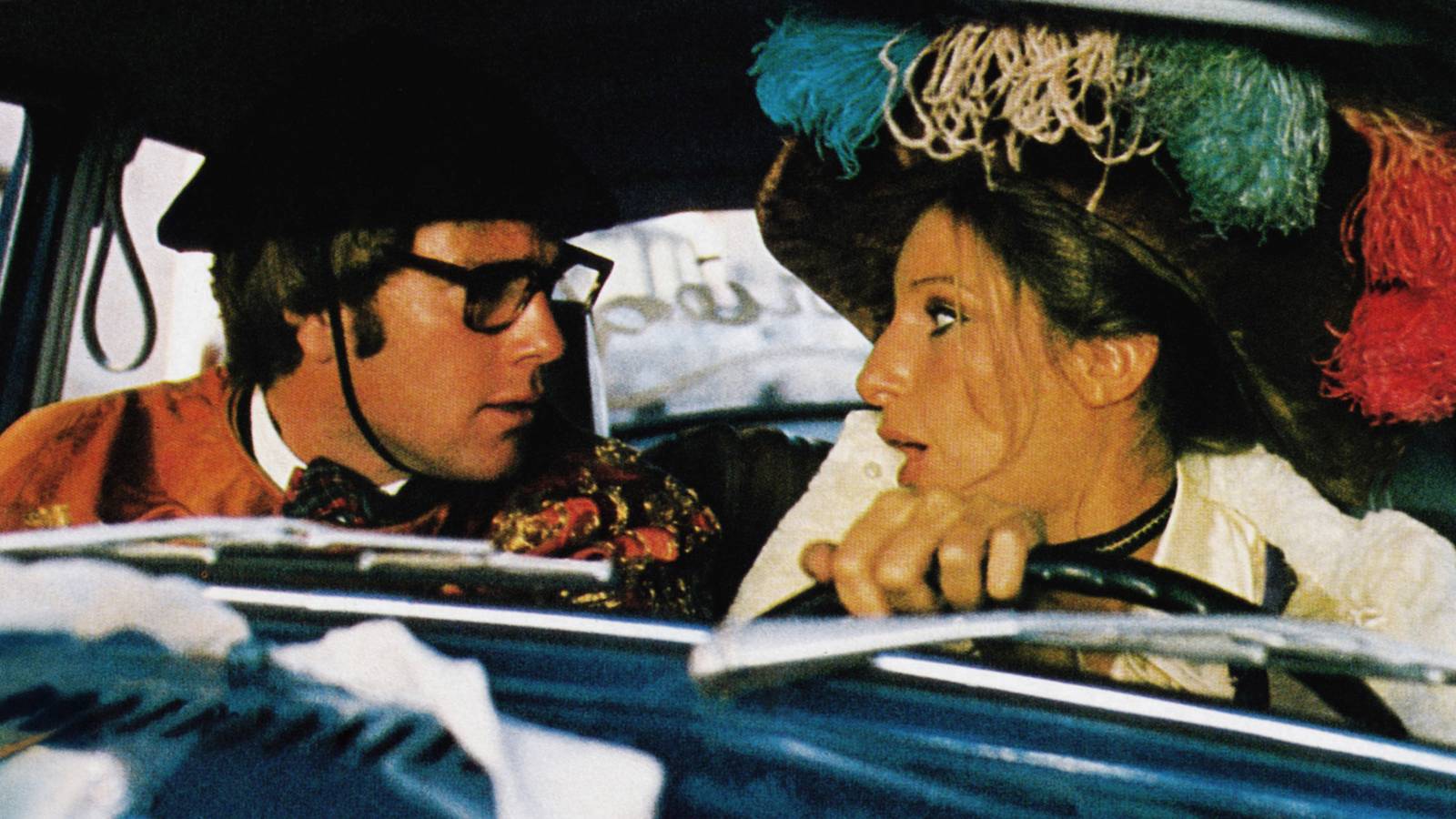
Image via Warner Bros. Published Aug 15, 2026, 3:36 PM EDT Writing from the Chicagoland area in Illinois, Robert is an avid movie watcher and will take just about any excuse to find time to go to his local movie theaters. Robert graduated from Bradley University with degrees in Journalism and Game Design with a minor in Film Studies. Robert tries his best to keep up with all the latest movie releases, from those released in theaters to those released on streaming. While he doesn't always keep up with the latest TV shows, he makes it a goal to watch nearly every major new release possible. He has been honing his craft and following any and all movie news all his life, leading up to now, where he has a vast knowledge of film and film history. He also logs every movie that he watches on his Letterboxd page, and has hosted a weekly online movie night with his closest friends for over 6 years. Sign in to your Collider account It's certainly easier for many modern moviegoers to largely stick to contemporary releases, considering that these films are often at the center of cultural conversation. It's especially the case for comedies, as they tap into what is currently funny, whereas the ones from the past risk delving into a style of humor that has fallen out of fashion. However, there is a real weight to watching classic comedy movies of the past, with several of them deserving to be revisited in the current year of 2026. From legendary films having monumental anniversaries in 2026 to timeless comedic outings that feel more relevant than ever, there's a near-infinite well of exceptional classic comedies to choose from. These are far from the only ones worth revisiting, yet they distinctly come to mind as some of the most striking comedy films of their era that are sure to leave an impact on 2026 audiences. 'Mr. Smith Goes to Washington' (1939) Image via Columbia Pictures It would be an understatement to say that there is an increased interest and widespread awareness of the backdoor dealings and corruption happening in American government at the highest level, a fact that, while true in most eras of American history, is especially apparent currently. Ironically, one of the very best comedic riffs on this painful truth of American government was released almost 90 years ago, with Mr. Smith Goes to Washington remaining just as hilarious and brilliant as it was in 1939. While some would argue that it's almost too optimistic about what government corruption truly looks like nowadays, this iconic political comedy still provides a great balance of humor and charm as it tackles the difficulties and corruption inherent in those in governmental power. James Stewart really is the heart of the film that has continued to make it a classic for so many years, with his earnest joy and innocence being put through the wringer as he sticks to his morals. 'Shrek' (2001) Image via DreamWorks Animation While the film may be more recent than every other film on this list, it's hard to deny the classic comedy status of Shrek. The wild fairy-tale satire completely rewrote the script on animated family movies with its release, with a focus on pop culture references and actively riffing on the clichés of its competitors, making it a cultural icon that has persisted 25 years later. With 2026 being the year of its 25th anniversary, it's a great time to revisit this icon of animated comedy. It also helps that the film's comedy has had a defining staying power beyond its initial satirical edge, with effective writing and well-written characters helping it stand on its own as a comedy classic. Its relevance in the modern day is also stronger than ever, with the long-awaited Shrek 5 premiering 17 years after the previous film, continuing the same wit and charm that forever changed the landscape of animated comedy. 'Duck Soup' (1933) Image via Paramount Pictures Iconic comedy troupe The Marx Brothers have laid claim to many legendary timeless comedies during Hollywood's Golden Era, with any number of them landing just as well with modern audiences as they would when they first released. However, out of all of the brilliant comedies that they have helped create, arguably their most timeless is Duck Soup, a wild musical comedy that acts as a manic satire of global relations and the absurdity of totalitarian dictatorships. While its political satire was more directly tailored for the historical events of the '20s and '30s, its messaging on dictatorial figures continues to ring true, further amplified by the always great comedy of the Marx Brothers. Duck Soup perfectly exemplifies the strengths of the brothers' signature brand of comedy, growing more beloved with each passing year despite originally earning a mixed reception. 'Some Like It Hot' (1959) Image via United Artists Some Like It Hot seems like the type of film that would have aged terribly to the modern age, being a 67-year-old film about gender dynamics and crossdressing. However, through some great performances and insightful, caring filmmaking from Billy Wilder, it's instead absolutely timeless in its execution and celebrated as one of the all-time greatest comedies. The film has been celebrated with open arms as one of the very best explorations of gender roles and identity from classic Hollywood. While just about all of Wilder's comedy masterpieces have merit in being viewed from a modern perspective, Some Like It Hot certainly has the most to gain from the recontextualization and general mentalities of 2026 culture. This icon of Hollywood has only grown more respected with time, as a joyous watch that hasn't aged a bit and is as hilarious as ever. 'What's Up, Doc?' (1972) Image via Warner Bros. One of the most exceptional subgenres of comedy that found great success in classic Hollywood but has largely fallen out of favor now is the screwball comedy, with the mixture of witty dialogue and satirical love making them fan favorites. While What's Up, Doc? was released long after the screwball had waned in popularity, this love letter to the genre, combined with the technical craft of the '70s, makes it one of the very best comedies ever made. It's a non-stop barrage of wild circumstances, memorable characters, and an ever-growing build-up of chaos and madness until it all comes to a head in a legendary chase sequence. The greater focus on finer details and setting up and circumventing punchlines makes What's Up, Doc? one of the funniest movies of the '70s and a deeply underrated classic worth watching in the modern day. 'Who's Afraid of Virginia Woolf?' (1966) Image via Warner Bros. The comedic works of Mike Nichols have always been celebrated throughout film history. In recent years, they have been rediscovered, inspiring a great number of modern comedic offerings. Especially when a film like The Invite is being celebrated as one of the best comedies of 2026, it feels like the perfect time to look back to one of its biggest inspirations, the Best Picture-winning Who's Afraid of Virginia Woolf?. Virginia Woolf is far from a traditional comedy experience, instead acting as a psychological drama with a heaping dose of dark humor to help alleviate its messaging on relationships and dysfunctional marriages. However, in many ways, these nontraditional comedic elements performed with such exceptional precision are exactly what makes it so impactful today. It fits perfectly in line with the style of darker comedy that defines the modern age, thanks in large part to Nichols' unique directorial voice. Collider Exclusive · Oscar Best Picture Quiz Which Oscar Best PictureIs Your Perfect Movie? Parasite · Everything Everywhere · Oppenheimer · Birdman · No Country Five Oscar Best Picture winners. Five completely different visions of what cinema can be — and what it can do to you. One of them is the film that was made for the way your mind works. Ten questions will figure out which one. 🪜Parasite 🌀Everything Everywhere ☢️Oppenheimer 🐦Birdman 🪙No Country for Old Men FIND YOUR FILM → 01 What kind of film experience do you actually want? The best movies don't just entertain — they leave something behind. ASomething that pulls the rug out — that makes me think I'm watching one kind of film and then reveals I'm watching another entirely. BSomething overwhelming — funny, sad, absurd, and genuinely moving, all at once. CSomething grand and weighty — a film that makes me feel the full scale of what I'm watching. DSomething formally daring — a film that pushes what cinema can even do. ESomething lean and relentless — pure tension with no wasted frame. NEXT QUESTION → 02 Which idea grabs you most in a film? Great films are driven by a central obsession. What's yours? AClass, inequality, and what people are willing to do when desperation meets opportunity. BIdentity, family, and the chaos of trying to hold your life together when everything is falling apart. CGenius, moral responsibility, and the catastrophic weight of a decision you can never take back. DEgo, legacy, and the terror of becoming irrelevant while you're still alive to watch it happen. EEvil, chance, and whether moral order actually exists or if we just tell ourselves it does. NEXT QUESTION → 03 How do you like your story told? Form is content. The way a story is shaped changes what it means. AGenre-twisting — I want it to start in one lane and migrate into something completely different. BMaximalist and genre-blending — comedy, action, drama, sci-fi, all in one ride. CEpic and non-linear — cutting between timelines, building a mosaic of cause and consequence. DA single unbroken flow — I want to feel like I'm living it in real time, no cuts to safety. ESpare and precise — every scene doing exactly what it needs to do and nothing more. NEXT QUESTION → 04 What makes a truly great antagonist? The opposition defines the protagonist. What kind of opposition fascinates you? AA system — invisible, structural, and almost impossible to fight because it has no single face. BThe self — the ways we sabotage, abandon, and fail the people we love most. CHistory — the unstoppable momentum of events that no single person can stop or redirect. DThe industry — the machinery of culture that chews up talent and spits out irrelevance. EPure, implacable evil — a force so certain of itself it becomes almost philosophical. NEXT QUESTION → 05 What do you want from a film's ending? The final note is the one that lingers. What do you want it to sound like? AShock and inevitability — a conclusion that recontextualises everything that came before it. BEarned emotion — I want to cry, laugh, and feel genuinely hopeful, even if the world is a mess. CDevastation and grandeur — an ending that makes me sit in silence for a few minutes after. DAmbiguity — something that leaves enough open that I'm still thinking about it days later. EBleakness — an honest refusal to pretend the world is tidier than it actually is. NEXT QUESTION → 06 Which setting pulls you in most? Where a film takes place shapes everything — mood, stakes, what's even possible. AA gleaming modern city with a hidden underside — beauty masking rot, wealth masking desperation. BA collapsing suburban life that opens onto something infinite — the multiverse of a single ordinary person. CThe corridors of power and science at a world-historical turning point — where decisions echo for decades. DThe grimy, alive chaos of New York and Hollywood — fame as both destination and trap. EVast, indifferent landscape — desert and highway where violence arrives without warning or reason. NEXT QUESTION → 07 What cinematic craft impresses you most? Every great film has a signature — a technical or artistic element that makes it unmistakable. AProduction design and mise-en-scène — every frame composed to carry meaning beneath the surface. BEditing and tonal control — the ability to move between registers without losing the audience. CScore and sound design — music that becomes inseparable from the dread and awe of what you're watching. DCinematography as performance — the camera not recording events but participating in them. ESilence and restraint — what's left unsaid and unshown doing more work than any dialogue could. NEXT QUESTION → 08 What kind of main character do you root for? The protagonist is the lens. Who you choose to follow says something about you. ASomeone smart and resourceful who makes increasingly dangerous decisions under pressure. BSomeone overwhelmed and ordinary who turns out to be capable of something extraordinary. CA brilliant, tortured figure whose gifts and flaws are inseparable from each other. DA self-destructive artist whose ego is both their superpower and their undoing. EA quiet, principled person trying to make sense of a world that has stopped making sense. NEXT QUESTION → 09 How do you feel about a film that takes its time? Pace is a choice. Some films sprint; others let tension accumulate slowly, deliberately. AI love a slow build when I know the payoff is going to be seismic — patience for a devastating reveal. BGive me relentless momentum — I want to feel breathless and emotionally spent by the end. CEpic runtime doesn't scare me — if the material demands three hours, give me three hours. DI want it to feel propulsive even when nothing is technically happening — restless energy throughout. EDeliberate and unhurried — I want dread to accumulate in the spaces between the action. NEXT QUESTION → 10 What do you want to feel walking out of the cinema? The best films leave a mark. What kind of mark do you want? AUnsettled — like I've just seen something I can't fully explain but can't stop thinking about. BMoved and energised — like the film reminded me what actually matters and gave me something to hold onto. CHumbled — like I've been in the presence of something genuinely important and overwhelming. DExhilarated — like I've just seen cinema doing something it's never quite done before. EHaunted — like a cold, quiet dread that stays with me for days. REVEAL MY FILM → The Academy Has Decided Your Perfect Film Is…Your answers have pointed to one Oscar Best Picture winner above all others. This is the film that was made for the way your mind works. ParasiteYou are drawn to films that operate on multiple levels simultaneously — that begin in one genre and quietly, brilliantly migrate into another. Bong Joon-ho's Parasite is a film about class, desire, and the architecture of inequality that manages to be darkly funny, deeply suspenseful, and genuinely shocking across a single extraordinary running time. Your instinct is for cinema that hides its true intentions until the moment it's ready to reveal them. Parasite is exactly that — a film that rewards close attention and punishes assumptions, right up to its devastating final image. Everything Everywhere All at OnceYou want it all — and this film gives you all of it. The Daniels' Everything Everywhere All at Once is one of the most maximalist films ever made: action comedy, multiverse sci-fi, family drama, existential crisis, and a genuinely earned emotional core that sneaks up on you amid the chaos. You are someone who responds to ambition, who doesn't want cinema to choose between being entertaining and being meaningful. This film refuses that choice entirely. It is overwhelming by design, and its overwhelming nature is precisely the point — because the feeling of being crushed by infinite possibility is exactly what it's about. OppenheimerYou are drawn to cinema on a grand scale — films that understand history not as a backdrop but as a force, and that place their characters inside that force and watch what happens. Christopher Nolan's Oppenheimer is a film about the terrifying gap between what we can do and what we should do, told with the full weight of one of the most consequential moments in human history behind it. You want your films to feel important without feeling self-important — to earn their ambition through sheer craft and the gravity of their subject. Oppenheimer does exactly that. It is enormous, complicated, and refuses easy comfort. BirdmanYou are drawn to films that foreground their own construction — that make the how of the filmmaking part of the what it's about. Alejandro González Iñárritu's Birdman, shot to appear as a single continuous take, is cinema examining itself through the cracked mirror of a fading actor's ego. You respond to formal daring, to the feeling that a film is doing something that probably shouldn't be possible. Michael Keaton's performance and Emmanuel Lubezki's restless camera create something genuinely unlike anything else — a film that is simultaneously about creativity, relevance, self-destruction, and the impossibility of ever truly knowing if your work means anything at all. No Country for Old MenYou are drawn to cinema that trusts silence, that refuses to explain itself, and that treats dread as a form of meaning. The Coen Brothers' No Country for Old Men is a film about the arrival of a new kind of evil — implacable, arbitrary, and utterly indifferent to the moral frameworks we use to make sense of the world. It is one of the most formally controlled films ever made, and its controlled restraint is what makes it so terrifying. You want your films to haunt you, not comfort you. You are not interested in resolution if resolution would be dishonest. No Country for Old Men is honest in a way that most cinema never dares to be. ↻ RETAKE THE QUIZ 'Fargo' (1996) Image via Gramercy Pictures A dark comedy classic that took the world by storm and became celebrated as one of the best comedies of the '90s, Fargo is a masterclass mixture of dark plot points with memorable characters to create a deeply unforgettable comedy experience. While many people are quick to associate Fargo with the beloved TV spinoff series, the original dark comedy still has a brilliance and timeless comedy that makes it a perfect watch for its 30th anniversary in 2026. Many different films directed by the Coen Brothers have found success in this blending of abject darkness and joyous absurdity, yet Fargo arguably does the greatest job of balancing these core elements, thanks greatly to the memorable characters at its center. The dialogue allows for just about every character, even those with only a single scene, to leave a discernible impact on the audience, finding humor in the wildest and darkest of places as it continues to spiral into a larger web of chaos and nonsense. 'The General' (1926) Image via United Artists Few comedy filmmakers were as brilliant in their craft during the silent era as Buster Keaton, whose exceptional stuntwork and jaw-dropping spectacle completely changed cinema. Many of Keaton's movie masterpieces are worthy of experiencing nowadays, yet it's hard to argue against watching one of his greatest films, The General, seeing as it turns a staggering 100 years old in 2026. Even after a century of filmmaking in its wake, few other comedy films have even come close to the level of slapstick brilliance and stuntwork present in this timeless masterpiece. The General is one of the pivotal films that continuously comes to mind when considering the greatest of the silent era of comedy, pushing the medium to its absolute limits and being a hilarious tour de force in the process. 'Ferris Bueller's Day Off' (1986) Image via Paramount Pictures An icon of '80s culture and often considered one of the greatest teen comedies ever made, Ferris Bueller's Day Off has had a resounding influence on wider culture. With the film celebrating its 40th anniversary this year, this joyous mixture of electrifying charm is deserving of being revisited, especially considering just how much the teen comedy genre has evolved in the wake of its success. Few films more succinctly summarize and capture the spirit and high-flying energy of the '80s better than Ferris, which has helped sustain its legacy for so long as a beautiful piece of nostalgia for those who grew up in the legendary decade. The distinct style of John Hughes has also aged gracefully into the modern age, especially as his style and quirks have seeped into the conventional strengths of teen comedies at large. 'Modern Times' (1936) Image via United Artists No singular comedy filmmaker can act as the face of classic Hollywood comedy, yet Charlie Chaplin gets about as close as possible. His comedic offerings are often celebrated as some of the greatest and most influential of all time, with none more iconic than his magnum opus, Modern Times. The film turns 90 years old in 2026 and has continuously been considered one of the greatest comedies ever made. Even more than simply being an iconic piece of classic Hollywood comedy, Modern Times has had a lasting influence that continues well into the modern age. One can easily see just how influential and important many of its sequences are, as the lighthearted fun cuts to the heart of what makes comedy filmmaking so great. Whether you're a die-hard fan of classic Hollywood who's watched the film 100 times or a young one looking to get into classic comedy, you owe it to yourself to watch (or rewatch) this all-time classic in 2026. Modern Times Release Date February 25, 1936 Cast Charles Chaplin, Paulette Goddard, Henry Bergman, Tiny Sandford, Chester Conklin Runtime 87 Minutes Director Charles Chaplin Writers Charles Chaplin
10 Classic Comedy Movies You Must Watch in 2026
Full Article
Original Source
Read the full article at Collider →KhanList aggregates and links to publicly available news content. We do not host full articles from third-party sources. Always verify important information with original sources.