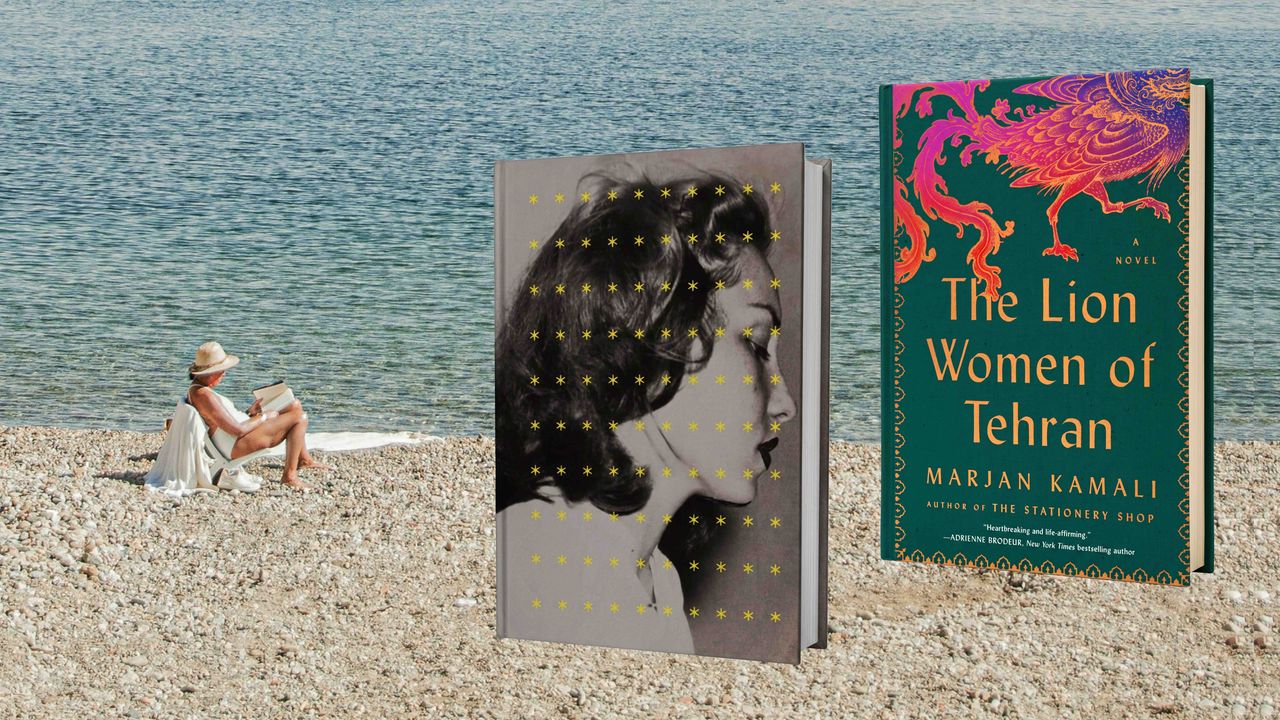
From a beloved epic charting a journey through the American West, to a chronicle of the French Revolution and reflections on a situationship in 1970s Brazil.UnsplashThe phrase “summer reading” has grown up alongside us. Once a dreaded assignment from our school days, it's since evolved into one of life's quieter indulgences. Whether it's your buoy through long-haul journeys, or your first priority when you hit the beach, this leisurely season of reading only gets better with age. When it comes to our collective reading list among editors at Condé Nast Traveler, the picks are as varied and delicious as summer's vine ripened heirlooms. We've found ourselves nose deep into our paperbacks perched over the Ligurian Sea, on cinematic road trips through the Southwest, and seated on far-flung flights to Asia. Our range includes a meandering cowboy odyssey that sprawls from a nowhere town in Texas to Big Sky country, a poignantly observant memoir from a wild child Dreamlander, and a careful dissection of a situationship set to the rhythms of 1970s Brazil. These are the books Traveler editors have thrown into our carry-ons and brought out on our overnight flights all season long to pass the time and become a little wiser on the way.The Lion Women of Tehran by Marjan KamaliI chanced upon a copy of The Lion Women of Tehran by Marjan Kamali at my local library and devoured it over a weekend. The novel follows the profound friendship between two young girls in 1950s Iran, tracing its evolution through decades of political upheaval. Woven through the loss and betrayal are stories of courage, resilience, and feminism. At a time when Iran dominates political headlines, this novel offered a deeply human perspective on a country too often reduced to geopolitics. —Arati Menon, global digital directorThe Hour of the Star by Clarice LispectorIt’s time we all got a little more transparent about summer reading, and I’ll be the first to raise the hand of accountability. On vacation, the life cycle of my beach read looks something like this: First, I'll admire how good the book looks in my beach bag. Soon after, I'll feel pride in the fact that I even packed a book, but ultimately, honestly, there’s a very slim chance I’m actually going to read it. The Hour of the Star, however, has been one of the best exceptions to my routine. Clarice Lispector is one of history’s most brilliant writers, overlooked as a household name largely because of the masculine literary establishment of midcentury Brazil, where she lived and worked for most of her life. Her writing is unnervingly intimate to the mid-to-late-twenties soul: slow-moving lyricism that keeps you unknowingly flipping the pages, only to land on a revelatory punch you’ll carry with you for the rest of your life. The Hour of the Star, in particular, drops us into the electric landscape of 1970s Brazil, following a young (ugly) girl’s love (situationship) with a rat of a boyfriend while weaving through themes of identity, inwardness, and social class. It’s the perfect masterpiece to dissociate with on a beach, near a body of water, or in the air, with enough depth to leave you perfectly unsettled. The psychological insight lingers long after you’ve finished, which, to me, is exactly the kind of gut-wrench you want from something fewer than 100 pages. —Bridget Knowles, associate social media managerJohn of John by Douglas StuartWhile Calvinism, weaving, deeply repressed sexuality, and passages in Scottish Gaelic don’t exactly scream beach read, I devoured John of John from a sun lounger overlooking the Ligurian Sea. Like much of Southern Europe this summer, Italy was scorching, and the book—which is set on the mist-shrouded, wind-whipped Isle of Harris (a remote and rugged island in Scotland's Outer Hebrides archipelago)—became my way to retreat from the heat. Like one of those portable neck fans tourists wear, but way less embarrassing. John of John takes place in the 1990s, before everyone had internet and cell phones had become appendages, and the story's pacing matches that era in that nothing is immediate. It's not that nothing happens—so much happens—but the book is one big slow reveal, and the journey to get there is serpentine, and painful at times, but so worth it. The protagonist John, who has just graduated from art school on the mainland, gets called back to the island by his father (an austere, religious, secretive man; also named John) who wants his son to help take care of his grandmother, carry on the family's livelihood, weaving, and return to the church. Like the characters and relationships in Shuggie Bain, Stuart’s 2020 Booker Prize-winning novel, those in this book are messy and complicated (a.k.a believable) but have, at their center, real love. And, not surprisingly, there are some lovely weaving metaphors throughout, not the least of which is how a mix of contrasting colors and imperfections yield the most compelling cloth.—Rebecca Misner, features director, west coastTalk by Linda RosenkrantzTalk is proof that conversation is an art form, no matter how trivial. It’s a carefully selected compendium of transcripts author Linda Rosenkrantz put together after recording her three artist friends—Marsha, Emily, and Vincent—during a 1965 Hamptons summer. Beyond the laugh-out-loud thought experiments and summer gossip, you’ll get snippets of a changing America—abortion, psychoanalysis, the trials and tribulations of turning 30—that might be eerily similar to the conversations you and your friends are having today. I drank it like water on the beaches of Andros, Greece. —Jessica Sulima, commerce writerWalking Through Clear Water in a Pool Painted Black by Cookie MuellerWhile yes, Walking Through Clear Water in a Pool Painted Black is the kind of collection you could finish in a week, I've spent the past year reading and rereading it instead, finding something new every time I return. Cookie Mueller pulls you from her suburban childhood in the 1950s to hitchhiking through 1960s San Francisco, working with John Waters's Dreamland troupe, raising a son in downtown New York, and stumbling through parties, apartments, hospitals, and road trips to share stories that are as chaotic as they are strangely tender. She writes about sex, grief, addiction, friendship, motherhood, and survival with startling honesty, but it's the tiny details—a motel room, a crowded bar, a conversation with a stranger, the smell of a city block—that stay with you long after you've closed the book. I'll keep returning to it, not only because the stories are unforgettable, but also because every reread reveals another beautifully observed moment I'd somehow missed before. —Jessica Chapel, commerce writerGrendel by John GardnerI firmly believe that reading the eat-your-vegetables classics is the gift that keeps on giving, with exhibit A being the wealth of reception that follows “great” books. I love trawling through all the riffs, responses, parodies, and spiritual successors that tend to circle literary stalwarts, and John Gardner's sub-200-page novel Grendel is reason alone to tackle Beowulf. Gardner takes on the oldest surviving English epic and flips its perspective to center on the namesake Grendel and how exactly he evolved into the looming wretch we remember as one of the Western canon's greatest monsters. He's a bird-flipping, foul-mouthed, incredibly injured personality who has his fair share of mommy issues—or in other words, a fascinating travel companion. As I was whiling away an eight-hour stint in Seattle—with my emotions heightened in a way that only the purgatory of a too-long and too-early layover can bring out—I found solace in his tantrums and humanity in the chronic loneliness they stemmed from. It's a book where the laughs don't fall far from the sucker punches, and it might just change the way you read. —Kat Chen, editorial assistant, destinationsSaturday Night by Susan OrleanI just cracked open Susan Orlean's Saturday Night, which was published in 1990. I've been on a kick of almost exclusively reading books that are about 30- to 40-years-old—out of a sense of yearning for simpler times? A desire to be reminded that most of our current preoccupations aren't original at all? Probably a mix, and this is already a favorite. Orlean travels throughout the United States, sending back dispatches of how people spend Saturday night, whether that's dancing polka in a barn in the Midwest, or at a thousand-seat restaurant by the side of Highway 1, or at a quinceañera in Phoenix. I can't wait to finish the second half on the beach this weekend. —Megan Spurrell, senior features editorListen to Susan Orlean in conversation on the Women Who Travel podcast:Lonesome Dove by Larry McMurtryYou know that feeling when you pay attention to something once, and suddenly you’re seeing it everywhere, all the time, and you think: Is this a trend, or am I, in fact, the very last person to the party? That has been my experience with Lonesome Dove, the Pulitzer prize-winning, 858-page Western by Larry McMurtry, which—after casually flipping through it at a friend’s house in Austin a few months ago—I found myself giving up the first half of my summer to. I read this book every morning and evening on the New York City subway. I read it in the bathtub of a plush resort in Puerto Vallarta. I read it while waiting on the street for my Friday night takeout. I read it at many airline gates. I read it on a breezy beach in Maine and under the glow of the midnight sun in a camper van in Iceland. I am bereft after finishing it. I am Lonesome Dove-pilled, if you will. And so too are many of my friends, colleagues, and family members, as well as people on the internet. Just the other day I watched a TikTok of Sofia Coppola explaining how much she loves this book. Reddit threads are dedicated to it. Something about Lonesome Dove, which is essentially about a very long cattle-drive led by two emotionally repressed Texas rangers, is still getting under people’s skin over 40 years since it was first published. It left me hankering for the landscapes of the American West—or at the very least, to read it all over from the beginning again. —Lale Arikoglu, special projects directorCitizens: A Chronicle of the French Revolution by Simon SchamaHistorian Simon Schama is one of those writers who can spin gold from his pen, a good trait to have for those writing manuscripts clocking in at over 900 pages. There's no denying Citizens is a heavyweight read, but I've read this tome over the course of several months with unflinchingly rapt attention ever since I fell into Schama's first, salient description of the melting plaster Elephant of the Bastille. Take the dull archetype that comes to mind when you think “history book,” and let the experience of reading this one shatter it. Schama drives this narrative of grandeur and ambition with immersive texture, compelling characters, and masterfully conducted suspense. While its size certainly limits it from being an easy, go-to carry-on companion, this book helped fight off my jet-lag on a two-week trip to Taiwan, and the added weight to my checked bag was well worth it. —K.C.Weight of the Earth: The Tape Journals of David Wojnarowicz by David WojnarowiczSpanning the 1980s, Weight of the Earth: The Tape Journals of David Wojnarowicz is a transcribed collection of the New York artist’s unfolding, innermost thoughts, which he recorded in the East Village and on the road in the Southwest. He reflects on vivid dreams and nightmares of breaking things; qualms with the art world while being in it; his relationships with language and his contemporaries; and, towards the end, grappling with his HIV diagnosis. These tapes feel far more vulnerable—even invasive knowing they were never meant for anyone else—than reading a diary. Wojnarowicz’s words are immediate and unpolished and affecting, even when he feels betrayed by their limitations. It’s a glimpse into his thought process without restraint, set against the sounds and every day scenes of a version of the city he so heavily influenced. —Skyli Alvarez, editorial assistant
10 Books Our Editors Have Loved Reading This Summer
Full Article
Original Source
Read the full article at Cntraveler →KhanList aggregates and links to publicly available news content. We do not host full articles from third-party sources. Always verify important information with original sources.