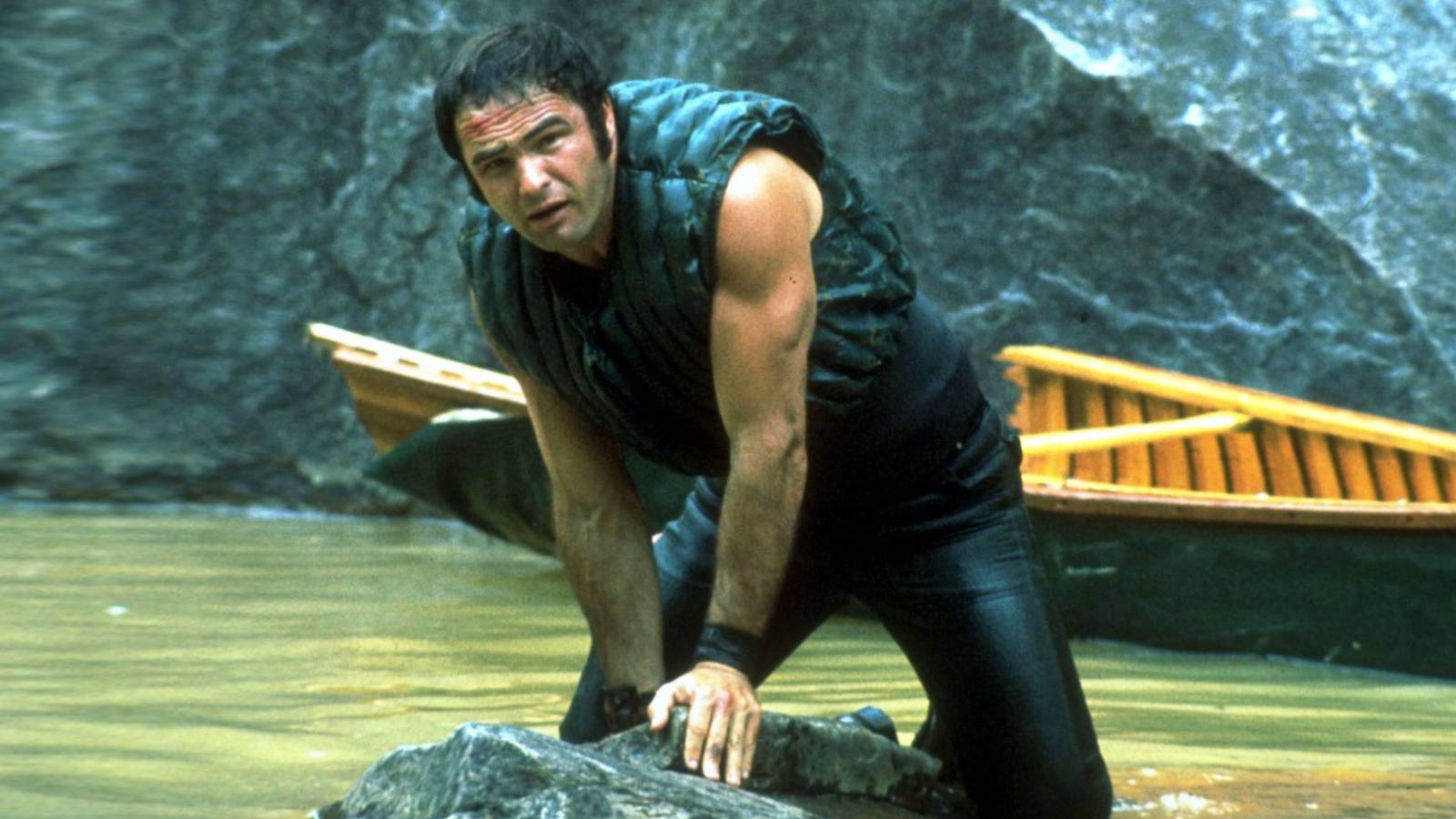
Image via Warner Bros. Published Jul 31, 2026, 7:36 AM EDT Luc Haasbroek is a writer and videographer from Durban, South Africa. He has been writing professionally about pop culture for eight years. Luc's areas of interest are broad: he's just as passionate about psychology and history as he is about movies and TV. He's especially drawn to the places where these topics overlap. Luc is also an avid producer of video essays and looks forward to expanding his writing career. When not writing, he can be found hiking, playing Dungeons & Dragons, hanging out with his cats, and doing deep dives on whatever topic happens to have captured his interest that week. Sign in to your Collider account The '70s are often regarded as a golden age for cinema, but the decade was also a rather pessimistic one. In the wake of Watergate and the Vietnam War, the idealism of the 1960s curdled into mistrust and malaise, with the public losing faith in traditional institutions and each other. This shift in perception comes through in some of the era's greatest movies. Although there were some cheery blockbusters for sure, the '70s also gave us countless relentlessly bleak movies, including crime dramas, psychological thrillers, horror films, and war epics, many of which dig down into some truly dark places. These stories are ambiguous or even outright grim, rejecting tidy resolutions and happy endings in favor of pessimism and harrowing realism. 10 'The Panic in Needle Park' (1971) Image via 20th Century Studios "I'll quit tomorrow." This movie announced Al Pacino as a major acting talent. Here, he turns in an intense, heartbreaking performance as Bobby, a small-time heroin dealer and addict. Opposite him is Kitty Winn as Helen, the shy young woman who gradually becomes consumed by the same destructive world after falling in love with him. As their relationship deepens, both become trapped in a relentless cycle of crime and dependency. Unlike many later movies about addiction, The Panic in Needle Park refuses to sensationalize its subject. Director Jerry Schatzberg presents addiction as monotonous, degrading, and all-consuming, with every aspect of Bobby and Helen's lives slowly shrinking until obtaining the next fix becomes their only purpose. Fittingly, the aesthetic is raw and documentary-esque, an unabashed depiction of absolute devastation. Finally, Schatzberg refuses to put any gloss or optimistic spin on the story: in the end, the characters only move backward. 9 'Salò, or the 120 Days of Sodom' (1975) Image via MGM "We are the true anarchists." Salò is the controversial art horror by Pier Paolo Pasolini, and it's either a masterpiece or an exercise in bad taste, depending on your point of view. The movie relocates the writings of the Marquis de Sade to the final days of Fascist Italy during World War II, where four wealthy officials imprison a group of teenagers. We watch as they subject the youths to systematic degradation, humiliation, and violence for their amusement. Salò is deliberately difficult to watch, but its brutality serves a larger political purpose. Pasolini transforms de Sade's philosophy into an indictment of fascism and the way that absolute power dehumanizes both victims and perpetrators. More disturbing is the film's ultimate message: where other directors might find something hopeful to see even while engaging with such dark themes, Pasolini offers no compassion or redemption here, only banal, ceaseless cruelty. 8 'Wake in Fright' (1971) Image via United Artists "Have a drink, mate." A brutal snapshot of excess and self-destruction, this Australian cult film centers on schoolteacher John Grant (Gary Bond), who dreams of escaping his isolated assignment in the Outback and returning to Sydney. A brief stop in the mining town of Bundanyabba, however, spirals into an extended nightmare of alcoholism, gambling, and violence, with Grant increasingly finding himself unable to leave. The genius of Wake in Fright lies in how ordinary hospitality gradually transforms into something deeply threatening. The townspeople initially appear generous and welcoming, yet their relentless pressure to drink, conform, and abandon restraint slowly strips away Grant's identity. His descent never feels forced or melodramatic; instead, each poor decision leads naturally to the next. Situation by situation, he makes himself just a little bit weaker, and thus even less likely to resist the next temptation. 7 'Deliverance' (1972) Image via Warner Bros. Pictures "Sometimes you have to lose yourself before you can find anything." One of the most harrowing survival stories in movie history. In Deliverance, four Atlanta businessmen (Jon Voight, Ned Beatty, Ronny Cox and a breakout Burt Reynolds) venture into an isolated river valley before it is flooded by a hydroelectric project, expecting little more than an adventurous weekend. Instead, they encounter violence that permanently alters every one of their lives. Although Deliverance is often remembered for one infamous sequence, its enduring power comes from the psychological consequences that follow. Indeed, the friends gradually realize that making it out of this situation alive may require abandoning morality, forcing them into impossible choices. The film smashes certain assumptions about masculinity, civilization, and human decency. Even now, more than 50 years later, Deliverance still hits hard. 6 'A Clockwork Orange' (1971) Image via Warner Bros. "And all that cal." Stanley Kubrick turned Anthony Burgess' forward-thinking novel into an abrasive, incendiary masterpiece. In A Clockwork Orange, cruelty flourishes at every level of society. Alex DeLarge (Malcolm McDowell) is a terrifying, charismatic young criminal who delights in acts of ultraviolence alongside his gang. After being imprisoned for murder, he becomes the subject of an experimental rehabilitation program that conditions him against violence. Yet, while Alex is undeniably monstrous, the government's methods of "curing" him prove equally disturbing. Through this conceit, the story raises thorny questions about free will, morality, and control. In particular, it suggests that forced goodness isn't goodness at all. Themes aside, A Clockwork Orange is simply a brutal movie, with several scenes that'll make even hardened viewers wince. Its eclectic visual style, ironic use of classical music, and dark humor only make the underlying pessimism more unsettling. 5 'Sorcerer' (1977) Image via Universal Pictures/ Paramount Pictures "No one leaves here." William Friedkin crafted this nail-biter out of the same source material that yielded Henri-Georges Clouzot's The Wages of Fear. In Sorcerer, four fugitives from different parts of the world (Roy Scheider, Bruno Cremer, Francisco Rabal, and Amidou) find themselves stranded in a remote South American village. Desperate for money and a chance to escape, they accept an almost suicidal mission: transporting two truckloads of unstable nitroglycerin across hundreds of miles of treacherous jungle roads. Their journey is like a descent into hell, including collapsing bridges, violent storms, and mechanical failures; every bump in the road could spell disaster. Their path culminates in a brilliantly tense scene where the characters attempt to traverse a rickety rope bridge. What makes The Wages of Fear particularly strong is how it delves deep into the protagonists' psyches, all of them rendered temporarily insane by their circumstances. 4 'The Conversation' (1974) Image via Paramount Pictures "He'd kill us if he got the chance." Pulling off one of the most remarkable runs for any director ever, Francis Ford Coppola cranked out this masterful thriller between the two Godfather films. Harry Caul (Gene Hackman) is a surveillance expert who prides himself on maintaining emotional distance from the people he secretly records. But after completing what appears to be a routine assignment, Harry becomes convinced that the young couple he has been monitoring may soon be murdered. The Conversation derives its suspense almost entirely from uncertainty. Harry never knows the full truth, and neither does the audience; we can only watch as he spirals deeper into obsession and paranoia. Every new piece of information raises further questions, and Coppola masterfully blurs the line between objective reality and Harry's increasingly fractured perception. The character's extraordinary technical expertise cannot save him from loneliness or the realization that his work may have enabled terrible crimes. 3 'The Deer Hunter' (1978) Image via Universal Pictures "One shot." One of the earliest movies to reckon with the Vietnam War, The Deer Hunter chronicles the lives of three working-class friends from a Pennsylvania steel town before, during, and after their service. Michael (Robert De Niro), Nick (Christopher Walken), and Steven (John Savage) begin the film surrounded by family, friendship, and familiar routines, only to return from the conflict physically and psychologically transformed, their experiences haunting them long after the fighting ends. The lengthy opening act establishes a vivid sense of community, making the devastation that follows even more painful. Here, war destroys not only bodies but also identities and relationships. More tragic is the movie's main thesis: some wounds cannot be healed. The whole cast rises to the occasion with committed performances, including a stellar, Oscar-nominated supporting turn from Meryl Streep. 2 'The Texas Chain Saw Massacre' (1974) Image via Bryanston Distributing Company "Look what your brother did to the door!" Tobe Hooper's lean, mean Texas Chain Saw Massacre revolutionized horror, serving up a grim and gritty story that was perfectly suited to the pessimistic mood of the decade's middle years. We meet a group of young friends traveling through rural Texas who inadvertently stumble upon a decaying farmhouse inhabited by a family of cannibalistic killers, including the chainsaw-wielding Leatherface (Gunnar Hansen), one of the genre's greatest icons. A big part of what makes this movie a masterpiece is its dusty sense of realism: everything looks grimy and real, something that Hooper's documentary-like visual style hammers home perfectly, and the lead performances are all believable. The film's violence is random, motiveless, and impossible to comprehend, drawing on the crimes of real-world killers like Ed Gein. Throughout, the mood is of exhaustion, helplessness, and existential dread. Collider Exclusive · Horror Survival Quiz Which Horror Villain Do You Have the Best Chance of Surviving? Jason Voorhees · Michael Myers · Freddy Krueger · Pennywise · Chucky Five killers. Five completely different ways to die — if you're not smart enough, fast enough, or self-aware enough to avoid it. Only one of them is the villain your particular set of instincts gives you a fighting chance against. Eight questions will figure out which one. 🏕️Jason 🔪Michael 💤Freddy 🎈Pennywise 🪆Chucky TEST YOUR SURVIVAL → 01 Something feels wrong. You can't explain it — you just know. What do you do? First instincts are the difference between the survivor and the first act casualty. ALeave immediately. I don't need to understand a threat to respect it. BStay quiet and observe. If I can see it, I can understand it. If I can understand it, I can avoid it. CStay awake. Whatever this is, I am not going to sleep until I feel safe again. DConfront it directly. Fear grows in the dark — I'd rather know what I'm dealing with. ECheck everything, trust nothing. The threat might be closer than I think — and smaller. NEXT QUESTION → 02 Where are you most likely to find yourself when things go wrong? Setting is everything in horror. Where you are determines which rules apply. ASomewhere remote — a cabin, a campsite, off the grid and away from people. BA quiet suburban neighbourhood where nothing ever happens. Except tonight. CIn my own head — the most dangerous place of all, depending on what's already in there. DWherever children are — because something about this place attracts the worst things. ESomewhere ordinary — a house, a toy store, a place where the last thing you'd expect is a threat. NEXT QUESTION → 03 What is your most reliable survival asset? Every survivor has a quality the villain didn't account for. What's yours? APhysical fitness — I can run, I can swim, I can outlast something that relies on brute persistence. BSpatial awareness — I always know the exits, the hiding spots, the fastest route out. CPsychological resilience — I've faced my worst fears before. They don't have the same power over me. DEmotional steadiness — I don't panic. Panic is what gets you caught. EScepticism — I don't underestimate threats because of how they look. Size is irrelevant. NEXT QUESTION → 04 What kind of fear is hardest for you to fight through? Knowing your weakness is the first step to not dying because of it. AThe unstoppable — something that will not stop, cannot be reasoned with, and is always getting closer. BThe invisible — a threat I can feel but can't locate, watching from somewhere I can't see. CThe psychological — something that uses my own mind and memories against me. DThe unknowable — something ancient, shapeless, that feeds on the fear itself. EThe mundane — a threat so ordinary-looking that no one will believe me until it's too late. NEXT QUESTION → 05 You're with a group when things start going wrong. What's your role? Horror movies are brutally clear about who survives group situations and who doesn't. AThe one who says "we need to leave" first — and means it, even when no one listens. BThe one who stays quiet, watches the others, and figures out the pattern before anyone else does. CThe one who holds the group together when panic sets in — because someone has to. DThe one who asks the questions nobody wants to ask — because ignoring them gets people killed. EThe one who takes the threat seriously when everyone else is laughing it off. NEXT QUESTION → 06 What's the horror movie mistake you're most likely to make? Honest self-assessment is a survival skill. Denial is not. AGoing back for someone — I know I shouldn't, but I can't leave them behind. BAssuming I'm safe once I've found a hiding spot. That's when it finds me. CFalling asleep when I absolutely cannot afford to. Exhaustion is its own enemy. DLetting my curiosity override my instincts — I always need to understand what I'm dealing with. EDismissing the threat because of how it looks. That's exactly what it wants. NEXT QUESTION → 07 What's your best weapon against something that can't be stopped by conventional means? Every horror villain has a weakness. The survivors are always the ones who find it. AThe environment itself — I use the terrain, the water, the geography against it. BPatience — I wait, I watch, and I strike at the one moment it doesn't expect. CLucidity — if I can stay in control of my own mind, it loses its primary weapon. DCourage — facing it directly, refusing to run, taking away the fear it feeds on. EImprovisation — I use whatever's at hand, however unconventional. Creativity over brute force. NEXT QUESTION → 08 It's the final scene. You're the last one standing. How did you make it? The final survivor always has a reason. What's yours? AI kept moving. I never stopped, never hid for too long, never let it corner me. BI figured out the pattern before anyone else did — and I used it against the thing following it. CI stayed awake, stayed lucid, and refused to give it the one thing it needed most. DI stopped being afraid of it. And the moment I did, everything changed. EI took it seriously from the start — and I never once made the mistake of underestimating it. REVEAL MY VILLAIN → Your Survival Odds Have Been Calculated Your Best Chance Is Against…Your instincts, your strengths, and your particular way of thinking under pressure point to one villain you actually have a fighting chance against. Everyone else — good luck. Jason VoorheesJason is relentless, but he is also predictable — and that is the gap you would exploit. He moves in straight lines toward his target. He doesn't strategise, doesn't adapt, doesn't outsmart. He simply pursues. Your ability to keep moving, use the environment, and resist the panic that freezes most victims gives you a genuine edge. The Crystal Lake survivors were always the ones who stopped running in circles and started thinking about terrain, water, and distance. You think like that. Which means Jason, for all his indestructibility, would face someone who simply refused to be where he expected. Michael MyersMichael watches before he moves. He is patient, methodical, and almost impossible to detect — until it's too late for anyone who isn't paying close enough attention. But you are paying attention. You notice the shape in the window, the car parked slightly wrong, the silence where there should be sound. Michael's power lies in the invisibility of ordinary suburbia — the fact that nothing ever looks wrong until it already is. Your spatial awareness and instinct to map every room, every exit, and every shadow before you need them is precisely the quality Laurie Strode had. You are not a victim waiting to happen. You are someone who already suspects something is wrong — and acts on it. Freddy KruegerFreddy wins by getting inside your head — using your own fears, your own memories, your own subconscious as weapons against you. That strategy requires a target who can be destabilised. You are harder to destabilise than most. You've faced uncomfortable truths about yourself and you haven't looked away. The survivors on Elm Street were always the ones who understood what was happening and chose to face it rather than flee from it. Freddy's greatest weakness is that his power evaporates in the presence of someone who refuses to give him the fear he feeds on. Your psychological resilience — the ability to stay grounded when reality itself becomes unreliable — is exactly the quality that keeps you alive here. PennywisePennywise is ancient, shapeshifting, and feeds on terror — but it has one critical vulnerability: it cannot function against someone who genuinely stops being afraid of it. The Losers Club didn't survive because they were braver than everyone else. They survived because they faced their fears together, and faced them honestly. You ask the questions others avoid. You look directly at what frightens you rather than turning away. That directness — the refusal to let fear fester in the dark — is Pennywise's worst nightmare. It chose the wrong target when it chose you. You are exactly the kind of person whose fear tastes like nothing at all. ChuckyChucky's greatest advantage is that nobody takes him seriously until it's already too late. He exploits the gap between how something looks and what it actually is. You don't have that gap. You take threats seriously regardless of how they present — and you never make the mistake of underestimating something because of its size or appearance. Chucky relies on surprise, on the delay between recognition and response. You close that delay faster than almost anyone. Your instinct to treat every unfamiliar thing with appropriate scepticism — rather than dismissing it because it seems absurd — is the exact quality that keeps you breathing. Against Chucky, not laughing is already winning. You are very good at not laughing. ↻ RETAKE THE QUIZ 1 'Chinatown' (1974) Image via Paramount Pictures "Forget it, Jake. It's Chinatown." Chinatown ranks among the greatest neo-noirs ever made, as well as one of the most tragic movies of its decade. In it, private investigator Jake Gittes (Jack Nicholson) is hired to expose an apparent case of marital infidelity involving a prominent engineer, only to uncover a sprawling conspiracy involving water rights and horrifying family secrets. Every discovery Jake makes only reveals deeper layers of corruption. Unlike traditional detective stories, where truth brings justice, Chinatown insists that exposing wrongdoing changes nothing when the criminals hold real power. Jake's intelligence, determination, and courage are insufficient against a system that's rotted from the inside. This message is expressed pithily in the movie's famous final line, an admission of total defeat and complicity, a bruising statement on the limits of individual action. It all makes Chinatown one of the most pessimistic masterpieces in film history. Chinatown Release Date June 20, 1974 Cast Jack Nicholson, Faye Dunaway, John Huston, Perry Lopez, John Hillerman, Diane Ladd, Roman Polanski, Roy Jenson, Richard Bakalyan, James Hong, Bruce Glover, Joe Mantell, Roy Roberts, Noble Willingham, Rance Howard, Jesse Vint, Burt Young, Lee de Broux, Darrell Zwerling, Nandu Hinds, James O'Rear, Beulah Quo, Jerry Fujikawa, Belinda Palmer, Elliott Montgomery Runtime 130 minutes Director Roman Polanski Writers Robert Towne
10 Bleakest Movies of the 1970s
Full Article
Original Source
Read the full article at Collider →KhanList aggregates and links to publicly available news content. We do not host full articles from third-party sources. Always verify important information with original sources.