
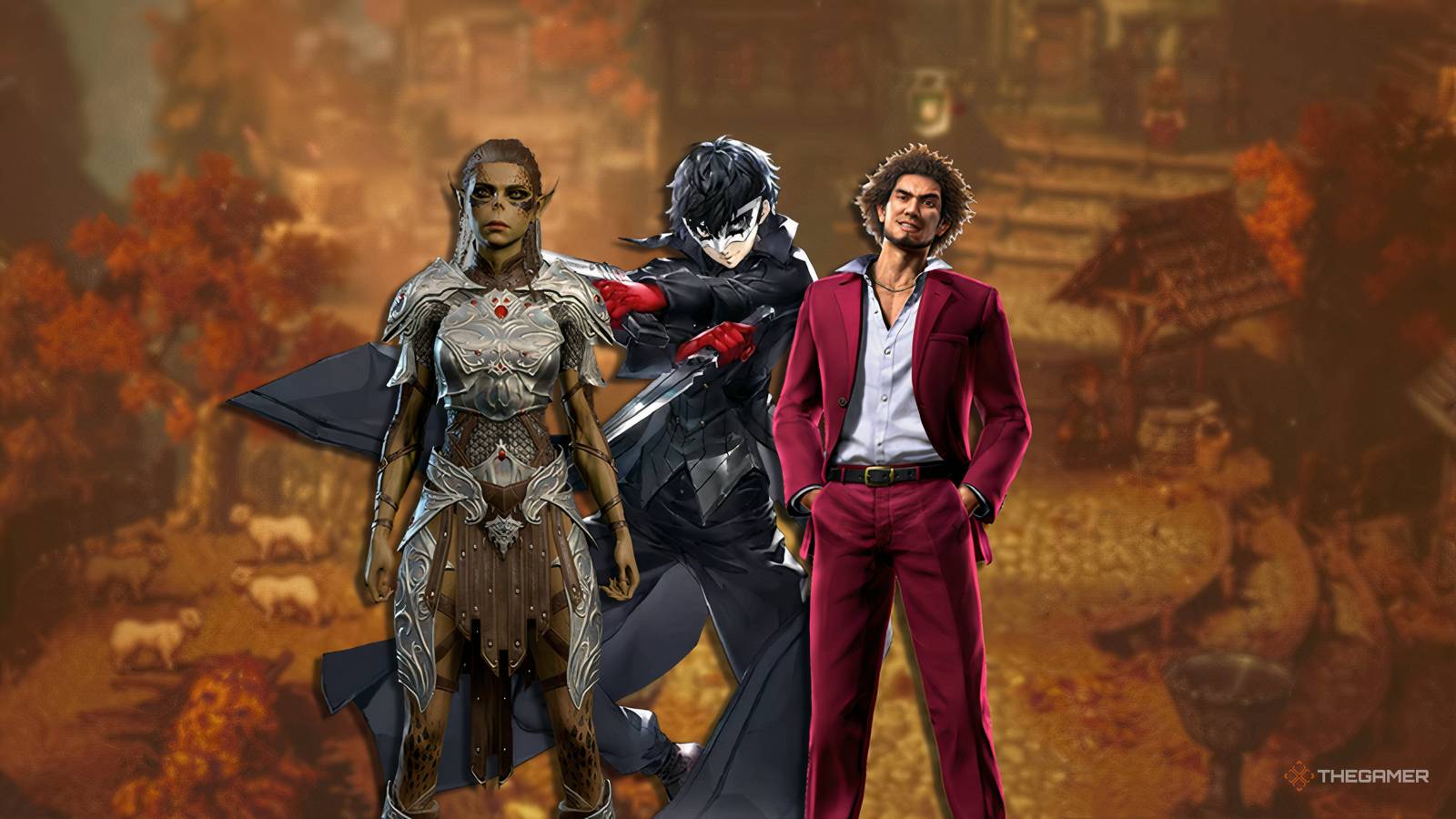
Published Jul 29, 2026, 9:30 AM EDT Ryan Thompson-Bamsey has been an Editor at TheGamer since 2021. He has specialized in RPGs, grand strategy games, and visual novels, reviewing major releases in franchises from Square Enix, Larian Studios, and Paradox Interactive. Ryan has served multiple times on the jury for the Indie Cup awards, and has mentored many emerging writers in the games industry. He has covered some of the biggest releases of recent years, including leading the site's coverage of Baldur's Gate 3, Dragon's Dogma 2, and plenty of other massive RPGs. The turn-based RPG spent the 2000s being written off as a relic and the 2010s refusing to die. What happened over the last decade is more interesting: the format got taken apart and rebuilt. Every game here keeps the old skeleton, whether that's a menu-driven party or a stack of tabletop dice rolls, then does something to elevate things. Some of that work is surgical, but sometimes it feels a bit 'wacky'. What these games all have in common, though, is that they are fantastic. I reviewed three of the games on this list, and two of them became two of my three 5/5s. 10 Octopath Traveler 2 Break and Boost was already the sharpest thing Square Enix had done with a battle menu in fifteen years, and the sequel refuses to coast on it. Latent Powers give each of the eight travellers a personal escape hatch from a losing turn, so the optimal play shifts depending on who is still standing. Eight separate stories still fail to cohere into one, and the chapter that ties them together arrives a little late in the game's very long runtime, but the combat carries it regardless. 9 Yakuza: Like A Dragon Like a Dragon took a fifteen-year-old brawler franchise and turned it into a turn-based RPG, which should have been a career ender. It wasn't, though. Ichiban Kasuga's delusion does the heavy lifting. He sees Yokohama's hustlers and loan sharks as bosses and dragons because he has read too much Dragon Quest, and the game commits to the bit. What makes it work mechanically is the refusal to abstract the street: party members drift about between turns, so an attack might clip a bollard or catch a passing cyclist, and positioning matters in a way most JRPGs abandoned decades ago. Job changes happen at a job centre. It works, even though it shouldn't. 8 Divinity: Original Sin 2 Larian's second Original Sin is notorious for its commitment to elemental puddles and the like. Oil catches fire and water conducts lightning, and the enemy AI understands these interactions intrinsically. The armour system is another sticking point: Physical and magical armour must be stripped before any status effect lands, which kills the old save-or-suck lottery and replaces it with something you can plan around. It's one of the most compelling combat systems I have ever encountered. As a narrative machine, it's also a bruiser. You'll hear a hundred stories of people thinking that Act 2 is basically an entire game in itself. Act three therefore sags under its own ambition, and the ending has never recovered from the volume of choice preceding it, but nothing else plays like this. 7 Clair Obscur: Expedition 33 Let's ignore the incredibly story for even a moment to talk about what makes Clair Obscur such fun to actually play. Purists will tell you a game with parry timings is not turn-based, but they are wrong. Sandfall's debut builds an ATB system that runs off the classic menu, then makes the enemy phase interactive. Dodge or parry every incoming attack, and a clean defensive run converts into a counter. The result rescues turn-based combat from its oldest problem, which is that the enemy's turn is dead air where you watch numbers happen. The equipment and skill systems let you strip abilities off equipment and keep them permanently, so builds get filthy fast. The Belle Époque art direction and Lorien Testard's score did the rest. It's a true masterpiece. And that incredible story I mentioned? Still incredible. 6 Chained Echoes One man spent seven years making a SNES RPG that has no business being this well balanced. The Overdrive meter is why it belongs here, a bar that punishes repetition and rewards variety, sitting in a sweet spot that grants damage bonuses and cheaper skills. Overheat and everything costs more. It kills grinding at the root, because there is no equipment shop and no experience curve to farm; progression comes from beating bosses and finding gear. Sky Armour battles bolt a mech layer onto the second half without wrecking the balance. Matthias Linda's solo dev credit gets mentioned in every review, including this one, for good reason. 5 Baldur's Gate 3 Third instalments of beloved PC RPGs do not usually arrive twenty-three years late and win everything in sight. Every action and reaction in BG3 gets surfaced clearly enough that people who had never rolled a d20 could follow a combat round by hour... three? Four? Which is how a 5e adaptation became the best-selling CRPG ever made. Underneath that, the reactivity is absurd. Kill a quest-giver and the quest reroutes; shove almost anyone off almost anything and the game has an answer ready. Act three still creaks under the weight of what came before (Oh, Divinity vibes), but this is the slimmest price to pay for an incredible time. 4 Cassette Beasts New Wirral is a haunted British island where the bus routes still run, and Bytten Studio has used it to out-think Game Freak on its own turf. You do not command creatures in this one, you record them onto cassette and transform into them yourself, with battles running two against two while your partner does the same. Fusion is the big fun non-Pokemon draw — at full meter you merge into a single remastered form inheriting both type sets for a handful of turns, which makes team-building a question of what your monsters produce together. Fifteen types apply status effects instead of damage multipliers, and every battle theme has vocals, which ought to be unbearable and somehow is not. 3 Persona 5 Persona 5 inherits the weakness-exploitation skeleton from Shin Megami Tensei, where landing a critical hit buys another go, and welds it to a calendar system in which every afternoon is a resource you spend on friendships that feed back into combat strength. The Palaces are an upgrade over Persona 4's procedural slogs, handcrafted infiltration dungeons with stealth and ambush bonuses. Six months of in-game time gives the whole thing a shape most JRPGs lack. The Phantom Thieves' politics do not survive scrutiny, but the interface design has been plagiarised for a decade for good reason. 2 Pathfinder: Wrath Of The Righteous No RPG here is denser with systems, and Wrath of the Righteous will not hold your hand through any of them. Mythic Paths are the highlights. Partway through the crusade, you stop being a mortal adventurer and become an angel, or a swarm of sentient insects, with the ruleset rewritten to accommodate whichever nonsense you picked. Companions and endings bend around the choice. The crusade management layer bolted on top is correctly regarded as the weakest element, though it can be switched off entirely. Character building is a hobby here rather than a menu, and the game rewards obsessives at the expense of everyone else. The answer to what Persona looks like outside Tokyo turned out to involve a high-fantasy election. Archetypes carry the mechanical load, a job system layered over press-turn combat with inherited skills and lineage trees that make party composition a puzzle rather than a preference. The other change is subtler and more useful: weak enemies die in real time out on the field, so the trash mobs that pad every JRPG stop existing. The calendar returns, tightened. Its treatment of prejudice is broad enough to see coming from several kingdoms away, and the ending sermonises. It remains the most confident swing any JRPG has taken since Persona 5 itself.
10 Best Traditional RPGs Released In The Last 10 Years
Full Article
Original Source
Read the full article at Thegamer →KhanList aggregates and links to publicly available news content. We do not host full articles from third-party sources. Always verify important information with original sources.