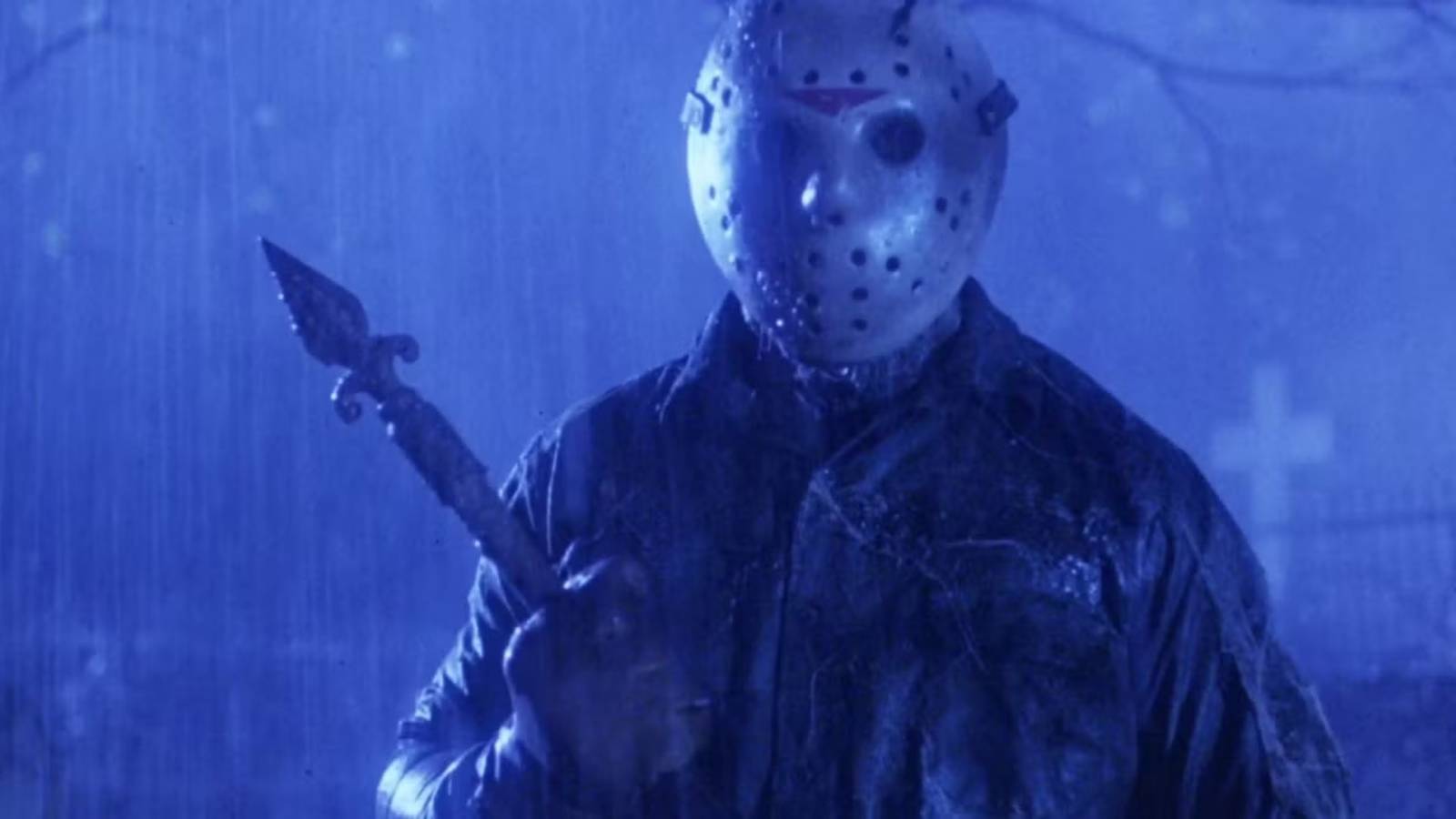
Image via Paramount Published Jul 30, 2026, 6:17 AM EDT Daniel is a 27-year-old List Writer for Collider living in the south suburbs of Chicago, Illinois. As an avid film buff, he watches and analyzes many films and TV shows, especially in the horror genre, and regularly attends movie screenings. Sign in to your Collider account Horror history can't be discussed without mentioning the best slashers. In the decades since the genre's conception, slashers have remained consistently popular and influential, becoming perhaps the most recognizable subgenre within all of horror today. If it weren't for some of these bloody good thrill rides, our current pop culture would be drastically different, unrecognizable had slashers never even existed. We need slashers in our movies. Our current century and the last one provided us with undoubtedly excellent slasher terrors that audiences simply can't get enough of. Since the 1960s, they've been a pioneering force at the box office, and have given us legendary villains, kills, and moments that have come to define horror itself. As mentioned before, horror history is not without slashers, and the following ten are the best of the absolute best, the slashers that redefined the genre and became immortalized forever in cinema. 10 'Friday the 13th Part VI: Jason Lives' (1986) Image via Paramount Pictures Let's start off the list by heading back to the 1980s during the golden age of slashers, when they dominated the box office nearly every year, and where some of our most cherished franchises gained their footing. Among them was the Friday the 13th series, creator Sean S. Cunningham's legendary slasher franchise that pushed the subgenre to extreme heights of financial success. Who can forget its iconic, gory kills or even its star antagonist, the hockey mask-wearing machete-wielder Jason Vorhees? Through its many ups and downs across its impressive twelve installments, it's often stated that its thrilling sixth installment, Part IV: Jason Lives, is the definitive best. Released in 1986, Jason Lives pushed the franchise into a fun, campy new direction that fans couldn't get enough of. It was the closest these films ever got to having a blockbuster thanks to its bigger than usual budget and higher production values, which beefed up the casting, the stunt work, and especially the practical effects. The story was better paced, humorous, and even self-aware at points, predating the meta-horror formula Kevin Williamson later perfected with 1996's Scream. It's a better polished, endlessly enjoyable thrill ride that not only best represented Jason Vorhees' horror dominance in the '80s, but forever defined the franchise. 9 'X' (2022) Image via A24 Slashers have seen a rebirth in the 21st century. As the late 2000s rolled around, gone were the days of some of the more recognizable slasher franchises that made up the subgenre, with a few exceptions like Scream and Halloween still churning out a few hits here and there. Fans were starved for something fresh and new to rekindle interest, and boy, did they get what they were hoping for in the 2020s. Released in 2022, newcomer director Ti West gave us X, his arthouse slasher masterpiece that felt like a shot in the arm this subgenre needed. X is really a fresh spin on the typical slasher formula that takes everything we love about it and pays homage to it while also adding something creative and a bit subversive. It has the typical set-up: naive teens venture out into the middle of nowhere to a creepy place, only to be picked off one by one by the sinister inhabitants. But it takes things up a notch by subtly subverting several tropes, adding additional ideas, and elevating the story by being more character-driven and well-acted. X has become a modern classic that has kept slashers highly relevant going further into this ever-changing century. 8 'Child's Play' (1988) Image via Universal Pictures No slasher, or even any other horror movie for that matter, has better exemplified the creepy possessed doll trope than Don Mancini's Child's Play franchise. This pillar of late '80s and '90s horror pop culture truly was a sensation that transcended its popularity across the media, becoming consistently beloved and recognizable even today. Though every fan has their personal favorite, nothing tops the 1988 original, which really seemed to balance genuine horror and dark comedy the most effectively. Child's Play takes an admittedly goofy premise and manages to turn it into a solidly suspenseful, shockingly intense, and unforgettably fun cult classic that doesn't stay too far into farce. This gave us the killer doll Chucky (voiced by Brad Dourff), one of horror's most recognizable horror villains, one who consistently appears throughout pop culture and sees no signs of being forgotten. This is darkly exciting and endlessly rewatchable. Surely, it's cemented its place in film history. 7 'A Nightmare on Elm Street' (1984) Image via New Line Cinema Widely regarded as one of the scariest horror movies of all time, the late director Wes Craven's career-defining 1984 slasher hit A Nightmare on Elm Street terrified entire generations into becoming horror lovers. With its eerie atmosphere, legendary kills, and unquestionably iconic villain, A Nightmare on Elm Street changed the game in the slasher world by introducing us to Freddy Krueger (Robert Englund), the one-liner spewing, finger-knife-wielding, fedora hat-wearing, dream demon that slashed his way into our memories. This truly exemplifies the meaning of a slasher, and continues to reign as one of the subgenre's most defining examples. It's timeless, scary, and nailbiting from start to finish, creating an experience that horror lovers continually praise today. Craven's sharp directing and creative writing talents, coupled with the beloved Robert Englund's passionate role as Freddy, turned A Nightmare on Elm Street into a recognizable landmark of horror, one that won't ever be forgotten. 6 'Peeping Tom' (1960) Image via Universal Pictures Though extremely popular now, slashers had a bit of a rough start at first, and they didn't really begin until the mid 20th century. In its infancy, it was a tested idea that didn't really have any groundwork or recognizable traits. Well, that was until it kicked off thanks to the earliest known slasher, Peeping Tom. Released in 1960, this underrated proto-slasher template beat a more recognizable Alfred Hitchcock slasher, Psycho, to the punch the same year by just a few months, becoming recognized as the first of its kind. It's dark, terrifyingly suspenseful, and truly inspiring, featuring the earliest known examples of a psychopathic human slasher, as well as a POV film style to show the killer's perspective while killing his victims, which would later inspire other notable films like Halloween and Black Christmas a decade later. Peeping Tom laid the foundation of the slasher subgenre, jump-starting its meteoric rise to greatness. Collider Exclusive · Horror Survival Quiz Which Horror Villain Do You Have the Best Chance of Surviving? Jason Voorhees · Michael Myers · Freddy Krueger · Pennywise · Chucky Five killers. Five completely different ways to die — if you're not smart enough, fast enough, or self-aware enough to avoid it. Only one of them is the villain your particular set of instincts gives you a fighting chance against. Eight questions will figure out which one. 🏕️Jason 🔪Michael 💤Freddy 🎈Pennywise 🪆Chucky TEST YOUR SURVIVAL → 01 Something feels wrong. You can't explain it — you just know. What do you do? First instincts are the difference between the survivor and the first act casualty. ALeave immediately. I don't need to understand a threat to respect it. BStay quiet and observe. If I can see it, I can understand it. If I can understand it, I can avoid it. CStay awake. Whatever this is, I am not going to sleep until I feel safe again. DConfront it directly. Fear grows in the dark — I'd rather know what I'm dealing with. ECheck everything, trust nothing. The threat might be closer than I think — and smaller. NEXT QUESTION → 02 Where are you most likely to find yourself when things go wrong? Setting is everything in horror. Where you are determines which rules apply. ASomewhere remote — a cabin, a campsite, off the grid and away from people. BA quiet suburban neighbourhood where nothing ever happens. Except tonight. CIn my own head — the most dangerous place of all, depending on what's already in there. DWherever children are — because something about this place attracts the worst things. ESomewhere ordinary — a house, a toy store, a place where the last thing you'd expect is a threat. NEXT QUESTION → 03 What is your most reliable survival asset? Every survivor has a quality the villain didn't account for. What's yours? APhysical fitness — I can run, I can swim, I can outlast something that relies on brute persistence. BSpatial awareness — I always know the exits, the hiding spots, the fastest route out. CPsychological resilience — I've faced my worst fears before. They don't have the same power over me. DEmotional steadiness — I don't panic. Panic is what gets you caught. EScepticism — I don't underestimate threats because of how they look. Size is irrelevant. NEXT QUESTION → 04 What kind of fear is hardest for you to fight through? Knowing your weakness is the first step to not dying because of it. AThe unstoppable — something that will not stop, cannot be reasoned with, and is always getting closer. BThe invisible — a threat I can feel but can't locate, watching from somewhere I can't see. CThe psychological — something that uses my own mind and memories against me. DThe unknowable — something ancient, shapeless, that feeds on the fear itself. EThe mundane — a threat so ordinary-looking that no one will believe me until it's too late. NEXT QUESTION → 05 You're with a group when things start going wrong. What's your role? Horror movies are brutally clear about who survives group situations and who doesn't. AThe one who says "we need to leave" first — and means it, even when no one listens. BThe one who stays quiet, watches the others, and figures out the pattern before anyone else does. CThe one who holds the group together when panic sets in — because someone has to. DThe one who asks the questions nobody wants to ask — because ignoring them gets people killed. EThe one who takes the threat seriously when everyone else is laughing it off. NEXT QUESTION → 06 What's the horror movie mistake you're most likely to make? Honest self-assessment is a survival skill. Denial is not. AGoing back for someone — I know I shouldn't, but I can't leave them behind. BAssuming I'm safe once I've found a hiding spot. That's when it finds me. CFalling asleep when I absolutely cannot afford to. Exhaustion is its own enemy. DLetting my curiosity override my instincts — I always need to understand what I'm dealing with. EDismissing the threat because of how it looks. That's exactly what it wants. NEXT QUESTION → 07 What's your best weapon against something that can't be stopped by conventional means? Every horror villain has a weakness. The survivors are always the ones who find it. AThe environment itself — I use the terrain, the water, the geography against it. BPatience — I wait, I watch, and I strike at the one moment it doesn't expect. CLucidity — if I can stay in control of my own mind, it loses its primary weapon. DCourage — facing it directly, refusing to run, taking away the fear it feeds on. EImprovisation — I use whatever's at hand, however unconventional. Creativity over brute force. NEXT QUESTION → 08 It's the final scene. You're the last one standing. How did you make it? The final survivor always has a reason. What's yours? AI kept moving. I never stopped, never hid for too long, never let it corner me. BI figured out the pattern before anyone else did — and I used it against the thing following it. CI stayed awake, stayed lucid, and refused to give it the one thing it needed most. DI stopped being afraid of it. And the moment I did, everything changed. EI took it seriously from the start — and I never once made the mistake of underestimating it. REVEAL MY VILLAIN → Your Survival Odds Have Been Calculated Your Best Chance Is Against…Your instincts, your strengths, and your particular way of thinking under pressure point to one villain you actually have a fighting chance against. Everyone else — good luck. Jason VoorheesJason is relentless, but he is also predictable — and that is the gap you would exploit. He moves in straight lines toward his target. He doesn't strategise, doesn't adapt, doesn't outsmart. He simply pursues. Your ability to keep moving, use the environment, and resist the panic that freezes most victims gives you a genuine edge. The Crystal Lake survivors were always the ones who stopped running in circles and started thinking about terrain, water, and distance. You think like that. Which means Jason, for all his indestructibility, would face someone who simply refused to be where he expected. Michael MyersMichael watches before he moves. He is patient, methodical, and almost impossible to detect — until it's too late for anyone who isn't paying close enough attention. But you are paying attention. You notice the shape in the window, the car parked slightly wrong, the silence where there should be sound. Michael's power lies in the invisibility of ordinary suburbia — the fact that nothing ever looks wrong until it already is. Your spatial awareness and instinct to map every room, every exit, and every shadow before you need them is precisely the quality Laurie Strode had. You are not a victim waiting to happen. You are someone who already suspects something is wrong — and acts on it. Freddy KruegerFreddy wins by getting inside your head — using your own fears, your own memories, your own subconscious as weapons against you. That strategy requires a target who can be destabilised. You are harder to destabilise than most. You've faced uncomfortable truths about yourself and you haven't looked away. The survivors on Elm Street were always the ones who understood what was happening and chose to face it rather than flee from it. Freddy's greatest weakness is that his power evaporates in the presence of someone who refuses to give him the fear he feeds on. Your psychological resilience — the ability to stay grounded when reality itself becomes unreliable — is exactly the quality that keeps you alive here. PennywisePennywise is ancient, shapeshifting, and feeds on terror — but it has one critical vulnerability: it cannot function against someone who genuinely stops being afraid of it. The Losers Club didn't survive because they were braver than everyone else. They survived because they faced their fears together, and faced them honestly. You ask the questions others avoid. You look directly at what frightens you rather than turning away. That directness — the refusal to let fear fester in the dark — is Pennywise's worst nightmare. It chose the wrong target when it chose you. You are exactly the kind of person whose fear tastes like nothing at all. ChuckyChucky's greatest advantage is that nobody takes him seriously until it's already too late. He exploits the gap between how something looks and what it actually is. You don't have that gap. You take threats seriously regardless of how they present — and you never make the mistake of underestimating something because of its size or appearance. Chucky relies on surprise, on the delay between recognition and response. You close that delay faster than almost anyone. Your instinct to treat every unfamiliar thing with appropriate scepticism — rather than dismissing it because it seems absurd — is the exact quality that keeps you breathing. Against Chucky, not laughing is already winning. You are very good at not laughing. ↻ RETAKE THE QUIZ 5 'Black Christmas' (1974) Image via Warner Bros. Pictures Providing some of the most tremendous influence the subgenre has ever seen, 1974's Black Christmas was where slashers really took off in the late 1970s to '80s. The first of its kind to mix slasher elements with holiday-themed terror, this undeniably classic broke new ground and established slashers' foothold in the horror mainstream. It was violent, intense, bloody, and endlessly suspenseful from start to finish, giving fans what really makes slasher movies so intriguing to watch. Really, though, Black Christmas is a benchmark, more than some others on this list. It emphasized the mood and atmosphere, which complemented the more intense and graphic kill scenes, which are probably the biggest highlight of this film. It showed that the kills need to take center stage and be the epic highs of the story, which, of course, so many slashers after it took notes on. It's groundbreaking and revolutionary, becoming the pivotal film that marked slashers' golden era of horror. 4 'The Texas Chain Saw Massacre' (1974) Image via Bryanston Distributing Company Released the same year as Black Christmas, along came what is arguably considered one of the most essential films in horror history, The Texas Chain Saw Massacre. Directed by the late Tobe Hooper, The Texas Chain Saw Massacre is widely considered now to be the greatest influence the subgenre has ever seen since its conception in the early 1960s. It popularized some of its already established tropes, like human killers and graphic kills, and added some creative additions, like masked killers, isolated rural settings, and iconic killer weapons. It is the stuff of horror royalty. The Texas Chain Saw Massacre truly defines the horror genre with its timeless scares and gritty violence. It was a boundary pusher for sure, thanks to its graphic content, which elevated slashers to become more recognized as something that can't be ignored by the general movie-going audience. Endlessly haunting and powerfully iconic, this certainly made slasher history. 3 'Halloween' (1978) Image via Compass International Pictures While it's certainly not the first to popularize the holiday-horror subgenre, the legendary filmmaker John Carpenter's trailblazing slasher masterpiece Halloween certainly perfected the idea. Released in 1978, a golden year for horror, Halloween launched slashers' popularity into the stratosphere, becoming a massive critical and commercial success that further pushed studios to capitalize on the formula. Had this not been released, we'd arguably never have gotten other franchises like Friday the 13th or Scream. Carpenter's classic further turned the tropes and clichés of slashers into legend, like having a final girl and a killer constantly coming back to life even after being supposedly killed so many times. It was also incredibly tense and claustrophobic, using its dark suburban setting to heighten the fear of being trapped and alone with an unstoppable killer. No matter how many rewatches, Halloween always gets more terrifying and compelling, and slashers just won't be the same without its influence. 2 'Scream' (1996) There was a time in the 1990s when slashers experienced their lowest point. Franchise fatigue from Friday the 13th and A Nightmare on Elm Street were causing fans to get tired of the subgenre, and any new attempt to rekindle interest either failed or didn't make much of an impact. That was until a revolutionary game-changer joined the scene. Released in 1996, Scream breathed new life into slashers with its incredible mix of humor and meta-commentary, which showed horror movies can be scary while also poking fun at its clichés. A Nightmare on Elm Street's director Wes Craven helmed this film as well as acclaimed screenwriter Kevin Williamson, who perfected the story, creating a legendary slasher comedy that was both laugh-out-loud funny and quotable, while also being tense, graphic, and certainly horrifying. Its iconic opener is perhaps one of the greatest first scenes in horror history, marking a new age of dominance for slashers that would keep it alive well into the next century. It's significant and highly inspiring, and it saved the subgenre from the brink of extinction. 1 'Psycho' (1960) Image via William Creamer - © MPTV Finally, the last film to talk about arguably made slasher history what it is today. Sir Alfred Hitchcock's Psycho is by many considered not only the greatest slasher, but one of the most captivating horror movies of all time. Its success and influence know no bounds and has spanned decades, becoming a timeless inspiration for all horror movies to achieve. This has some of the best direction, writing, pacing, and performances in cinema in general. It fires on all cylinders, a magnum opus that even non-horror fans need to see just to figure out why it's become more beloved now than when it did in 1960. Psycho greatly changed the trajectory of slasher and horror history, and as a result, deserves to be mentioned prominently on this list. Psycho Release Date September 8, 1960 Runtime 109 minutes
10 Best Slasher Movies in Film History
Full Article
Original Source
Read the full article at Collider →KhanList aggregates and links to publicly available news content. We do not host full articles from third-party sources. Always verify important information with original sources.