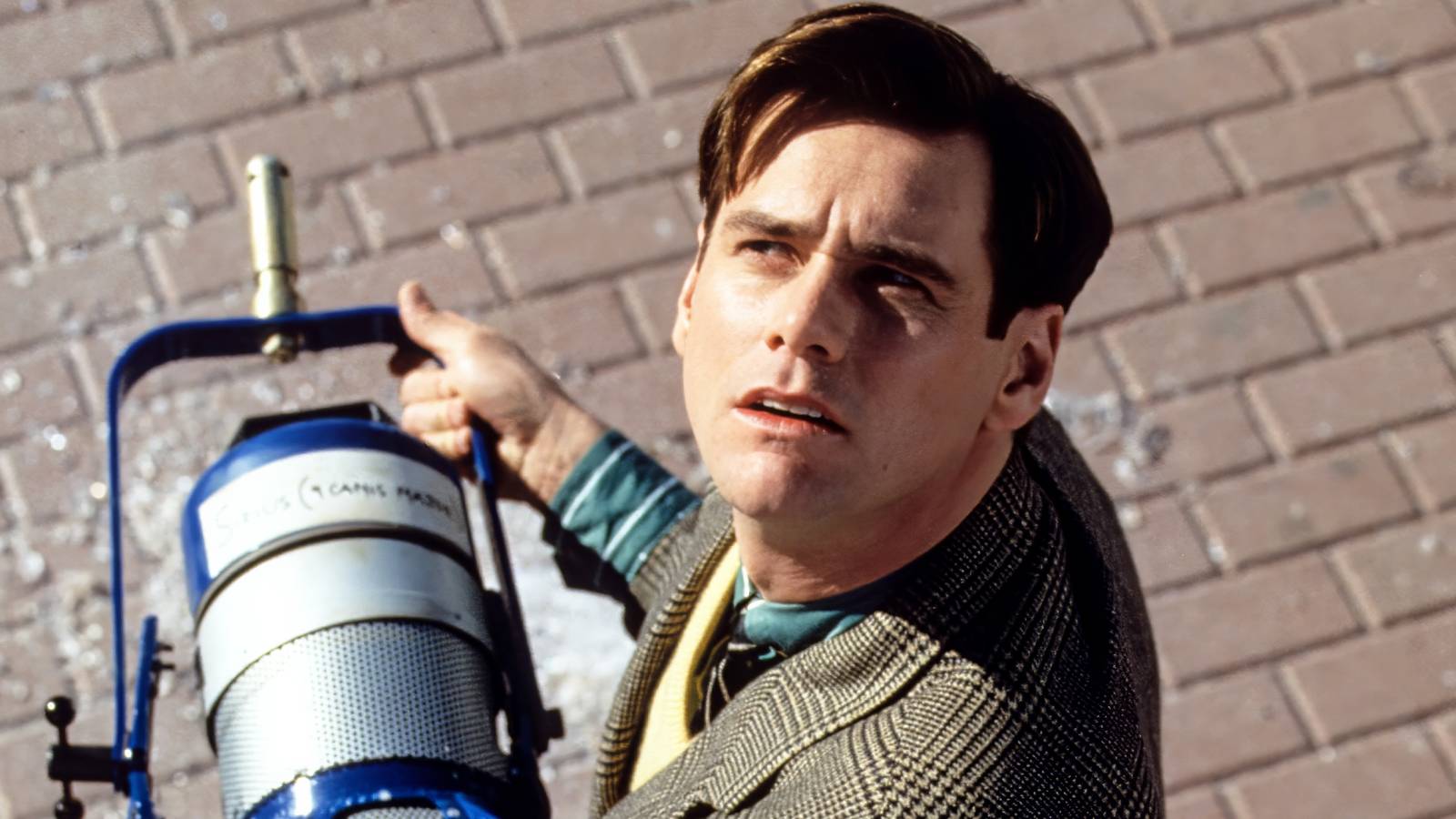
Image via Paramount Pictures Published Aug 14, 2026, 8:11 PM EDT Lisa Nordin is an actress, writer, and fan of all things performing arts. Her favorite genres are Sci-Fi and Fantasy. She is a self-published author and enjoys exploring how fictional stories help define and qualify the human experience. Sign in to your Collider account According to The American Heritage Dictionary of the English Language, 5th Edition, a satire is “A [...] work in which human foolishness or vice is attacked through irony, derision, or wit.” Far from being a simple parody or mockery, satire plumbs the depths of the human condition and isn’t afraid to acknowledge the truths and faults of a given topic. Ever since movies were invented, satires have played an important role in cinema's broader contribution to the arts. Throughout the history of film, there have been some truly great satires, and they cross over into many genres. From pop culture hits like Barbie to horror-themed flicks like The Menu or What We Do in the Shadows, these movies have their finger on a pulse that makes society tick. Out of this rich canon of films, these 10 stand apart. They deserve to be appreciated for their excellence and impact on cinema and are some of the best satires of all time. 10 'Borat' (2006) Image via 20th Century Studios Borat, also known as Borat: Cultural Learnings of America for Make Benefit Glorious Nation of Kazakhstan, is a movie that you either love or hate. It is undoubtedly one of the most divisive and controversial comedies ever done, and it has lost none of its potency, 20 years later. Sacha Baron Cohen plays the role of Borat Sagdiyev, a journalist from Kazakhstan who journeys to America to experience the culture and document what he discovers. Blending a mockumentary style with scripted and improvised scenes, Borat is a collage of filmmaking techniques. The movie created something altogether different than anything done before, and the line between fiction and reality was fluid. Borat leaves nothing off the table, and everything from politics to racism to religion is fair game. Several of the real people filmed in the movie had no idea they are interacting with an actor, and Cohen is so solidly in character that the setup works hook, line, and sinker. Made on a shoestring budget of $18 million, the movie grossed almost $300 million worldwide. It continues to be quoted by devotees and earned an Oscar nomination for best adapted screenplay. Borat is a potent satire that takes no prisoners. It does not try to be palatable and instead exposes the ethnocentric behaviors that it wants to. 9 'The Truman Show' (1998) Image via Paramount Pictures Jim Carrey is one of Hollywood’s leading men when it comes to comedy, but he is also able to carry a dramatic performance very well. One of his best, more serious film roles is in The Truman Show. In The Truman Show, Carrey plays Truman Burbank, a man who has no idea that his entire life has been a TV show. Everyone Truman knows — his family, his friends, his neighbors are all actors, and everything in his world is a masquerade. The Truman Show was years ahead of its time. Before reality TV had dominated airwaves, influencers filmed every minute of their lives, or The Matrix envisioned a simulated reality, The Truman Show tackled all of these subjects and more. From blatant product placement to the public obsession with celebrity, The Truman Show ticks every mark and has a lot to say about publicity and privacy. As time moves forward, The Truman Show has only increased in relevance. It is a touching and poignant satire that has one of the most satisfying movie endings of all time. 8 'Shrek' (2001) Image via DreamWorks Animation Satire is inherently bold, and one movie that sent shockwaves through its own genre and the larger moviemaking community alike was Shrek. In 2001, no one had dared to make fun of Disney’s animated kids movies on such a pointed scale. DreamWorks was founded in part by a former employee of Disney, Jeffrey Katzenberg, and this background would become a driving force of the animated ogre’s raison d'être. Raising stark contrasts about what audiences had come to expect from fairy tales, Shrek blew romantic fantasy tropes apart. Striking underlying notes about self-confidence and beauty standards, Shrek was its own layered onion, tackling surface-level topics as well as more nuanced ones. Bold enough to take on the highly influential studio, Shrek became the defining satire of kids' films and changed the game forever. 7 'Monty Python and the Holy Grail' (1975) Image via EMI Films “And now for something completely different.” Debuting in 1969, Monty Python's Flying Circus was a TV series that broke the mold. Its droll, dry, and absurdist humor gave the series an affect all its own. Spearheaded by Graham Chapman, John Cleese, and Terry Gilliam, Monty Python was truly original and became a blueprint for modern sketch comedy. In 1975, the creators debuted their second feature-length project entitled Monty Python and the Holy Grail. Made on a meager budget of £300,000, the film became the first ever to satirize King Arthur and his quest to find the Holy Grail. The movie had all the hallmarks of the fan-favorite TV show and did not disappoint devotees. In fact, Monty Python and the Holy Grail found new audiences and gained even more popularity in the years that followed than the original series. This unique triumph continues to influence filmmaking today and proves that low-budget projects are often the best. 6 'Young Frankenstein' (1974) Image via 20th Century Fox Mel Brooks is the king of comedy, and his parodies are universally renowned. In Young Frankenstein, Brooks aims his magnifying glass of satire at old Hollywood horror. Young Frankenstein pays tribute to the genre and includes all of the well-established tropes cinema buffs appreciate. There is the unsure but never at fault hero, the ditsy, seductive female, and the exaggerated oddities of townsfolk and side characters. It is a delightful dissection of vintage fright flicks and endlessly entertaining. Young Frankenstein was a huge success that continues to be a favorite for many. The cast includes stellar talents such as Gene Wilder, Peter Boyle, Teri Garr, Marty Feldman, Madeline Kahn, and Cloris Leachman. Every performance given is phenomenal, and Young Frankenstein has the best acting in any blockbuster comedy ever. 5 'Modern Times' (1936) Image via United Artists The title of Charlie Chaplin’s Modern Times makes its point unmistakable. In his last silent movie before moving on to the new talkies, Chaplin tackled industrialization and modernization in one brilliant film. As a character simply known as A Factory Worker, Chaplin is seen absentmindedly pulling on levers and operating switches that seem redundant to him. A small figure against a towering room full of buttons and knobs is an instant visual depiction of how users feel out of touch with technology, and we don’t really understand how and why it works. Modern Times continues to offer hilarious commentary on everything from human laziness to job security. In one scene, a feeding machine shoves food into Chaplin’s mouth. Of course, things start well, and even though ridiculous, the invention seems somewhat useful; then things go spectacularly awry. This example and so many more within the movie illustrate how, even in 1936, humanity was trying to negotiate and examine its dependency on gadgets. 4 'Network' (1976) Image via Metro-Goldwyn-Mayer Written by Paddy Chayefsky and directed by Sidney Lumet, Network is a classic 1976 dark comedy that continues to have an impact on the Zeitgeist. Decades ahead of its time, Network seems eerily prophetic in its commentaries about social hysteria and mass media manipulation. Years before “fake news” became a commonly used term, Network aimed to portray what was going on behind the scenes of powerful information distributors. Network does a superb job of pairing its overall message with more subtle looks into the lives of the people who run large media corporations. It is both a power-behind-the-throne exposé and an observation on the allure of power and popularity. Network took home four Academy Awards in 1977 and continues to be more and more applicable as time goes on. 3 'Get Out' (2017) Image via Universal Pictures Aptly described by Collider’s Anja Djuricic as “a social satire wrapped in a thriller,” Jordan Peele’s Get Out is a perfect blend of commentary and modern horror. The story follows Chris Washington (Daniel Kaluuya) as he travels with his girlfriend Rose Armitage (Allison Williams) to visit her parents. Chris feels uneasy at Rose’s family home, and there is something about her parents he doesn’t fully trust. As Chris experiences stranger and stranger occurrences at the quiet country estate, the movie slowly reveals that there is an infinitely more sinister and widespread conspiracy at work. Get Out is absolutely brilliant. Not only are the horror elements spot-on, but the underlying current of uneasy racial tension and cultural appropriation is thought-provoking. Get Out is one of the few horror movies to win the Oscar for best screenplay. It is a masterpiece in every sense of the word and will no doubt influence filmmakers for years to come. Collider Exclusive · Oscar Best Picture Quiz Which Oscar Best PictureIs Your Perfect Movie? Parasite · Everything Everywhere · Oppenheimer · Birdman · No Country Five Oscar Best Picture winners. Five completely different visions of what cinema can be — and what it can do to you. One of them is the film that was made for the way your mind works. Ten questions will figure out which one. 🪜Parasite 🌀Everything Everywhere ☢️Oppenheimer 🐦Birdman 🪙No Country for Old Men FIND YOUR FILM → 01 What kind of film experience do you actually want? The best movies don't just entertain — they leave something behind. ASomething that pulls the rug out — that makes me think I'm watching one kind of film and then reveals I'm watching another entirely. BSomething overwhelming — funny, sad, absurd, and genuinely moving, all at once. CSomething grand and weighty — a film that makes me feel the full scale of what I'm watching. DSomething formally daring — a film that pushes what cinema can even do. ESomething lean and relentless — pure tension with no wasted frame. NEXT QUESTION → 02 Which idea grabs you most in a film? Great films are driven by a central obsession. What's yours? AClass, inequality, and what people are willing to do when desperation meets opportunity. BIdentity, family, and the chaos of trying to hold your life together when everything is falling apart. CGenius, moral responsibility, and the catastrophic weight of a decision you can never take back. DEgo, legacy, and the terror of becoming irrelevant while you're still alive to watch it happen. EEvil, chance, and whether moral order actually exists or if we just tell ourselves it does. NEXT QUESTION → 03 How do you like your story told? Form is content. The way a story is shaped changes what it means. AGenre-twisting — I want it to start in one lane and migrate into something completely different. BMaximalist and genre-blending — comedy, action, drama, sci-fi, all in one ride. CEpic and non-linear — cutting between timelines, building a mosaic of cause and consequence. DA single unbroken flow — I want to feel like I'm living it in real time, no cuts to safety. ESpare and precise — every scene doing exactly what it needs to do and nothing more. NEXT QUESTION → 04 What makes a truly great antagonist? The opposition defines the protagonist. What kind of opposition fascinates you? AA system — invisible, structural, and almost impossible to fight because it has no single face. BThe self — the ways we sabotage, abandon, and fail the people we love most. CHistory — the unstoppable momentum of events that no single person can stop or redirect. DThe industry — the machinery of culture that chews up talent and spits out irrelevance. EPure, implacable evil — a force so certain of itself it becomes almost philosophical. NEXT QUESTION → 05 What do you want from a film's ending? The final note is the one that lingers. What do you want it to sound like? AShock and inevitability — a conclusion that recontextualises everything that came before it. BEarned emotion — I want to cry, laugh, and feel genuinely hopeful, even if the world is a mess. CDevastation and grandeur — an ending that makes me sit in silence for a few minutes after. DAmbiguity — something that leaves enough open that I'm still thinking about it days later. EBleakness — an honest refusal to pretend the world is tidier than it actually is. NEXT QUESTION → 06 Which setting pulls you in most? Where a film takes place shapes everything — mood, stakes, what's even possible. AA gleaming modern city with a hidden underside — beauty masking rot, wealth masking desperation. BA collapsing suburban life that opens onto something infinite — the multiverse of a single ordinary person. CThe corridors of power and science at a world-historical turning point — where decisions echo for decades. DThe grimy, alive chaos of New York and Hollywood — fame as both destination and trap. EVast, indifferent landscape — desert and highway where violence arrives without warning or reason. NEXT QUESTION → 07 What cinematic craft impresses you most? Every great film has a signature — a technical or artistic element that makes it unmistakable. AProduction design and mise-en-scène — every frame composed to carry meaning beneath the surface. BEditing and tonal control — the ability to move between registers without losing the audience. CScore and sound design — music that becomes inseparable from the dread and awe of what you're watching. DCinematography as performance — the camera not recording events but participating in them. ESilence and restraint — what's left unsaid and unshown doing more work than any dialogue could. NEXT QUESTION → 08 What kind of main character do you root for? The protagonist is the lens. Who you choose to follow says something about you. ASomeone smart and resourceful who makes increasingly dangerous decisions under pressure. BSomeone overwhelmed and ordinary who turns out to be capable of something extraordinary. CA brilliant, tortured figure whose gifts and flaws are inseparable from each other. DA self-destructive artist whose ego is both their superpower and their undoing. EA quiet, principled person trying to make sense of a world that has stopped making sense. NEXT QUESTION → 09 How do you feel about a film that takes its time? Pace is a choice. Some films sprint; others let tension accumulate slowly, deliberately. AI love a slow build when I know the payoff is going to be seismic — patience for a devastating reveal. BGive me relentless momentum — I want to feel breathless and emotionally spent by the end. CEpic runtime doesn't scare me — if the material demands three hours, give me three hours. DI want it to feel propulsive even when nothing is technically happening — restless energy throughout. EDeliberate and unhurried — I want dread to accumulate in the spaces between the action. NEXT QUESTION → 10 What do you want to feel walking out of the cinema? The best films leave a mark. What kind of mark do you want? AUnsettled — like I've just seen something I can't fully explain but can't stop thinking about. BMoved and energised — like the film reminded me what actually matters and gave me something to hold onto. CHumbled — like I've been in the presence of something genuinely important and overwhelming. DExhilarated — like I've just seen cinema doing something it's never quite done before. EHaunted — like a cold, quiet dread that stays with me for days. REVEAL MY FILM → The Academy Has Decided Your Perfect Film Is…Your answers have pointed to one Oscar Best Picture winner above all others. This is the film that was made for the way your mind works. ParasiteYou are drawn to films that operate on multiple levels simultaneously — that begin in one genre and quietly, brilliantly migrate into another. Bong Joon-ho's Parasite is a film about class, desire, and the architecture of inequality that manages to be darkly funny, deeply suspenseful, and genuinely shocking across a single extraordinary running time. Your instinct is for cinema that hides its true intentions until the moment it's ready to reveal them. Parasite is exactly that — a film that rewards close attention and punishes assumptions, right up to its devastating final image. Everything Everywhere All at OnceYou want it all — and this film gives you all of it. The Daniels' Everything Everywhere All at Once is one of the most maximalist films ever made: action comedy, multiverse sci-fi, family drama, existential crisis, and a genuinely earned emotional core that sneaks up on you amid the chaos. You are someone who responds to ambition, who doesn't want cinema to choose between being entertaining and being meaningful. This film refuses that choice entirely. It is overwhelming by design, and its overwhelming nature is precisely the point — because the feeling of being crushed by infinite possibility is exactly what it's about. OppenheimerYou are drawn to cinema on a grand scale — films that understand history not as a backdrop but as a force, and that place their characters inside that force and watch what happens. Christopher Nolan's Oppenheimer is a film about the terrifying gap between what we can do and what we should do, told with the full weight of one of the most consequential moments in human history behind it. You want your films to feel important without feeling self-important — to earn their ambition through sheer craft and the gravity of their subject. Oppenheimer does exactly that. It is enormous, complicated, and refuses easy comfort. BirdmanYou are drawn to films that foreground their own construction — that make the how of the filmmaking part of the what it's about. Alejandro González Iñárritu's Birdman, shot to appear as a single continuous take, is cinema examining itself through the cracked mirror of a fading actor's ego. You respond to formal daring, to the feeling that a film is doing something that probably shouldn't be possible. Michael Keaton's performance and Emmanuel Lubezki's restless camera create something genuinely unlike anything else — a film that is simultaneously about creativity, relevance, self-destruction, and the impossibility of ever truly knowing if your work means anything at all. No Country for Old MenYou are drawn to cinema that trusts silence, that refuses to explain itself, and that treats dread as a form of meaning. The Coen Brothers' No Country for Old Men is a film about the arrival of a new kind of evil — implacable, arbitrary, and utterly indifferent to the moral frameworks we use to make sense of the world. It is one of the most formally controlled films ever made, and its controlled restraint is what makes it so terrifying. You want your films to haunt you, not comfort you. You are not interested in resolution if resolution would be dishonest. No Country for Old Men is honest in a way that most cinema never dares to be. ↻ RETAKE THE QUIZ 2 'Jojo Rabbit' (2019) Image via Searchlight Pictures In Jojo Rabbit, viewers get a rarely explored viewpoint to consider: that of an indoctrinated Hitler Youth. Jojo Rabbit (Roman Griffin Davis) is a 10-year-old boy who, like many young children in his town, has become enamored with Adolf Hitler (Taika Waititi). Jojo’s fascination with Adolf has reached the point where he sees and talks to him as an imaginary friend. Into this interesting dynamic comes a complication for Jojo. He discovers that his mother Rosie (Scarlett Johansson) has been hiding a young Jewish refugee named Elsa (Thomasin McKenzie) in their home. Jojo Rabbit is a witty, tender, and heartbreaking inspection of one of humanity’s darkest hours. As movies and satires are designed to do, they try to unstring an untangleable knot. They dive deep into a topic and attempt to make sense or discover some pebble of rationality, however minute. Jojo Rabbit is an important piece of cinema that masterfully depicts how powerful media representation, structural racism, and public campaigns of propaganda can be. Jojo Rabbit serves as both a lesson and a warning that should never be forgotten. 1 'Dr. Strangelove or: How I Learned to Stop Worrying and Love the Bomb' (1964) Image via Columbia Pictures If there is one satire that has left an indelible impact on the cinema, it is Stanley Kubrick's Dr. Strangelove or: How I Learned to Stop Worrying and Love the Bomb. In this classic masterpiece, a rogue official launches an unauthorized strike on the Soviet Union, and the US leaders panic and try to decide what to do next. The cast and performances in Dr. Strangelove are exemplary, and Peter Sellers delivers a tour de force caliber in all three of his separate roles. Although Dr. Strangelove aims its derision against the Cold War, the movie’s insights about fear tactics, hypocrisy, and political disillusionment is still incredibly relevant. It blends subversive comedy with satire and became a model for future films to follow. Dr. Strangelove walks the fine line that the best satires do of jesting about a topic while making pointed remarks that land with the audience. By using the armor of wit, Dr. Strangelove and other satires can deliver a message that few would have been interested in receiving otherwise.
10 Best Satires in Film History
Full Article
Original Source
Read the full article at Collider →KhanList aggregates and links to publicly available news content. We do not host full articles from third-party sources. Always verify important information with original sources.