
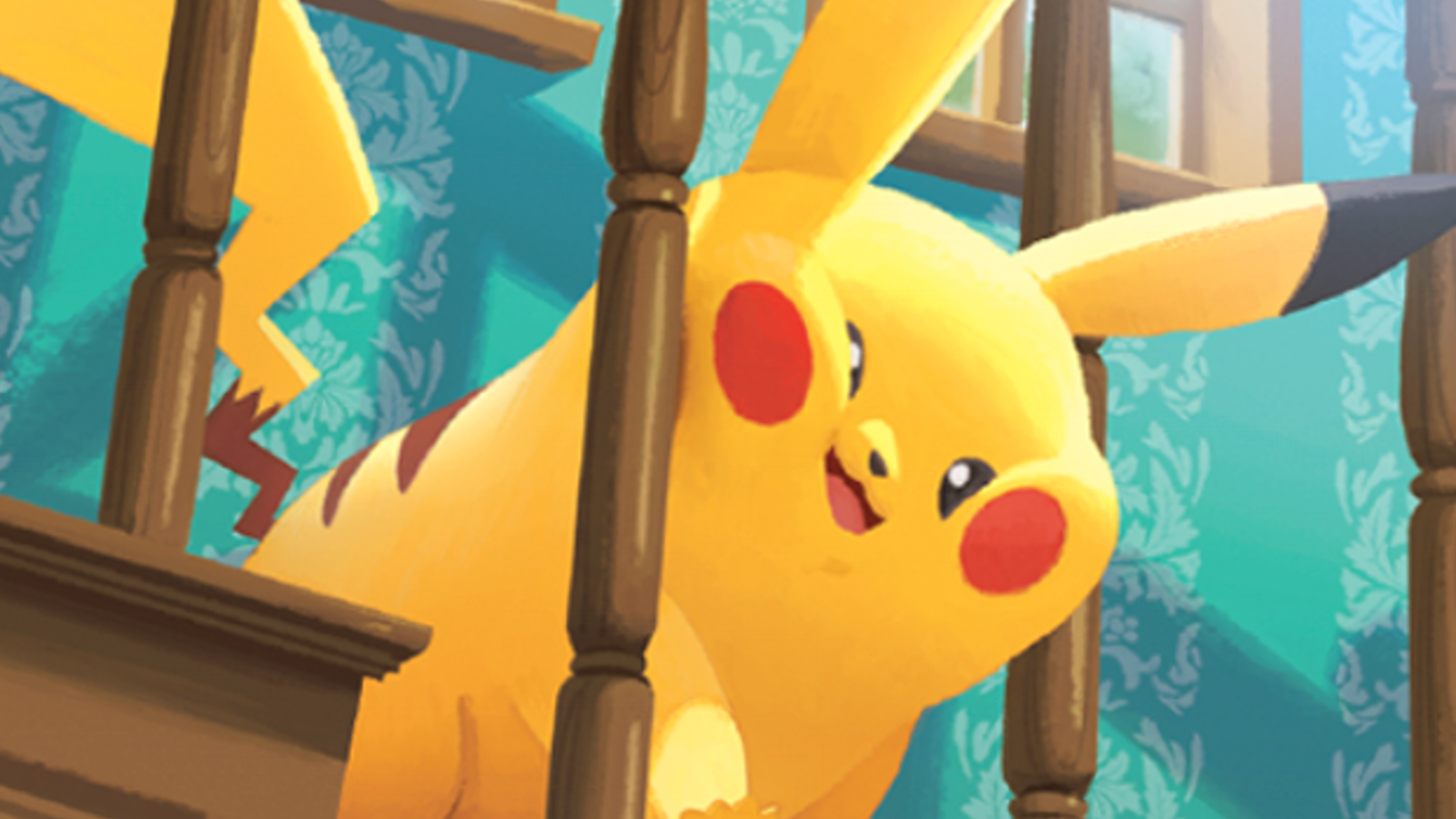
Image via The Pokémon Company Published Sep 19, 2026, 4:50 AM EDT Hannah has been writing about horror, sci-fi, and all things nerdy since 2021. At Collider, she covers news and conducts interviews, along with contributing features that dive deep into genre storytelling and why it works. If there’s something lurking in the shadows, she’s probably already writing about it if she's not too busy watching a tape from her VHS collection. Sign in to your Collider account Pikachu has appeared on hundreds of Pokémon cards since the Trading Card Game began, but even the franchise’s mascot has never received a collection quite like this. The newly released Pokémon TCG: 30th Celebration expansion contains 30 Pikachu rare cards, each featuring a completely different artist’s interpretation of the Electric-type icon. Every booster pack guarantees one of the designs, making Pikachu the centerpiece of the entire anniversary set. Thirty cards featuring the same Pokémon could get repetitive. Instead, this collection proves that artists still have plenty to say about Pikachu after three decades. They find the small animal underneath the mascot, the beloved companion fans wish they could bring home, and the weird little menace who cannot be trusted around household furniture. Each card understands something different about why Pikachu has lasted, but these 10 understand the character best. 10 Pikachu 045/128 Illustrated by Naoyo Kimura Image via The Pokémon Company Pikachu rarely gets the opportunity to stop. Most cards have it battling, running, eating, or producing enough electricity to create an insurance claim. Naoyo Kimura slows everything down and gives Pikachu a rare moment of genuine reflection. The change immediately separates this card from the collection’s more energetic entries. The artwork asks nothing from the mascot except its presence, then trusts viewers to care about what might be happening behind those enormous eyes. Of course they do. It is Pikachu. Kimura understands that the character’s appeal has never depended entirely on action or comedy. Pikachu has been a companion for generations of fans, which means its more thoughtful moments carry their own emotional weight. This card gives that softer side of the character the attention it deserves. 9 Pikachu 043/128 Illustrated by OOYAMA Image via The Pokémon Company Pikachu has battled gods, saved the world, and spent 30 years carrying an international franchise on its tiny shoulders. OOYAMA finally lets it sleep. Frankly, nobody has ever earned a nap more. The card’s ability makes the joke even better by putting Pikachu to sleep in exchange for letting its player draw cards. Pikachu remains useful without opening its eyes, which is the kind of work-life balance everyone deserves. More importantly, the artwork recognizes that rest can reveal character as effectively as action. Pikachu does not have to perform every second to remain lovable. There is also something incredibly satisfying about seeing Pokémon’s mascot refuse to participate for once. Pikachu has completed enough battles, photo shoots, promotional appearances, and world-saving missions. OOYAMA gives the character permission to clock out, and the result is one of the most affectionate cards in the collection. 8 Pikachu 048/128 Illustrated by Kiyotaka Oshiyama Image via The Pokémon Company Pikachu is one of the most recognizable characters ever created, which makes it difficult for any artist to place it inside an elaborate composition without everything else becoming background decoration. Kiyotaka Oshiyama refuses to let that happen, and as a result Pikachu belongs to the larger image instead of dominating it. That decision returns Pikachu to its roots as one creature within a strange, colorful ecosystem of berries. The card remembers that Pikachu existed inside the Pokémon world before it became the face printed on nearly everything. Oshiyama does not reduce Pikachu’s importance to accomplish that connection. He proves the character can remain the center of an image without consuming it. That balance gives the entire card room to breathe and rewards anyone willing to look beyond Pikachu long enough to appreciate how carefully everything works together. 7 Pikachu 027/128 Illustrated by Asako Ito Image via The Pokémon Company Asako Ito’s crocheted Pikachu is immediately recognizable as her work. The visible stitches and handmade construction are the entire point. This Pikachu exists because somebody sat down and made it one piece at a time, and that approach is perfect for a 30th-anniversary collection. Fans have spent three decades drawing Pikachu, sewing plush toys, sculpting figures, making costumes, and using every craft available to bring Pokémon into their lives. Ito turns that kind of fan devotion into official card artwork. The result honors Pikachu’s place in the franchise and the countless handmade versions created by people who simply wanted the character close to them. The card also refuses to hide the work behind its creation. Every stitch reminds collectors that art does not need to be polished into perfection to inspire affection. Pikachu has always encouraged people to make things, and Ito gives that creativity a place inside the official history of the Pokémon TCG. Collider Exclusive · Universe Personality Quiz Which Iconic Universe Do You Belong in the Most? Star Wars · Lord of the Rings · Harry Potter · Game of Thrones · Star Trek Five legendary universes. Five completely different visions of what the world could be — or already was. One of them is the world your instincts, your values, and your particular way of existing were built for. Eight questions will tell you which one. 🚀Star Wars 💍Lord of the Rings 🧙Harry Potter 👑Game of Thrones 🖖Star Trek FIND YOUR UNIVERSE → 01 What gives your life its deepest sense of meaning? Every universe is built around a different answer to this question. ABeing part of something larger than myself — a cause, a rebellion, a fight for freedom that outlasts me. BThe journey itself — the places I'll go, the companions beside me, the world I'll discover on the way. CLearning — unlocking what I'm capable of, understanding the world's hidden mechanics, growing into something more. DLegacy — the name I leave behind, the power I build, the mark I make before the world moves on without me. EUnderstanding — exploring what exists beyond the horizon and asking what it means to be alive in a universe this vast. NEXT QUESTION → 02 Which kind of world do you most want to inhabit? The environment shapes who you become. Choose carefully. AA galaxy of planets, each with its own culture — connected by conflict, trade, and the Force. BAncient lands of breathtaking beauty, deep history, and a creeping darkness at the edges. CA world hidden inside our own — full of wonder, community, and magic waiting to be learned. DA brutal, beautiful continent where power is everything and every alliance is a calculation. EA future where humanity has reached the stars — and must decide what kind of species it wants to be. NEXT QUESTION → 03 How do you prefer your conflicts resolved? The shape of a world's conflicts tells you everything about its soul. AThrough sacrifice and courage — someone has to make the impossible choice so others don't have to. BThrough fellowship — the impossible becomes possible when the right people walk the same road. CThrough growth — confronting what you fear, understanding what you lack, and becoming equal to the challenge. DThrough strategy — outthinking, outmaneuvering, positioning yourself so the outcome was never in doubt. EThrough dialogue — finding the third option, the peaceful resolution, the answer that doesn't require a body count. NEXT QUESTION → 04 Who do you want beside you when things get difficult? Your ideal companions reveal the world you were made for. AA small crew — a pilot, a rogue, a warrior — each broken in their own way, unbeatable together. BA fellowship of different kinds of people, bound by purpose and deepened by the long road. CFriends who grew up alongside me — who knew me before I knew myself, and stayed anyway. DAllies whose loyalty I've earned — and tested — and whose ambitions align with mine, for now. EA crew of brilliant, curious, principled people from every corner of known space. NEXT QUESTION → 05 What is your relationship with power? How you seek, wield, or resist power is the map of who you are. AI want to use it to protect — and I'm terrified of what I might become if I'm not careful. BI distrust it. The most important power in this story is the courage to give it up. CI want to earn it — through knowledge, through effort, through becoming someone worthy of it. DI want to wield it. Preferably before someone else decides to wield it against me. EI want to understand it — its structures, its limits, its ethical dimensions. Power without accountability is the real threat. NEXT QUESTION → 06 How does your universe treat good and evil? A world's moral architecture tells you more about it than any map. AThere is a dark side and a light side — and the choice between them is always present, always personal. BEvil is real and ancient and patient — and goodness, however small, is the only thing that can undo it. CGood and evil are real, but they live inside people — and people are complicated, always capable of both. DGood and evil are mostly a matter of perspective and proximity. Power is the only honest currency. EEvil is usually the result of ignorance, fear, or broken systems — and understanding it is the first step to solving it. NEXT QUESTION → 07 What role would you naturally fall into? Every universe has archetypes. Which one fits you without trying? AThe reluctant hero — ordinary origins, extraordinary moment, changed forever by the choice to act. BThe unlikely carrier — the one nobody expected to matter most, quietly bearing the weight of everything. CThe student — not yet who I'll become, learning through every mistake, growing into something the world needs. DThe player — sharp enough to see the game for what it is, ambitious enough to try to win it. EThe explorer — drawn to the unknown, driven by curiosity, most alive when standing somewhere no one has stood before. NEXT QUESTION → 08 What do you ultimately believe about the future? The answer to this is the clearest window into which universe already lives inside you. AThat hope is real — that even in the darkest galaxy, a new hope is always possible. CThat even the smallest person can change the course of the future, if they have the courage to try. CThat love and friendship and doing what's right will matter in the end, even when everything says otherwise. DThat the wheel keeps turning — that power shifts, winters end, and what endures is those willing to fight for it. EThat humanity — or whatever we become — is capable of extraordinary things, if we choose to be. REVEAL MY UNIVERSE → Your Universe Has Been Chosen You Belong In…Your answers point to the iconic universe your values, your instincts, and your particular way of seeing the world were built for. This is where you would find your people — and your purpose. Star WarsYou believe in the cause — in the idea that freedom is worth fighting for even when the odds are impossible and the empire is vast. You are drawn to the moral clarity of a universe where hope itself is a form of resistance. You'd find your people in the Rebellion — a ragtag coalition of true believers held together by conviction more than resources. Star Wars is fundamentally a story about ordinary people choosing to matter in an extraordinary conflict — and that is exactly your kind of story. The Force may or may not be with you. But the will to use it for something larger than yourself certainly is. Lord of the RingsYou understand, in the deepest part of yourself, that the journey matters as much as the destination — and that the world's beauty is worth protecting even at great cost. Middle-earth is a world of ancient wonder, deep friendship, and a darkness that only retreats when enough small acts of courage accumulate. You would thrive here because you value the fellowship more than the glory — the road more than the arrival. Tolkien's universe rewards patience, loyalty, and the willingness to carry something heavy across a very long distance. Those are not burdens to you. They are simply how you move through the world. Harry PotterYou believe that love, loyalty, and doing what's right are not naive sentiments — they are the most powerful forces in any world, magical or otherwise. The Wizarding World is a place of wonder hidden in plain sight, where learning is transformative and the bonds you form at school follow you into every battle. You would flourish here because you take both the magic and the friendships seriously — and you understand that one without the other is incomplete. Harry Potter's universe ultimately rewards those who choose to stand for something even when standing is terrifying. That choice — made quietly, without guarantee — is something you understand completely. Game of ThronesYou see the world clearly — its power structures, its hypocrisies, its brutal arithmetic — and you are not paralysed by that clarity. You use it. Westeros is a world that rewards intelligence, adaptability, and the willingness to understand that every alliance is also a negotiation. You would survive here — possibly thrive here — because you don't confuse the world as it is with the world as you'd like it to be. Game of Thrones is a story about what happens when the idealists and the realists collide. You are sharp enough to know which one lasts longer. Winter always comes. You are already prepared. Star TrekYou believe the future is worth building — that curiosity, cooperation, and the expansion of understanding are not just ideals but the most practical path forward for any civilisation. Star Trek is a universe where the questions matter as much as the answers, and where encountering something utterly alien is cause for wonder rather than fear. You would belong here because you are fundamentally optimistic about what intelligence and decency can achieve — while being honest about how hard that achievement is. The Federation is the universe's most ambitious thought experiment: what if we actually got better? You don't just hope that's possible. You think it's the only thing worth working toward. ↻ RETAKE THE QUIZ 6 Pikachu 035/128 Illustrated by Susumu Maeya Image via The Pokémon Company Pikachu may be Pokémon’s biggest celebrity, but Susumu Maeya remembers that it is also a small woodland animal. That side of the character often disappears beneath the battles, merchandise, and enormous expectations attached to it. Maeya brings it back without sacrificing any of Pikachu’s personality. This card presents a creature that has found a comfortable hiding place and has no interest in surrendering it. This Pikachu could exist in the woods behind someone’s house, which only makes the fact that it does not hurt more. That animal quality has always been essential to Pikachu’s design. Fans recognize human emotions in the character without forgetting that it belongs to another species with its own behaviors and instincts. Maeya leans into that balance, giving collectors a Pikachu they can understand without fully domesticating it. 5 Pikachu 046/128 Illustrated by svlt Image via The Pokémon Company Some artists use Pikachu’s anniversary as permission to create the loudest card possible. svlt goes in the opposite direction and lets Pikachu enjoy its surroundings. The confidence required to do so deserves credit because the card never relies on spectacle to justify itself. Pikachu has enough personality to hold an image without performing an attack or getting into trouble. Its presence is the subject. That choice also gives the character dignity that mascot artwork can sometimes overlook. Pikachu is allowed to exist for itself instead of smiling for the people watching, and the card becomes stronger because svlt refuses to demand more. The simplicity also makes this card easy to return to. There is no punchline to exhaust or complicated action to decipher. It offers a small moment with Pikachu and lets that companionship become the reward, which is exactly what many fans have wanted from the character all along. 4 Pikachu 026/128 Illustrated by Takeshi Nakamura Image via The Pokémon Company Takeshi Nakamura puts the collector in the deeply enviable position of being personally investigated by Pikachu. The unusual perspective turns the act of holding the card into part of the image. Pikachu has noticed you, and apparently, it needs answers. The card’s only attack, Peer At, continues the idea by forcing an opponent to reveal their hand. Pikachu is not fighting anyone. It is being unbearably nosy and gathering information that may or may not concern it. Nakamura builds the entire card around one recognizable part of Pikachu’s personality: its curiosity. That curiosity has driven Pikachu into trouble across almost every version of Pokémon, but it is also what makes the character such an effective companion. Pikachu wants to know what is happening and refuses to remain on the sidelines. The result is playful, interactive, and deeply unfair to anyone who has spent 30 years wishing Pikachu could look directly at them. 3 Pikachu 040/128 Illustrated by Shinji Kanda Image via The Pokémon Company Shinji Kanda has already given the Pokémon TCG unforgettable artwork featuring Giratina and Magikarp, so handing him Pikachu for the anniversary collection was an obvious act of violence against collectors’ wallets. His style pushes Pikachu into one of the collection’s most ambitious images, and the mascot handles it beautifully. That success says as much about Pikachu as it does about Kanda. The character’s silhouette remains readable even when the artwork surrounding it demands equal attention. Thirty years of familiarity have made those ears and that lightning-bolt tail practically impossible to lose. Kanda uses that visual certainty as an anchor, then unleashes everything else around it. Pikachu survives the chaos because its design was always that strong. The card does not depend on nostalgia, even though everyone looking at it brings decades of memories with them. Kanda takes one of the safest characters Pokémon could possibly use and makes it artistically dangerous again. 2 Pikachu 036/128 Illustrated by OKACHEKE Image via The Pokémon Company OKACHEKE understands exactly what Pikachu would be like if one lived inside someone’s house. It would be curious, ridiculous, and repeatedly found doing something no reasonable person could have predicted. It would also know that being adorable removes almost every consequence. This card gives Pikachu a full personality without using a battle or Trainer. The domestic setting turns the mascot into a pet, but Pikachu clearly would not be an obedient one. It has made a decision, committed completely, and now expects everyone else to accept it. After 30 years of fans wishing Pokémon were real, OKACHEKE provides the strongest evidence that owning a Pikachu would be both wonderful and exhausting. That ordinary setting also makes Pikachu more believable than any attempt at realism could. Fans do not love the character because it can produce electricity, they love Pikachu because they can imagine it following them home, taking over the couch, stealing food, and discovering increasingly creative ways to become stuck. 1 Pikachu 047/128 Illustrated by Atsuko Nishida Image via The Pokémon Company Atsuko Nishida designed Pikachu during Pokémon’s original generation. That history gives her anniversary card an importance no other entry can match, but the artist’s name alone does not earn it the top position. The artwork also understands exactly why Pikachu has lasted this long. Nishida does not bury her creation beneath references to the past or force 30 years of history into every corner. She returns to Pikachu’s joyful energy and lets the original design carry the celebration. The round cheeks, readable silhouette, and sense of forward movement still accomplish everything they did in 1996. Pikachu has changed alongside Pokémon, but its appeal has never needed to become complicated. That makes this card the perfect conclusion to the Pikachu rare collection. Plenty of artists found new ways to interpret the character, but Nishida reminds everyone what made those interpretations possible. She created a Pokémon people immediately wanted to follow, protect, and call their friend. Thirty years later, Pikachu is still racing ahead, and generations of fans are still happily running after it. Release Date 1997 - 2023-00-00 Network TV Tokyo, TV Osaka, TV Aichi, TVh, TVQ, TSC Directors Shigeru Omachi, Koji Ogawa, Fumihiro Ueno, Hideki Hiroshima, Maki Kodaira, Makoto Ooga, Ayumi Moriyama, Keitaro Motonaga, Shigeru Ueda, Fumihiro Yoshimura, Minoru Ohara, Yoshitaka Makino, Kiyoshi Egami, Makoto Sokuza, Bjarne Heuser, Naoki Murata, Kenichi Nishida, Tomoe Makino, Masahiko Watanabe, Hiroaki Takagi, Tazumi Mukaiyama, Ryohei Horiuchi, Yoshihiro Oda, Hiromichi Matano Cast Rica Matsumoto Satoshi (voice) Ikue Otani Pikachu (voice) Writers Junki Takegami, Atsuhiro Tomioka, Hideki Sonoda, Yukiyoshi Ôhashi, Yuka Miyata, Takeshi Shudo, Shouji Yonemura, Shinzo Fujita, Michihiro Tsuchiya, Deko Akao, Reiko Yoshida, Aya Matsui, Junichi Fujisaku Franchise(s) Pokemon Creator(s) Naoko Takeuchi
10 Best Pikachu Designs for Pokémon’s 30th Celebration, Ranked
Full Article
Original Source
Read the full article at Collider →KhanList aggregates and links to publicly available news content. We do not host full articles from third-party sources. Always verify important information with original sources.