
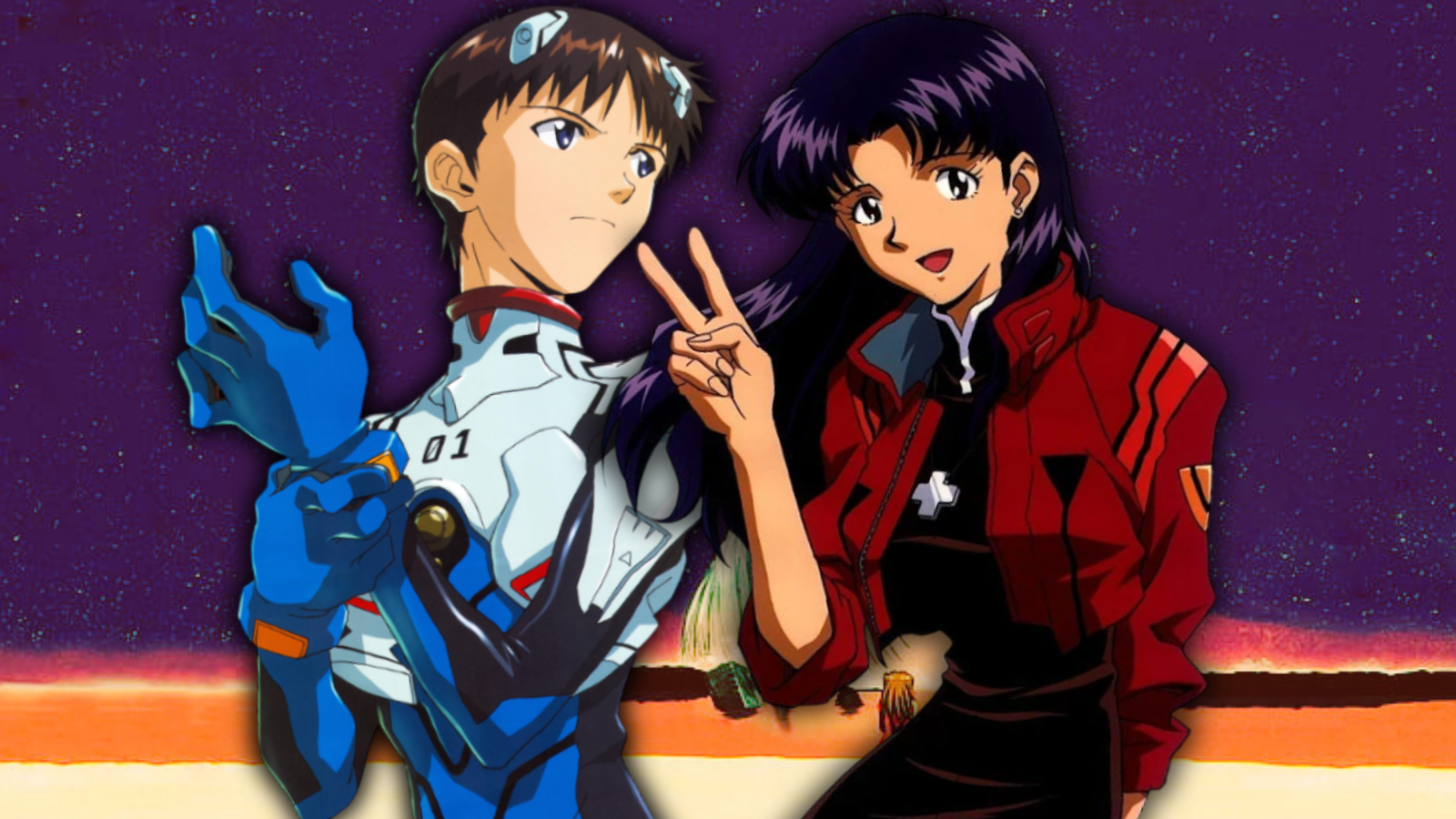
Custom Image by Hannah Diffey Updated Sep 11, 2026, 6:00 PM EDT Hannah is a senior writer and self-publisher at ScreenRant. There, she focuses on writing news, features, and list-style articles about all things comics, books, anime, and manga. She works as a freelance writer in the entertainment industry, focusing on video games, anime, and literature. Her published works can be found on Screen Rant, FinanceBuzz, She Reads, and She Writes. Sign in to your ScreenRant account Few anime explore the messier parts of being human quite like Neon Genesis Evangelion. Beneath its giant robots, apocalyptic battles, and increasingly surreal story lies a series deeply concerned with loneliness, self-worth, fear, and the complicated ways people relate to one another. Its characters may rarely have their lives together, but their observations occasionally reveal surprisingly profound truths. That makes Evangelion a particularly memorable source of dialogue. Some of its most powerful lines are bleak, while others offer an unexpected sense of hope or perspective. Whether they come from Shinji's struggles, Rei's observations, Misato's hard-earned wisdom, or another character entirely, these quotes capture many of the ideas that make the series so enduring. The wording may also differ between the original English dub and later translations, but their underlying messages remain just as impactful. 10 "Bathing cleans the mind and soul." - Misato Katsuragi, Episode 2 Sometimes, you really just need a good bath. Misato says this line to Shinji on a few occasions, most notably after he arrives at her apartment and begins living with her. There's certainly some truth to the idea, as many people will immediately want to take a shower after a traumatic incident. The feeling of being clean can easily spread to one's inner thoughts and help to purge bad memories before they get a chance to settle in. This advice is turned on its head a bit by Asuka, who ends up getting in the bathtub at one point and refuses to get out due to her own trauma and her inability to wash it away. Nevertheless, it's still pretty good advice--if you're not feeling your best, give a bath a try, and you may find yourself feeling as refreshed mentally as your body does. 9 "I mustn't run away." - Shinji Ikari, Episode 3 (and others) This line is uttered like a mantra by Shinji numerous times, something he says to help keep himself from freaking out and fleeing the scene of battle. While it serves as a sign that Shinji's mental state isn't the best, as a quote, it holds a bit more meaning. After all, if Shinji were to run away, the fate of the world could be decided due to his inaction. Shinji is facing a particularly difficult situation, staring down bizarre alien beings in an EVA machine that he's not fully familiar with, so it makes sense that he'd be struggling to keep himself under control, as almost anyone would. Still, there are times in life when one doesn't have a choice but to act, and in those times, it may be necessary to remind yourself why you can't just quit. 8 "As long as the Sun, the Moon, and the Earth exist, everything will be all right." - Yui Ikari, End of Evangelion These words, spoken by Shinji's mother before her passing, are an unexpectedly bright quote for Evangelion. It basically says that while problems will come along, most problems are ultimately temporary; unless something major, like the Moon, has ceased to exist, then everything will probably turn out okay in the end. It's a strangely reassuring statement for a series that often looks quite bleak, and arguably does face the kind of major problems that really are worth worrying about. In that sense, the quote isn't just about not sweating the small stuff, but also a statement of affirmation--so long as the world still exists, anything can be fixed, so there's no need to worry over minor mistakes. Just keep that world around, and it'll all be okay. 7 "Pain is something man must endure in his heart." - Kaworu Nagisa, Episode 24 Kaworu can be a controversial character, but his observations and musings about the nature of humanity tend to be pretty on point. Kaworu says this to Shinji in their first real conversation, a rather deep cut for two people who are essentially just meeting. He says this in an attempt to convince Shinji that being alone all the time isn't good for him; there's a fundamental pain to existing, whether it's the pain of loneliness or the difficulties that come with dealing with others. If one is going to endure pain either way, then, why would one ever choose to be alone? That is the point Kaworu is trying to make to Shinji. Kaworu continues musing that this pain comes quite easily, but that doesn't mean that life is nothing but pain. There can be joy in life, but only for those who endure the pain and connect with others. 6 "Man fears the darkness, and so he scrapes away at the edges of it with fire." - Rei Ayanami, Episode 11 Rei's observation deals with a fundamental truth of humanity: a fear of the unknown. Humankind uses fire, and other tools, to learn about the world around them, removing the unknown and replacing it with the known. In so doing, life becomes possible, able to spread out into the area that was once bathed in darkness. However, it's fundamentally impossible to know everything, and so we will always still be surrounded by the unknown. In Evangelion, there are a lot of terrifying unknowns flying about--like just what will happen if the Angels achieve their goal. Characters must constantly face the limits of their knowledge, and in some ways piloting an EVA is just the latest iteration of that fire, a tool which helps to remove the terrifying unknown. 5 "Part of growing up means finding a way to interact with others while distancing pain." - Misato Katsuragi, Episode 3 Another quote from Misato, this one is said to Ritsuko while discussing the fact that Shinji needs to grow up a bit and learn how to deal with other people. Notice that Misato never denies that interacting with others can bring pain; that's a truth of life that no one can change. However, like with Kaworu's quote, that pain is necessary if one is to receive all the benefits that come with interacting with people, and all the joy that can bring. Evangelion is all about how the characters unintentionally hurt each other, both the children like Asuka and Shinji and the adults like Misato and Kaji. With all the pain flying around, it's surprisingly mature of Misato to encourage continued connection, but it just shows that she's come to identify this truth of life and accept it. 4 "Only an idiot fights when he knows he can’t win." - Kensuke Aida, Episode 4 A fairly straightforward quote, this comes from Shinji's school friend, Kensuke Aida, who is obsessed with the EVAs and attempts to tape their battles. Kensuke specifically adds that backing down from a fight that you can't win doesn't say anything about one's perceived toughness, contradicting Toji. This quote echoes the words of famous strategists and tacticians from throughout history, who often encourage their warriors to battle only when they have at least equal footing. More metaphorically, there are challenges which can be faced and overcome, and those which one must succumb to. Choosing not to fight is not the same as losing, and may even be the wiser choice if it saves resources for other problems which can be more easily dealt with. Fighting for a lost cause might seem noble, but if the only result is getting killed, was it really worth it? 3 "Don't make others suffer for your personal hatred." - Title, Episode 12 Rather than coming from a character, this quote is derived from the title of episode 12, "She said, 'Don't make others suffer for your personal hatred.'" It's not clear who "she" is, exactly, but it hardly matters. The quote seems to acknowledge that hatred can only cause suffering, and that it's unjust to force that suffering upon others just because of one's own inner hatred. This isn't just talking about the object of that hatred, either; hate can manifest suffering in a variety of ways, from just bringing down everyone's morale to subjecting them to the same kind of berating that the hated is intended to receive. Hatred can harm oneself as much as it can everyone else, if not more so, but that's the price of feeling hate, and it shouldn't be forced upon others. 2 "There are as many truths as there are people." - Ryoji Kaji, Episode 26 Episodes 25 and 26 of Neon Genesis Evangelion are bizarre in their presentation, and absolutely full of philosophizing. In this quote, Kaji points out that there often is no such thing as an objective truth, and that what the truth is means different things to different people. This is especially important for someone like Shinji to understand, as he's so bound up inside his own head most of the time that he hardly even considers what other people are thinking. This line is immediately followed up by Kensuke, who says "but there is only one truth that is your truth." It suggests that just because there are many perspectives on an issue, one doesn't have to abandon their own truth entirely. It's important to understand how others might see things differently, but it's also important to consider one's own truth, and make sure that it reflects the whole picture. 1 "One who truly hates himself cannot love." - Rei Ayanami, Episode 26 Later, in the same scene, Shinji says that he hates himself, to which Rei replies with the above quote. It's a true statement, as how can one expect others to care for them if they don't even care about or trust in themselves? This quote represents the culmination of the entire series' character arc for Shinji, a realization that he doesn't have to hate himself, and that doing so has actually been the source of a great many of his problems. If the characters of Evangelion had less self-hatred, they wouldn't have faced so many of the problems that they do, and that's especially true for Shinji. His self-hatred is the source of his insecurities, his cowardice, and his fear. A Shinji who respects himself and even learns to love himself would be a far more powerful character, as the Rebuild of Evangelion films showed. For underlining the key themes of the show, this quote is arguably Neon Genesis Evangelion's best. Created by Hideaki Anno First Film Neon Genesis Evangelion: Death & Rebirth TV Show(s) Neon Genesis Evangelion Movie(s) Neon Genesis Evangelion: Death & Rebirth, End of Evangelion, Evangelion: 1.0 You Are (Not) Alone, Evangelion: 2.0 You Can (Not) Advance, Evangelion: 3.0 You Can (Not) Redo, Evangelion: 3.0+1.0 Thrice Upon a Time Character(s) Shinji Ikari, Rei Ayanami, Asuka Langley Soryu, Toji Suzuhara, Kaworu Nagisa, Mari Illustrious Makinami, Gendo Ikari, Misato Katsuragi Video Game(s) Neon Genesis Evangelion
10 Best Neon Genesis Evangelion Quotes That Prove Just How Deep The Series is
Full Article
Original Source
Read the full article at Screenrant →KhanList aggregates and links to publicly available news content. We do not host full articles from third-party sources. Always verify important information with original sources.