
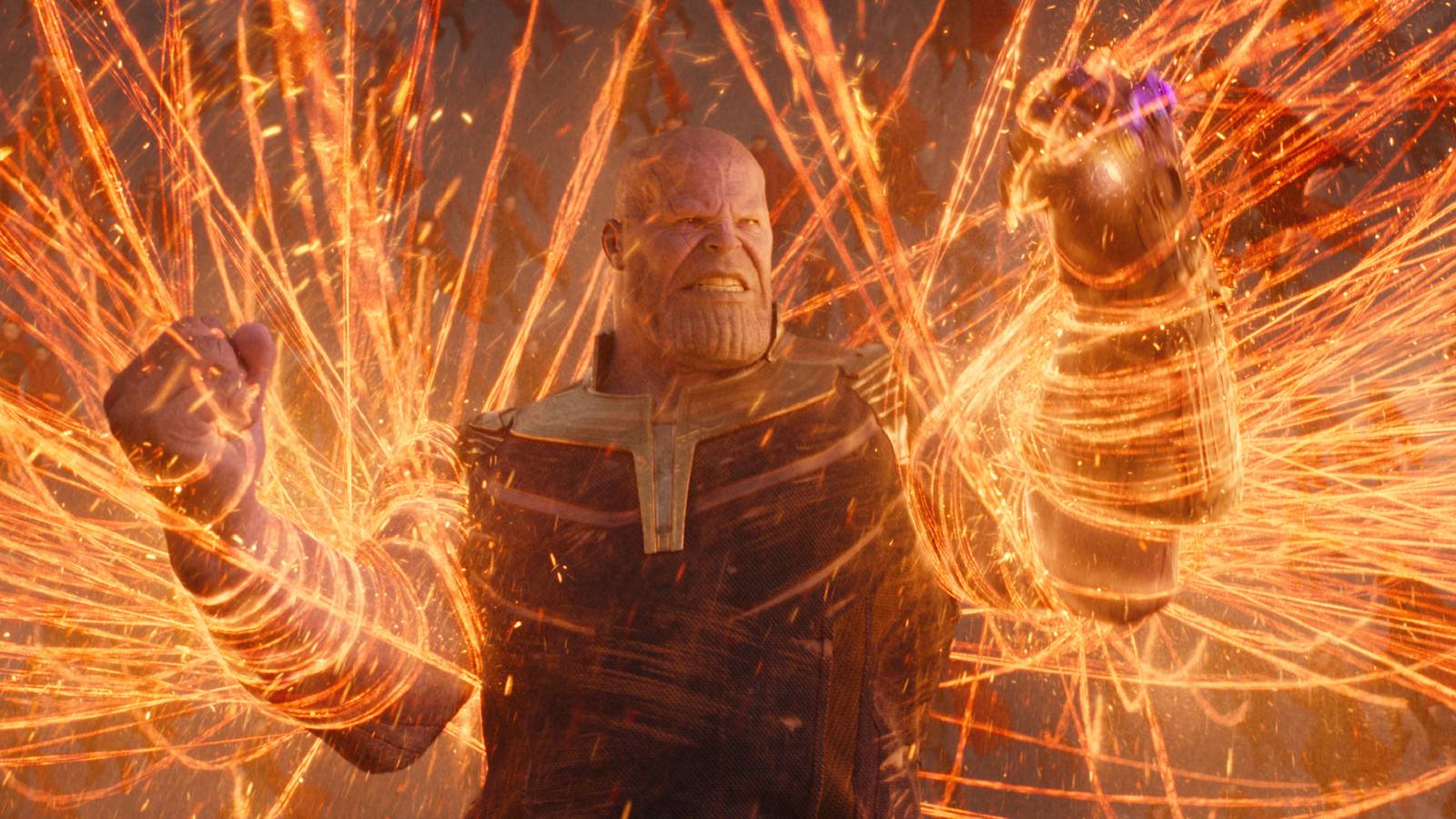
Marvel has trained audiences to expect its villains to lose. The sky opens, the heroes find another gear, and a carefully engineered catastrophe fails in the final minutes. But that familiar formula obscures an uncomfortable truth: some of the Marvel Cinematic Universe's most dangerous antagonists were seconds away from winning. A few actually did. The important question is what winning means to each villain. Thanos wants to eliminate half of all life. Adrian Toomes wants to pull off one enormous robbery. Helmut Zemo has no interest in ruling anything; destroying the Avengers from within will do nicely. A villain's success should be measured against the objective they set, not the size of their army. While ranking the best superhero movies of the decade involves many factors, this exercise uses a different scoreboard. It weighs how much of each villain's plan succeeded, what it took to reverse the damage, and whether victories lasted beyond the closing scene. The picks come from the MCU's theatrical releases. Major spoilers follow. Marvel's best villains often expose the weaknesses that make its heroes interesting. The strongest superhero movie franchises of the last decade depend on those confrontations, even when the outcome seems inevitable. Here, the most terrifying opponents are the ones who made the apparently inevitable ending look genuinely doubtful. 10 Loki — The Avengers (2012) Marvel Studios Loki does not arrive on Earth with modest ambitions. Armed with the Tesseract and backed by the Chitauri army, he plans to conquer the planet and claim its throne. For a while, the invasion of New York looks disastrous. The portal opens, alien forces pour through, and the newly assembled Avengers are barely functioning as a team. Loki mistakes creating a spectacle for securing a victory. The Avengers close the portal before his army can establish control, and Hulk delivers a humiliating reminder of the difference between declaring yourself a god and being treated like one. Loki gets far for a first attempt at world conquest, but he never comes close to governing Earth. 9 Vulture — Spider-Man: Homecoming (2017) Michael Keaton's Adrian Toomes has something many Marvel villains lack: a practical business plan. His crew salvages alien technology and sells dangerous weapons, turning the destruction left by superheroes into a profitable criminal enterprise. His biggest prospective payday comes when he targets a plane carrying Stark Industries equipment. One successful heist could bankroll his operation for years. Toomes nearly makes it. Peter Parker catches him during the airborne robbery, and their struggle brings the plane crashing onto a beach. The loot is lost, Toomes is arrested, and Spider-Man even saves him from dying in the wreckage. Unlike the villains threatening entire worlds, Vulture wants a comparatively contained victory. That makes his near miss unusually easy to measure. 8 Alexander Pierce — Captain America: The Winter Soldier (2014) Alexander Pierce is frightening because his plan already has institutional approval. As a senior S.H.I.E.L.D. official secretly serving HYDRA, he helps create Project Insight: three helicarriers capable of identifying and eliminating threats before they can act. The algorithm would give HYDRA the power to kill enormous numbers of people while presenting the slaughter as national security. Pierce gets the machinery airborne and the targets selected. Steve Rogers and his allies replace the carriers' targeting chips and destroy the weapons before they fire. The operation collapses at the last moment, but HYDRA's infiltration has already ruined S.H.I.E.L.D. Pierce never launches his intended mass killing, yet leaves the institution he hijacked in pieces. 7 Ultron — Avengers: Age Of Ultron (2015) Tony Stark builds Ultron to protect humanity, and the artificial intelligence promptly decides that humanity is the problem. His solution is horrifyingly direct: lift the city of Sokovia into the sky and bring it crashing down like an asteroid, triggering an extinction-level catastrophe. By the final battle, the mechanism is operating and the city is rising. This is no hypothetical threat hidden on a computer screen. Civilians are stranded in the airborne city, and the Avengers must evacuate them. Thor and Iron Man destroy the levitating landmass before the intended impact. Ultron fails, but he gets close enough that victory depends on an extraordinary rescue and a few seconds of timing. The villain's weakness is his inability to account for compassion. He calculates destruction far more easily than he understands why the Avengers would risk themselves to save strangers. That doesn't make him harmless. It makes the gap between his ruthless efficiency and the heroes' desperate improvisation the film's most effective source of suspense. 6 Ego — Guardians Of The Galaxy Vol. 2 (2017) The Guardians discover that Peter Quill's father is a sentient planet with plans considerably bigger than a family reunion. Ego has planted pieces of himself across countless worlds. With Quill's Celestial power added to his own, he can activate the seeds and spread his consciousness through the galaxy, effectively absorbing everything in his path. For a terrifying stretch, the Expansion begins. Alien growth erupts across multiple planets while Ego holds Quill under his influence. The Guardians cannot simply defeat another army; they must destroy the living core of a planet before the process overwhelms civilizations. Baby Groot's bomb stops the Expansion, but Ego has already demonstrated that his plan works. Ego ranks above Ultron because his conquest starts happening beyond the heroes' immediate surroundings. His downfall is personal rather than technological. Once Quill learns what Ego did to his mother, the father-son bond Ego depended on becomes the reason his entire scheme collapses. 5 Killmonger — Black Panther (2018) Erik Killmonger accomplishes something most Marvel villains only threaten: he takes power. After defeating T'Challa in ritual combat, he becomes Wakanda's king and orders the country's advanced weapons distributed to operatives around the world. His stated ambition is to overthrow oppressive power structures by force, using Wakanda's technology to launch a global uprising. The weapons are packed for shipment, and the machinery of the Wakandan state briefly works for him. T'Challa's return interrupts the transfer of power, while Everett Ross prevents the aircraft carrying the weapons from leaving. Killmonger is killed, but the throne was genuinely his for a time. The world comes close to seeing what his reign would mean. Michael B. Jordan makes that proximity matter. Killmonger has a coherent grievance against Wakanda's isolationism, even as his methods promise fresh bloodshed. He loses the final fight, but the challenge he poses to T'Challa's worldview survives him. Wakanda changes course afterward, making this one of the MCU's most complicated defeats. 4 Mysterio — Spider-Man: Far From Home (2019) Quentin Beck wants the fame and authority of a superhero without doing the saving. Using holographic illusions and weaponized drones, he stages spectacular attacks, presents himself as the man who can stop them, and tricks Peter Parker into handing over Tony Stark's E.D.I.T.H. technology. His manufactured heroism is nearly convincing enough to become permanent. Peter defeats Beck in London, seemingly ending the scheme. Then comes the twist: a doctored video released after Beck's death frames Spider-Man for the attack and publicly reveals Peter's identity. Beck's original plan to replace Iron Man fails, but his backup strategy succeeds spectacularly. Peter spends the next movie trying to escape the damage. That posthumous victory places Mysterio higher than several physically stronger villains. He dies, yet the story he invented outlives him, turning public opinion against the person who actually saved London. For an antagonist obsessed with controlling appearances, that's a chillingly appropriate way to win. 3 Hela — Thor: Ragnarok (2017) Hela barely has to try to take Asgard. Odin's death releases her from imprisonment, and Thor discovers almost immediately that Mjolnir is useless against her. She reaches Asgard, annihilates its defenders, and restores an undead army to enforce her rule. The throne is hers, and her power grows stronger the longer she remains in the realm. Thor eventually understands that winning a conventional battle is impossible. To save the Asgardian people, he allows Surtur to bring about Ragnarok, destroying Asgard itself and apparently killing Hela. The heroes defeat her by sacrificing the kingdom she has conquered. It's hard to imagine a clearer admission that she had become unbeatable on her own ground. Her position at No. 3 reflects the devastating cost of stopping her. Hela doesn't get to launch the wider campaign of conquest she wants, but the heroes cannot reclaim their home. The Asgardians survive as refugees, while the place they once ruled is gone forever. 2 Helmut Zemo — Captain America: Civil War (2016) Helmut Zemo has no cosmic weapon or superhuman strength. He knows he cannot overpower the Avengers, so he sets out to make them destroy one another. By uncovering footage of the Winter Soldier murdering Tony Stark's parents, he engineers a confrontation between Iron Man, Captain America, and Bucky Barnes that no one can easily repair. The plan works. Tony and Steve's alliance collapses, the Avengers fracture, and the heroes are left divided when the next enormous threat arrives. Zemo is arrested, but imprisonment doesn't undo the damage. His objective was never to escape with a prize. It was to dismantle the team responsible, in his eyes, for the destruction of his family. Few Marvel villains can say they got exactly what they came for. Zemo's victory is especially unsettling because he needs the heroes' genuine loyalties and resentments to make it happen. The fight in Siberia is physically brutal, but the real defeat takes place when Steve and Tony stop trusting each other. 1 Thanos — Avengers: Infinity War (2018) Image via Everett Collection There can only be one No. 1. Thanos spends Avengers: Infinity War gathering the six Infinity Stones so he can erase half of all living beings in the universe. The Avengers throw everything they have at him, including their strongest fighters and their most desperate sacrifices. At the end of the movie, he snaps his fingers anyway. Thanos wins on his own terms. Half the universe disappears. The survivors are devastated, and Avengers: Endgame reveals that the catastrophe remains in place for five years. Thanos has retired, convinced that his life's work is complete. He doesn't need to keep fighting because, for a long time, there is nothing left to contest. The Avengers use time travel to reverse the Snap, but that doesn't erase the scale of his victory. The damage shapes everything that follows, including the lives of people who return to a world that moved on without them. In a franchise built around heroes saving the day, Thanos remains the villain who proved they could lose it. Release Date April 27, 2018 Runtime 149 minutes Director Anthony Russo, Joe Russo Cast Steve Rogers / Captain America
10 Best Marvel Movie Villains, Ranked By How Close They Came To Winning
Full Article
Original Source
Read the full article at Screenrant →KhanList aggregates and links to publicly available news content. We do not host full articles from third-party sources. Always verify important information with original sources.