
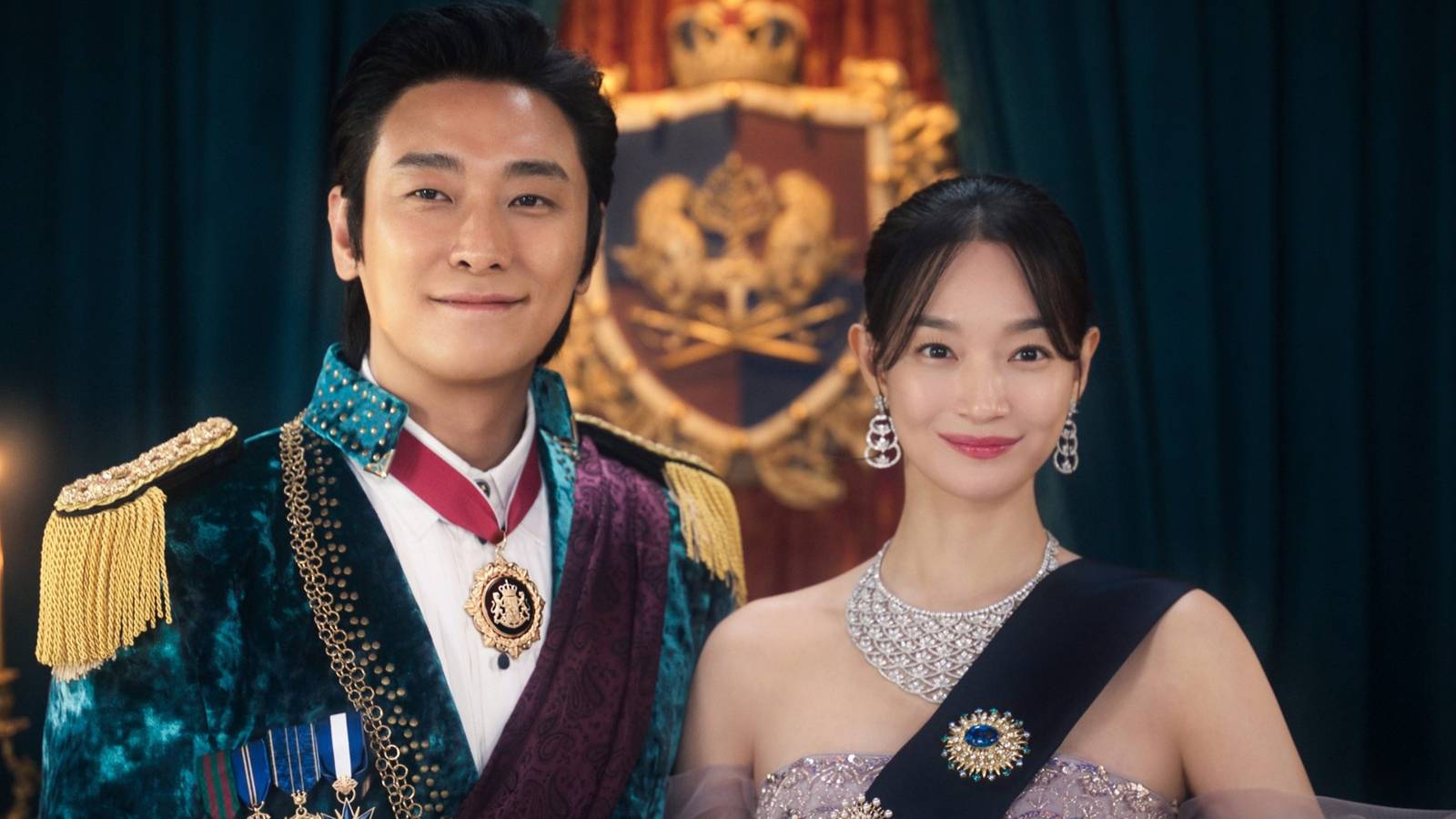
Published Nov 9, 2026, 1:01 PM EST Shealyn Scott is a Senior Writer at Screen Rant. She has been writing for the site since 2024, focused on network, reality, streaming, and classic television. A creative writer, journalist, and lover of the written word in all its forms, Shealyn enjoys deconstructing scenes from her favorite shows, using context clues and historical precedent to predict major plot points (which, due to her successful track record, has sparked rumors of clairvoyance). As an award-winning student journalist, Shealyn spent her college years advocating for the humanities while studying English Literature. Her love of storytelling propelled her to expand her degree with minors in Writing and History, believing life to be a mere collection of stories that can be framed in as many ways as a movie scene. As a Senior member of the TV Team, Shealyn treats the series she covers like books, analyzing every line, camera angle, and lighting choice. Thankfully, her personal mission statement lines up perfectly with Screen Rant: every creative work deserves just as much thought from the viewer as it received from its creator. Be it Joseon era retellings or alternate history romances, some of the most entertaining modern K-dramas focus on royalty. For decades, historical K-dramas have been one of the most significant niches in the entire genre, typically drawing inspiration from real events and distinct periods of Korean history. In recent years, however, the industry has embraced a new sub-genre focusing on historical fantasy, recontextualizing ancient Korean monarchies within a fresh, modern setting. Whether the stage is set in a grand palace or in metropolitan Seoul, royal dramas capture the tension of forbidden love K-dramas with a bold political edge. At once, these stories evoke the splendor of classic fairy tales and push the envelope by adding something new to the equation, from class-based conflicts to ruthless inheritance schemes. Furthermore, while the vast majority of shows aim to be relatable and appeal to the Everyman, royal K-dramas offer the same amount of substance— with twice as much style. 10 Princess Hours In a world where the Korean monarchy was never abolished, a perfectly ordinary high school student turns into a princess overnight— but it isn't without complications. At first glance, Shin Chae-kyeong (Yoon Eun-hye) is a totally unassuming teenager, which makes her sudden betrothal to Crown Prince Lee Shin (Ju Ji-hoon) all the more confounding for both members of the public and rivals within the royal family. Between a gripping love triangle, a twisted betrayal, and a few melodramatic obstacles, the iconic first-generation K-drama spins a story of young love that's cliché in all the right ways. Nearly 20 years later, Princess Hours remains a hit series, hitting the same nostalgic notes as the best early 2000s rom-coms. 9 Perfect Crown Likewise, Perfect Crown's alternate history follows an arranged marriage between a prince and a commoner, but the fake dating plot enacted by Grand Prince I-an (Byeon Woo-seok) and Seong Hui-ju (IU) was solely their idea. As such, when assassination attempts, familial objections, and political discourse rain down upon the main characters, they at least retain the agency to fight back. If Princess Hours is the K-drama equivalent of a Y2K romantic comedy, Perfect Crown is a modern classic that uses its tropes wisely and without fear. Arguably the best part of the series is the slow-burn romance, bolstered by some undeniable chemistry between I-an and Hui-ju that makes each kiss feel like its own storybook ending. 8 The Crowned Clown In stark contrast, The Crowned Clown takes itself far more seriously, but the drama is well-earned. During a particularly violent period of political unrest, the King of Joseon employs a jester named Ha-seon (Yeo Jin-goo) to be his body double. Inexplicably, the two men look identical, though their dispositions could not be more different. Yet, the King's plan takes an unexpected turn as his supposed allies in the royal court begin celebrating Ha-seon's creativity and innovation, indirectly calling into question the real monarch's leadership. From there, the doppelgänger K-drama devolves into organized chaos, but it always feels like a diverting spectacle that the viewers can peek behind the curtains of for some delightful tension. 7 Mr. Queen Similarly, Mr. Queen is a K-drama about secret identities and posing as someone you're not, though it takes a far more fantastical route. Following a near-death experience, abrasive chef Jang Bong-hwan (Choi Jin-hyuk) is transported to Joseon, where his soul inhabits the body of Queen Kim So-yong (Shin Hye-sun). The man is forced to play the part to keep his cover, leading to hilariously awkward showdowns with the King (Kim Jung-hyun). Nevertheless, the switch manages to teach Bong-hwan some invaluable life lessons along the way, and he irreversibly changes the course of So-yong's life in turn. Beneath the exaggerated comedy, Mr. Queen is a surprisingly poignant story of self-discovery, told in fragments with more than enough humor to cushion the blow. 6 The Red Sleeve Conversely, The Red Sleeve keeps its distance from absurdity. Rather, the historical drama goes to great lengths to reign in its narrative, making for a subdued but wildly affecting end product. At the center of the story is the courtship between King Yi San (Lee Jun-ho) and Seong Deok-im (Lee Se-young), a lady of the court and eventual concubine. For a K-drama led by a K-pop idol, The Red Sleeve is an austere, utterly heartbreaking series that will not rest until the audience reaches for their tissues. Years later, its bittersweet ending has cemented it as one of the most tragic K-dramas of the decade thus far. Regardless, the devastation is a small price to pay for the show's incomparable storytelling. 5 Moon Lovers: Scarlet Heart Ryeo Also starring IU as Hae Soo/Go Ha-jin, Moon Lovers: Scarlet Heart Ryeo is an iconic time-travel K-drama that takes a normal 21st century woman and drops her in the middle of a Goryeo-era battle for the throne. Throughout the series' 20 episodes, Hae Soo becomes one of the most influential people in the entire palace, changing the lives of numerous princes. Of course, Moon Lovers: Scarlet Heart Ryeo places Hae Soo in a love triangle with two princes vying for power, but the protagonist's infectious optimism and strict moral compass rubs off on countless characters besides her two main love interests. Yet, the opposites-attract romance that slowly blooms is undoubtedly a highlight as well. 4 The King: Eternal Monarch Instead of sending its characters back in time, the magic of The King: Eternal Monarch lies within its parallel worlds. In one universe, the story takes place in the Kingdom of Corea. In the other, modern-day Korea is threatened by dimension-hopping royals on the hunt for eternal life. Heartthrob Lee Min-ho steals the show as Lee Gon, ruler of Corea who follows his unhinged uncle across time and space to protect both universes from his wrath. While the male lead shines, the story itself is not lacking in tense, exceptionally nuanced conflicts and confronting dilemmas. Thankfully, despite a fairly complex premise, the romantic fantasy K-drama is an enthralling, easy-to-follow epic that's built to be binged. 3 Under the Queen's Umbrella Meanwhile, Under the Queen's Umbrella doesn't have any flashy, genre-bending hook to tout; it's simply the tale of a mother trying to get her children on the right path. Granted, the stakes are far higher than a typical family sitcom, as Queen Im Hwa-ryeong (Kim Hye-soo) must reform her mischievous princes to save their royal lineage. Although Under the Queen's Umbrella has a somewhat stripped-back plot, the series is rich with emotional crescendos and career-defining character work. Of course, with such a renowned K-drama female lead at the helm, enlightened viewers would expect nothing less. 2 The Remarried Empress Based on the acclaimed webtoon of the same name, The Remarried Empress follows eponymous ruler Navier (Shin Min-a), a woman who gets a second chance at romance when her husband, Sovieshu (Ju Ji-hoon), abruptly leaves her for his mistress. With the weight of an empire-dividing divorce on her back, Navier seeks out the prince of a neighboring kingdom to form a strategic attachment. The Remarried Empress can be streamed on both Disney+ and Hulu. From its stunning visuals to its flawless set design, every detail of the 2026 K-drama was meticulously thought through. Truly, The Remarried Empress' record-breaking premiere is just the start of what's sure to be a long, ridiculously impressive legacy. 1 The King’s Affection Admittedly, the sheer grandeur of The Remarried Empress may soon make it the biggest royal K-drama in history, but The King's Affection cannot be forgotten. Since its 2021 premiere, the captivating historical romance has been a must-watch K-drama on Netflix, with Park Eun-bin's portrayal of Crown Prince Lee Hwi/Dam-yi being lauded as a genre-defining performance. The King's Affection was the first Korean drama to win an International Emmy Award. The 20-episode drama is a winding road of love, loss, and a palpable longing for freedom, chronicling Dam-yi's turbulent ascension to the throne as Crown Prince following her twin brother's death. Each subplot is a compelling world of its own, each side character a fully-realized person, each twist a staggering setback that makes Dam-yi's dream of escaping feel impossible. Only the best K-dramas about royalty can stay truly grounded amidst its pomp and circumstance, and The King's Affection is— at least for now— in a dazzling league of its own.
10 Best K-Dramas About Royalty, Ranked
Full Article
Original Source
Read the full article at Screenrant →KhanList aggregates and links to publicly available news content. We do not host full articles from third-party sources. Always verify important information with original sources.