
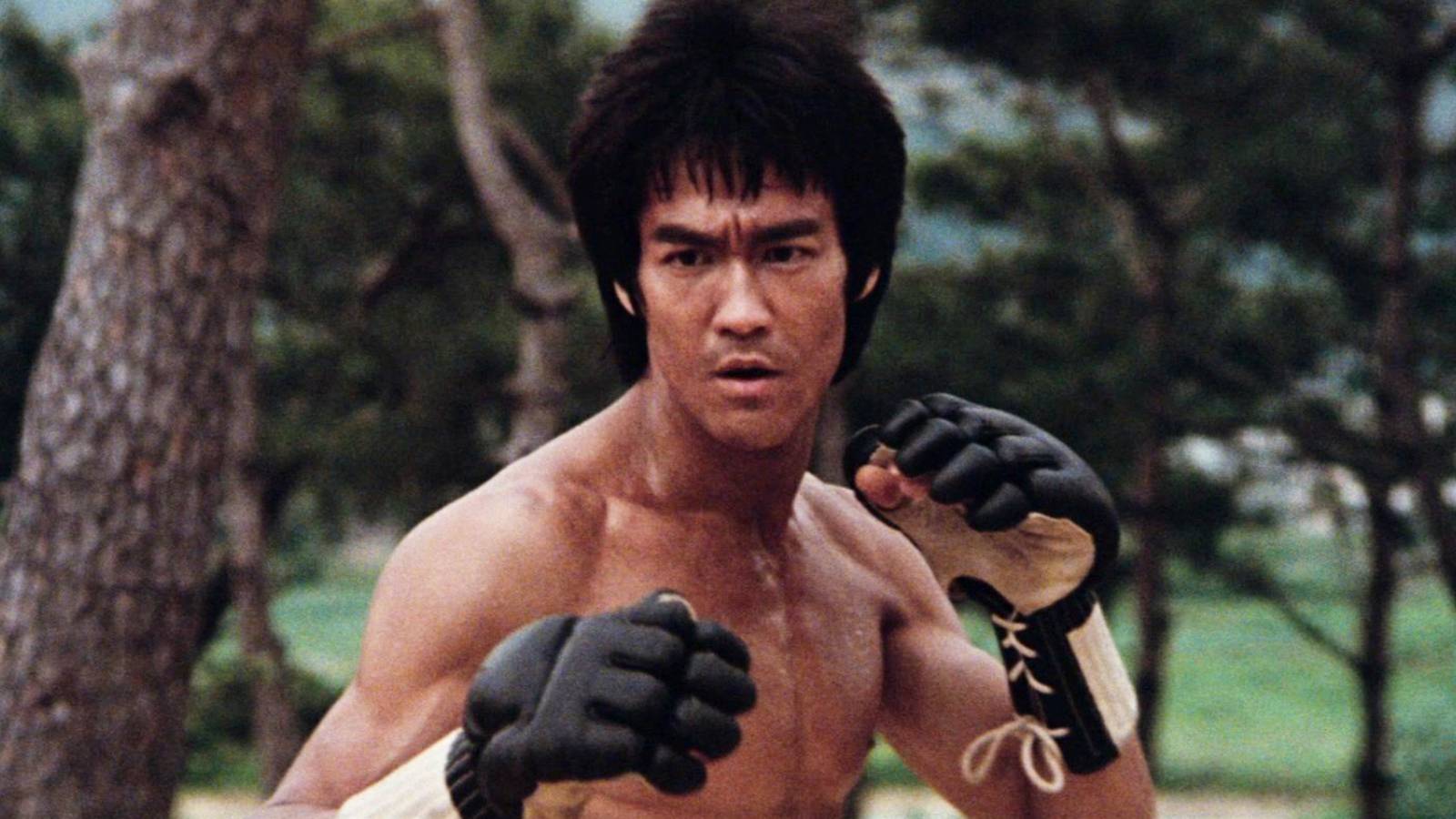
Image via Golden Harvest Published Aug 20, 2026, 7:04 AM EDT Jeremy has more than 2700 published articles on Collider to his name, and has been writing for the site since February 2022. He's an omnivore when it comes to his movie-watching diet, so will gladly watch and write about almost anything, from old Godzilla films to gangster flicks to samurai movies to classic musicals to the French New Wave to the MCU... well, maybe not the Disney+ shows. His favorite directors include Martin Scorsese, Sergio Leone, Akira Kurosawa, Quentin Tarantino, Werner Herzog, John Woo, Bob Fosse, Fritz Lang, Guillermo del Toro, and Yoji Yamada. He's also very proud of the fact that he's seen every single Nicolas Cage movie released before 2022, even though doing so often felt like a tremendous waste of time. He's plagued by the question of whether or not The Room is genuinely terrible or some kind of accidental masterpiece, and has been for more than 12 years (and a similar number of viewings). When he's not writing lists - and the occasional feature article - for Collider, he also likes to upload film reviews to his Letterboxd profile (username: Jeremy Urquhart) and Instagram account. He has achieved his 2025 goal of reading all 13,467 novels written by Stephen King, and plans to spend the next year or two getting through the author's 82,756 short stories and 105,433 novellas. Sign in to your Collider account Plenty of the best martial arts movies of all time were produced – or co-produced – by Hong Kong. Shaw Brothers Studio is a big reason for that, with the company producing hits in the 1960s, admittedly, but having many of its best releases come out in the 1970s. There was also Golden Harvest, which might've peaked a little later, having produced plenty of iconic 1980s martial arts movies (like Police Story). Still, the following movies make it look like the 1970s was the golden era for Hong Kong martial arts cinema, because these titles are all among the best of the best. Co-productions are not disqualified, either, in the event that movies were produced by more than one studio, and one of those studios was not based in Hong Kong. 10 'The Avenging Eagle' (1978) Image via Shaw Brothers Studio The Avenging Eagle deserves more love and attention than it tends to get, but it might just be overshadowed by the abundance of martial arts movies from its decade. It’s nice and simple, being a martial arts movie all about revenge, with two people wanting to enact vengeance on the same target, albeit for different reasons, so they form an uneasy alliance and then lots of fighting ensues. There’s nothing here that can be faulted, because the plot works well enough and then The Avenging Eagle goes above and beyond when it comes to delivering a good deal of well-executed and choreographed action. It’s also a great showcase for its stars, including Alexander Fu Sheng, who died tragically young, which shook up the production of The 8 Diagram Pole Fighter (another great Hong Kong martial arts movie, but that one came out in the 1980s). 9 'The Way of the Dragon' (1972) Image via Golden Harvest The best movie Chuck Norris ever featured in would have to be The Way of the Dragon, though he’s not the lead or hero here the way he often was in his 1980s movies. Bruce Lee is the star, and Norris plays the fiercest of the opponents he comes up against throughout the whole film, with their fight scene being the undeniable highlight. Things escalate, as you'd expect, and Bruce Lee fights a bunch of people, all before eventually fighting Chuck Norris. It is the best reason to watch The Way of the Dragon: Bruce Lee and Chuck Norris fight. There you go. That’s all you need. But if you want to know a bit more, it’s about a man standing up against criminals, all to help out some relatives. Things escalate, as you'd expect, and Bruce Lee fights a bunch of people, all before eventually fighting Chuck Norris. There, you got some more, but did you really need it? Again: Bruce vs. Chuck. 8 'The Super Inframan' (1975) Image via Shaw Brothers Studio Alongside calling The Super Inframan a martial arts movie, it’s also a superhero film and a B-grade science fiction one, alongside almost being a comedy? Well, at least it’s silly, and seems to be at least pretty aware of the silliness, because it takes itself a lot less seriously than most films produced by Shaw Brothers Studios. It’s a little more in line with the Showa era Godzilla movies, tonally speaking, than most martial arts films. It’s about monsters trying to take over the world, but they're not really giant ones, so it’s not like Godzilla in terms of being a kaiju movie. Still, the special effects are similar, and the plot is also wonderfully simple: a man is given superpowers through an experiment, and then he defends the world from the invading monsters. The Super Inframan is a great blend of so many chaotic genres, and even if it’s technically an acquired taste, you should still probably give it a shot. 7 'Vengeance!' (1970) Image via Shaw Brothers Like The Avenging Eagle, Vengeance! doesn’t really mess around and does what you'd expect. It is especially brutal for a movie of its time, being one of the few films that’s well over half a century old that might still make you wince at times, when watched today. The plot couldn’t be simpler, with the complex stuff coming about because of how far the main character goes in getting vengeance after his brother is murdered. He makes some kind of shift from sympathetic to more of an anti-hero, and then maybe even someone who’s not really much better than the villainous characters he was going after in the first place. Vengeance! would make for a good double feature, at least thematically, with Lady Snowblood, which is similarly bloody and despairing (though watching both back-to-back could admittedly be quite depressing). 6 'The Boxer from Shantung' (1972) Image via Shaw Brothers Studio While The Boxer from Shantung was set way back in the past, in the 1930s, and doesn’t feel modern in the more conventional sense, it does feel a bit more modern with what it does narratively, and what it does with the genres it belongs to. Basically, it plays out a bit like a gangster film, since the narrative here feels like a rise-and-fall kind of thing, and the finale feels very Scarface (1983). Then again, this came out about a decade before Scarface, so maybe the finale from Scarface is kind of the finale from The Boxer from Shantung. And it’s all hand-to-hand fighting and chaos, rather than the explosive gunfight found in that Scarface remake. Maybe it doesn’t need to be 134 minutes, but even then, most of The Boxer from Shantung is very compelling, and the final act is undeniably top-tier, as far as the martial arts genre goes. 5 'Drunken Master' (1978) Image via Golden Harvest Company Jackie Chan and Yuen Woo-ping paired up to make Drunken Master, and yes, the former is more of a household name, but anyone into martial arts should know the latter’s name, too. Jackie Chan, of course, is an actor and has also directed some of his own movies, while Yuen Woo-ping is best known for his work as an action choreographer (for some of The Matrix movies and Kill Bill, for example), and has also directed quite a few movies, too. Drunken Master is very reliable stuff if you're a fan of either martial arts legend, or both of these martial arts legends. There’s some comedy here that comes about from the drunken fighting style, and as you're probably aware, if you’ve seen your fair share of Jackie Chan movies, the star’s very good at that kind of martial arts film. 4 'Last Hurrah for Chivalry' (1979) You probably know John Woo because of his films that tend to feature slow-motion gunfights and scenes of doves flying around all over the place, but he’s also great at directing martial arts movies with hand-to-hand action, if Last Hurrah for Chivalry is anything to go by. It’s a convoluted one narratively, so it’s almost better not to worry too much about why exactly people are fighting and what causes certain conflicts to escalate. The important thing is that the fighting is extremely well-filmed and continually exciting. Also, it builds so well throughout, giving you one great fight scene that you can’t imagine will be topped, but then each scene is, again and again, more or less relentlessly throughout. It’s pretty easy to consider Last Hurrah for Chivalry one of the most underrated movies John Woo’s directed, with its quality being almost up there with films like A Better Tomorrow, The Killer, and Hard Boiled. 3 'A Touch of Zen' (1970) Image via Golden Harvest It’s important to mention that A Touch of Zen was a co-production between Hong Kong and Taiwan, so it’s not a full-blown Hong Kong movie. Still, if it was a co-production, it’s fair game to be included, and it would feel wrong to leave off a martial arts movie this grand, ambitious, and visually bold. A Touch of Zen is three hours long, and quite a bit of it isn't even all that action-packed, to be honest. The action is generally saved for the final act, and said final act is worth the price of admission (or worth the three hours of time you'll need to devote to watching it). A Touch of Zen also has a bit more going on narratively and thematically than most of the other martial arts movies being mentioned here, sort of being like an arthouse (and epic) martial arts film. Can that combination of genres really work? Apparently, yes. 2 'The 36th Chamber of Shaolin' (1978) Image via Shaw Brothers Studio The 36th Chamber of Shaolin might well be the ultimate martial arts movie about training, which is often a big part of the genre, yet the extent to which The 36th Chamber of Shaolin focuses on it is noteworthy. By the time the action comes around, with the main character having completed his training, it feels like more of an epilogue than a climax, since it’s obvious he’s going to annihilate those he wants vengeance against. And that’s okay, since so much time is spent getting the protagonist powerful enough. The 36th Chamber of Shaolin is about the training, and even if that might sound boring or disappointing, it genuinely never runs the risk of being those things. It’s almost as essential as martial arts movies get, and it would also make for a good place to start if you’ve somehow never seen a Shaw Brothers Studio film before. 1 'Enter the Dragon' (1973) Image via Warner Bros. The last film Bruce Lee starred in that was completed was Enter the Dragon, with the last scenes he shot for a movie being featured in Game of Death. Game of Death, for the record, is kind of unwatchable outside the Bruce Lee scenes, because it was a forced attempt to complete a movie that had barely been shot without its star. Just skip to the final 15 to 20 minutes, if you're a Bruce Lee completionist. With Enter the Dragon, you get a nice mix of genres, since it takes place around a martial arts competition, but it’s actually more of a spy movie where the action eventually spills out from the tournament fighting scenes. It’s also well-paced, and has a good cast beyond just Bruce Lee, though he does shine the brightest here, it has to be acknowledged. Also to be acknowledged: Enter the Dragon is another co-production, this time being between Hong Kong and the U.S. (the director, Robert Clouse, was American).
10 Best Hong Kong Martial Arts Movies of the 1970s
Full Article
Original Source
Read the full article at Collider →KhanList aggregates and links to publicly available news content. We do not host full articles from third-party sources. Always verify important information with original sources.