
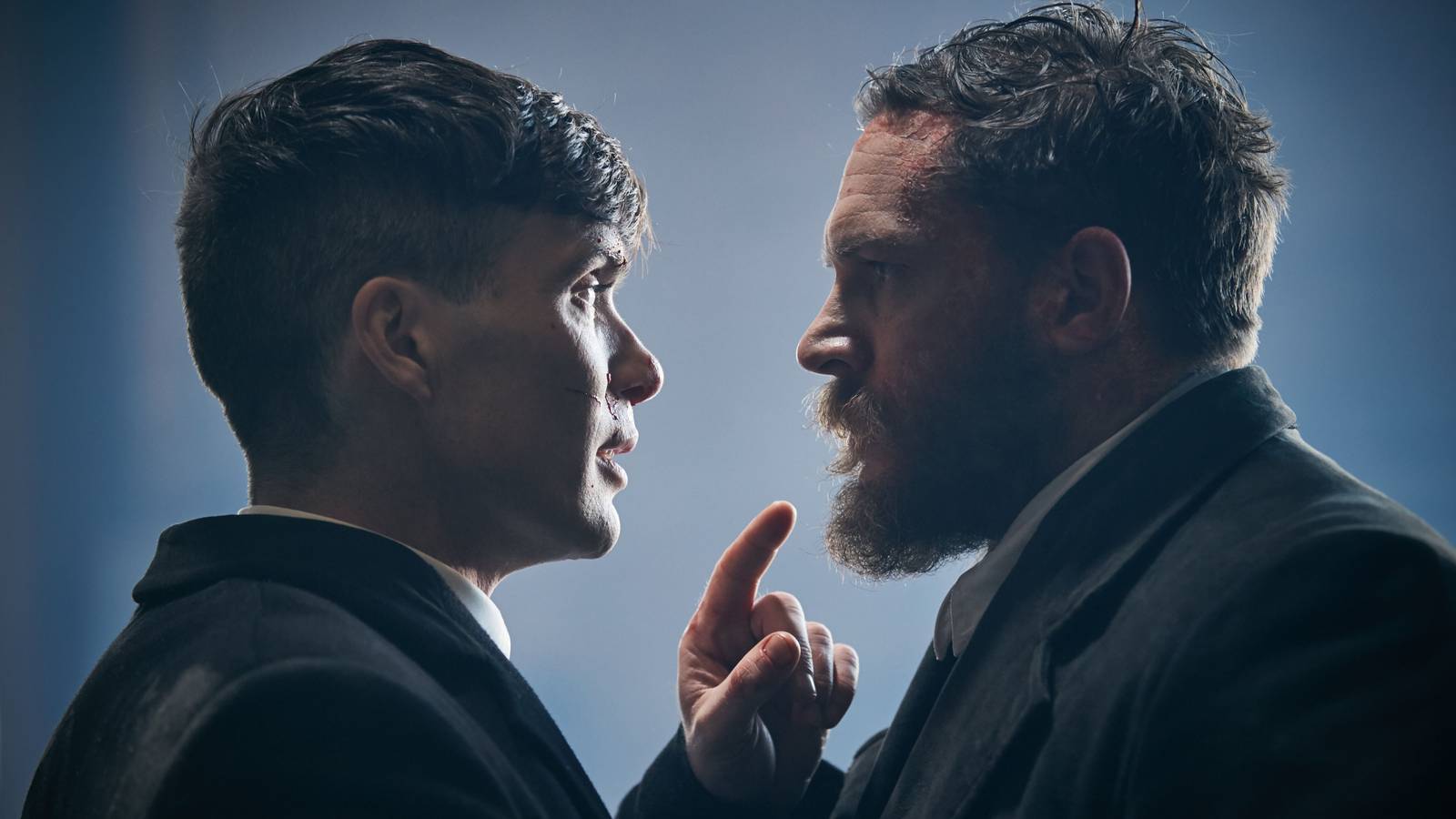
The allure of the gangster archetype lies in their role as dark reflections of the American Dream: the promise that freedom, money, and status can be earned through one’s own efforts, if one is willing to pay the price in blood. A great gangster villain elevates the narrative by exposing the darkest corners of ambition and the cost of corruption. The golden age of television saw gangster antagonists evolve from one-dimensional enforcers in fedoras into terrifyingly complex figures with a mix of cunning, unpredictability, and charisma, in contrast to their brutality. Regardless of the setting, these villains dominate every scene they are in, turning already good shows into timeless masterpieces. Nonetheless, television history is full of characters that have made a lasting impression on pop culture, from bloodthirsty psychopathic enforcers to slick-talking corporate cartel leaders. However, this handful of characters below set the gold standard for television villainy, outright cementing their legacy as the best of all time. 10 David Proval’s Richie Aprile - The Sopranos The Sopranos featured several compelling characters in its six-season run, but few were as instantly captivating as Richie Aprile. Richie is an old-school gangster and the poster child for entitlement, toxicity, and unyielding resentment. After serving a ten-year prison sentence, he returned to New Jersey to find a mob landscape that had moved on without him. Richie is unpredictably aggressive, always looking over his shoulder and making rash decisions. Unable to adapt to his diminished status, he ignores authority and operates by a primitive street-power code. He paralyses a former associate over a minor feud, runs illegal jacket rackets through legitimate businesses, and brazenly defies Tony’s orders on drug dealing along garbage routes. Ultimately, his inability to control his dark impulses leads to his own downfall. When he punches his fiancée, Janice Soprano, during a dinner argument, she shoots him dead. Richie spent his time on the show as an unpredictable wildcard, trying to rally support for a coup against Tony. He was a danger to everyone around him, including himself. 9 Cristin Milioti’s Sofia Falcone - Penguin Sofia Falcone in The Penguin is a deceptively psychotic and intelligent force of nature, as dangerous as she is beautiful. Sofia was placed in Arkham Asylum by her own father, Carmine Falcone, where she endured brutal psychological torture; when she was released, she emerged as a deeply traumatised, calculated predator. She is exceptionally capable, dismantling the patriarchal mob structure that betrayed her and burning down her enemies without giving up her femininity. Elegant, intelligent, and dangerous, Sofia Falcone stands out as a woman who effortlessly dominated the male-dominated world of organised crime, leaving her mark in television history as one of the best of all time. 8 Bokeem Woodbine’s Mike Milligan - Fargo Season 2 of Fargo introduces Mike Milligan, a smooth-talking corporate crime lieutenant sent by the Kansas City mob to absorb the family-run Gerhardt dynasty. Language is his weapon: he quotes literature, delivers dry, witty monologues, and speaks with a polite, measured cadence that unnerves rivals, turning territorial negotiations into quiet psychological intimidation before a shot is fired. Accompanied by the Kitchen Brothers, he navigates racial prejudice from Midwestern law enforcement officers and mob superiors through competence and will-driven violence. After surviving a brutal gang war and securing a whole region, he is rewarded with a windowless office desk, a typewriter, and a calculator. His arc ends on a beautifully tragic note, leaving audiences speechless. 7 Michael Shannon’s Nelson Van Alden - Boardwalk Empire Michael Shannon leaves nothing to be desired as Nelson Van Alden in Boardwalk Empire, one of television’s most fascinatingly tragic characters. A religious fanatic, his self-righteous repression turns him into the mobsters he condemned. Initially a Prohibition agent leading the charge against Nucky Thompson, Van Alden embodies the facade of puritanical virtue. Underneath his slick exterior is a hypocritical, unstable man whose repressed vices, explosive temper, and brutal self-flagellation threaten his righteousness. Van Alden is especially fascinating for his gradual descent into criminality. After submerging a crooked agent in baptismal fervour and fleeing to Chicago as “George Mueller,” he loses his moral footing, selling irons, then working for O’Banion and Capone. 6 Adrien Brody’s Luca Changretta - Peaky Blinders Luca Changretta was a refreshing addition to Peaky Blinders, bringing a full-scale Sicilian blood feud to the industrial streets of Birmingham and serving as one of the most stylishly lethal threats the Shelby family ever faced. Arriving from New York to avenge his father’s death, Luca begins a personal vendetta signalled by black hands mailed to his targets. Dressed in a finely tailored suit, a toothpick between his teeth, Luca projects the elegant, predatory lethality of a seasoned mobster. He is a formidable antagonist, ruthlessly focused on psychological torture before the final blow. He did not just want Tommy Shelby dead; he wanted to destroy his entire family and systematically ruin his empire. Luca struck at the very heart of the Shelbys’ home turf, using his superior numbers and strategic alliances with rival factions like Alfie Solomons to push the Shelbys into a desperate corner. His inevitable downfall came from underestimating Tommy Shelby’s strategic mind, foresight, and ability to make advantageous backroom deals. 5 Stephen Graham’s Al Capone - Boardwalk Empire Al Capone in Boardwalk Empire is a masterclass in slow-burn character evolution, tracing the rise of a hot-headed, low-level driver to Chicago’s most infamous and feared crime kingpin. He starts as an ambitious, insecure goon for Johnny Torrio, motivated by a toxic combination of fragile pride and violent, explosive urges. His insecurities about his appearance make him prone to violent and brutal outbursts to compensate for his shortcomings. He brutally beats rivals to death while building his own empire in Cicero. Despite his psychopathy, there is some humanity buried within him that makes him a deeply complex, 3-dimensional villain to watch on screen. Capone is portrayed as a devoted family man who genuinely cares for his family, even learning sign language to connect more with his deaf son. The stark contrast between his roles as a tender father and a ruthless mob boss gives him depth that other moustache-twirling villains cannot match, placing him at the pinnacle of villainy in the genre. 4 Tom Hardy’s Alfie Solomons - Peaky Blinders Alfie Solomons is a walking enigma on Peaky Blinders. Half genius, half madman. A force of nature that turns Camden Town into a volatile, highly profitable kingdom. Alfie is the head of a murderous Jewish gang in interwar London, and he combines an unusual blend of black humour, clever and theatrical negotiating skills, and brutal, pragmatic violence. Furthermore, he carries himself with a deceptively rambling, mumbling cadence, often using his eccentric, unhinged baker appearance to catch rivals off guard before killing them or backing them into a corner. What sets Alfie apart is his hypocrisy and lack of moral code; he is difficult to predict and is always three steps ahead of most others. 3 Vincent D’Onofrio’s Wilson Fisk - Daredevil Jojo Whilden /©Disney+/Marvel Studios /Courtesy Everett Collection Wilson Fisk, aka the Kingpin, is a horrific blend of brains and brawn who rules New York City in Daredevil. He is a tragic, deeply insecure man-child trapped in the body of a leviathan. His traumatic upbringing led Wilson to believe that he alone could save Hell’s Kitchen by tearing it down and rebuilding it in his image. Fisk combines high-level financial racketeering with political manipulation to create and control his criminal empire. He moves through society with a carefully curated formal persona, yet is prone to sudden outbursts of primal rage when the cameras are off. The tragic humanity underpinning his monstrous ambition is what makes Wilson Fisk a deeply complex and captivating villain. His violent ambition stems from deep childhood trauma and an obsessive need to project strength, never again to feel helpless. His love for Vanessa, an art dealer, humanises him and, in turn, becomes his greatest vulnerability. She catalyses his transformation into an unstoppable force, willing to burn the entire city to protect what is his. 2 Frank Vincent’s Phil Leotardo - The Sopranos Phil Leotardo in The Sopranos is the living embodiment of old-school mob grievances and stubborn toxic pride. After serving a 20-year prison sentence, he never fully moves on; he returns to a Lupertazzi crime family that he feels has abandoned its values. Phil represents the archaic, rigid, unforgiving era of La Cosa Nostra, which sees diplomacy and compromise as weaknesses. What makes Phil an iconic final antagonist for Tony Soprano is his relentless grudge-holding: avenging his murdered brother, he murders his cousin-in-law Vito Spatafore, partly from homophobia, and launches an all-out war against New Jersey. He seeks to decapitate and absorb the DiMeo family, clinging to an outdated code that makes him one of television’s most hostile figures. 1 Giancarlo Esposito’s Gus Fring - Breaking Bad Gustavo “Gus” Fring from Breaking Bad set the blueprint for intelligent mastermind villains who perfected the art of hiding in plain sight. He evades the police by masquerading as the soft-spoken owner of the Los Pollos Hermanos fast-food franchise. His mild-mannered public persona is the ultimate camouflage for a vast, multi-million-dollar methamphetamine empire. Moreover, his ability to outthink and outmanoeuvre anyone he faces, whether the police or other cartel bosses, makes Fring truly dangerous. He doesn’t act on emotion; instead, he takes the most logical route to achieve his goals, even if it means treating everyone around him as an asset to be used or discarded. He has a terrifying capacity for cruelty, shown when he used a box cutter to slit open his loyal henchman Victor’s throat in front of Walter White and Jesse Pinkman, an act driven not by anger but by ruthless pragmatism. Gus is a cold, calculated villain who never fails to keep the big picture in view. Release Date 2008 - 2013-00-00 Network AMC Showrunner Vince Gilligan Breaking Bad, created by Vince Gilligan, follows a chemistry teacher turned drug kingpin named Walter White (Bryan Cranston) as he attempts to provide for his family following a fatal diagnosis. With nothing left to fear, White ascends to power in the world of drugs and crime, transforming the simple family man into someone known only as Heisenberg.
10 Best Gangster TV Show Villains of All Time
Full Article
Original Source
Read the full article at Screenrant →KhanList aggregates and links to publicly available news content. We do not host full articles from third-party sources. Always verify important information with original sources.