
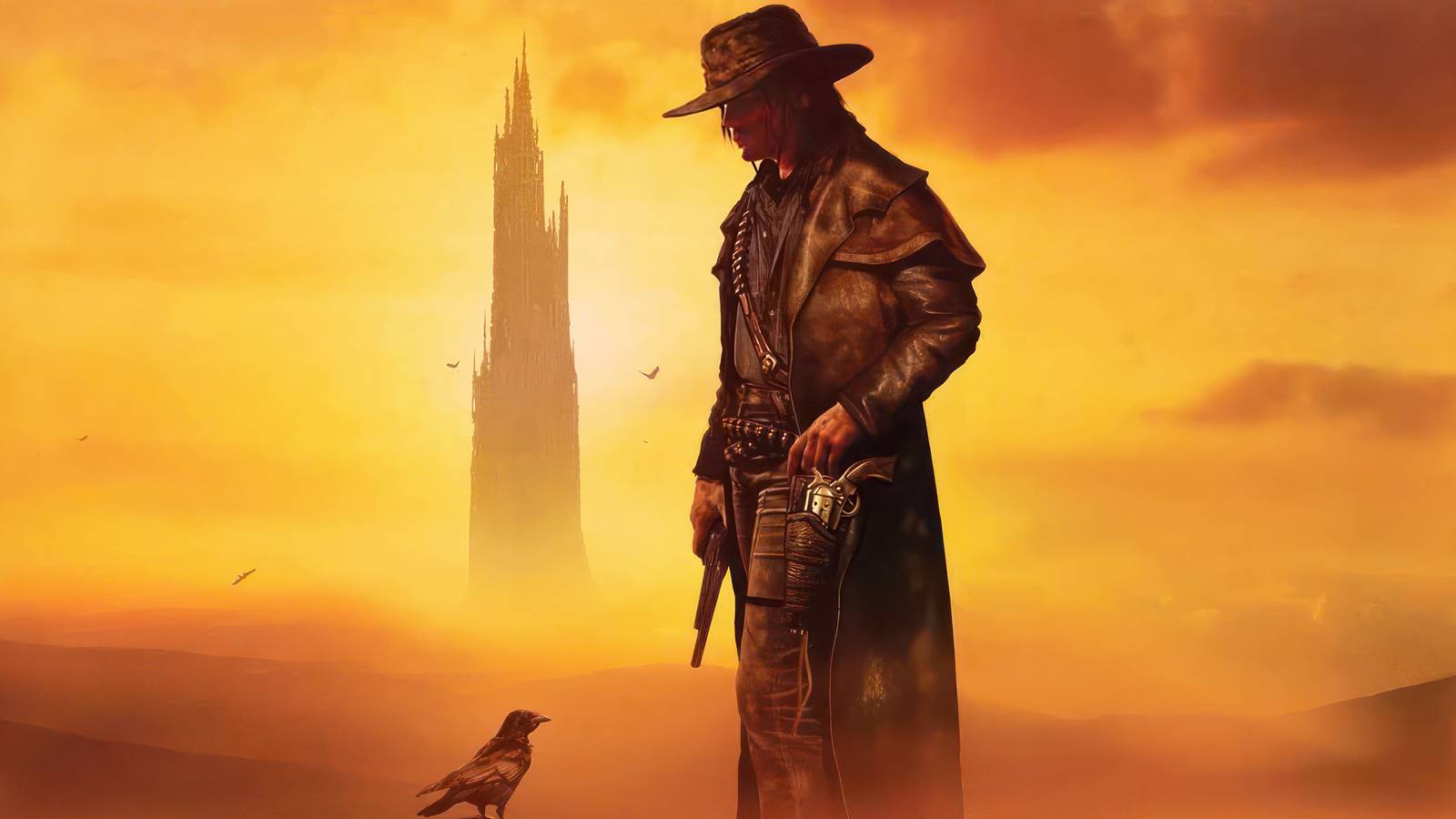
Published Aug 13, 2026, 5:19 PM EDT Luc Haasbroek is a writer and videographer from Durban, South Africa. He has been writing professionally about pop culture for eight years. Luc's areas of interest are broad: he's just as passionate about psychology and history as he is about movies and TV. He's especially drawn to the places where these topics overlap. Luc is also an avid producer of video essays and looks forward to expanding his writing career. When not writing, he can be found hiking, playing Dungeons & Dragons, hanging out with his cats, and doing deep dives on whatever topic happens to have captured his interest that week. Sign in to your Collider account Fantasy entered the 1980s still living under the enormous shadow of Lord of the Rings. Tolkien's influence had helped transform the genre into a publishing force, but it had also inspired countless novels built from increasingly familiar ingredients: quests, prophecies, magical artifacts, medieval kingdoms, and battles between clearly defined forces of good and evil. Consequently, during that decade, some writers continued those traditions brilliantly, and others began dismantling them. This list looks at the very best of these books, some of which executed classic tropes with unusual style and confidence, while others pushed the genre into fresh new territory. 10 'Fevre Dream' (1982) "The river hides things even daylight cannot expose." Years before Game of Thrones made him one of fantasy's most famous writers, George R. R. Martin wrote one of the strongest vampire novels of the late 20th century. Fevre Dream transports the subgenre's trope to a fresh setting: the Mississippi River. In it, struggling steamboat captain Abner Marsh enters into a partnership with the wealthy, mysterious Joshua York. But when it turns out that there are bloodsuckers aboard, the boat becomes a battlefield. The story is tense and engaging, a gleeful hybrid of Bram Stoker and Mark Twain, as the author himself put it. The best part of it is the rich historical setting. Steamboats, river towns, changing technology, and the Mississippi itself give the story a distinctive identity far removed from Gothic castles and European aristocrats. Martin's vampires are equally memorable, with competing philosophies regarding humanity. 9 'Redwall' (1986) "Heroes can come in the smallest forms." Brian Jacques' Redwall books combine genuinely compelling fantasy action with a delightful cuteness overload. Set in a world inhabited by anthropomorphic animals, the plot of the first book centers on the young mouse Matthias, who embarks on a search for the legendary sword of Martin the Warrior to fend off the advance of the ruthless rat Cluny the Scourge and his army. It's classic fantasy stuff: riddles to solve, ancient legends to uncover, villains to defeat, feasts to enjoy, and heroic deeds to perform. Yet the unusual animal civilization gives these familiar elements a personality entirely their own, with different species developing distinctive cultures and characteristics. The series remains beloved today, and it has inspired various tabletop RPGs and board games like "Mouseguard" and "Aftermath", as well as Magic: The Gathering's "Bloomburrow" expansion. 8 'The Gunslinger' (1982) Image via Donald M. Grant, Publisher "The man in black fled across the desert, and the gunslinger followed." Although utterly butchered by the movie adaptation, Stephen King's dark fantasy novel The Gunslinger remains a lean, mean banger, clocking in at a little over 200 pages. We follow Roland Deschain, the last gunslinger, as he pursues the mysterious Man in Black across a desolate landscape. Along the way, fragments of Roland's history and the strange world surrounding him gradually emerge, suggesting a civilization where time, technology, magic, and reality itself have begun breaking down. Readers encounter abandoned machinery alongside supernatural forces, violent frontier towns alongside ancient prophecies, and hints that Roland's world may somehow intersect with our own. It's a unique mix of horror, fantasy, Western, and post-apocalyptic dystopia, mashing together ideas from Lord of the Rings and The Good, the Bad and the Ugly, but all filtered through King's sui generis perspective. 7 'Magician' (1982) "An ordinary boy can become part of an extraordinary history." This was the opening chapter of Raymond E. Feist's mega-bestselling Riftwar Cycle. It primarily follows Pug, an orphan raised at Castle Crydee who becomes apprenticed to the magician Kulgan. His relatively ordinary life changes dramatically when mysterious invaders arrive through magical rifts connecting Midkemia to another world. It's up to Pug to close these gateways once and for all. While not necessarily groundbreaking, Magician is fittingly grand and entertaining, delivering everything that fantasy fans love to see. Indeed, it lovingly embraces the fundamentals of the epic fantasy tradition. For instance, the book starts off as a coming-of-age story, with classic magical education story beats, but eventually expands into a sweeping adventure replete with political intrigue, brutal warfare, and universe-threatening interdimensional conflict. The protagonist's character development mirrors that expansion. 6 'Pawn of Prophecy' (1982) "Every great quest begins before the hero understands it." This is another fairly traditional but undeniably entertaining epic fantasy. The first entry in the five-book Belgariad series, Pawn of Prophecy centers on Garion, an apparently ordinary farm boy raised by his formidable Aunt Pol. His sheltered existence ends when circumstances force them to leave home alongside the enigmatic storyteller known as Mister Wolf. Soon, Garion realizes that his companions know considerably more about his identity and destiny than they are willing to reveal. The tale that follows features a stone orb with a living soul, scheming sorcerers, wild boar attacks, spies, princes, gods, secret identities, wandering storytellers, and daring escape attempts. That said, the book's greatest strength might be the chemistry among his characters. Banter and personality drive the adventure, and their conversations feel a lot more lively and modern than what you find in most '80s fantasy. 5 'Matilda' (1988) "Sometimes the smallest person can possess the greatest power." Roald Dahl published a ton of classics, and Matilda was one of his late-career masterpieces. It's about an extraordinarily intelligent girl born into a family that regards intelligence as an inconvenience. School initially offers little improvement thanks to the terrifying headmistress Miss Trunchbull, yet Matilda eventually discovers that her remarkable mind may possess abilities extending beyond smarts alone. Crucially, Dahl understands exactly how the world can appear from a child's perspective. Adults possess enormous arbitrary power, injustices feel infuriatingly unfair, and small victories against authority can become acts of heroic resistance. Matilda's supernatural abilities therefore work as more than a fantastical gimmick; they become an extension of her refusal to remain powerless. All this adds up to a funny, satisfying, timeless gem. 4 'The Black Company' (1984) Image via Tor Books "Heroes depend on who's telling the history." Long before "grimdark" became a thing, Glen Cook was already questioning the heroic assumptions underlying traditional epic fantasy, opening huge new possibilities for the genre in the process. Narrated primarily by the physician Croaker, the novel follows the Black Company after it enters the service of the Lady, an immensely powerful ruler fighting a rebellion against her empire. However, the story broke ground by painting its protagonists in dark shades of gray. Rather than being noble heroes attempting to save civilization, the soldiers are simply professionals fulfilling a contract while trying to keep one another alive. The violence is fittingly bone-crunching and bereft of the usual easy morality and neat divisions between good and evil. Countless fantasy writers would take note, making this one of the decade's most influential gen renovels. 3 'The Mists of Avalon' (1983) Image via Alfred A. Knopf "Every legend changes depending on who tells it." This is one of the most striking and radical reimaginings of Arthurian legend. Rather than centering Arthur, Lancelot, Merlin, and the knights who traditionally dominate the mythology, The Mists of Avalon places women such as Morgaine and Gwenhwyfar at the heart of the story. Around them, Britain undergoes enormous religious and political change. In particular, Christianity grows increasingly powerful while the older pagan traditions struggle to survive. Consequently, on top of being a tale of spells and swords and secret romance, the story is also a statement on the conflict between competing cultures and beliefs. For all these reasons, the novel inspired a lot of later revisionist fantasy. Whatever readers make of its interpretations of its source material, The Mists of Avalon unquestionably demonstrated the creative possibilities of taking an ancient story apart and reconstructing it from new perspectives. 2 'The Dragonbone Chair' (1988) Image via DAW "Make a home for yourself inside your own head." In The Dragonbone Chair, we meet Simon, an orphan working as a kitchen boy in the Hayholt, whose life changes following the death of the elderly King John Presbyter. A succession crisis draws the world of Osten Ard toward war, forcing Simon into a journey that gradually exposes him to the complicated history underlying the kingdom's conflicts. Refreshingly, author Tad Williams takes his time establishing both Simon and the world around him. That patience allows the protagonist's development to feel unusually convincing, while the political and historical complexity of Osten Ard adds a lot of depth and dimension to the conflict. Altogether, this book served as the pivotal bridge between classic Tolkienesque high fantasy and modern grimdark/epic fantasy, making it one of the most important 1980s fantasy releases. 1 'The Colour of Magic' (1983) "Fantasy had finally learned to laugh at itself." This was the first book in Terry Pratchett's brilliant Discworld series, and it arrived on the fantasy scene like a thunderbolt. By 1983, the genre had accumulated enough conventions and stereotypes to become ripe for parody, and Pratchett gleefully targeted virtually all of them. The story revolves around the spectacularly incompetent wizard Rincewind after he becomes the reluctant guide to Twoflower, Discworld's first tourist. Along the way, countless books and characters are skewered, making for a hilarious send-up of sword-and-sorcery adventures. However, Pratchett also goes way beyond that, serving up genuinely layered characters and endlessly imaginative world-building. In addition to being a genre parody, The Colour of Magic and its sequels are satires of real-world issues like politics, religion, economics, technology, prejudice, and the foibles of human nature, all smuggled into an entertaining comedy package. Collider Exclusive · The Sorting Hat Awaits Which Hogwarts House Are You? Gryffindor · Slytherin · Hufflepuff · Ravenclaw Four houses. One destiny. The Sorting Hat has considered thousands of students — now it's your turn. Answer honestly and discover where you truly belong at Hogwarts School of Witchcraft and Wizardry. 🦁Gryffindor 🐍Slytherin 🦡Hufflepuff 🦅Ravenclaw PLACE THE HAT → 01 What quality do you value most in yourself? Answer as honestly as you can — the Hat always knows. ACourage — I act even when I'm afraid, because what's right matters more than what's safe. BAmbition — I know what I want and I have the drive and cunning to get there. CLoyalty — I show up for the people I love, no matter what it costs me. DWisdom — I think before I act and I'm always hungry to understand more. NEXT QUESTION → 02 A friend is being treated unfairly. What do you do? How you protect others says everything about who you are. AStep in immediately and confront whoever is responsible — I won't stand by. BWork out the best strategy to address it — a smart move beats a rash one. CBe by their side, support them, and help them through it however they need. DAnalyse what's actually happening and find the most reasoned, fair solution. NEXT QUESTION → 03 What does success look like to you? What you're working toward defines who you're becoming. ABeing remembered as someone who fought for what was right, whatever the odds. BAchieving the goals I set for myself — influence, status, and earned respect. CA life where the people I care about know I was there for them, always. DMastering my field, contributing something meaningful, and never stopping learning. NEXT QUESTION → 04 What is your greatest fear? Fear is the most honest thing about a person. ABeing a coward when it mattered — looking back and knowing I did nothing. BMediocrity — fading into obscurity without making my mark on the world. CLosing the people I love or letting them down when they needed me most. DIgnorance — being wrong and not knowing it, or never reaching my potential. NEXT QUESTION → 05 The rules say no. Your gut says go. What do you do? Every institution has rules. What you do with them is a choice. ABreak the rules — if it's the right thing to do, no rule should stop me. BFind a way to get what I want without getting caught. Rules are guidelines. CProbably follow the rules — but I'd find a way to help within them if I could. DThink it through carefully — is the rule unjust, or is my gut just impatient? NEXT QUESTION → 06 What kind of friend are you? Who you are to the people you love is who you really are. AThe protector — I will go to the ends of the earth for the people I care about. BThe strategist — I give sharp advice and I'm the one who figures out how to fix things. CThe constant — I'm always there, always reliable, and I never make it about me. DThe guide — I help people think things through and see perspectives they've missed. NEXT QUESTION → 07 You look into the Mirror of Erised. What do you see? The mirror shows the deepest desire of your heart. AYourself standing victorious, having faced the greatest challenge and won. BYourself at the height of your power — respected, successful, and in control. CYourself surrounded by everyone you love, whole and happy and together. DYourself with all the answers — every book read, every mystery solved. NEXT QUESTION → 08 The Sorting Hat pauses. It whispers: "You could do well in any house. But what matters most to you — truly?" This is your tiebreaker. The Hat always listens. ABravery. I want to be the kind of person who acts when others won't. BGreatness. I want to leave my mark and be more than ordinary. CBelonging. I want to be part of something good and never let my people down. DUnderstanding. I want to know the truth of things and keep growing forever. REVEAL MY HOUSE → The Sorting Hat Speaks Your House Has Been ChosenAfter careful deliberation, the Sorting Hat has made its decision. This is the house your values, your instincts, and your particular way of being in the world were made for. 🦁 GryffindorYou have nerve. Not the reckless kind, but the deep, quiet courage that shows up even when you're terrified — especially then. Gryffindors don't act because they're fearless — they act because they understand that some things are worth being afraid for. You stand up for people when it would be easier to look away. You charge toward what's right even when the odds are terrible. Harry, Hermione, Ron — the heroes of Hogwarts's greatest chapter — all called the tower with the scarlet and gold home. And now, so do you. 🐍 SlytherinYou are driven, sharp, and utterly clear-eyed about what you want and how to get there. Slytherin has long been misunderstood — painted as the house of villains when it is, at its best, the house of those who refuse to accept limits placed on them by others. You are resourceful, strategic, and you play the long game. You know your worth. You protect your own fiercely. The dungeon common room with its view of the Black Lake is yours — and the ambitions that will take you further than anyone expects are yours too. 🦡 HufflepuffYou are the kind of person that makes the world genuinely better just by being in it. Hufflepuff is not the "safe" house or the "leftover" house — it is the house of those with the greatest heart and the most unwavering integrity. You show up. You work hard. You don't need glory or recognition — you do what's right because it's right. Your loyalty never wavers, even when tested. Nymphadora Tonks, Cedric Diggory, Newt Scamander — some of the wizarding world's finest. And now you join them. 🦅 RavenclawYour mind is your greatest gift, and you've always known it. Ravenclaws are the thinkers, the questioners, the ones who find a puzzle irresistible and a good book better company than most people. Ravenclaw is not merely about intelligence — it's about the love of learning, the pursuit of truth, and the rare courage to admit you don't know something yet. You see the world with unusual clarity and depth. Luna Lovegood, Filius Flitwick, Rowena Ravenclaw herself — all extraordinary, all original. And so are you. ↻ RETAKE THE QUIZ
10 Best Fantasy Books of the 1980s
Full Article
Original Source
Read the full article at Collider →KhanList aggregates and links to publicly available news content. We do not host full articles from third-party sources. Always verify important information with original sources.