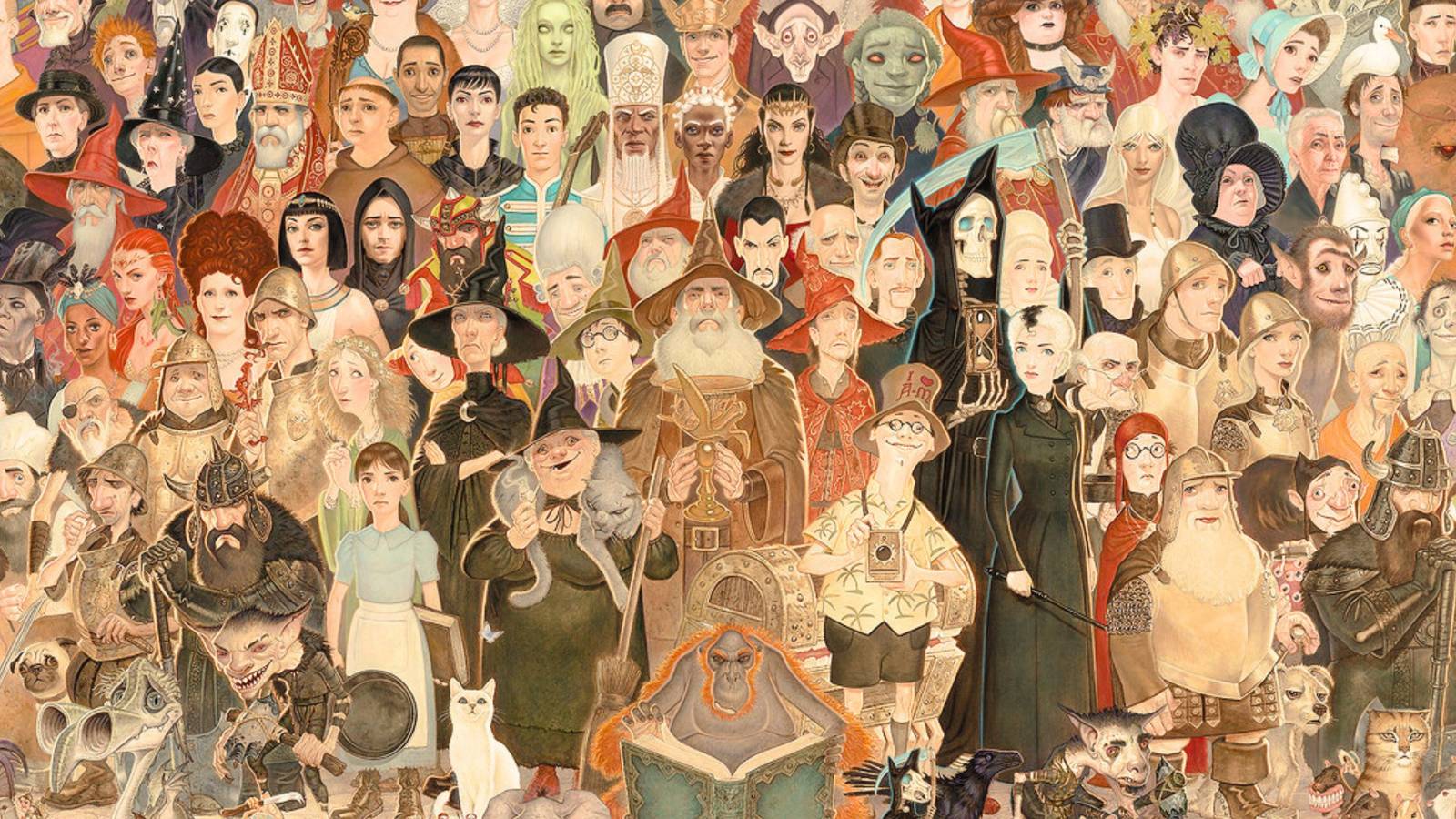
Published Aug 5, 2026, 11:30 AM EDT Tom is a Senior Staff Writer at Screen Rant, with expertise covering everything from hilarious sitcoms to jaw-dropping sci-fi epics. Initially he was an Updates writer, though before long he found his way to the TV and movies team. He now spends his days keeping Screen Rant readers informed about the TV shows of yesteryear, whether it's recommending hidden gems that may have been missed by genre fans or deep diving into ways your favorite shows have (or haven't) stood the test of time. Tom is based in the UK and when he's not writing about TV shows, he's watching them. He's also an avid horror fiction writer, gamer, and has a Dungeons and Dragons habit that he tries (and fails) to keep in check. Sign in to your ScreenRant account Few fantasy series are as beloved by their fandoms as Terry Pratchett’s Discworld novels. Across 41 books and a host of companion materials such as maps, cookbooks, and pseudo-nonfiction explorations of the science of the Disc itself, Pratchett created one of the most distinctive and richly realized settings ever put to paper. Every corner of the Disc feels alive, combining classic fantasy tropes with philosophical satire and endlessly inventive humor. Given the sheer volume of Discworld novels, every fan is bound to have their favorite, and no two readers' rankings will ever be exactly the same. Even so, some entries stand above the rest thanks to how perfectly they capture Terry Pratchett's uniquely comedic sense of wonder. These novels showcase everything that makes the Disc one of fantasy literature's greatest fictional worlds, balancing razor-sharp wit with heartfelt storytelling and unforgettable characters. The Wee Free Men (2003) 2003’s The Wee Free Men introduces Tiffany Aching, the young shepherd girl who would go on to become one of Terry Pratchett's greatest protagonists. When her little brother is stolen by the Queen of Fairyland, Tiffany reluctantly joins forces with the Nac Mac Feegle, a clan of tiny, blue-skinned warriors whose fearlessness is matched only by their enthusiasm for drinking and fighting. Together, they venture into Fairyland, where Pratchett transforms familiar folklore into something far stranger and considerably more dangerous. What makes The Wee Free Men exceptional even among the dozens of other Discworld novels is how it completely rejects the traditional fantasy idea that heroism depends on destiny or magical power. Tiffany wins because she observes, thinks, and refuses to panic, embodying Pratchett's belief that intelligence and compassion are every bit as powerful as swords or spells. At the same time, the 2003 novel brilliantly reimagines fairy mythology, presenting elves as a truly terrifying threat. The result is one of Discworld's most emotionally satisfying coming-of-age stories, proving that Pratchett could reinvent familiar fantasy concepts without ever losing his trademark warmth. Equal Rites (1987) Over a decade before Tiffany Aching made her Discworld debut, Terry Pratchett dived into the story of Eskarina “Esk” Smith in 1987's Equal Rites, which is the tale of a 7-year-old girl who accidentally inherits the powers of a wizard despite the widely held belief that only men can master wizarding magic (just as only women can become witches, despite the somewhat controversial existence of warlocks). Guided by the formidable witch Granny Weatherwax, Esk must travel to the heart of wizard education and study, the Unseen University, while confronting centuries of magical tradition and gender bias. Equal Rites easily stands as one of the best Discworld novels because it uses fantasy conventions to examine prejudice without ever becoming heavy-handed. Rather than simply parodying gender-based fantasy stereotypes, Pratchett explores how institutions preserve outdated assumptions and why genuine change requires questioning traditions that have gone unchallenged for generations. As only the third Discworld book, Equal Rites was also pivotal in establishing the balance of humor and social commentary that became central to the entire series, proving fantasy could be simultaneously hilarious and deeply insightful. Men At Arms (1993) The second book in Terry Pratchett's City Watch series, 1993’s Men At Arms, is also among the author’s most socially conscious Discworld novels. When a deadly firearm known as the Gonne (the Disc’s first gun) appears in the city, the Watch must solve a murder mystery while confronting a weapon capable of changing society forever. Alongside the investigation, Pratchett explores prejudice through the recruitment of dwarfs, trolls, and werewolves into the city guard. Men At Arms seamlessly combines detective fiction with politically satirical fantasy adventure. The Gonne represents the dark side of technological progress, allowing Pratchett to examine power and violence through the lens of a seemingly magical object. Meanwhile, the growing diversity of the Watch reflects the messy realities of social progress, which is handled with empathy rather than cynicism. Beneath the jokes lies one of fantasy literature’s strongest examinations of the concept of justice itself, making Men At Arms every bit as emotionally resonant as it is laugh-out-loud hilarious. Moving Pictures (1990) Many of the best Discworld stories are also part of multi-book series like the City Watch or Witches novels, but several don’t need ties to existing fan-favorite characters to stand out. This is definitely the case with 1990’s Moving Pictures, which explores what happens when cinema is invented on the Disc. Aspiring actors and opportunists flock to “Holy Wood” in Anhk Morpork in search of fame, leading protagonists Victor Tugelbend and Ginger to become unlikely celebrities. However, mysterious supernatural forces are manipulating events behind the scenes, and cinema starts to warp reality itself. Few Discworld novels capture Pratchett's talent for blending modern culture into fantasy more effectively than Moving Pictures. Rather than simply parodying Hollywood, the novel explores humanity's fascination with storytelling and celebrity while imagining filmmaking as an almost magical force capable of reshaping the world. Every classic movie cliché receives affectionate mockery, but the satire remains grounded in genuine admiration for cinema's power to inspire imagination. The result is an inventive fantasy that demonstrates how seamlessly Pratchett could transplant contemporary industries into the Disc without making them feel out of place. Maskerade (1995) Granny Weatherwax and Nanny Ogg are two of the most beloved characters Terry Pratchett ever created, and 1995’s Maskerade sees the pair of witches traveling to Ankh-Morpork in search of Agnes Nitt, only to find themselves embroiled in mysterious disappearances and murders at the city's opera house. Drawing obvious inspiration from The Phantom of the Opera, Maskerade affectionately lampoons theatrical traditions while introducing plenty of supernatural twists. Maskerade excels at delivering the uniquely weird comedic tone of Discworld because Pratchett understands that opera is already wonderfully absurd before adding witches into the mix. Every exaggerated convention becomes an opportunity for comedy, yet beneath the laughter lies a surprisingly thoughtful exploration of identity, performance, and beauty. Granny Weatherwax's refusal to accept theatrical melodrama creates countless memorable scenes as practical common sense collides with operatic excess. Like many of the best Discworld books, Maskerade works equally well as parody and as an excellent fantasy story in its own right. Soul Music (1994) Where Moving Pictures explored the consequences of cinema’s invention in a fantasy world, Soul Music does so with one of the 20th century’s other great contributions to culture: rock n’ roll. When Death temporarily abandons his responsibilities, his granddaughter Susan reluctantly inherits the family business, while a mysterious guitar introduces "Music with Rocks In" to Ankh-Morpork. The guitar’s owner, struggling musician Imp y Celyn, unknowingly sparks a cultural revolution as his performances become impossible to resist. Soon, the Disc finds itself swept up in a phenomenon resembling the Beatles or Elvis at their peak. Soul Music is one of several of the best Discworld books that stands out thanks to Pratchett's unmatched ability to weave contemporary culture into fantasy settings. lt lovingly references decades of musical history while examining why music is so central to human identity. Rather than treating rock music as the butt of a “what would happen if Middle-earth had electric guitars” type joke, Pratchett explores its mythic qualities, turning concerts, fandom, and celebrity into magical forces that feel completely believable within the Disc. The result is a joyful celebration of music wrapped inside one of the cleverest Discworld stories. Going Postal (2004) Con artist Moist von Lipwig is the star of several amazing Terry Pratchett novels. However, it’s his introduction in 2004’s Going Postal that remains not only the best of the character's books, but of Discworld overall. The story starts when the compulsive scammer receives an unusual offer from Lord Vetinari: revive Ankh-Morpork's abandoned postal service or face execution. Forced into honest work for perhaps the first time in his life, Moist discovers that restoring public faith in letters and stamps proves considerably more dangerous than running scams. Standing in his way is the ruthless Grand Trunk semaphore company, the Disc’s equivalent of telegrams, which has little interest in competition returning. Going Postal showcases Pratchett at the height of his creative genius, transforming bureaucracy and communication infrastructure into thrilling fantasy. The novel also explores capitalism and public trust without sacrificing its relentless humor. By making something as seemingly mundane as postal delivery exciting, Pratchett once again demonstrates that absolutely any aspect of modern life can become the foundation for unforgettable fantasy when viewed through the wonderfully eccentric lens of Discworld. Monstrous Regiment (2003) Anyone who has ever wondered what would happen if Terry Pratchett put his own spin on the story of Mulan is in luck, because that’s exactly what 2003’s Monstrous Regiment is. When Polly Perks disguises herself as a man to enlist in the Borogravian army and search for her missing brother, she gradually discovers many of her fellow recruits are hiding equally surprising secrets. As the regiment marches toward the front lines, Pratchett dismantles traditional military fiction while examining nationalism, gender expectations, and blind patriotism with his characteristic wit. The brilliance of Monstrous Regiment lies in its ability to balance outrageous comedy with moving emotional depth. Every revelation about the regiment adds another layer to Pratchett's exploration of identity, exposing the arbitrary rules that societies construct around gender and authority. Despite tackling serious themes, however, Monstrous Regiment never loses its sense of humor, ensuring its message emerges naturally through character rather than lectures. It is one of Discworld's most powerful standalone stories, demonstrating Pratchett's extraordinary ability to use fantasy satire to illuminate real-world issues without compromising entertainment. Small Gods (1992) The place of 1992's Small Gods as one of the best Discworld novels is interesting, as it’s a difficult book to define with a premise that is notably complex. Set largely apart from the main Discworld timeline, Small Gods follows Brutha, an innocent novice who becomes the only person capable of hearing the once-mighty god Om after the deity is mysteriously reduced to the form of a small tortoise. Together, they embark on a journey that challenges the divide between the authority of organized religion and the nature of genuine faith. Many fans consider Small Gods to be one of the greatest, if not the greatest, Discworld novels because it tackles enormous philosophical questions, even compared to Pratchett’s other books (which themselves never lack thematic depth). Rather than mocking faith, Small Gods examines how religious institutions distort noble ideals like kindness, curiosity, and compassion. Om's gradual transformation from arrogant deity into a more empathetic figure mirrors this broader message incredibly effectively. Perhaps no other Discworld book is a better showcase for Pratchett's ability to combine comedy and philosophy more successfully than almost any other fantasy author. Night Watch (2002) 2003’s Night Watch is widely regarded as Terry Pratchett's masterpiece because it distills everything that makes Discworld extraordinary into a single novel. After pursuing the serial killer Carcer across a magical storm, Commander Sam Vimes is thrown decades into the past during one of Ankh-Morpork's most violent political revolutions. Trapped in history, Vimes must secretly mentor his younger self while ensuring events unfold as they're supposed to. Alongside familiar members of the City Watch, he witnesses the sacrifices that shaped both the city and the man he would eventually become. The humor of Night Watch remains brilliantly sharp, but it is matched by an emotional weight few other fantasy books possess, even in Discworld. Pratchett uses time travel as a vehicle for exploring the responsibility and cost of preserving hope in difficult times. Every page reinforces Sam Vimes' status as one of fantasy's greatest protagonists while presenting Ankh-Morpork at its most vivid and complex. No other Discworld novel blends comedy, political commentary, heartfelt character development, and unforgettable worldbuilding with such confidence, making Night Watch the definitive achievement of Terry Pratchett's remarkable fantasy universe. Discworld TV Show(s) Soul Music, Wyrd Sisters, Hogfather, The Color of Magic, Going Postal, The Watch Video Game(s) Discworld MUD First Film Hogfather First TV Show Soul Music Cast David Jason, Charles Dance, Michelle Dockery, Marc Warren, Anna Chancellor, Richard Coyle, Ingrid Bolsø Berdal, Adam Hugill, Jo Eaton-Kent, Wendell Pierce, Ralph Ineson, James Fleet, Terry Pratchett Created by Terry Pratchett
10 Best Discworld Novels
Full Article
Original Source
Read the full article at Screenrant →KhanList aggregates and links to publicly available news content. We do not host full articles from third-party sources. Always verify important information with original sources.