
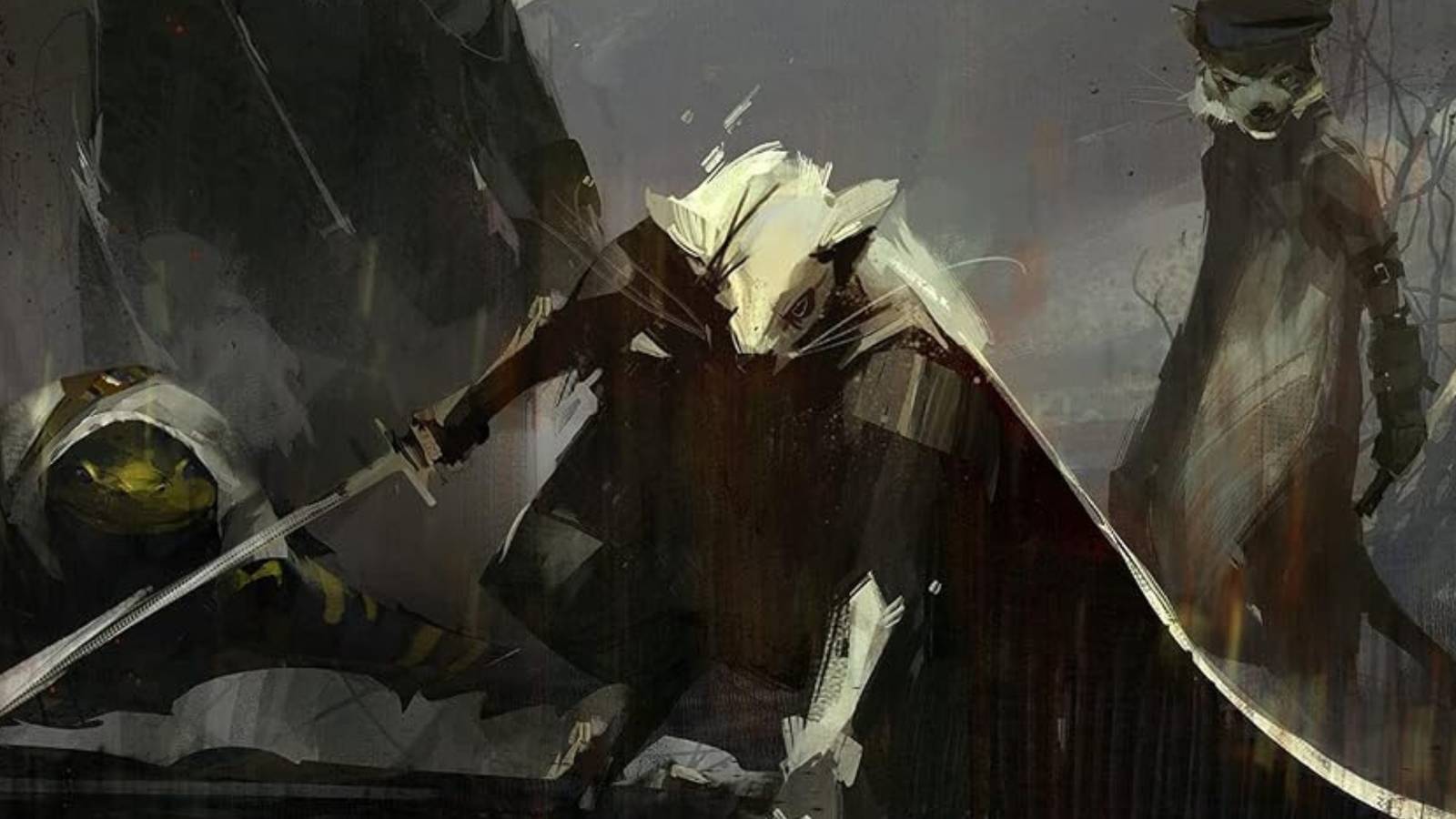
Almost every avid adult reader grew up on books where the main characters were animals. However, anyone who thinks books where the protagonists are animals are limited to children’s literature is incredibly mistaken. There are many deep, profound, and immersive books aimed at adult readers that focus on or are told through the perspective of animals. From childhood favorites to ambitious literary fiction, animal protagonists have proven capable of carrying stories every bit as complex as those centered on humans. Books with animal heroes come from a wide range of eras and genres. They all treat the central concept of animal protagonists differently, meaning each has its own unique spin on the idea. What the best of them all have in common is a guarantee to delight anyone who considers themselves both a keen reader and an animal lover. Whether talking animals in a human world or heroes in a fantasy kingdom populated by anthropomorphized critters, these books offer some truly unforgettable furry protagonists. Fifteen Dogs By André Alexis (2015) Few books where the main characters are animals take the concept in such a philosophically ambitious direction as 2015's Fifteen Dogs. Author André Alexis begins with an extraordinary premise: the Greek gods Apollo and Hermes make a wager about whether animals would be happier if they possessed human intelligence. Fifteen dogs living in a Toronto veterinary clinic are subsequently granted human consciousness, setting in motion a story that is funny, tragic, strange, and often profoundly moving. This thematic depth is possible because André Alexis doesn’t simply give the canine characters human personalities. Instead, Fifteen Dogs explores how human intelligence interacts with their natural instincts, social structures, loyalty, fear, and desire. Some of the dogs thrive under their new awareness, while others find intelligence to be a burden. The result is a literary novel that uses its fantastical premise to examine what it means to live a meaningful life. As a heads up, it’s a frequently heartbreaking story, but it's a powerful one too. Hollow Kingdom By Kira Jane Buxton (2019) Zombie apocalypses have dominated literary horror and sci-fi for decades, but Hollow Kingdom by Kira Jane Buxton immediately distinguishes itself by placing a domesticated crow at the center of the disaster. The 2019 novel follows S.T., a foul-mouthed crow living in Seattle with his human owner, Dennis. When humanity begins succumbing to a terrifying plague, S.T. finds himself trying to understand what has happened to the strange creatures he has spent his life observing. Kira Jane Buxton's novel is a wonderfully unusual blend of post-apocalyptic horror, comedy, and animal adventure. S.T. can communicate with other animals, but the book's animal perspective is especially effective because it constantly exposes the absurdity of human civilization. While it’s bizarre and laugh-out-loud hilarious, Hollow Kingdom can also be unexpectedly moving, especially once S.T. and the other animals start inheriting the remnants of the world. It is an inventive, energetic read that uses a talking animal protagonist to create one of the most thoughtful zombie apocalypse novels ever written. The Duncton Wood Series By William Horwood (1980-1993) William Horwood's Duncton Wood series proves that even a creature as unassuming as the humble mole can sustain an epic fantasy saga. The books begin in the underground world of Duncton Wood, where mole societies have their own cultures and societies. However, while this could have been the premise of a whimsical children’s novel, the six Duncton Wood books are ambitious and often dark, and treat its animal civilization setup seriously. For example, the first novel, 1980’s Duncton Wood, establishes a sweeping struggle involving freedom from religious tyranny. Horwood's moles of Duncton Wood communicate and form complex communities, but their physical existence remains central to the storytelling. Their underground environment, instincts, and relationship with the natural world give the series an identity distinct from a standard fantasy epic that’s simply swapped its human characters for animals. As the saga expands across multiple generations and books, its mythology becomes increasingly elaborate, giving animal-fiction fans a substantial fantasy world filled with memorable characters and genuinely high stakes. The Bees By Laline Paull (2014) A bee's life isn’t one that feels like it would fit a work of dystopian fiction, but Laline Paull’s 2014 novel The Bees transforms the hierarchy of a hive into a gripping and surprisingly recognizable society. The story follows Flora 717, a worker bee born into a colony where every individual has a predetermined role. However, Flora is physically different from the other workers, and her unusual abilities eventually make her a dangerous anomaly within the rigid structure governing the hive. Laline Paull manages to successfully create a world in which bees communicate and think in sophisticated ways, while their society remains deeply shaped by genuine aspects of bee behavior. Flora's journey through the hive exposes its strict social order and the sacrifices demanded by collective survival. The routines and dangers of hive life feel dramatic and occasionally terrifying, and while it’s one of the weirder books featuring animal protagonists out there, The Bees remains one of the best. The Redwall Series By Brian Jacques (1986-2011) The Redwall series is one of the most celebrated examples of animal protagonists being used to construct an entire fantasy universe, and with good reason. Author Brian Jacques populated his world with mice, badgers, otters, squirrels, moles, rats, stoats, and countless other animals, giving them distinct cultures and personalities. In terms of pllot, the peaceful inhabitants of Redwall Abbey regularly find themselves defending their homes against dangerous armies of predators, and the epic saga details their struggle to finally establish a lasting peace. Although the books are often aimed at younger readers, the Redwall series has an enormous appeal for anyone who enjoys traditional fantasy. Brian Jacques combines quests, battles, mysteries, and heroic legends with a wonderfully detailed animal world. What’s more, the characters are never limited by their biology or species. A brave mouse can become a legendary warrior, while several characters of predatory species are timid, warm, and personable. The 22 Redwall novels offer an enormous amount to explore, and its energetic storytelling makes the series one of the most beloved animal fantasies ever written. The Builders By Daniel Polansky (2015) Where Redwall uses anthropomorphized creatures to create an epic saga, The Builders uses talking animals to weave a brutal Western-inspired revenge story. Daniel Polansky's 2015 grimdark fantasy novel follows a mouse, Captain, and his crew of mercenaries when they reunite for one final mission against a former employer who betrayed them. This premise might initially suggest something playful, but The Builders is incredibly violent and written with a tongue-in-cheek sense of cynicism. The Builders is heavily inspired by crime fiction and Westerns, and does nothing to water these influences down. Captain’s world isn’t filled with whimsy and joy but hired guns, old grudges, betrayal, and revenge. Its animal characters speak and behave much like hardened human outlaws, yet their species still influence their physicality and presence. This contrast between size of personality and literal size leads to some great moments of levity between its most brutal scenes, and The Builders is an excellent choice for readers who want animal protagonists in a genuinely adult story. Animal Farm By George Orwell (1945) George Orwell's Animal Farm will always be one of the most famous books ever written about talking animals, although it wasn’t conceived as a simple escape from reality like many others are. The 1945 novel follows a group of farm animals who overthrow their human owner and attempt to establish a society in which all animals are equal. Their revolution initially promises freedom, but power quickly begins to corrupt its leaders. Orwell uses the fact that the animals can speak, organize politically, and develop ideologies, to make Animal Farm an allegorical fable rather than a whimsical adventure. At its core, Animal Farm is a warning against the flaws Orwell perceived in revolutionary ideals and the tyrannical societies that follow, but using pigs, horses, sheep, and other farm animals to explore the allegory. However, the genius of Animal Farm is that its heavy political undertones don’t prevent it from being an immensely readable story. The ideas may be complex, but the prose isn’t. This simplicity allows its increasingly disturbing events to unfold with remarkable clarity. Above all else, Animal Farm demonstrates how animal protagonists can support sophisticated political satire just as well as they can fantasy epics or charming literary tales. Fantastic Mr Fox By Roald Dahl (1970) Fantastic Mr Fox may be lighter and predominantly targeting young readers, but Roald Dahl's 1970 novel remains one of the most entertaining examples of animal protagonists in children's literature and is enjoyable to anyone regardless of age. Mr. Fox is a stereotypically clever fox who steals food from three wealthy and deeply unpleasant farmers. When Boggis, Bunce, and Bean decide they have finally had enough, they launch an increasingly extreme campaign to capture him. The animals in Dahl's world talk, plan, and cooperate, while the human characters remain largely unaware of their underground society. Mr. Fox is an ideal animal protagonist because many of his qualities feel specifically suited to a fox: he is cunning, resourceful, and difficult to catch. Dahl turns his ongoing war with the trio of farmers into a fast-paced and utterly hilarious battle of wits, with Mr. Fox's family and fellow animals eventually joining his efforts. Funny and endlessly rereadable, Fantastic Mr Fox shows how much personality animal characters can have even in a relatively short book. Black Beauty By Anna Sewell (1877) The 1877 book Black Beauty is one of the earliest and most influential examples of a novel told directly through the perspective of an animal, and it remains one of the best almost 150 years later. Anna Sewell's classic follows the life of the titular horse, beginning with his happy childhood before chronicling the many owners, hardships, and forms of cruelty he encounters. Beauty narrates his own story, giving readers an unusually intimate view of Victorian society from an animal's perspective. Unlike many fictional animal protagonists, Black Beauty does not inhabit a fantasy world or communicate with humans through speech. Sewell instead imagines how a horse might perceive and understand the people around him, and the result is incredibly emotional. Black Beauty was written partly to encourage better treatment of horses, and its concern for animal welfare still resonates. However, the novel is also compelling because of Beauty himself. His life contains just as much suffering, loss, and eventual happiness as any human character, making him one of literature's most sympathetic protagonists despite walking on four legs. Watership Down By Richard Adams (1972) Watership Down is the definitive recommendation for readers seeking an epic novel centered on animal protagonists, effortlessly balancing the feel of a grand fantasy adventure with the grounded tone of a story set in the real world. Also well known for inspiring a traumatizing kids movie, Richard Adams's 1972 novel follows a group of rabbits who flee their warren after one of them, Fiver, experiences a terrifying vision of its destruction. Led by Hazel, the rabbits embark on a dangerous journey across the English countryside in search of somewhere they can establish a new home. The rabbits of Watership Down all have complex personalities, but Adams never allows them to behave like human protagonists in animal costumes. Their understanding of the world is shaped by rabbit instincts, their vulnerability to predators, and their dependence on the natural environment. This balance makes Watership Down uniquely immersive. The stakes feel enormous precisely because the protagonists are small and fragile creatures in a dangerous world. Suspenseful, remarkably detailed, and boasting an absolute tearjerker of an ending, Watership Down remains the gold standard for books with animal protagonists.
10 Best Books With Animal Protagonists
Full Article
Original Source
Read the full article at Screenrant →KhanList aggregates and links to publicly available news content. We do not host full articles from third-party sources. Always verify important information with original sources.